
GreenFiber Attic Insulation in Henderson: A Homeowner’s Guide
Cellulose settles roughly 20% in the first 90 days after it’s blown in. GreenFiber’s own coverage charts account for this with two separate numbers: installed depth and settled depth. Most homeowners never ask to see either one. That gap matters here, because the depth you can measure in your attic a few months after the job is the only proof you got the R-value you paid for. This guide explains what to check, what to read, and what to do when the paperwork doesn’t match the quote. If you’d rather not spend a Saturday with a tape measure in 115-degree attic heat, call (844) 320-5338 and we’ll take a look.
What R-value do you actually need in Henderson, and how many inches is that?
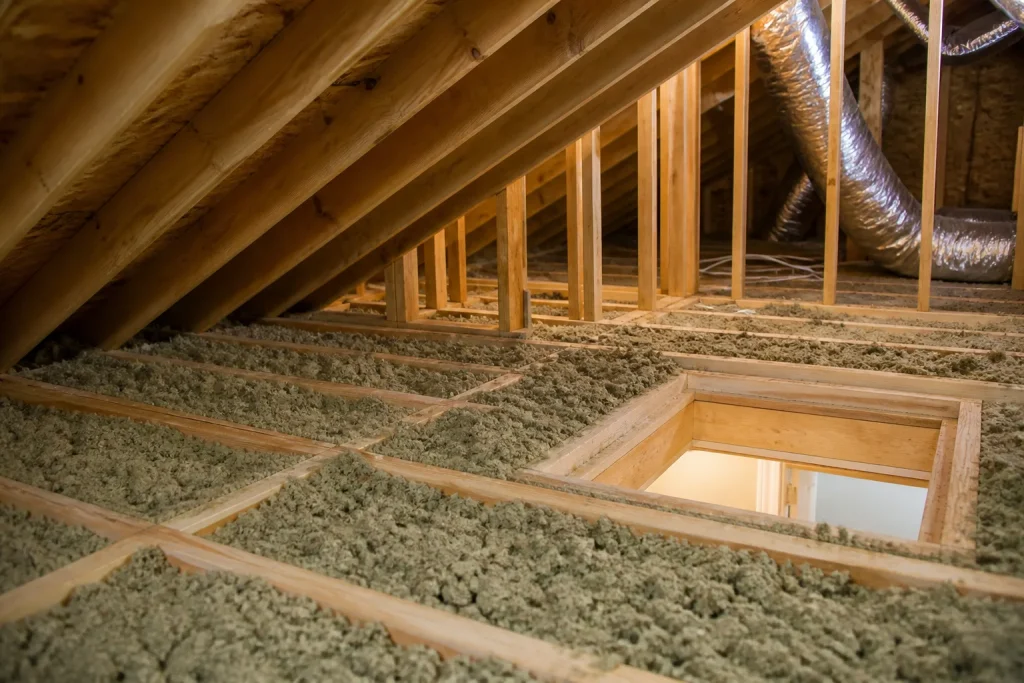
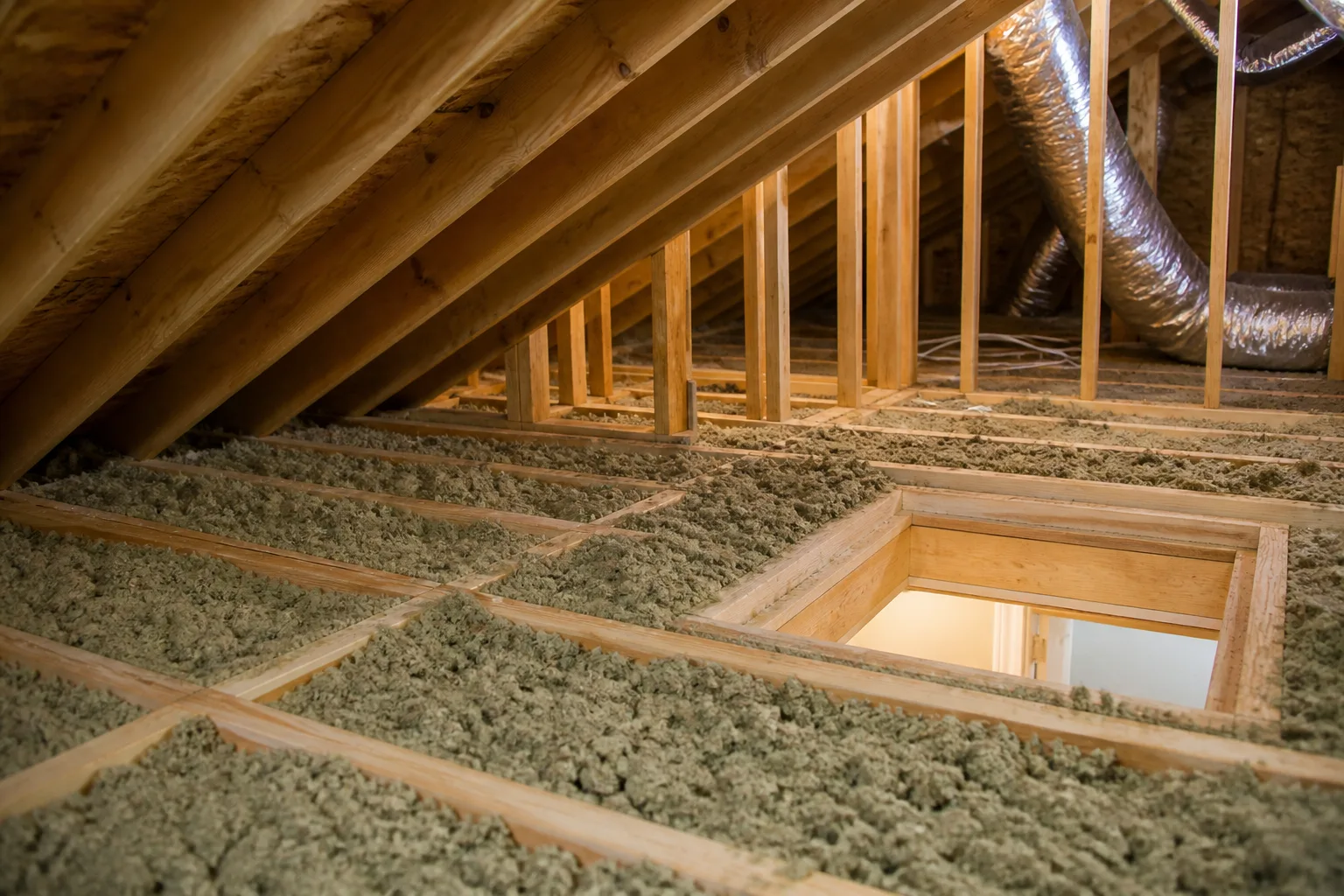
Henderson sits in IECC climate zone 3B, which sets a target of R-38 to R-60 for an attic floor, depending on how your existing assembly is built and what’s already up there. Here’s where GreenFiber gets concrete: at the standard loose-fill density used for open-blow attic applications, R-38 lands at roughly 11.5 to 12 inches of settled depth, and R-49 lands closer to 14.5 inches. If a contractor tells you they installed R-49, the settled depth in that attic should measure about 14 inches at the end of the settling period. If it measures 9, you got R-30 at best.
That’s the whole value of cellulose as a product. Fiberglass batts hide bad installation inside a paper facing. Loose-fill cellulose can be audited after the fact with nothing more than a ruler and the bag count on the invoice. In Henderson’s summer heat, attic floor temperatures push past 140°F on a July afternoon, and the difference between R-30 and R-49 shows up in your second-floor bedroom by August.
- R-38: roughly 11.5 to 12 inches settled depth
- R-44: roughly 13 inches settled depth
- R-49: roughly 14.5 inches settled depth
- R-60: roughly 17 to 18 inches settled depth, usually when the existing assembly is underperforming
Those depth figures are the number you put on your calendar to check 90 days out. Not “sometime.” The date.
How do you read a GreenFiber coverage chart and verify the job?
Every bag of GreenFiber cellulose has a coverage chart printed on it that tells the installer how many bags per 1,000 square feet are required to hit a target R-value. A 1,500 square foot attic at R-49 typically takes somewhere in the neighborhood of 30 to 35 bags depending on the exact product line. If your invoice shows 18 bags for 1,500 square feet, the math doesn’t work and the depth in the attic will confirm it.
Here’s how to verify installation yourself after the crew leaves:
- Count the empty bags on the invoice. Cross-check against the coverage chart for your square footage and target R-value.
- Find the depth markers. Every installer should leave rulers or markers at multiple points across the attic floor before blowing. If you don’t see them, that’s the first problem.
- Measure settled depth at four points, ideally one per attic quadrant, using a ruler pushed straight down to the drywall. Photograph each measurement.
- Compare to the settled-depth column for your target R-value, not the installed-depth column.
- Wait 90 days and measure again. Depth should be stable, not still dropping.
We pulled a job file out of a Green Valley Ranch home a few months back where the invoice claimed R-44 and the settled depth measured under 10 inches. That’s an R-30 installation billed as an R-44 installation. The homeowner had never checked. We see this pattern across Henderson more often than we’d like, and it’s why we publish the bag count, square footage, and quadrant depth readings on every job.
Why does air sealing have to happen before any cellulose goes in?
Loose-fill cellulose is light. It moves. Under the stack effect, which is the natural pressure gradient that pulls air up through a house and out the attic in winter and reverses in Henderson’s summer cooling season, cellulose migrates into any gap it can find. Top plates at wall intersections, recessed can lights, plumbing penetrations, and framing gaps become pathways for the insulation to disappear into a wall cavity over a couple of seasons. Seal the bypass first, then blow.
This is the point most insulation contractors in Henderson skip, because sealing is slow, unglamorous work and the visible part of the job is the insulation depth. But an unsealed attic floor with R-49 on top of it performs worse than an R-38 attic that was sealed first. The blower-door test, a pressurization reading that shows in one number how much air your building envelope is losing, tells you the difference. Typical Henderson homes we test before sealing read in the 4,000 to 5,500 CFM50 range; properly sealed homes drop to roughly half that. That’s the number that actually drives your energy bill, not the R-value on the invoice.
If you’re looking at the full picture of your attic and crawl space together, our attic insulation in Henderson page walks through the sequencing. Air sealing is a prerequisite, not an upgrade.
What does GreenFiber’s fire rating actually mean for a Henderson garage ceiling?
GreenFiber cellulose is treated with borate, which serves both as a fire retardant and a pest deterrent. On the ASTM E84 flame-spread index, which is the standard test for how quickly a material spreads flame across its surface, borate-treated cellulose typically scores in the 5 to 15 range. Fiberglass, the other common choice for garage ceilings and attic floors, scores zero because it doesn’t burn at all in that test. So cellulose isn’t “better” than fiberglass on flame spread in the abstract, but it’s substantially better than most homeowners assume, and roughly equivalent to or better than many foam products in the same application.
Why this matters in Henderson specifically: a lot of the homes built between 2015 and 2020 in neighborhoods like Cadence and Inspirada have finished or semi-finished garage ceilings that homeowners want to insulate for a home office, gym, or shop conversion. The garage ceiling sits below an unconditioned or partially conditioned space, and code requires a specific fire rating on the ceiling assembly when you convert it. Borate-treated cellulose at ASTM E84 Class A is an appropriate choice there, and it costs less installed than closed-cell spray foam. We still recommend verifying against the specific assembly in your home, but the fire number is why cellulose has never been excluded from garage-ceiling work the way some homeowners assume.
For structures where foam is the better call, our spray foam insulation in Henderson page covers when and why. Cellulose and foam aren’t competitors; they solve different problems in the same house.
What should the job documentation actually contain?
The documentation you walk away with is the only record you’ll have in five years when you’re selling the house or disputing a warranty claim. Here’s what it needs to contain, at minimum:
- Bag count: the number of GreenFiber bags installed, stated on the invoice
- Square footage covered: measured, not estimated from the listing
- Target R-value and the depth that R-value requires: both numbers, side by side
- Final installed depth at four attic quadrants: measured with photos before the crew leaves
- Blower-door ACH50 before and after: air changes per hour at 50 pascals, the standard tightness metric
- Photograph record of the sealed bypasses: top plates, can lights, penetrations, before the insulation went over them
- Written warranty and written scope: signed before any work began
The ACH50 number is the one homeowners skip and shouldn’t. If the reading didn’t drop meaningfully from before to after, the sealing didn’t work regardless of how deep the insulation is. At GreenFiber densities in a properly sealed Henderson attic, a house that reads 5.0 ACH50 before should read near 3.0 after. Any contractor who won’t schedule a post-install blower-door test is telling you something about their process. Ask for the number in writing before the job starts.
When should you call a pro, and what happens if the numbers don’t match?
Cellulose installation isn’t a hard DIY in the way that electrical work is, but the sealing prerequisite and the blower-door verification make it a bad first project for a homeowner with a full-time job and no diagnostic equipment. And there’s a genuine safety component: attics in Henderson hit 140°F-plus on summer afternoons, blown cellulose generates significant dust, and walking joists in a dark attic is how people fall through ceilings. If your attic has any signs of prior rodent activity, which is common in older Henderson neighborhoods close to open desert, the insulation and any contaminated materials need to come out first, and that’s a respirator-and-suit job, not a weekend project.
If the numbers on your installation report don’t match the quote, the first call is to the installing contractor. If they won’t remeasure, or the remeasurement confirms the shortfall and they won’t resolve it, that’s where a second opinion comes in. We offer a free review of any written estimate or installation record. Bring the bag count, the depth photos, and the blower-door readings, and we’ll read them with you. No urgency theatre, no scare tactics. Just the numbers.
Related services in Henderson: if your attic sits over a crawl space, sealing the floor from above doesn’t solve everything. Our crawl space encapsulation and vapor barrier in Henderson page covers the moisture side of the envelope, which matters just as much in a house that gets 4 inches of annual rainfall and 100°F summers. And if you want the full picture of how the envelope fits together, start at the Envelope Insulation Henderson home page.
The Bottom Line
GreenFiber cellulose is a good product for Henderson attics when it’s installed at the right density, over a properly sealed floor, with documented depth and blower-door numbers on the way out the door. The product isn’t the problem in most failed installations; the process is. Here’s what to walk away with:
- Bag count, square footage, target R-value, and the settled depth that R-value requires, all stated on the invoice
- Quadrant depth measurements after settling, on a date you put on the calendar
- Blower-door ACH50 before and after
- Photo evidence of the sealed bypasses, taken before the insulation went in
- A written scope and a written warranty, signed before the first bag was opened
If you’re in Henderson and need help reading a quote, checking an existing installation, or getting the job done right the first time, Envelope Insulation Henderson offers free estimates – call (844) 320-5338. We answer live, day or night.
Frequently Asked Questions
Yes, cellulose settles roughly 20% in the first 90 days, and the manufacturer’s coverage charts account for it by specifying both an installed depth and a settled depth. The R-value stays the same because the density increases as it settles. What changes is the vertical depth in the attic, which is why you measure settled depth, not installed depth, when verifying the job. Call (844) 320-5338 if you want us to remeasure a recent installation.
Usually yes, but not without checking two things first: whether the existing batts are properly seated against the drywall (many aren’t), and whether the attic floor beneath them is sealed. Blowing cellulose over unsealed bypasses traps air leaks under a fresh layer of insulation, and the stack effect will pull both insulation and conditioned air into the attic regardless of the total R-value. In our experience, roughly half the Henderson attics we inspect with existing batts have significant air bypasses hidden under the paper facing.
Most attic insulation jobs in a typical Henderson home run somewhere between $2,000 and $4,500 installed at R-38 to R-49, including air sealing and a blower-door test. The price varies with attic square footage, existing insulation condition, and how many bypasses need sealing. Anyone quoting a number over the phone without seeing the attic is guessing. Call (844) 320-5338 for a written price before any work starts.
Cellulose (GreenFiber) is recycled paper treated with borate, denser, and easier to audit after installation because depth corresponds directly to R-value. Fiberglass (Owens Corning) is lighter, non-combustible, and often the better choice for specific assemblies and vertical surfaces. Both work well in Henderson attics when installed correctly. The installation process, air sealing and verification, matters more than which product you choose. Call (844) 320-5338 and we’ll walk through which fits your specific attic.
Written by the team at Envelope Insulation Henderson.
Need Insulation Help?
Call Envelope Insulation Henderson - licensed & insured, here with fast after-hours help in Henderson.
(844) 320-5338