
Johns Manville Attic Insulation in Henderson: A Homeowner’s Guide
Johns Manville Spider is a blown-in fiberglass that goes in wet and sets with an adhesive binder, so the depth ruler your installer might use for standard loosefill won’t prove anything once it cures. On a Spider job in Henderson, the verification that matters is a bag-per-square-foot coverage log plus a thermal imaging scan taken after the material sets. Most homeowners don’t know to ask for either, which is exactly how a thin spot over the living room ceiling goes unnoticed until August.
If you’d rather not sort through product specs and install protocols yourself, call (844) 320-5338 and we’ll walk you through what a correct job looks like in your attic. Estimates are free, and they come in writing.
Key Takeaways
- JM Spider sets with a binder, so post-install verification needs a coverage log and thermal scan, not a depth measurement.
- The binder surface needs to be above 40°F. Henderson’s December through February attic temperatures regularly fall below that, which changes scheduling.
- Spider does not seal air leaks. Top plates, can lights, and penetrations need foam before any insulation goes in.
- Climate zone 3B targets vary by assembly, but R-38, R-49, and R-60 are the three common stops, and each has a different installed thickness with Spider.
How Is Johns Manville Spider Different From Standard Blown-In Insulation?
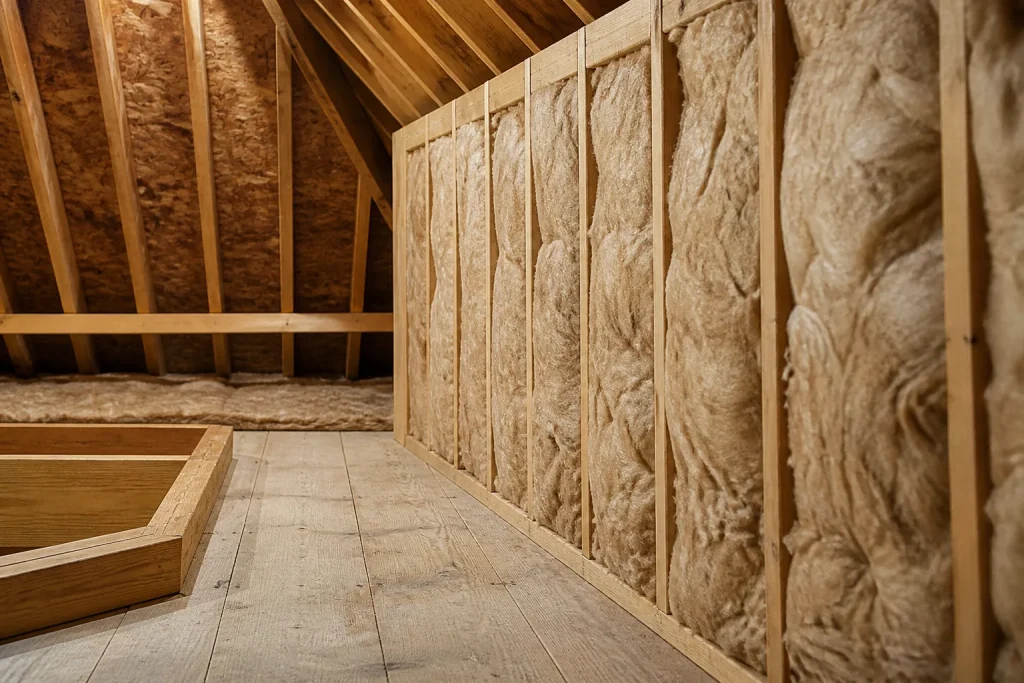
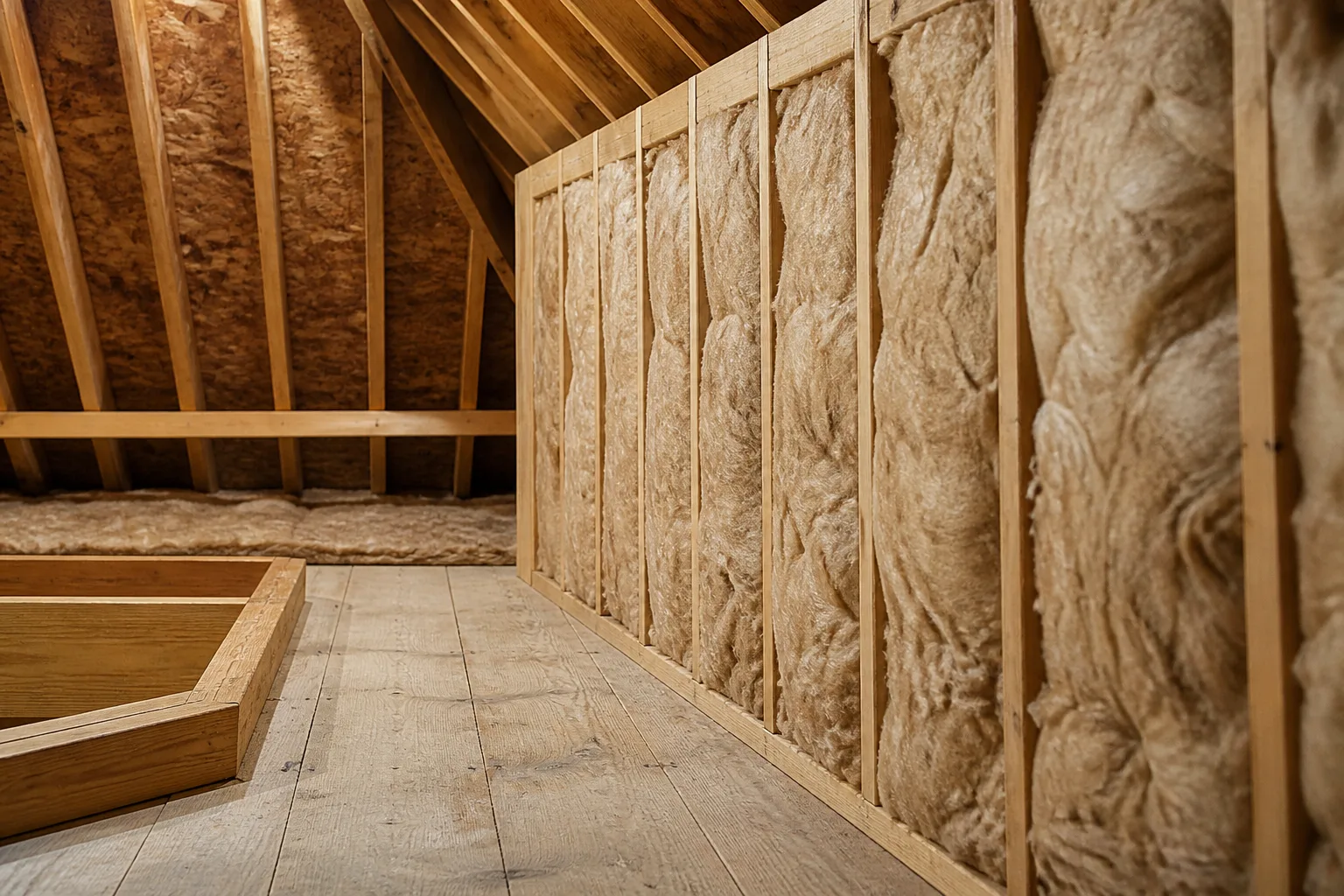
Standard loosefill, whether GreenFiber cellulose or Owens Corning fiberglass, is blown in dry and fluffs into place. Spider is blown in with water and a starch-based adhesive binder, so it lands damp, clings to the surfaces it touches, and cures into a lighter, more uniform blanket over the next several hours. That difference in chemistry changes three things: how it’s applied, how long the installer has to work it, and how you check it afterward.
The application itself demands more control. The installer adjusts water-to-material ratio at the machine, and the spray pattern has to be even because the binder grabs on contact. Dwell time matters. Material blown too wet sags and compresses at the edges and loses R-value. Material too dry never bonds and behaves like ordinary loosefill that happens to sit a little higher.
Then there’s the temperature spec that catches Henderson installers every winter. Spider’s binder needs a surface temperature above 40°F to cure properly. A Henderson attic in late December or January can sit at 38°F at 8 a.m. and warm up by noon. A crew that doesn’t check surface temp before spraying is gambling with your insulation. We’ve seen jobs over in Green Valley where Spider was sprayed onto a cold deck and the binder never fully set, leaving a crumbly crust that hadn’t bonded to anything.
For a straight comparison: dry loosefill is forgiving and easy to verify with a ruler. Spider is less forgiving and needs different proof. If a contractor quotes you Spider and treats it like regular blown fiberglass, that’s your first signal.
How Do You Verify a Johns Manville Spider Installation Was Done Right?
You verify a Spider install with two documents and one inspection. The documents are the installer’s coverage log and the thermal imaging report. The inspection is your own visual check at the right time. Depth rulers, the tool most homeowners have heard of, don’t work here because Spider sets as a bonded mass rather than settling into a measurable pile.
- Coverage log. Ask for bag counts per square foot, calculated against the product’s published coverage chart for the target R-value. JM publishes coverage at specific installed densities, so the installer should be able to show you exactly how many bags went in and how many square feet they covered. If the math doesn’t line up with your attic’s square footage, the target R-value wasn’t met.
- Batch numbers. Every bag carries a batch code. Recording those codes is standard practice for a documented job and lets any later question about the material be traced back to a specific production run.
- 24-hour wait and inspect. Spider needs time to set. Roughly a day after the crew leaves, the surface should read as a uniform, slightly textured blanket with consistent color. What does improper set look like? Powdery or crumbly patches, sagging at the eaves, visible separation from rafters, and darker wet-looking spots that never lightened. Any of those means the binder didn’t cure correctly.
- Thermal imaging. An infrared scan of the ceiling below the attic shows temperature variance across the surface. A thin spot or void reads warmer in winter and cooler in summer than the surrounding areas. This is the single most useful check because it finds the problem you can’t see from inside the attic.
If you already have a quote in hand from another contractor and want a second set of eyes, that’s free with us. We’ll read it with you and tell you whether the verification steps are in the scope.
Does Spider Seal Air Leaks? No, and That Matters in Henderson
The binder in Spider bridges small gaps and gives the material some structural cling, but it is not an air barrier. A top plate that leaks conditioned air into the attic will keep leaking after Spider goes in. The material will sit on top of a bypass and insulate around it while the leak continues, which is why the air sealing has to happen first.
In Henderson homes built between 2015 and 2025, the common bypasses are predictable. Top plates where the wall framing meets the attic floor, recessed can lights, bath fan housings, plumbing penetrations, and the chase around the furnace flue. Each one needs foam or a similar sealant applied before any insulation is sprayed. The blower-door test, a pressurization reading that shows in one number how much air your building envelope is losing, should be taken before sealing and again after insulation. Without the “before” number, there’s no way to prove the sealing changed anything.
We won’t blow insulation over an unsealed attic floor. It’s the one rule we hold without exception because a Spider job over open bypasses is a well-documented waste of the material and your money. If your contractor is quoting Spider without a pre-installation air sealing step and a pre-insulation blower-door reading, ask why.
That sequencing is also why crawl space work often happens in the same visit. Sealing the top of the house without addressing the bottom leaves the stack effect pulling Henderson’s desert air up through the floor. If you’re already planning an attic job and the crawl space is unsealed, crawl space encapsulation and vapor barrier in Henderson belongs on the same punch list.
What R-Value Should Henderson Homeowners Target With Spider?
Henderson sits in IECC climate zone 3B, a hot-dry zone where the cooling load dominates and attic temperatures routinely hit 140°F or higher in July. The U.S. Department of Energy recommends R-38 to R-60 for zone 3 attics. Most Henderson homes we see are starting between R-11 and R-19, which explains why second-floor rooms over the garage run hot from May through September.
Installed thickness with Spider depends on the density the installer targets, and JM publishes coverage charts rather than a single number. As a rough guide based on typical installed density, which the installer should confirm from the current product data sheet for your specific job:
- R-38 lands around 12 to 13 inches of installed Spider, the minimum upgrade for a Henderson home coming from R-11.
- R-49 lands around 15 to 16 inches, a common target for homes with a vaulted ceiling or an older HVAC system.
- R-60 lands around 18 to 20 inches, the top of the DOE range and generally where we stop unless there’s a specific reason to go higher.
The exact thickness depends on the density the product is applied at, and the installer’s coverage log should show both the target R-value and the thickness achieved. If a quote gives you one number without the other, ask for the chart. Going deeper than R-60 rarely pays back in a Henderson climate because the incremental savings flatten out while the material cost keeps climbing.
If you’re comparing products rather than just depth, spray foam insulation in Henderson is worth understanding as an alternative for rim joists and hard-to-reach cavities where blown fiberglass can’t reach.
What Should the Job Documentation Include?
A properly documented Spider job in Henderson leaves you with a folder, not just a receipt. Under the standard we work to, every job starts with a written price and ends with a documented record, and that record is what protects you if anything looks off six months later. Here’s what should be in it:
- The written scope and written warranty, delivered before any work starts. Flat price, defined R-value target, defined air-sealing scope. No “we’ll figure it out once we’re up there.”
- The installer coverage log, showing bags per square foot and the R-value calculation.
- Batch numbers for the material used.
- Pre- and post-insulation blower-door CFM50 readings, so you can see the air leakage change in a single figure.
- A thermal imaging report from below the ceiling, confirming uniform coverage with no voids or thin spots.
- Photos of the finished attic, the sealed bypasses, and any problem areas the crew found up there.
We publish before-and-after blower-door numbers on every applicable job, and the thermal scan is part of the standard visit rather than something you have to request. Materials we work with come from Owens Corning and Johns Manville among others, so if you already have a preference for one brand’s product, we can quote to it. That documentation standard is also what makes a fair comparison possible when you’re holding two estimates side by side. The one that names the R-value, the coverage log, and the blower-door test is the one you can actually hold accountable.
If you want to see how the same documentation standard applies to straight attic work without the Spider binder, our page on attic insulation in Henderson walks through the sequence. And if you’re starting from scratch and want the whole house looked at, our Envelope Insulation Henderson home page has the full service list.
When to Call a Pro
Spider’s temperature spec and its post-install verification are the two places a homeowner can get hurt. If your attic surface is running below 40°F in a Henderson winter, a crew that sprays anyway is either not checking or not telling you. And if there’s no coverage log or thermal scan planned, you have no way to confirm the job was done correctly, which means you can’t hold anyone to the result. Air sealing a top plate or a can light is a slow, careful job that benefits from someone who has done several hundred of them.
The Bottom Line
Johns Manville Spider is a good product and a real upgrade over standard loosefill when it’s installed by someone who understands the binder and verifies the result. The problem isn’t the material. It’s that most homeowners in Henderson don’t know to ask for a coverage log, a 24-hour set inspection, and a thermal scan, and without those you can’t tell a proper install from a sloppy one until next summer’s heat bill. Target R-38 to R-60 in climate zone 3B, seal the attic floor first, and insist on the blower-door before and after.
If you’re in Henderson and want a written price and a documented scope before anyone touches your attic, Envelope Insulation Henderson offers free estimates. Call (844) 320-5338 and we’ll talk through your attic, your current R-value, and what a correct Spider install with a 365-Day Done Right Promise behind it looks like.
Frequently Asked Questions
Most Henderson attic Spider jobs run roughly $2.50 to $4.50 per square foot installed, or about $3,200 to $6,800 for a typical 1,600-square-foot attic, depending on the target R-value and how much air sealing is required first. Air sealing adds cost because it’s the labor-heavy step, but skipping it defeats the purpose of insulating. Call (844) 320-5338 for an exact quote on your attic, written before any work starts.
Yes, as long as the attic surface temperature is above 40°F when the material is sprayed. Henderson attic temperatures in December and January frequently dip below that in the early morning, so the installer should check surface temp before spraying and schedule accordingly. A crew that sprays onto a cold deck risks the binder never fully curing. Call (844) 320-5338 if you want a job scheduled with the temperature spec checked on arrival.
Neither is universally better. Spider’s binder gives it better cling and less settling on sloped surfaces and around obstructions, while standard Owens Corning loosefill is easier to verify with a depth ruler and costs less per square foot. For a flat Henderson attic with few obstructions, standard loosefill often delivers the same R-value for less. For a complex attic with knee walls or vaulted sections, Spider’s cling is worth the premium. Call (844) 320-5338 and we’ll look at your attic and tell you which makes sense.
Thin spots show up first as hot second-floor rooms over the garage or a ceiling that feels warm in July. Inside the attic, an improper set reads as powdery or crumbly patches, sagging at the eaves, or darker wet-looking spots that never lightened. A thermal scan taken after installation would have caught those at the time. Call (844) 320-5338 if you want a scan of an existing job.
Written by the team at Envelope Insulation Henderson.
Need Insulation Help?
Call Envelope Insulation Henderson - licensed & insured, here with fast after-hours help in Henderson.
(844) 320-5338