
Blown-In Insulation: Repair or Replace? How Henderson Homeowners Decide
Most blown-in insulation in a Henderson attic does not need to be replaced. It needs to be diagnosed. The number one reason homeowners here pay for a full tear-out they didn’t need is that a contractor pushes a ruler into settled cellulose, reads a depth that’s 15 to 20 percent lower than install day, and quotes a replacement against today’s R-value target. That settling is normal. It is expected. And it doesn’t cut thermal performance proportionally to depth loss. If you’d rather not climb into a 140-degree attic in July to sort this out yourself, call (844) 320-5338 and we’ll take a look.
What are the three ways blown-in insulation actually fails in Henderson?
Henderson attic insulation degrades through three distinct mechanisms, and each one calls for a different response. Sorting which one you’re dealing with is the whole decision.
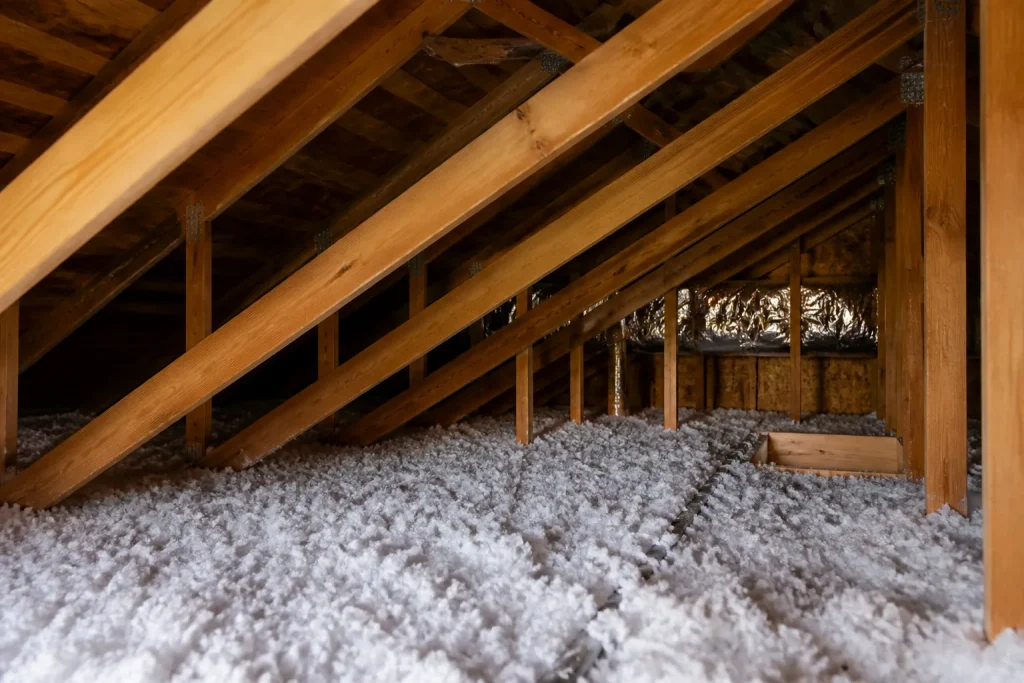
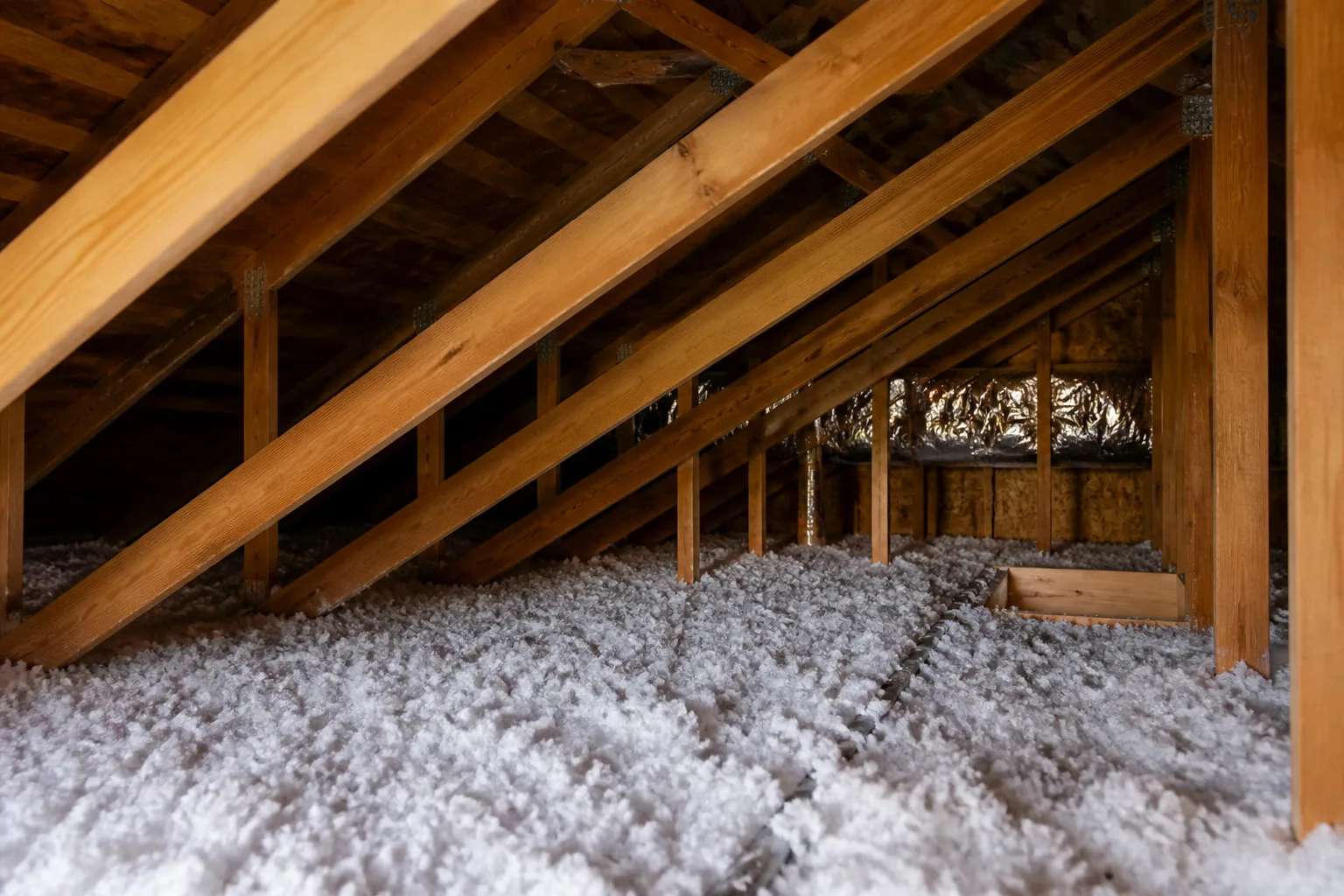
- Thermal settling (normal, expected). Cellulose and fiberglass compact over time under their own weight and the daily thermal swing of a Henderson summer. Cellulose typically loses 15 to 20 percent of its installed depth over a decade. The R-value drops, but not in a straight line with depth. This is a top-off situation, not a replacement.
- Air-washing from unsealed bypasses (fixable without replacement). Every penetration in the attic floor – top plates, can lights, plumbing chases, wire holes – lets conditioned air escape into the attic. That moving air strips heat from the insulation fibers around it, which is called air-washing. The insulation isn’t ruined. The envelope is leaking. This gets fixed with air sealing, and the existing insulation usually stays.
- Contamination from wildlife or water intrusion (the only reliable replacement trigger). Rodents tunnel and nest, which compresses and soils material. Roof or plumbing leaks soak cellulose, and wet cellulose loses its structure and can grow mold. This is the one scenario where replacement is usually the right call, because you can’t clean and re-fluff contaminated material back to a sound state.
In our experience across Henderson, thermal settling is the most common finding and full replacement is the least common correct answer. The trick is measuring before you decide.
How does a blower-door test tell you whether it’s the insulation or the air sealing?
A blower-door test – a pressurization reading that shows, in one number, how much air your building envelope is losing – separates the two problems that look identical from the attic floor. The reading is expressed in CFM50: cubic feet per minute of air escaping while the house is pressurized to 50 pascals.
Here’s how it works as a diagnostic. If your attic has aged blown-in and known bypass locations, a baseline CFM50 reading tells you how leaky the envelope is before anyone touches the insulation. A high number with intact insulation points to air sealing as the fix. A high number with degraded, thin, or contaminated insulation points to both sealing and a top-off or replacement. We won’t blow new insulation over an unsealed attic floor, and a blower-door reading is how we prove the sealing is done before the insulation goes down.
The same test run again after the work gives you a before-and-after pair. On a typical Henderson ranch home we might read 4,200 CFM50 before sealing and 2,100 after – a single figure that shows the conditioned air the home was losing and then stopped losing. That’s the number that tells you what you actually paid for. When we do this work, the before-and-after readings are published on the job, so you can see the change rather than take our word for it.
When is a top-off the right move instead of a tear-out?
A top-off is the correct response whenever the insulation is intact but shallow. The calculation is straightforward, and you should ask any contractor in Henderson to show it to you in writing.
Say your attic was originally insulated to R-38 and settling has brought the depth down to something that reads like R-28. You don’t tear out the old material and start over. You add material to restore the depth and hit the target R-value. For a typical Henderson attic, a top-off runs in bags per 1,000 square feet, and the number depends on the product: loose-fill fiberglass and cellulose have different coverage rates per bag, so the quantity should be spelled out in the scope, not left vague.
- What you should see in the scope: starting R-value (measured, not guessed), target R-value, product name, bags required per 1,000 sq ft, and total coverage.
- What a top-off does not fix: air-washing. If the bypasses stay open, the new material settles into the same leak paths. Seal first, then top off.
- What a top-off should never be: a substitute for removing wet or contaminated material. Adding dry insulation over wet cellulose just hides the problem.
If you want a deeper look at how Henderson homes are typically brought up to code R-value, our page on attic insulation in Henderson walks through the target numbers for this climate.
What contamination threshold actually triggers replacement?
Replacement is justified when the material fails a measurable threshold, not when a contractor says it “looks bad.” Two readings do most of the work:
- Moisture content above 1 percent by weight in cellulose. Cellulose is treated to resist mold, but once it holds enough water it loses structural integrity and becomes a growth medium. A moisture meter reading taken at multiple attic points gives you a number to compare against the threshold.
- Visible mold colonization covering more than 10 percent of the surface area in fiberglass. A few isolated spots can often be addressed; widespread colonization across the batts means the material is compromised.
Wildlife is the other common trigger. Rodent activity compresses insulation and introduces waste, and no amount of re-fluffing restores material that’s been tunneled through. In our experience, a Henderson home near open desert corridor edges is more likely to end up in this bucket than one deep in a subdivision, simply because of what walks in through the roof vents. We pulled a job out of a garage in Green Valley last week where the culprit was a single family of roof rats that had turned two bays of cellulose into a nest. The insulation was gone. The fix was removal, rodent proofing, and fresh material – after the entry points were sealed.
When should you call a pro on a blown-in insulation question?
Call a professional when the decision hinges on a measurement you can’t take yourself. If you’re standing in the attic with a flashlight trying to guess R-value by eye, or you smell something musty above the ceiling, or you’ve found droppings, the next step is a diagnostic, not a guess. Attic work in a Henderson summer is also genuinely hazardous – 140-degree-plus temperatures, low headroom, and the risk of stepping through a ceiling. A trained technician with a moisture meter and a blower door settles the question in an hour.
The same logic applies if you have water staining on the ceiling below the attic. That’s a moisture call, and it should be read by someone who can trace it to the source before any insulation decision is made. We start every job under The Haven Standard with a written price before any work begins, and the diagnostic comes first, so the scope is based on readings rather than a sales pitch.
Related services in Henderson: if the evaluation points toward air sealing or a full envelope review, see our Envelope Insulation Henderson home page for the full service line, and for crawl space moisture problems that feed attic humidity, our crawl space encapsulation and vapor barrier work in Henderson is the relevant starting point. If spray foam turns out to be the right answer for a complicated ceiling, spray foam insulation in Henderson covers when it beats blown-in.
What written record should you get after a repair-or-replace evaluation?
You should walk away from the evaluation with a document, not a verbal recommendation. The record that lets you make an informed decision and hold anyone accountable includes four things:
- Pre-work blower-door CFM50. The baseline air-leakage number for the whole house.
- Moisture readings at four attic points. So any contamination call is backed by numbers, not a look and a shrug.
- The recommended scope with material quantities. Product name, bags per 1,000 sq ft, target R-value, and the air-sealing work specified separately from the insulation work.
- Post-work blower-door confirmation. The same test, run again, so the improvement is visible in one figure.
Under the Haven Standard, our customers get a flat written price, a written scope, and a written warranty before anyone lifts a tool – and a Documented Photo Record on every visit, included, not available on request. We publish the blower-door readings on jobs where they apply because that’s the number that shows performance, not a feeling about it. Materials come from suppliers like Owens Corning, GreenFiber, and Icynene, and we won’t specify a product just because it’s the only one on the shelf. Bring us a competing Henderson estimate and we’ll read it with you as a free second opinion – the number on the page should hold up under comparison.
The Bottom Line
If your blown-in insulation is intact but shallow, top it off. If the problem is a leaky attic floor, seal it first. Replace only when the material fails a measurable contamination threshold – moisture above 1 percent by weight in cellulose, or widespread mold in fiberglass. Settling, on its own, is not a reason to tear anything out, and a contractor who measures R-value by depth alone without accounting for the 15 to 20 percent settling factor is quoting you a replacement you may not need. The decision belongs to a blower-door reading and a moisture meter, not a sales conversation.
If you’re in Henderson and need help, Envelope Insulation Henderson offers free estimates – call (844) 320-5338 and we’ll set up a diagnostic so you can decide based on the numbers. Technicians have up to 10 years of experience, every job gets a written price before any work starts, and the 365-Day Done Right Promise covers the work after it’s done.
Frequently Asked Questions
Usually not. Cellulose and fiberglass settle 15 to 20 percent over roughly a decade, and the R-value drops with the depth – but settling alone doesn’t justify replacement. A top-off restores the depth and the R-value. Replacement is only the right answer when the material is contaminated by moisture or wildlife.
A top-off is significantly less expensive than a full removal and reinstall because you’re keeping the existing material and adding to it. The exact price depends on the current R-value, the target, and the square footage. We write the price before any work starts, so you know the number up front – call (844) 320-5338 for a free estimate and a written scope.
You can’t tell reliably by looking. The threshold that matters is moisture content above 1 percent by weight in cellulose, and that requires a meter reading taken at several attic points. If you see ceiling stains below the attic or smell something musty, that’s a reason to get a reading, not a reason to assume the worst. Call (844) 320-5338 and we’ll measure it.
You can, but you shouldn’t. Blowing new material over unsealed top plates, can lights, and penetrations lets air continue to wash through the insulation, which cuts its performance and causes the new material to settle into the same leak paths. Seal first, then insulate – in that order. Call (844) 320-5338 to have the bypasses identified with a blower-door baseline before anything goes down.
Written by the team at Envelope Insulation Henderson.
Need Insulation Help?
Call Envelope Insulation Henderson - licensed & insured, here with fast after-hours help in Henderson.
(844) 320-5338