Fast, Reliable Blown-In Insulation Across Sandy Valley
Sandy Valley is the kind of place where the attic tells you the truth about a house. If you’ve lived out here past a July or two, you already know it: a home here lives through 100°F+ afternoons and sub-freezing winter nights in the same week, and a thin or compressed insulation blanket just can’t hold that swing. We’re Envelope Insulation Co., an independently owned and operated contractor working under The Haven Standard since 2016. We know what happens in Sandy Valley attics – the rodent runways, the desert dust packed along the eaves – and we work in the order that fixes it: seal first, then insulate. Call (844) 320-5338 and a live person picks up.
If you’re near the Sandy Valley Fire Station off Sandy Valley Road, out toward the Quartz Avenue turnoffs, or on one of the larger rural parcels along the Kingston Road corridor (ZIP 89019), you’re in our service area. We handle a written price and a documented visit for every home, whether it’s a 1990s stucco rancher or an older manufactured unit that’s been fighting the wind for years.
Why Envelope Insulation Co. Is the Blown-In Insulation Choice for Sandy Valley
Most Sandy Valley homes get their blown-in insulation checked for the same reason: the summer propane bill or the electric bill just keeps climbing no matter what they set the thermostat to. We treat that as a diagnostic question, not a sales pitch. If you’ve brought a competitor’s written estimate, our Free Second Opinion means we’ll read the scope with you line by line before anything is decided.
Under The Haven Standard, here’s what a Sandy Valley job looks like before anyone lifts a tool: a written price, a written scope, and a written warranty, all in your hands. Our technicians have up to 10 years of experience in envelope work, and we carry that experience into the specific details that matter in the high desert – air sealing top plates and can lights, screening open bays against rodents, and confirming soffit ventilation isn’t blocked by dust. If you’ve ever had blown-in insulation go in over an unsealed attic floor, you’ve seen the difference without the sealing; we won’t do it that way.
We’re independently owned and operated, and we back completed work with the 365-Day Done Right Promise: if it isn’t done right, we make it right. Calls are answered by a live person, 24/7, no voicemail loops. And every visit closes with a Documented Photo Record – the same one we keep for the next technician who comes out. If you’re comparing contractors in Sandy Valley, ask them for a written price before work starts and a photo record after; if they can’t produce both, you know what you’re getting.
Our Blown-In Insulation Services in Sandy Valley
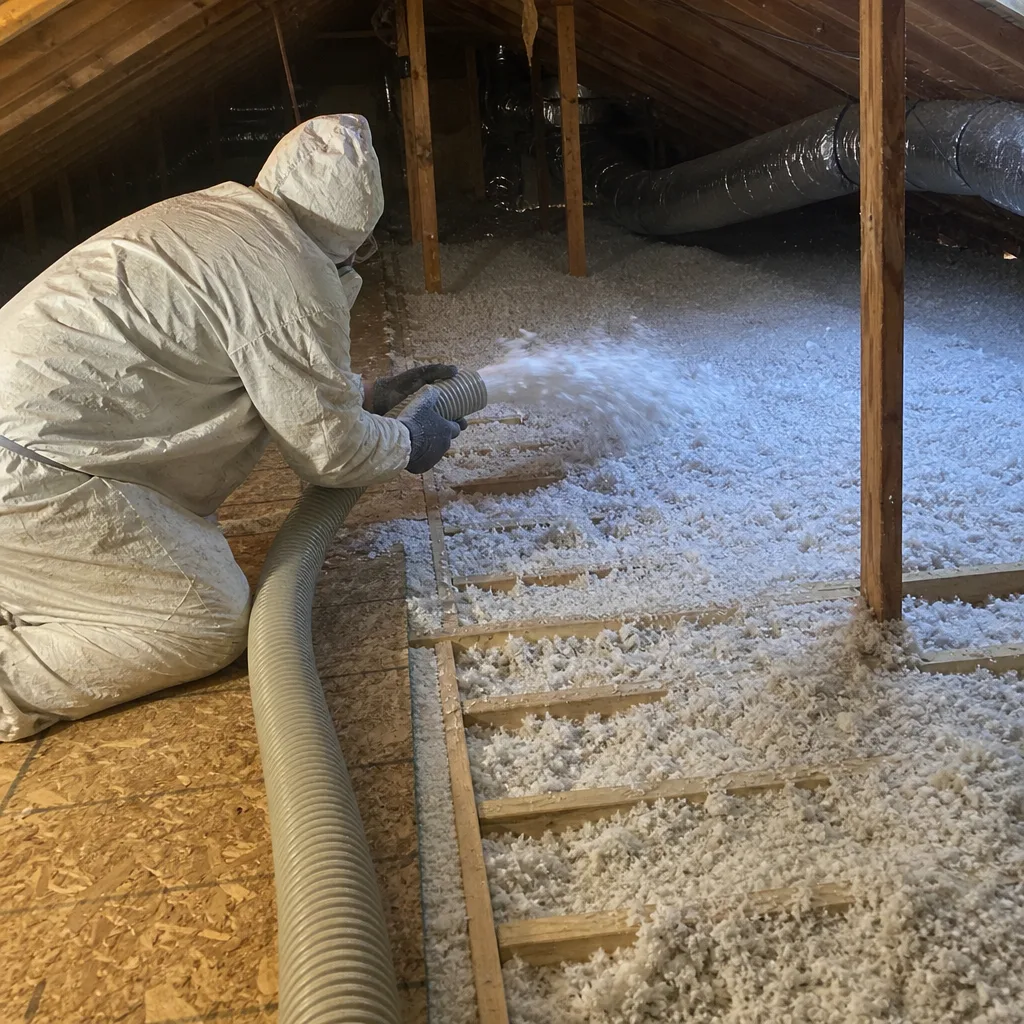
Three forms of blown-in work drive most of what we do in Sandy Valley, plus some top-up and wall work on older homes. Here’s how each one reads against the local housing stock.
Blown-In Cellulose
Cellulose is the material we reach for most often in Sandy Valley’s 1980s – 2000s site-built homes. It’s dense, packed well against dust movement, and it fills the irregular cavities 2×6 framing leaves around soffits and ceiling penetrations. In a valley where wind-driven dust gets into a poorly sealed attic, cellulose’s higher density and settled structure hold up better than a loose, light material that dust can displac
Blown-In Fiberglass
Fiberglass blown-in comes in when the homeowner wants a clean, non-settling material, or when we’re topping up an existing fiberglass layer already in the attic. We use Owens Corning and Johns Manville fiberglass, and we don’t lock you into one brand; if you have a preferred product or your existing insulation is a particular type, we work with that. In a Sandy Valley attic already prone to rodent runway damage, fiberglass needs careful screening of the open bays before the material goes down.
Dense-Pack Wall Insulation
Dense-packing drives insulation into existing wall cavities under pressure, which closes the leaks a loose fill would just sit beside. On Sandy Valley’s stucco and wood-sided homes, the wall side is often the missing piece – attics get attention and walls get forgotten. This is one of the highest-return steps on an older 2×6 home where the exterior walls are the biggest remaining thermal bypass.
Blown-In Top-Up
A top-up adds material to restore the attic to its intended depth, and it’s the right answer when the existing blown-in is intact but simply settled or lightly compressed. In Sandy Valley it’s often the wrong answer when the real problem is rodent tunneling or a missing barrier; a top-up over damaged, displaced insulation just buries a problem you’ll pay for again in two years. We tell you which one you actually need.
For a full look at materials and process, see our Blown-In Insulation service page.
Trusted Brands We Work With in Sandy Valley
We source blown-in and batt materials from Owens Corning, Johns Manville, Knauf and Rockwool, and we’ve got no proprietary product lock-in, so you don’t get sold a brand because of a supply arrangement. Different materials handle Sandy Valley’s daily thermal swing differently, and a material that’s wrong in a thin-skinned manufactured home can be right in a 2×6 site-built rancher. We match the material to the house, not the other way around. Turnaround on a Sandy Valley top-up or full re-insulation is typically quick once the scope is written.
Common Blown-In Insulation Problems We See in Sandy Valley Homes
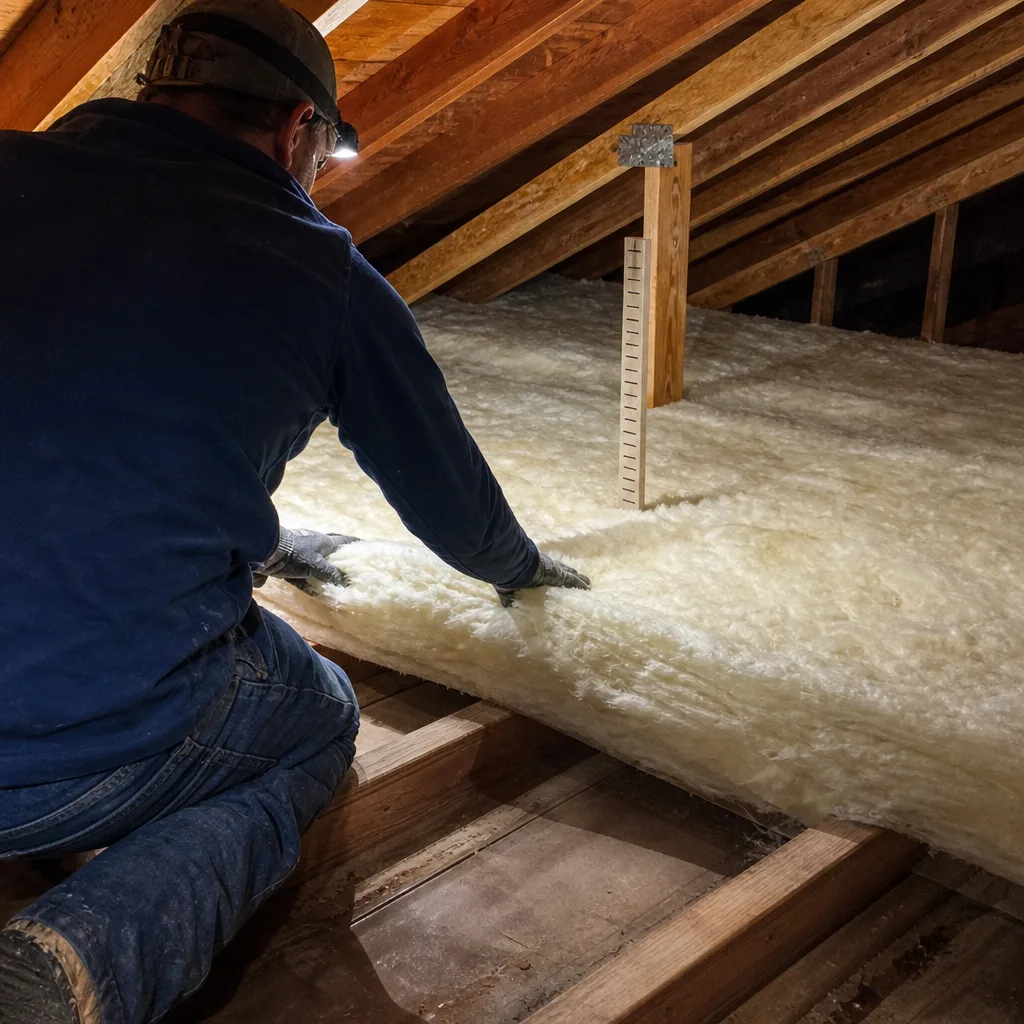
The failure modes in this valley repeat themselves, and they’re worth naming plainly so you can check your own attic against them.
- Rodent tunnels and dust intrusion. Desert rodents chute through attic blown-in, and wind-driven dust packs against the eaves. Both compress and displace the material and erode R-value while blocking the soffit ventilation the attic needs to breathe.
- Extreme diurnal thermal cycling. 100°F+ afternoons and sub-freezing winter nights cycle thin 1980s – 2000s attic insulation hard. Unsealed top plates and can lights turn that cycling into a steady heat leak in summer and a cold draft in winter.
- Manufactured-home underbelly failure. Older manufactured units have thin factory batts and sagging underbelly insulation that opens up at the belly-board seams. That’s a direct propane and electric-resistance loss every heating season.
- Compressed matting at the center of the field. Blown-in that’s been down for years mats and flattens along the center, leaving thin spots while reading fine at the edges. A quick depth check at the center shows whether the R-value is actually there or just at the perimeter.
Pricing for Blown-In Insulation in Sandy Valley, NV
Here’s what a typical Sandy Valley blown-in job runs in this market. A blown-in top-up for a standard single-family attic runs roughly $1,200 – $2,400. A full re-insulation after air sealing (with removal of damaged or compacted material) typically lands in the $2,800 – $5,500 range. Dense-pack wall insulation on an older 2×6 home runs roughly $1,600 – $3,000 depending on wall access. Manufactured-home underbelly work adds a separate line, usually $900 – $2,200, because the belly board has to be opened, re-supported and closed again.
What moves the price: attic square footage and current depth, whether the old material has to come out, how much air sealing is needed before anything is added, and how many rodent-choked bays have to be screened. You get a flat, written price before any work starts, so the number doesn’t drift once we’re on the ladder.
We Also Serve Cities Near Sandy Valley
Our work reaches well past the valley’s edges, and the same sealed-first approach applies across the region. If you’re in Sandy Valley or any of the smaller communities nearby, we cover Henderson, Whitney, Paradise, and Winchester. Same written price, same photo record, same 365-Day Done Right Promise. If you’re not sure whether you’re in range, call (844) 320-5338 and we’ll tell you.
Serving Sandy Valley, NV – Our Local Coverage Area
We serve Sandy Valley and nearby communities. Use the map below to see the area we cover. If you’re nearby, we can almost certainly help.
FAQs – Blown-In Insulation in Sandy Valley
It compresses because wind-driven desert dust and rodent tunneling displace it from the top, and the 100°F+ to sub-freezing daily swing mats it further. The fix isn’t just adding more material; it’s sealing the top plates and penetrations and screening the open bays first, then re-fluffing or topping up. Call (844) 320-5338 to get a written scope for your attic.
Do the underbelly first if the belly board is sagging or open, because that’s where propane and electric resistance heat escape fastest. Attic work follows once the floor side is closed. On most older manufactured units in Sandy Valley, both are needed, but the order matters for how quickly you see the fuel savings. Call (844) 320-5338 and we’ll walk you through it.
Dry air does favor dense, settled materials, which is why cellulose is often the first choice for a site-built Sandy Valley attic. Fiberglass is still a good fit when you’re matching an existing layer or want a non-settling product. The material matters less than the sealing underneath it. Call (844) 320-5338 for a free second opinion on any estimate.
For a home with intense summer solar gain and a hot attic, a radiant barrier alongside properly sealed blown-in is often worth it, especially on the south-facing roof planes. It reflects heat before it reaches the insulation; it doesn’t replace the insulation. Call (844) 320-5338 and we’ll price both together.
A top-up is enough when the existing material is mostly intact and just settled or lightly thin at the center. You need a full re-insulation when the material is ratty, tunneled, dust-packed at the eaves, or sitting over an unsealed attic floor – topping up over damage just hides it. We’ll check the depth at the center, not just the edges. Call (844) 320-5338 for a written assessment.
Get a Written Price for Your Sandy Valley Attic
If your Sandy Valley home is on propane and well water, or you’re in a manufactured unit with a tired underbelly, the blown-in decision is really a fuel-savings decision. It pays to get it right the first time. Call (844) 320-5338 for a free estimate – a live person answers, and you’ll have a flat written price, a written scope, and a written warranty before any work starts. That’s The Haven Standard.
Written by the team at Envelope Insulation Co.
Blown-In Insulation in Nearby Areas