
How Does a Radiant Barrier Work in Henderson, NV?
A radiant barrier is a sheet of aluminum foil, usually bonded to a substrate like OSB or reinforced paper, that reflects up to 97% of the infrared radiation your roof deck radiates downward into the attic. It does not add R-value. It works upstream of your insulation by keeping the heat load from reaching it in the first place. In Henderson, where roof-deck temperatures hit 160°F in July, that upstream intervention is worth more per dollar than adding R-value to an already-hot insulation mass. To see how we pair that with a full moisture strategy, read our page on Moisture & Radiant Barriers in Henderson. Call (844) 320-5338 for a free written estimate.
The One Variable That Decides Whether Your Henderson Radiant Barrier Works
The physics is simple. The installation is not. Most radiant barriers fail in Henderson not because the foil is wrong but because the air gap is.
The reflective side of the foil must face an air space of at least ¾ inch. In a Henderson attic, the correct installation is stapling the foil to the underside of the rafters so it faces down toward the attic floor, with the reflective surface exposed to that air gap. Foil laid flat on top of insulation, or foil touching the insulation surface, conducts heat straight through rather than reflecting it. That’s the most common error we find on re-roofing jobs where contractors stapled OSB-backed foil flat against the deck or draped it over the existing blown-in.
Why the air gap matters more than the foil itself
A radiant barrier doesn’t reflect heat by magic. It reflects because the low-emissivity aluminum surface (emissivity of roughly 0.03 to 0.05) radiates almost nothing back into the air space below it. Bare wood, painted drywall, and dark insulation facing all have emissivity near 0.90 and radiate heat freely. Put the shiny side against something solid and the foil’s emissivity advantage disappears. It becomes a conductor, not a reflector. The reflective surface has to face the air gap, not the roof deck.
Three heat transfer modes, one sentence each
- Conduction is heat moving through solid material – what R-value resists.
- Convection is heat moving through air – what air sealing resists.
- Radiation is heat moving as infrared waves – what a radiant barrier reflects.
A Henderson attic suffers all three at once in July. A radiant barrier only addresses radiation. That’s why we treat it as one piece of the envelope, not a standalone fix. Pairing foil with adequate R-value and air sealing is what delivers the full cooling-season benefit in a Climate Zone 3B home.
What a Properly Installed Radiant Barrier Actually Does to Attic Temperature
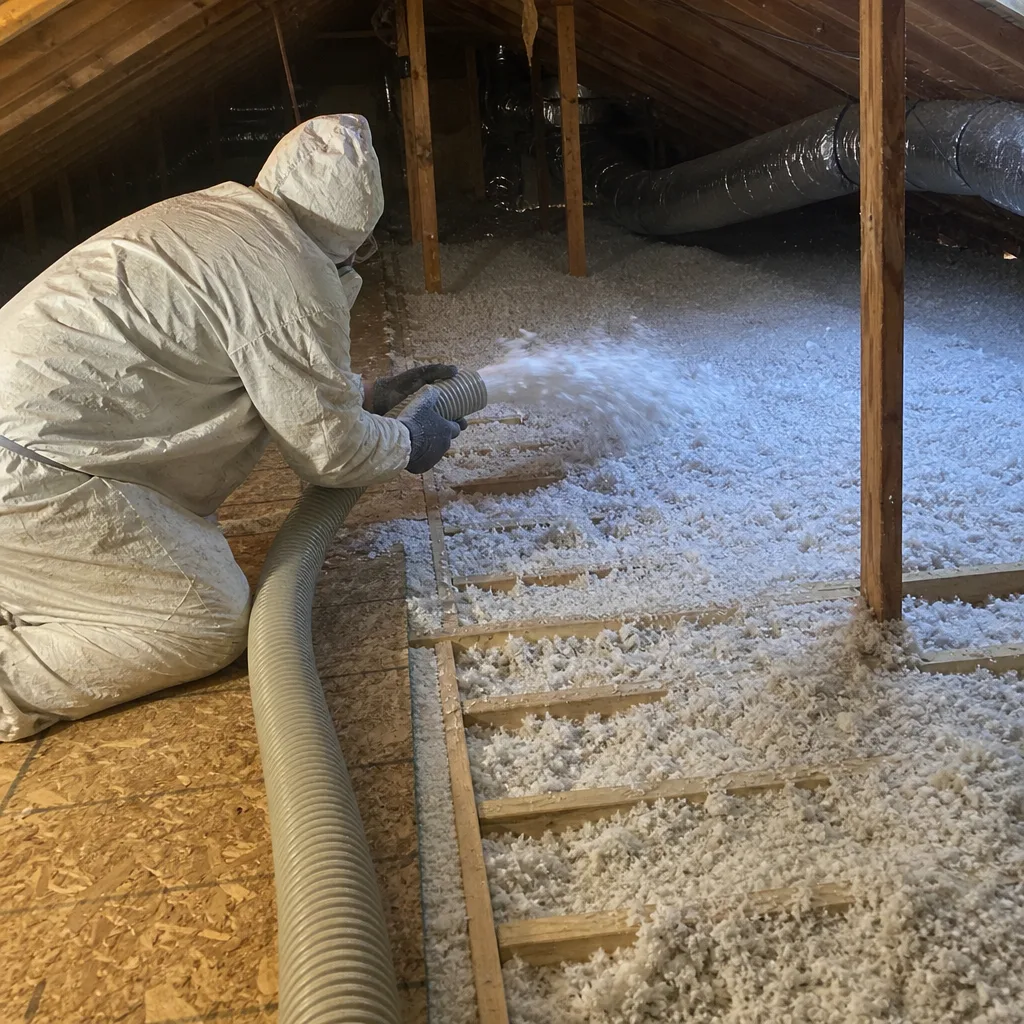
With a correctly installed rafter-staple radiant barrier, attic air temperature at peak afternoon drops 20 to 30°F compared to an identical attic without one. Envelope Insulation Henderson documents this on every job with a calibrated thermometer reading at peak heat, 48 hours after install, included in the Documented Photo Record we leave with you.
It’s a measurement, not a claim. You see the before and after numbers for your own attic.
Why the sequence matters
A radiant barrier installed over an un-air-sealed attic floor still lets hot attic air infiltrate your living space through top plates, can lights, and plumbing penetrations. The heat gets in another way. Under the Haven Standard, air sealing is a hard prerequisite, not an upsell. We complete it before any radiant barrier or insulation material goes in. Sealed first, then insulated – in that order, every time. On applicable jobs we also publish before-and-after blower-door numbers – a pressurization reading that shows, in one figure, how much conditioned air your home was losing.
Henderson’s cooling season runs roughly May through September with sustained 100°F-plus days, so the payback on attic work here is faster and more visible than in nearly any other US market. That’s also why the crews do attic work early-morning in summer, before the deck heats past safe working range.
What to Look for in a Henderson Radiant Barrier Install
The Green Valley and Anthem tract homes built from the late 1980s through the 2010s have mostly original R-13-ish batt or settled blown insulation, often disturbed by HVAC and solar installs. Solar arrays on the city’s sun-baked roofs routinely compress or displace the insulation beneath them, creating hidden hot spots under the panels. Pack rats tunnel through attic batts and nest in blown-in cellulose. So when we scope a radiant barrier job, we’re also checking what’s under it.
Here’s what a properly written scope on a Henderson radiant barrier should include:
- A named air-gap dimension (¾ inch minimum) and a specific installation method – rafter-staple, reflective side down.
- Air sealing listed as a separate, prior line item, not bundled into the insulation price.
- A written price before anyone starts, with the material brand named.
- A post-install measurement – attic temperature reading, and blower-door numbers where the job qualifies.
- A photo record of the gap, the rafter attachment, and the foil facing.
- A written warranty in hand before work begins.
If a written estimate you’ve received doesn’t name which way the foil faces, ask. It’s the whole job.
What Does Radiant Barrier Install Cost in Henderson?
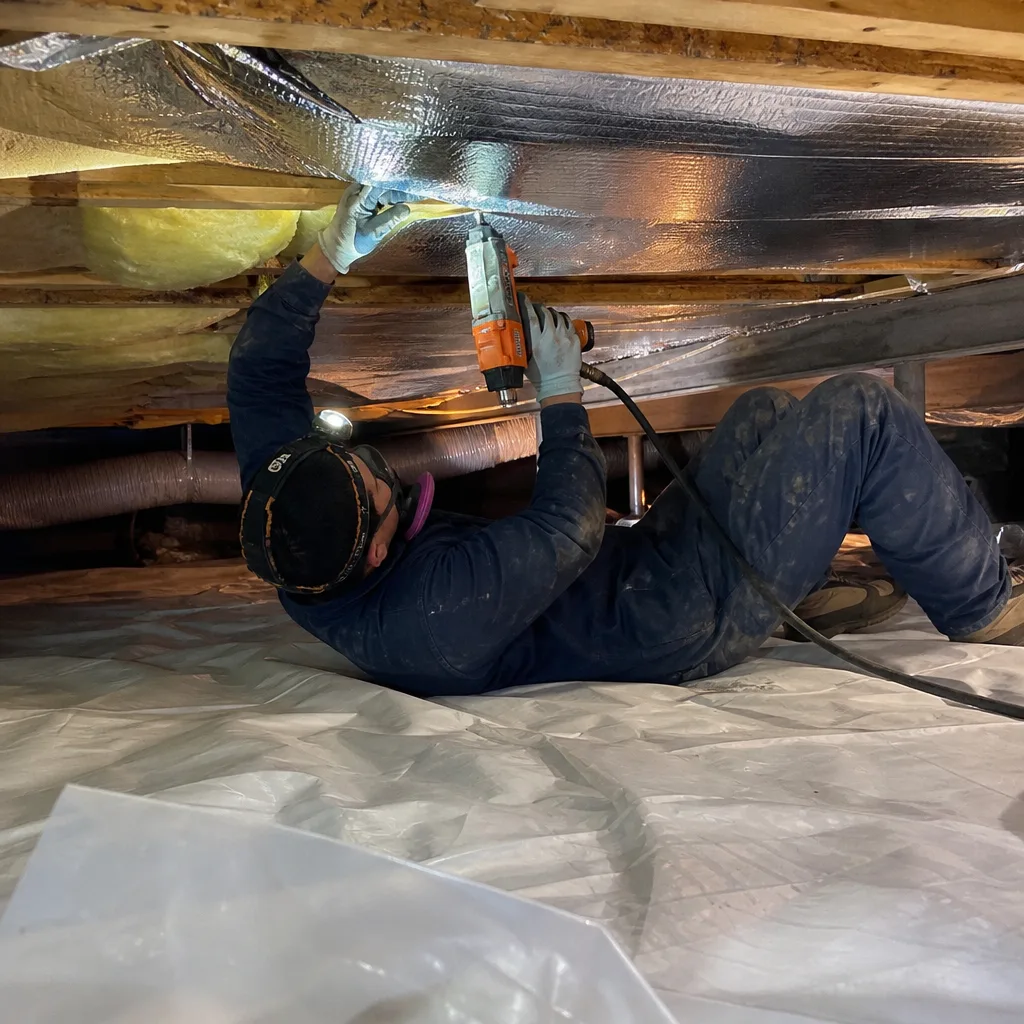
Most Henderson radiant barrier installs on a standard single-story attic run between $1.10 and $2.25 per square foot of attic floor, with the wide range explained by whether the foil is barrier-only or paired with air sealing and additional insulation. A typical 1,800-square-foot attic lands in the $1,900 to $3,200 range for a rafter-staple install with sealing included.
| Line item | Typical Henderson range |
|---|---|
| Radiant barrier foil, rafter-staple, per sq ft | $1.10 – $2.25 |
| Attic air sealing (top plates, can lights, penetrations) | $600 – $1,400 |
| Blown-in insulation top-up to R-38 | $900 – $2,100 |
| Insulation removal & rodent cleanup (if needed) | $800 – $2,400 |
| Post-install attic temperature reading + blower-door | Included in the written scope |
We source materials from Owens Corning, Johns Manville, Knauf, and GreenFiber, among others, so you’re not locked into a single product line. Every job begins with a written price – no work starts without it. Under Haven Standard Clause 1, you get a flat price, written scope, and written warranty before anyone lifts a tool. The 365-Day Done Right Promise applies to all completed work. If a competing quote comes in lower, our Free Second Opinion means we’ll read it with you, line by line.
FAQs
A radiant barrier reflects radiant heat and adds no R-value, while insulation slows conductive heat flow and is measured in R-value. In a Henderson attic you want both, plus air sealing, because the attic suffers all three heat transfer modes at once. Skipping any one of the three leaves a gap. Call (844) 320-5338 for a free written scope on all three.
No. Foil in contact with insulation conducts heat rather than reflecting it, and the radiant-reflection benefit largely disappears. The reflective side needs at least ¾ inch of air space facing it – typically stapled to the underside of the rafters facing down toward the attic floor. If you’re not sure how yours was installed, we can look. Estimates are free.
It can help, but the benefit is capped when the insulation below the foil is thin, settled, or disturbed. Henderson homes from the 1990s and 2000s often have original R-13-ish batts that have been compressed by solar installs or tunneled by pack rats. Fix the insulation and seal the attic first, then the radiant barrier’s 20 to 30°F attic temperature drop delivers its full value.
Often yes, weather and crew schedule permitting, and the work must be scheduled early-morning in summer to beat attic heat. We confirm a scheduling window when we take the job and text you when the technician is on the way – under Haven Standard: Arrive on schedule. Call (844) 320-5338 – a live person answers, 24/7.
If you’d rather have it looked at, Envelope Insulation Henderson offers a no-pressure assessment in Henderson – call (844) 320-5338 for a free estimate. We’ll measure your attic, read your current insulation, and hand you a written price with the air-gap spec before anyone starts work. See our home page to see the rest of what we do.
Written by the team at Envelope Insulation Henderson, serving Henderson, NV.