

Owens Corning Vapor Barrier Installation: The Henderson Owner’s Guide
We install Owens Corning-compatible vapor barrier systems in Henderson crawl spaces and on attic floors. A typical Henderson crawl space encapsulation with a reinforced vapor barrier runs $2,400 to $5,800 depending on square footage, drainage prep, and whether subfloor insulation goes in at the same time. Small attic-floor vapor barrier jobs run $500 to $1,200. Same-day assessments are common, though full installs usually book within the week.
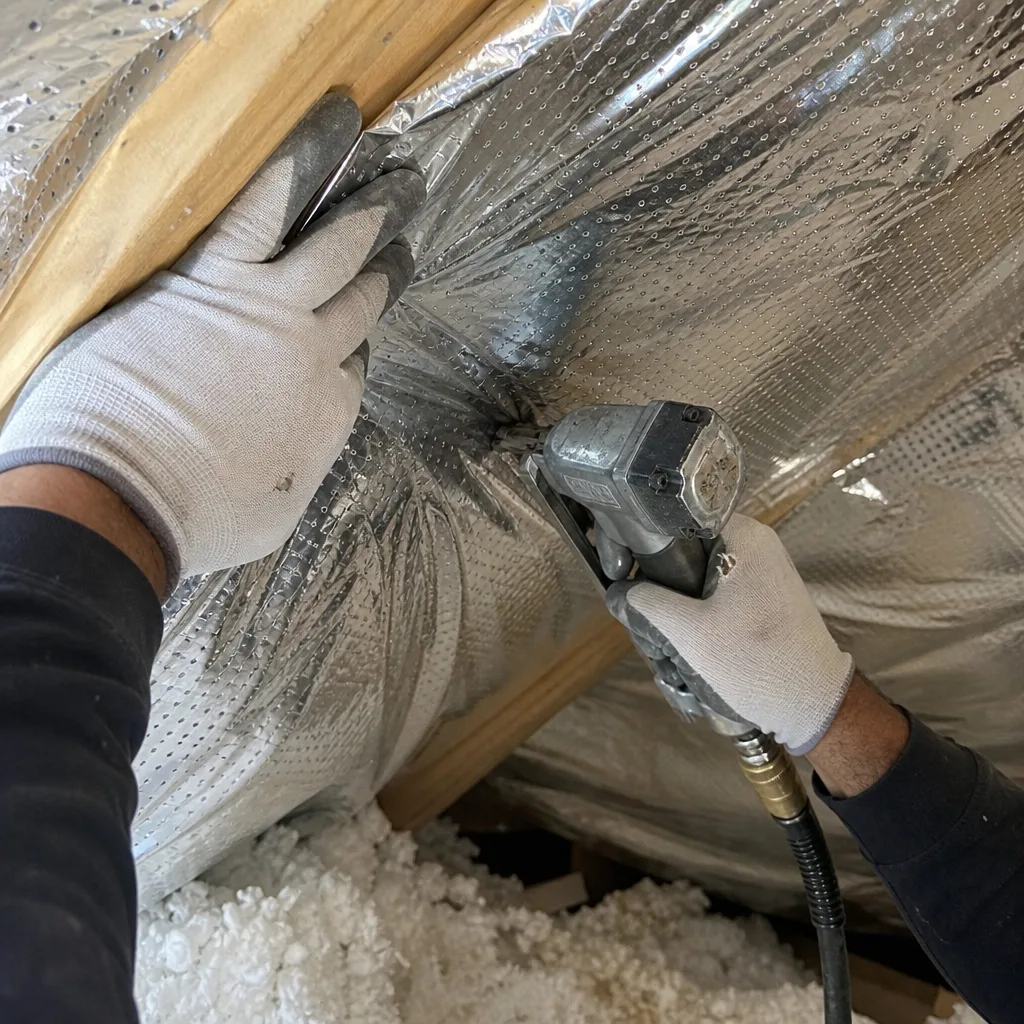
Owners usually discover a failed barrier the same way: a musty smell that shows up in the house in April and doesn’t leave, or a cold spot near a return vent. You go into the crawl space with a flashlight. The plastic sheeting is torn at the access hatch, pooling water along the footing, and falling away from the foundation wall. That’s a barrier that has stopped doing its job.
Key takeaways
- Owens Corning vapor barriers come in specific widths and mil thicknesses. Matching the right one to your crawl space matters more than brand loyalty.
- Most Henderson failures are installation failures, not product failures: a barrier laid on wet soil, or one never sealed at the piers.
- Repairs on a torn section are possible; replacement makes more sense once the barrier has passed five to seven years in a hot, dry climate.
- We publish a written price before any work starts, and you get a Documented Photo Record of the finished install.
Which Owens Corning Models This Applies To
Owens Corning sells vapor barrier products under names you’ll find printed on the packaging or on the label roll: Vapor Barrier Underlayment, Certified R-Value Vapor Barrier in attic applications, and the Rafter Mate and R-10/R-15 radiant barrier products that several Henderson owners confuse with vapor barriers. One is a moisture barrier; the other is a radiant heat product. They don’t substitute for each other.
The most common mistake is buying the wrong width. Owens Corning vapor barrier comes in standard roll widths of 10 or 12 feet. If your crawl space is 14 feet wide, one roll doesn’t span it, and the installer either buys two rolls with significant waste or installs a lapped seam that has to be taped with a compatible vapor-barrier tape, not duct tape. Taped seams done with the wrong tape are the single most common point of failure we find in Henderson crawl spaces.
On the OEM-versus-aftermarket question: for vapor barrier products specifically, we often install Owens Corning-compatible aftermarket equivalents when the specific width isn’t available locally. The barrier product is functionally identical when the mil thickness and material match (typically 6-mil or 10-mil reinforced polyethylene). We don’t claim stock of any brand; we source what the job requires and tell you what’s going in.
If you’re identifying your existing product, look for the product name on a label along the roll edge or on the packaging taped to the joist. Note the width and mil number before you call. That information makes the estimate faster.
Envelope Insulation Henderson is an independent service provider, not affiliated with Owens Corning. We also work with Reflectix and other brands on request.
Signs Your Owens Corning Vapor Barrier Installation Is Failing
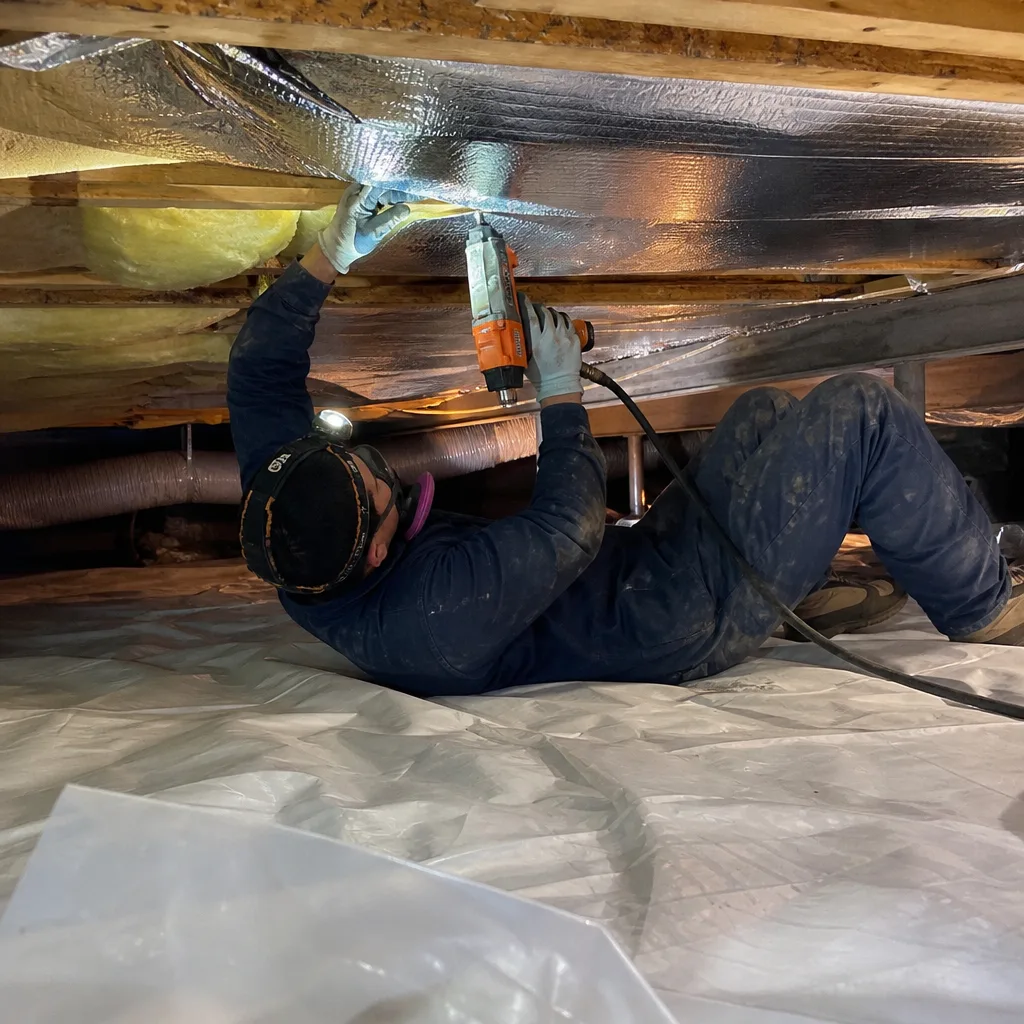
Vapor barriers don’t announce themselves. The signs you notice are usually downstream of a barrier that’s already failed.
- Musty odor through the return air. The barrier has separated from the foundation wall, letting soil moisture enter the crawl space air and get pulled into the HVAC return. This is the most common Henderson complaint we hear from homes built between 2015 and 2022.
- Condensation on the ductwork or joists in summer. Warm outside air meeting cold ductwork in a humid crawl space means the barrier’s seal at the access hatch is compromised. The crawl space is acting like an unsealed lung.
- Standing water or damp soil visible under the barrier. The barrier is installed directly over wet soil with no drainage path. In Henderson’s caliche-heavy soil, this is often a drainage problem the barrier was never going to fix.
- Tears or separation at the piers and footing. Barrier pulled away from the base of the foundation or torn around pier pads means the vapor seal is compromised at the highest-moisture point in the crawl space.
- Sagging or loose material between joists. On attic-floor or underfloor applications, a barrier that’s sagging has lost its contact with the surface it was meant to protect, and moisture can collect on top of the sagging low point.
One lifespan reality specific to this climate: in Henderson’s dry summer heat, plastic vapor barriers embrittle at the exposure seams after five to seven years. A barrier that looks intact from above may tear at the seal the moment you touch it. That’s a material fatigue issue, not an installation issue, and it’s the reason we recommend a physical inspection every few years.
Replacement Cost & What’s Included
Installed pricing for Owens Corning-compatible vapor barrier work in Henderson:
| Scope | Typical installed range |
|---|---|
| Crawl space vapor barrier, up to 1,500 sq ft | $1,800 – $3,200 |
| Crawl space vapor barrier, 1,500 – 2,500 sq ft | $2,400 – $5,800 |
| Attic-floor vapor barrier (flat application) | $500 – $1,200 |
| Full crawl space encapsulation (barrier + drainage + insulation) | $4,200 – $9,000 |
| Partial removal and reinstall (torn sections) | $600 – $1,600 |
What moves the range: square footage of the space, access (a tight crawl hatch costs more in labor), whether contaminated material has to be removed first, and whether drainage correction is included. The barrier material itself is a small part of the total. Labor and preparation are the big numbers.
Every job includes a written scope and written warranty before anyone starts work, delivered as part of our Written Price Before Any Work Starts commitment. The barrier material is warrantied by the manufacturer; our labor is covered by the 365-Day Done Right Promise. If something isn’t right within a year, we make it right.
DIY or Call Us?
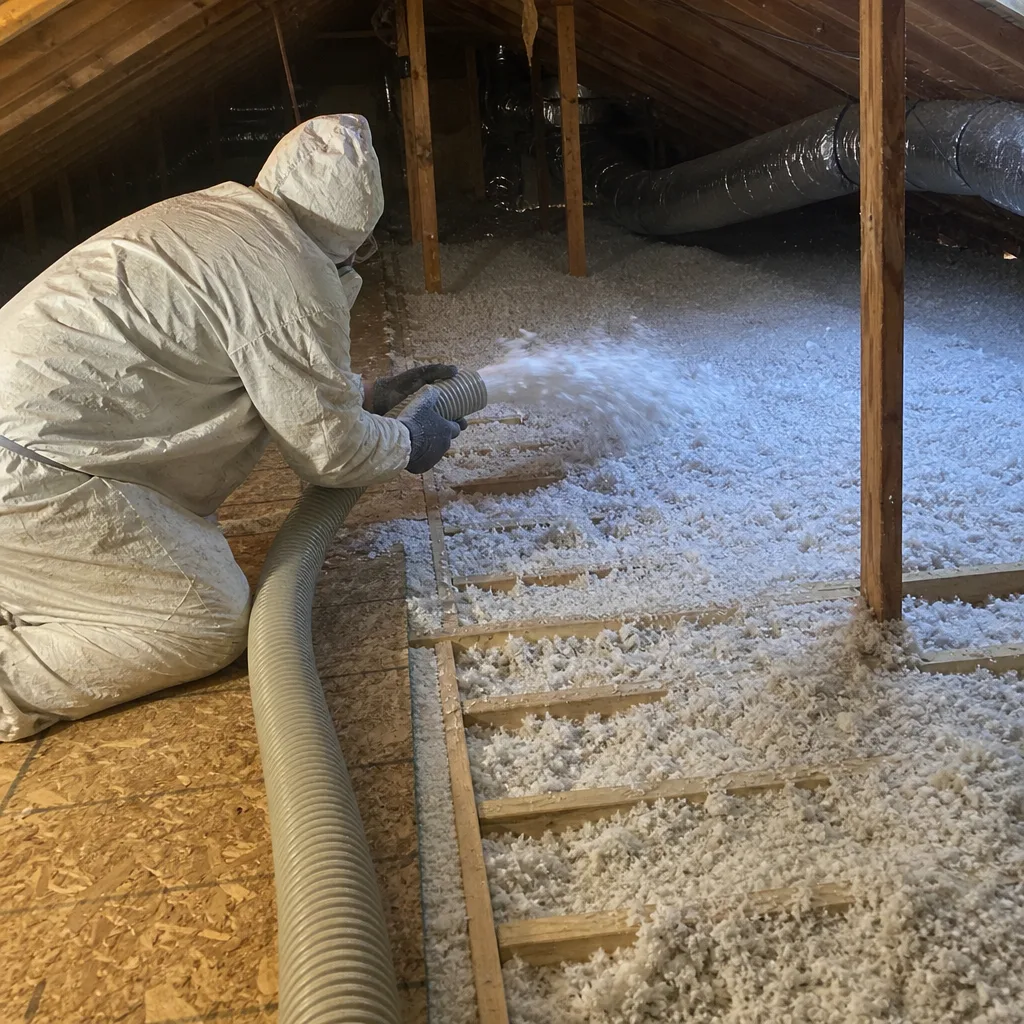
What you can safely check yourself: whether the barrier is visibly torn, whether it’s pulled away at the foundation edges, and whether there’s standing water under it. Take photos with your phone before you call. That’s genuinely helpful.
What you shouldn’t attempt: a full crawl space replacement. Laying a barrier over a 1,000-square-foot crawl space means cutting fitted pieces around piers, utility penetrations, and the access hatch, then taping and sealing every one of them so the barrier holds. The failure we fix most often is a homeowner-installed barrier where the piers were cut around without sealing the gap. That gap is where the moisture gets in. On a hot Henderson day, a crawl space is also the wrong place to be without a supplied-air respirator if there’s any biological growth.
We can also read you a competing estimate if you have one in hand. We offer a Free Second Opinion on Any Written Estimate. Call (844) 320-5338 and a live person answers, no voicemail.
FAQs
Expect five to seven years before the seams and exposure points show embrittlement in our climate. The material itself can go longer, but Henderson’s dry heat and occasional monsoon-season humidity cycles accelerate seam wear. A physical inspection every few years is the best defense.
Yes, if the damage is isolated to a section, usually at the access hatch or around one or two piers. If the barrier is separated at more than a couple of points or has passed five years, replacement is usually the better use of the money. We’ll tell you which one applies after we look. Call (844) 320-5338 for a clear answer.
A typical Henderson crawl space replacement runs half a day to a full day, depending on square footage and access. Attic-floor barrier jobs usually take three to four hours. The written price includes the expected duration before we start.
We source to the job: the correct width and mil thickness for your crawl space, not a standard roll cut down to fit. We’ll tell you what product is going in before the crew arrives, and you get a Documented Photo Record showing the installed result. Call (844) 320-5338 for a free estimate.
Written by the team at Envelope Insulation Henderson, serving Henderson and nearby areas.