

Demilec Radiant Barrier Installation: The Henderson Owner’s Guide
In Henderson, radiant barrier installation compatible with Demilec systems typically runs $0.75 to $1.60 per square foot installed, or roughly $1,100 to $2,400 for a standard 1,500-square-foot Henderson attic when a barrier is being added or replaced during insulation work. Most jobs of that size are scheduled same-day to three days out. We are an independent service provider and are not affiliated with Demilec.
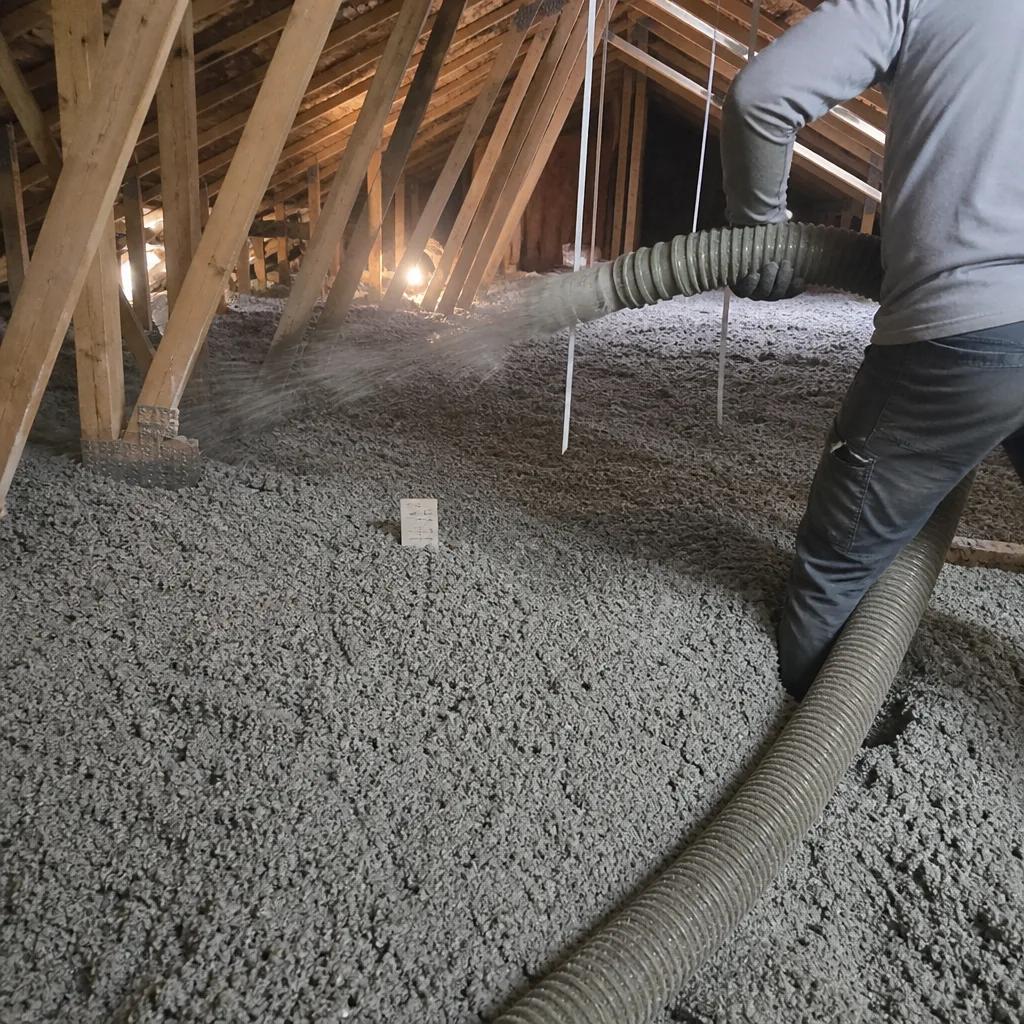
The failure almost always shows up as heat first. Homeowners in Henderson notice attic temperatures climbing into the 140s by mid-June, second-floor bedrooms that won’t drop below 78°F until 11 p.m., and HVAC units running nonstop from June through September. Then comes the visible part: foil facing that has sagged off the rafters, torn at a staple line, or turned chalky and reflective no more. That’s when people start searching for the part and the installer together.
Key Takeaways
- Installed cost in Henderson: about $0.75-$1.60 per square foot, or $1,100-$2,400 for a typical attic.
- NV heat degrades foil facings faster than most national estimates assume; expect a shortened service life.
- Air sealing must come first. A radiant barrier over an unsealed attic floor traps heat losses and voids the benefit.
- We’re an independent provider, not affiliated with Demilec, and we source matching materials on every job.
Which Demilec Models This Applies To
Demilec (now part of the Huntsman building solutions line) is best known for spray foam systems like Heatlok and Sealection, and its radiant barrier products are typically spec’d alongside those foam systems as part of a package. The radiant barrier itself is usually supplied as a foil-faced material – either a foil facing on the foam or a separate foil-backed sheet. That matters for compatibility: if you’re matching a replacement to an existing Demilec install, you need to match the facing thickness and perforation pattern, not just the brand name. A solid (non-perforated) foil in a Henderson attic over a vented assembly traps moisture against the deck; a perforated foil lets it breathe.
To identify what you have, check the product label or the paperwork from the original install for the Demilec system name, then measure the facing in place – width, foil thickness in mils, and whether it’s perforated. Any foil facing on spray foam cannot be swapped for a sheet barrier without changing the thermal assembly, so confirm which you actually have before ordering. Where an exact Demilec match isn’t available, quality aftermarket foil facings meeting the same ASTM spec (astm e96 for permeance, e84 for flame spread) are a legitimate substitute. We do not stock parts and we don’t carry parts on a truck – we source the correct material per job.
Signs Your Demilec Radiant Barrier Installation Is Failing
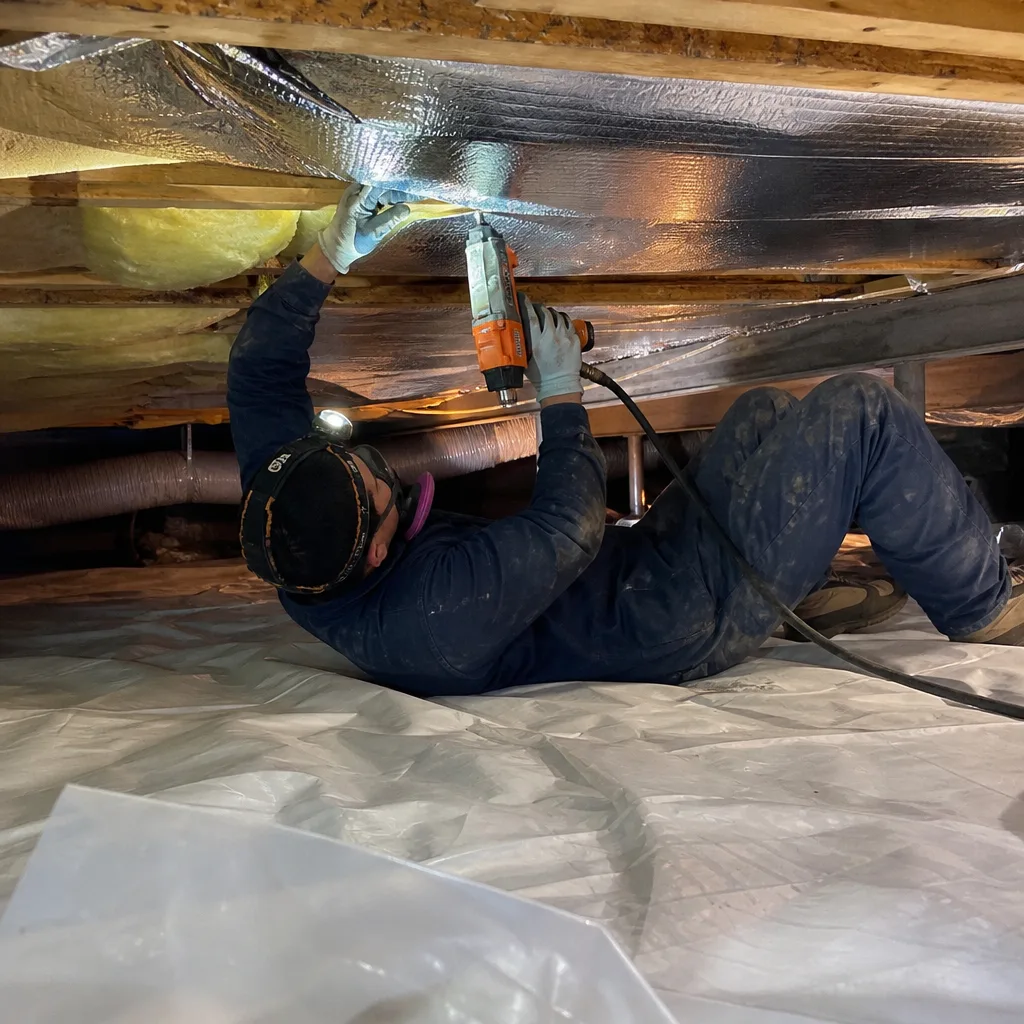
Foil doesn’t “break” the way a spring does. It degrades, and the degradation is progressive. In Henderson’s climate the failure modes are fairly predictable.
- Attic temps over 130°F by late morning. Radiant barrier works by reflecting radiant heat; once the foil surface oxidizes or dust coats it, reflectivity drops and the attic cooks. This is the earliest sign and the easiest to miss.
- Foil sagging between rafters or joists. Adhesive breakdown and staple pull-out from thermal cycling – the daily expansion and contraction of hot attic air – lets the foil drape, which creates air gaps that defeat the reflective layer.
- Tears and pinholes at staple lines. Every staple hole is a small radiant leak. Concentrated holes along a rafter run mean the install pattern was too sparse or the foil was over-tensioned.
- Chalky, dull, or white-haired foil surface. That’s oxidation, common in southern Nevada where UV and dry heat accelerate it. Once the surface goes from shiny to matte white, reflectivity is largely gone.
- Condensation or moisture staining on the deck. Usually a sign the barrier was installed without perforation or over an unvented assembly – the foil is now trapping moisture it should have let pass.
Replacement Cost & What’s Included
For a Henderson attic, installed radiant barrier runs about $0.75 to $1.60 per square foot. A 1,200-square-foot attic usually lands around $900-$1,900; a 1,500-square-foot attic around $1,100-$2,400; a 2,000-square-foot attic around $1,500-$3,200. What drives the range: whether the existing failing barrier has to come down first, whether the job also includes air sealing the attic floor (top plates, can lights, penetrations) before the new barrier goes up, and whether the assembly is a foil facing on existing spray foam versus a separate sheet barrier.
Those prices are for parts plus labor, and the number is written down before anyone starts – Haven Standard Clause 1. The written scope names the foil facing and spec, the square footage, and the warranty. Before-and-after blower-door readings are provided on every applicable job so you can see the air-loss change in a single figure. The 365-Day Done Right Promise applies to the work.
DIY or Call Us?
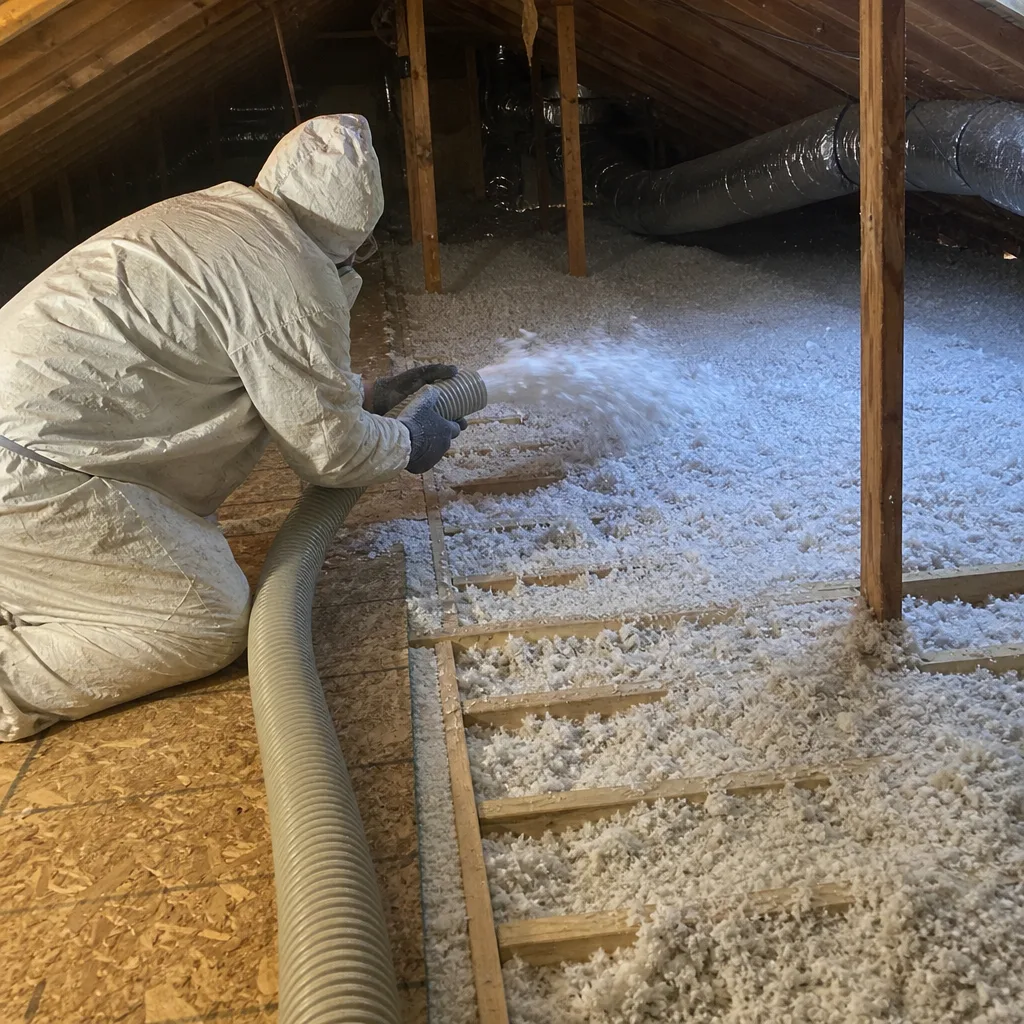
You can safely check three things yourself: whether the foil is perforated or solid, whether the surface looks shiny or chalky, and whether the foil is sagging anywhere. Reading the label and measuring the facing width needs no more than a tape and a flashlight. What you shouldn’t do yourself is install or replace foil in an attic that also needs air sealing, or work over existing spray foam. Radiant barrier only performs as part of the whole envelope, and a barrier over an unsealed attic floor can trap heat and moisture on the living side. Foil over foam is also a vapor and thermal assembly change, not a cosmetic one, and getting the permeance wrong in this climate is a costly mistake. We’ll tell you honestly whether the barrier needs replacing at all. Call (844) 320-5338 for a free estimate.
FAQs
Plan on 15 to 25 years in southern Nevada, shorter than the 20-30 year figures you’ll find in national guides because UV exposure and dry heat oxidize the foil surface faster here. If yours is already chalky and matte, it’s near end of life regardless of age.
Sometimes. Small tears and popped staples at rafter ends can be repaired if the foil surface is still shiny and the sag is minor. If oxidation has set in across the field or the foil is sagging between joists, replacement is cheaper than chasing patch after patch. We’ll tell you which case you’re in after a look – call (844) 320-5338.
A typical 1,500-square-foot Henderson attic radiant barrier runs most of a day, longer if the old barrier must come out first or if attic air sealing is added. You get a written scope and a start time before anyone arrives.
We take the original product label or system name plus your measurements and source a matching foil facing – same thickness, same perforation pattern, same ASTM spec. We do not carry parts on a truck or stock them; each material is ordered per job. If an exact Demilec match isn’t available, we’ll tell you that in writing and propose the equivalent aftermarket spec.
Call (844) 320-5338 for a free estimate. You’ll get a written price, a written scope, and a documented photo record – before any work starts.
Written by the team at Envelope Insulation Henderson, serving Henderson and nearby areas.