
Last updated November 17, 2026
How Long Does Spray Foam Insulation Take? Timelines and What to Expect
The spray itself in a standard 2,000-square-foot Henderson attic takes four to six hours. The part nobody leads with: occupants, pets, and plants cannot re-enter until the foam has fully cured and the space has been ventilated. That re-entry window is the number that actually rearranges a household’s day. It’s the number contractors are legally required to communicate to Nevada homeowners in writing. The full clock runs longer than the spray clock, and most quotes blur the two together. This guide makes every phase of a Henderson spray foam job visible, from masking and protection through the final inspection, and it shows you where the delays that aren’t spray time come from.
Quick Answer
Spray foam insulation application takes about four to six hours for a typical 2,000-square-foot attic, but the total project timeline is usually one working day for the spray plus a re-entry window after it. Open-cell foam in most applications keeps occupants out for around 24 hours; some closed-cell formulations require up to 24 hours as well, depending on the specific product, ambient temperature, and humidity. The space also needs active ventilation during that period. Any written estimate that quotes only the spray hours is giving you half the schedule.
Table of Contents
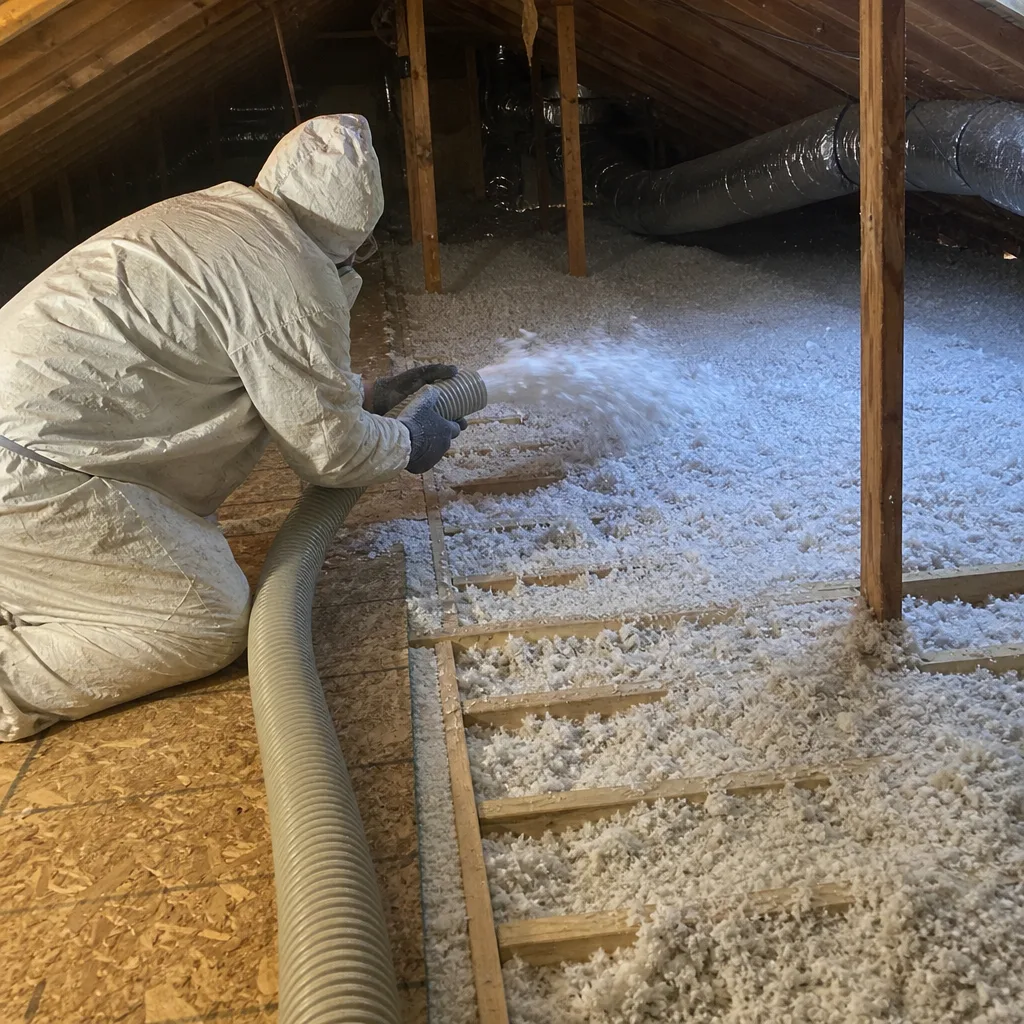
- The Five Phases of a Spray Foam Job, in Order
- Time by Application: Unvented Attic, Vented Attic, Rim Joist, Crawl Space
- Why Henderson Heat Changes the Cure Clock
- What You Should Receive Before Re-Entry
- What Extends the Timeline
- Removal, Air Sealing, and the Work That Comes First
- Common Mistakes to Avoid
- Frequently Asked Questions
The Five Phases of a Spray Foam Job, in Order
Spray foam isn’t a single event. It’s five sequential phases, and the clock starts at phase one, not at the spray gun. If the written schedule you received only accounts for the spray, ask for the rest of it in writing. Under the Haven Standard we operate under, every job starts with a written price and ends with a Documented Photo Record, and the phase schedule belongs inside the scope.
- Pre-job masking and protection. Plastic and taped sheeting over floors, walls, HVAC registers, and any finished surface near the spray zone. Furniture gets moved and covered. This phase typically runs 30 to 60 minutes in an attic and longer in a crawl space.
- Preparation of the spray surface. Any existing insulation that blocks the deck gets removed (see the removal section below), HVAC equipment that will be temporarily isolated gets isolated, and penetrations get sealed where the scope calls for it. This is where air sealing happens if it’s part of the job, and it’s the phase most often skipped in cheap quotes.
- Spray application. The actual two-component foam. A 2,000-square-foot attic of open-cell foam sprayed to a typical target thickness moves fast. An unvented closed-cell roof line takes longer because closed cell goes on in lifts and may need a pass or two to build thickness correctly.
- Cure and off-gas window. This is the phase that keeps you out of your own house. More on this below.
- Thermal barrier installation, if required. Spray foam in an attic that sits below living space often needs a listed thermal barrier (usually a garage-door-adjacent or attic-facing rated coating or drywall) over it per building code. This step adds time to the day and is often missing from a verbal estimate.
For the full service in Henderson, see spray foam insulation in Henderson.
Time by Application: Unvented Attic, Vented Attic, Rim Joist, Crawl Space
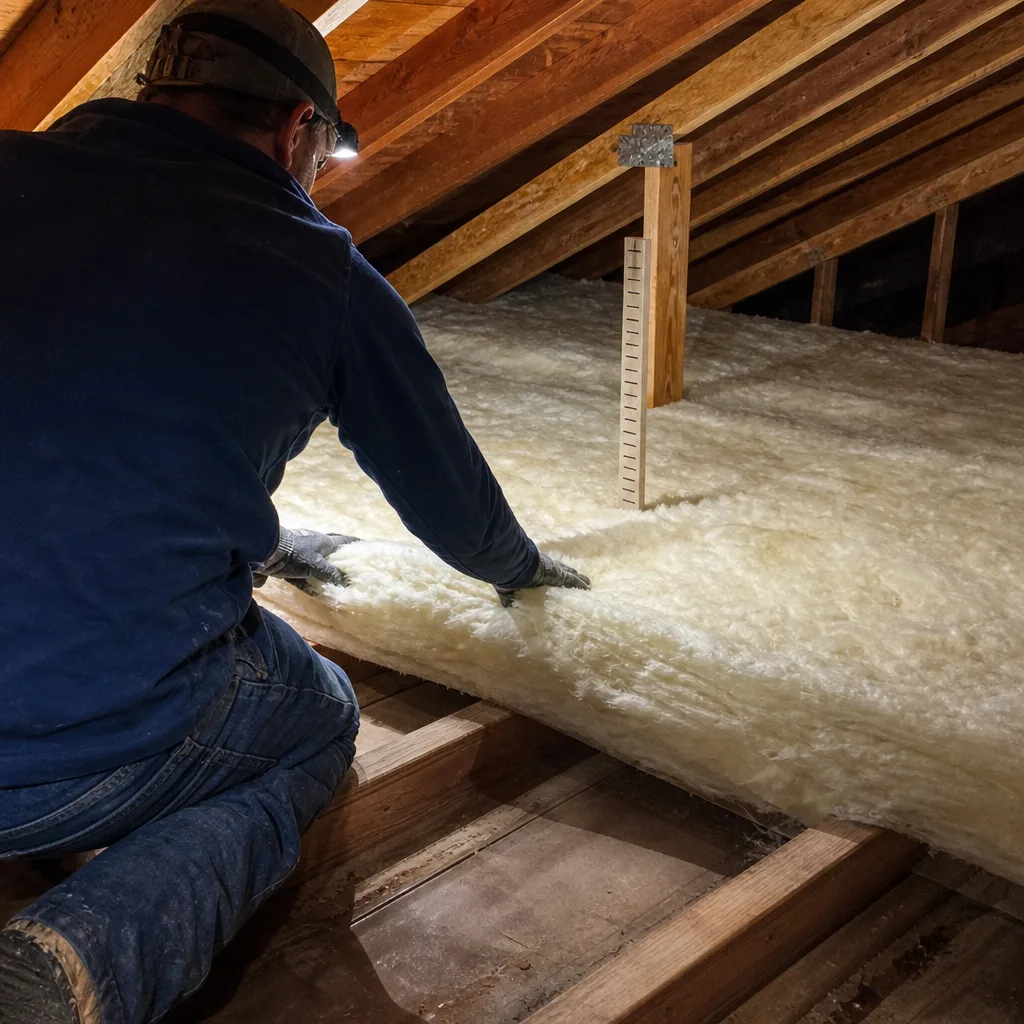
No two spray foam jobs are identical, but the time ranges below reflect what our technicians (each with up to 10 years of experience) regularly encounter across Henderson. Use them to sanity-check a quote.
- Unvented attic (closed-cell on the roof line). Four to eight hours of spray plus masking, plus the cure window. Closed-cell builds thickness in passes, so a 2,000-square-foot roof line can stretch into a full day. This is the most common residential application in our local market where an HVAC system runs in the attic.
- Vented attic, open-cell on the deck. Three to six hours of spray. This configuration still requires air sealing at top plates and penetrations first. In our experience blowing foam over an unsealed attic floor is the single most expensive shortcut a homeowner can unknowingly pay for.
- Rim joist application. Two to four hours for a typical single-family home, depending on how accessible the rim joist bays are and how many penetrations exist. This is a small job with outsized impact on draft in Henderson two-story homes.
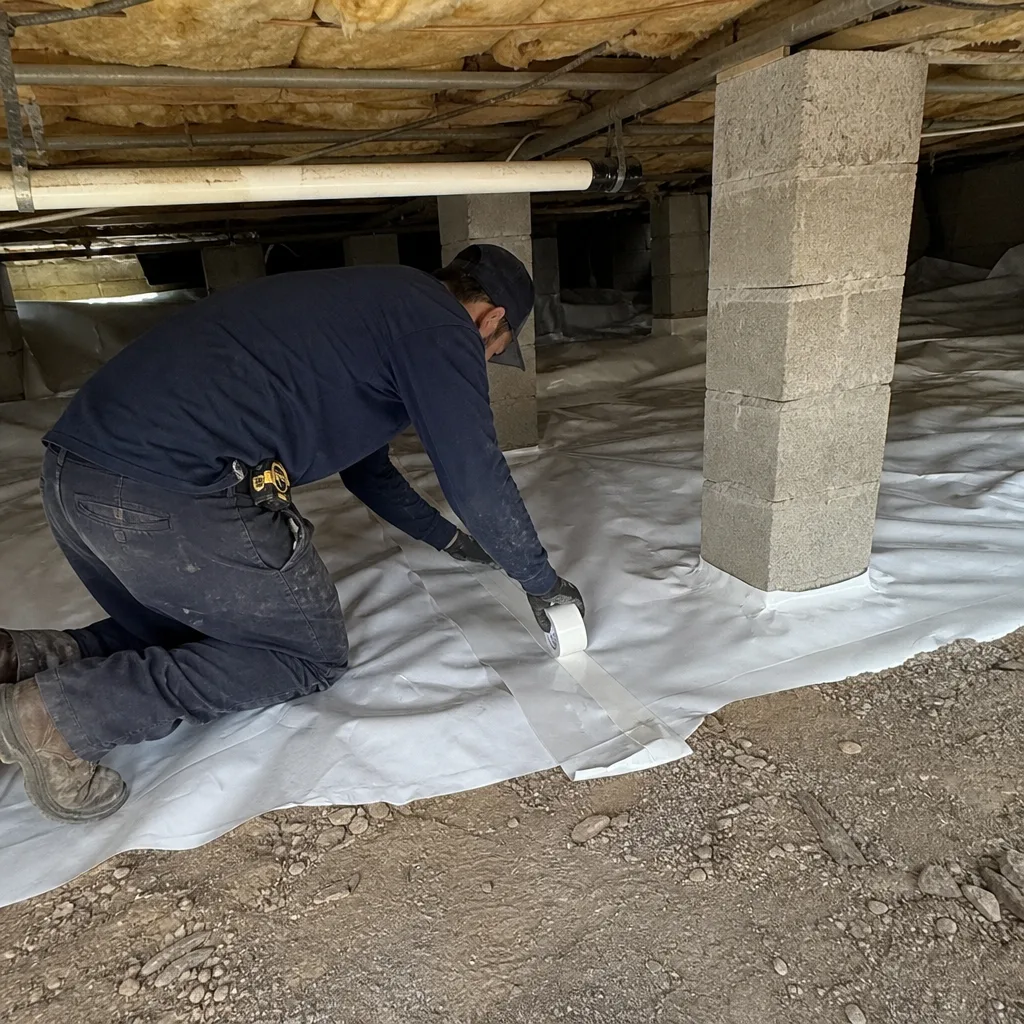
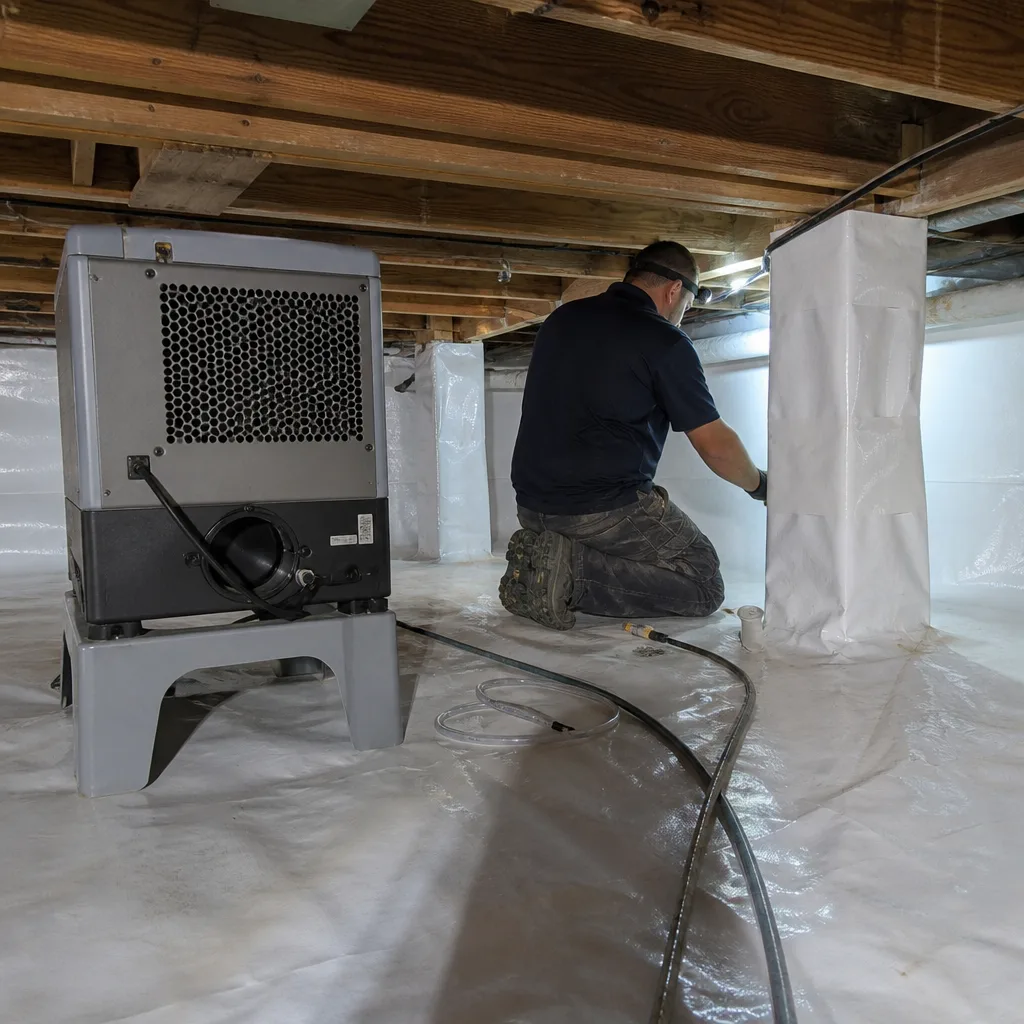
- Crawl space ceiling. Four to six hours for the ceiling area of a typical Henderson crawl space. Combined with encapsulation, it runs longer than the spray alone and often spans a second day if vapor barrier and dehumidification are part of the scope.
See our related work on crawl space encapsulation and vapor barrier in Henderson if your scope includes that side of the envelope.
Why Henderson Heat Changes the Cure Clock
Foam cures by an exothermic reaction that’s sensitive to substrate temperature and ambient humidity. In Henderson, an attic in late July can run well above 130°F, and a crawl space can sit close to the Dewar’s point with the moisture that comes off the slab. Both extremes push the cure clock in ways a mid-70s-degree template schedule won’t capture.
Two consequences matter to your day:
- Summer afternoon installs need adjusted timing. Spraying closed-cell foam into an attic that hot risks surface skinning that hides wet foam underneath. Our crews schedule around those hours, which can mean an early-morning start or an early-evening application window. That’s a Henderson-specific scheduling reality, not a contractor being difficult.
- Cooler months can need warmed substrate. In December and January, an unheated attic in Green Valley or Anthem can fall below the manufacturer’s minimum application temperature. Warming the substrate or delaying to a warmer window extends the day by hours, not minutes.
Whichever direction the thermometer points, the cure interval is chemistry plus temperature plus humidity. It isn’t a fixed timer you can speed up with a fan and a hopeful attitude.
What You Should Receive Before Re-Entry
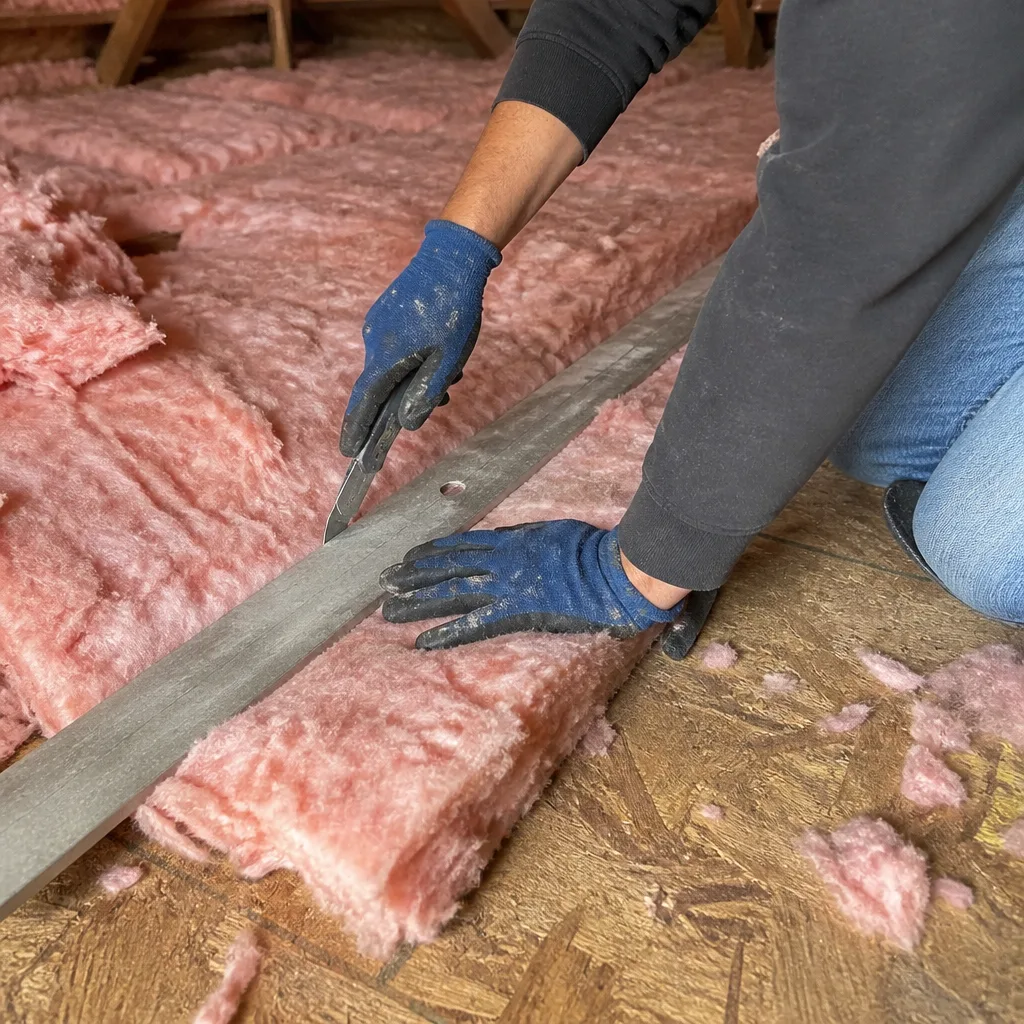
A verbal “you can go back up in six hours” is not a clearance. Nevada contractors are required to provide written notice of the re-entry interval, and a credible one is grounded in the specific product’s cure and off-gas data, not a rule of thumb.
Before you re-enter, you should have:
- Written clearance naming the specific foam product used on your job. Open-cell and closed-cell formulas have different off-gas profiles. The manufacturer’s data sheet, not a general contractor opinion, anchors the number.
- Documented ventilation protocol. How long windows, attic fans, or mechanical ventilation ran after spray and what the target clearance condition was.
- A stated re-entry time tied to that product and that ambient condition. 24 hours is the common figure for open-cell and for many closed-cell formulations; the requirement is that the number is specific to your job, not generic.
- The Documented Photo Record from the visit, so the before-and-after condition of the space is provable if a question comes up weeks later.
If you use a certified third-party or insurer checklist for VOC clearance on medical grounds, tell us before the job. The written clearance can be structured around that standard instead of the manufacturer’s default.
What Extends the Timeline
Most “the crew ran into something” surprises are knowable before a crew arrives. If any of the following apply, the schedule should reflect them from the written quote onward:
- Existing insulation that must be removed. Loose-fill from a prior job that’s compressed, wet, or contaminated has to come out before spray goes down. Removal in a Henderson attic can add half a day to a full day. It also has to be bagged and hauled, which is time on its own.
- Complex roof geometry. Vaulted ceilings, dormers, multi-hip roofs, and cathedralized sections slow spray application because the foam has to follow the geometry of the cavity, not a flat deck.
- HVAC equipment that must be isolated. Air handlers, ductwork, and return chases inside the spray zone need to be protected and often re-supported. That’s detail work that counts against the day.
- Attic access limitations. A scuttle in a closet is slower than a walk-up stair. In older Henderson neighborhoods, this can add hours to masking and to the physical removal of old materials.
- Uncovered knob-and-tube or wiring that needs addressing. Foam goes over modern wiring; it doesn’t go over exhausted, brittle, or uncovered conductors without a plan.
- Chimney, flue, and combustion appliance clearances. Direct-vent furnace flues and wood-burning stoves need to be handled to code before the spray goes in around them.
- Thermal barrier inclusions. If the code-required protective coating or drywall is part of the scope, that adds time after spray cure, not before.
If your attic also has existing rodent activity, mention it when scheduling. It affects sequencing, and it’s part of our Envelope Insulation Henderson home service line under attic cleaning and rodent proofing.
Removal, Air Sealing, and the Work That Comes First
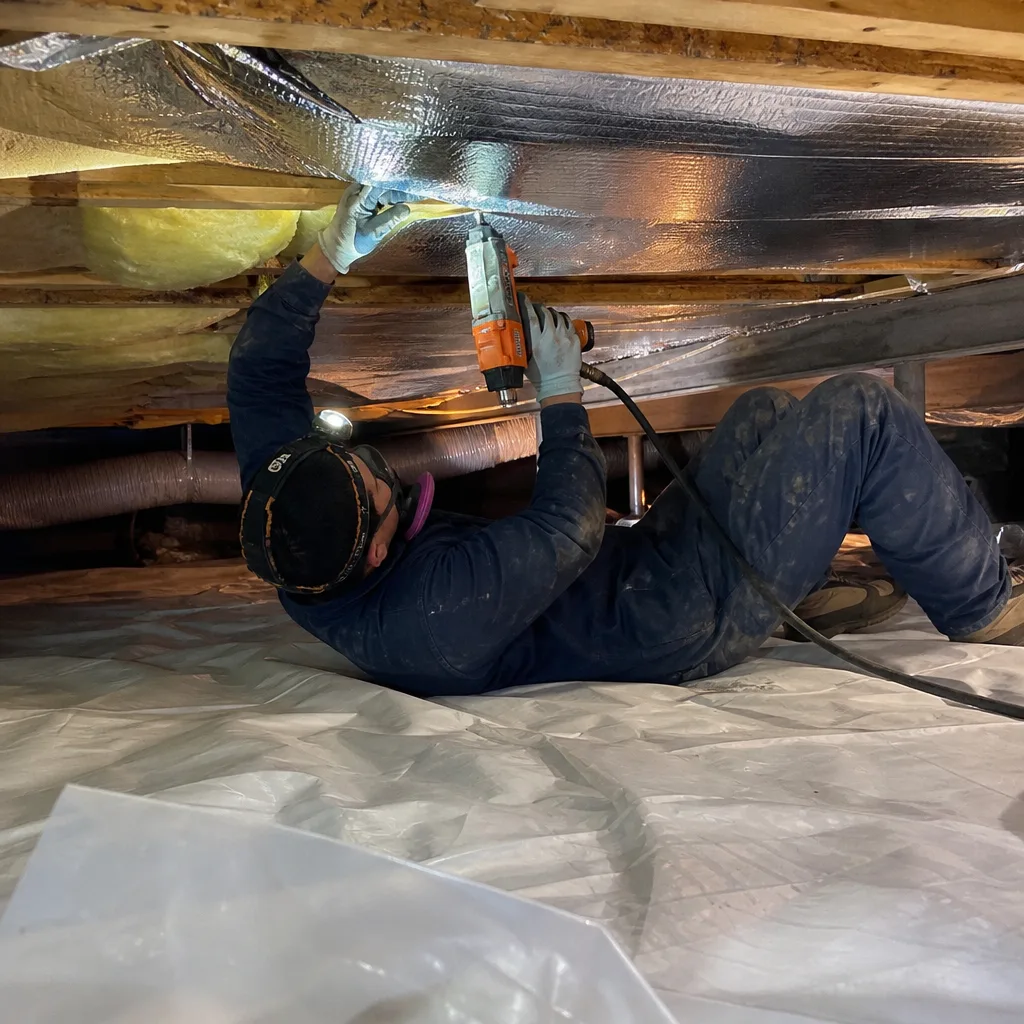
Air sealing is not an upsell on a spray foam job. It’s the step that determines whether the foam actually hits the number you’re paying for.
Attic top plates, can lights, wire penetrations, plumbing chases, and chimney gaps are the paths conditioned air takes out of your house. Blowing foam over a vented attic deck, or spraying closed cell over a roof line with obvious penetrations you never sealed, produces a nicely insulated envelope that still leaks. The way you know what was actually sealed is a blower-door test, which is a pressurization measurement that shows in one number how much air your home was losing before and after the work. On applicable jobs we publish those numbers so you can see the performance change you paid for, not just hear about it.
If removal of old insulation is part of the plan, review that scope with the same care as the spray scope. Removal done partially leaves a moisture-trapping layer under new foam, which is a problem Henderson’s summer humidity will find within a season or two.
Common Mistakes to Avoid
- Comparing spray time instead of project time. Two quotes that both say “four hours” can differ by a day once masking, cure, and thermal barrier are included. Ask for the full timeline in writing.
- Skipping removal and air sealing to protect the budget. Spray foam over a leaking, contaminated, or wet attic floor pays you back at a discount, or not at all. If the budget forces a trade-off, cut elsewhere.
- Accepting a verbal re-entry window. Nevada requires the re-entry and ventilation instructions in writing. If you’re asked to just “stay out of the attic for a bit,” you’re missing a document.
- Scheduling a summer afternoon spray in a Henderson attic. It’s not a scheduling cosmetic. Substrate temperature controls cure. A crew that quietly accommodates a bad window is one worth asking questions about.
- Ignoring thermal barrier requirements. If a code inspection is part of your project, the protective covering over spray foam needs to be listed for the application. It’s a common inspection fail.
- Not collecting the photo record and blower-door numbers. They are your evidence if a warranty question comes up later. It’s much harder to obtain them after the crew trailer is down the road.
- Treating the estimate like a coupon. Bring a competing written scope and we’ll read it with you under our free second opinion. A real second opinion lines up product, thickness, air sealing, and thermal barrier, not just a total price.
When to Call a Professional
If you’re scheduling a spray foam job on an unvented attic or a crawl space ceiling, that’s professional work from the first step. Two-component foam involves isocyanate chemistry, pressure equipment, and PPE requirements; the cure and off-gas window is a safety issue, not a convenience. Call us when:
- Your attic has existing loose-fill that’s wet, compressed, or blockable.
- You’re weighing closed-cell vs. open-cell for a Henderson roof line and don’t know which applies to your HVAC layout.
- A previous contractor gave you a verbal timeline with no written re-entry window.
- You need a code-required thermal barrier confirmed before an upcoming inspection.
Envelope Insulation Henderson offers free estimates in Henderson, with a written price, written scope, and written warranty before anyone lifts a tool. Call (844) 320-5338.
Frequently Asked Questions
Spray application on a typical 2,000-square-foot Henderson attic runs four to six hours, with total project time usually one working day plus the re-entry window. Unvented attic roof lines can run longer, sometimes close to a full day, because closed-cell foam builds in passes. Call (844) 320-5338 for a timeline specific to your home.
Not inside the spray zone, and not in the home until the written re-entry interval has passed. Open-cell foam commonly requires about 24 hours before re-entry; many closed-cell formulations require up to 24 hours depending on the product. The requirement is that the number comes to you in writing, tied to the product installed. Call (844) 320-5338 if you need the written clearance process explained up front.
For attics with HVAC equipment inside the conditioned space, or for homes with strong stack-effect drafts, spray foam usually pays back the timeline and budget premium over time. For a vented attic on a simple roof line, blown-in fiberglass (we work with GreenFiber, Owens Corning, and Johns Manville) is often the better tradeoff. The honest answer depends on the roof geometry and air leakage your blower-door reading reveals. Call (844) 320-5338 for a free estimate that walks that decision through with you.
Attic temperatures above 130°F change how the foam skins and cures, and crawl spaces can carry heat and humidity the manufacturer’s minimum cure conditions don’t anticipate. In our experience, Henderson summer afternoon installs require adjusted windows and sometimes an early-morning or early-evening spray. The written clearance will reflect the actual ambient condition of the day. Call (844) 320-5338 to schedule around the season.
A written scope, a written warranty, the re-entry clearance for the product installed, before-and-after blower-door numbers on applicable jobs, and a photo record of the space. Under the Haven Standard, every job closes with a Documented Photo Record, and the 365-Day Done Right Promise covers the completed work. Call (844) 320-5338 if a competing estimate skipped any of that.
Often yes, depending on where the foam is installed and what’s below it. Spray foam exposed in an attic that sits beneath living space typically requires a listed thermal barrier per building code. This is a coverage detail that should be in the written scope, not left to a day-of decision. Call (844) 320-5338 to confirm what your project needs.
The Bottom Line
Spray foam installation is a one-day spray wrapped in a longer project clock. Masking, preparation, air sealing, spray, cure, and thermal barrier are the actual phases, and the re-entry interval after off-gassing is the number that plans your household’s day. Henderson’s heat, humidity, and code requirements shift the schedule in ways a generic quote won’t capture. The written price, the written re-entry clearance, the blower-door readings before and after, and the Documented Photo Record are what you should walk away with. Under Haven Standard Clause 1, the price comes first and in writing, every time.
If your insulation isn’t paired with an airtight envelope, review our attic insulation in Henderson service for the broader approach. Related guides on our site cover what to look for in a spray foam estimate and how blower-door readings tell you whether the work moved the needle.
Contact
Have a scope, a competing estimate, or a blower-door reading you want a second opinion on? Envelope Insulation Henderson offers free estimates with a written price, written scope, and written warranty before any work starts. Call (844) 320-5338 for a free estimate. Live person, 24/7.
Written by the team at Envelope Insulation Henderson.