

Demilec Crawl Space Encapsulation: The Henderson Owner’s Guide
We install Demilec-compatible crawl space encapsulation systems in Henderson, and most full installs run between $5,500 and $11,000 depending on square footage, drainage conditions, and whether a sump and dehumidifier are part of the scope. We can typically get a written price and a crew scheduled within a few business days, and same-day assessments are common when you call in the morning. Homeowners usually discover the failure the same way: a musty smell that climbs into the living room in summer, a vapor barrier that’s pulling loose from the rim joist, or condensation beading on the ductwork and floor joists after a monsoon-week humidity spike.
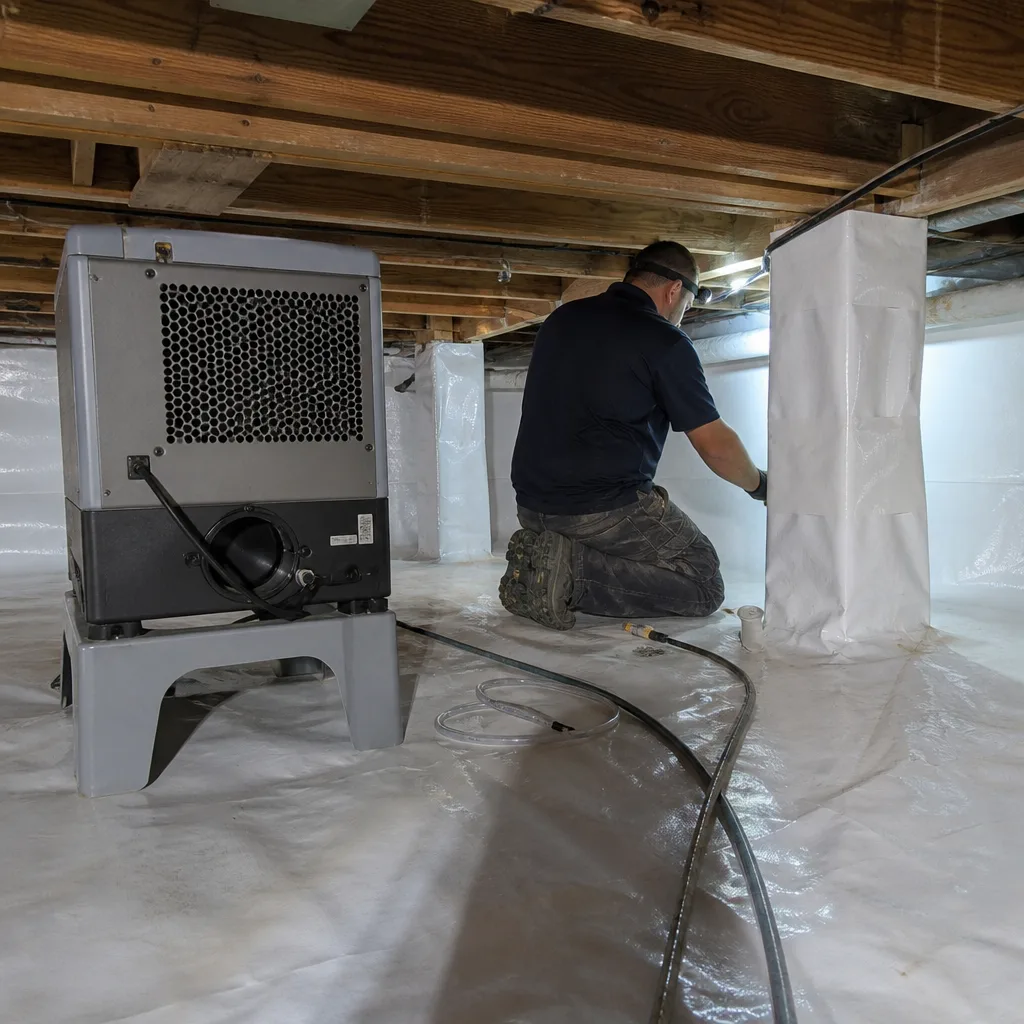
Demilec’s spray-applied products (part of the Huntsman building solutions line, sold for decades under the Demilec name in North America) are the foam side of an encapsulation system. The encapsulation itself is the liner, the sealing, and the mechanicals. When we say “Demilec crawl space encapsulation” in Henderson, we mean a system built to work with Demilec spray foam on the rim joists and band, paired with a reinforced 12-20 mil vapor barrier on the floor and walls. Our technicians have up to 10 years of experience reading these systems and knowing which layer failed.
Key takeaways
- Most Henderson encapsulation installs land between $5,500 and $11,000 installed.
- Demilec foam on rim joists fails when the vapor barrier behind it was installed first and trapped moisture against the wood.
- We’re an independent service provider. We’re not affiliated with Demilec; we install and service systems built around their products.
- Every job starts with a written price and ends with a documented photo record.
Which Demilec Models This Applies To
Demilec’s residential spray foam lineup has used several product names over the years, and Henderson homeowners usually find one of these on the label or on the paperwork left by the original installer:
- Heatlok HFO High Lift and Heatlok HFO Pro – closed-cell, 2 lb density, the current standard for rim joist and band joist sealing in crawl spaces.
- Heatlok Soy 200 and the older Heatlok 200 – legacy closed-cell formulations, common in Henderson homes built or retrofitted between roughly 2010 and 2019.
- SealTite – one-component foam, sometimes used in small penetration sealing but rarely the primary crawl space product.
- Soya-based open-cell lines – less common in crawl spaces because open-cell foam wicks moisture, but we do find it on interior walls above grade in some builds.
Identifying which one you have matters. Closed-cell Demilec foam at 2 lb density is rated around R-6.5 to R-7 per inch, so a 2-inch application on the rim gives you R-13 to R-14. Open-cell gives you closer to R-3.7 per inch, which means the same 2 inches is doing roughly half the thermal work. That’s a spec difference you can verify with a small core sample, and it changes what we recommend.
For the OEM vs. aftermarket question: Demilec foam itself doesn’t have a “replacement part” in the way a garage door spring does. What fails is either the foam (rare, unless it was applied wet or thin), the vapor barrier liner, the sealing tape and mastic, or the mechanical dehumidification. On the liner and sealing side, we use quality aftermarket 12-20 mil reinforced poly rated for crawl space use, and we don’t lock you into any single brand. That’s a deliberate choice: proprietary liners cost more and don’t perform measurably better in Southern Nevada’s climate.
Signs Your Demilec Crawl Space Encapsulation Is Failing
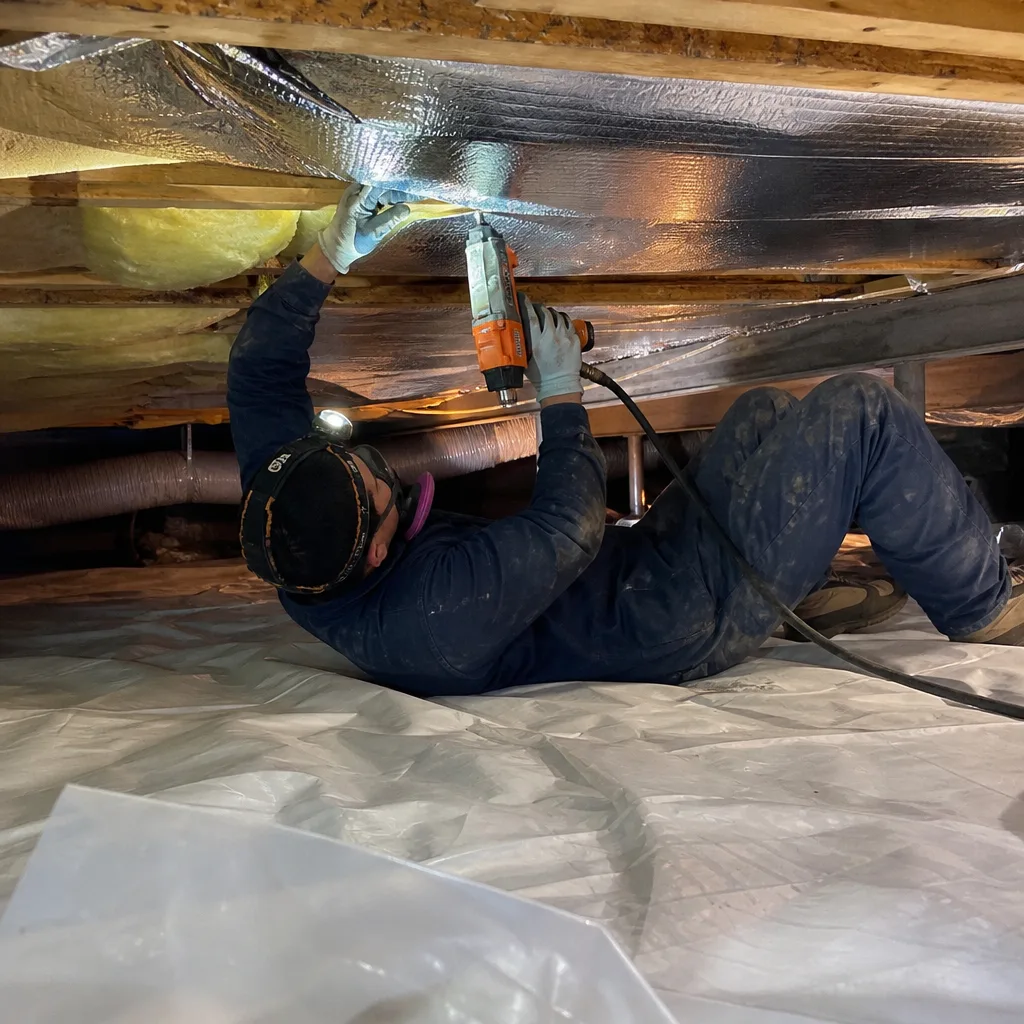
In Henderson, we see failures that follow the climate. Summer humidity sits low on the surface but crawl spaces stay damp because the soil under the slab and around the foundation holds moisture, and the temperature swing between a 110°F afternoon and a 78°F night drives condensation on cold surfaces. Here’s what that looks like:
- Musty odor rising into the first floor. This usually means the vapor barrier has separated from the wall or the seams have opened, allowing soil moisture to pass into the crawl space air. The smell is the symptom; the barrier is the cause.
- Condensation on ductwork, joists, or the underside of the subfloor. When the barrier is compromised, warm humid air contacts cool surfaces and condenses. If you’re seeing this in Henderson in July or August, the barrier behind the Demilec foam is the first thing we check.
- Foam separating from the rim joist or band. This happens when foam was sprayed over an unsealed or wet surface, or when the wood behind it swelled and shrank through a wet-dry cycle. The foam pulls away, and the air seal is gone.
- Standing water or saturated soil under the liner. Either the drainage wasn’t addressed before encapsulation, or the sump pit is undersized for the water table in your part of Henderson. A liner over a pond is a liner over a pond.
- Tears, punctures, or unsealed penetrations. Pipes, wiring, and post bases punch through the liner. If those penetrations weren’t sealed with mastic and a boot, the encapsulation has holes in it. We’ve seen more than one Henderson crawl space where the liner was installed but every penetration was left open.
Replacement Cost & What’s Included
Installed encapsulation pricing in Henderson, broken down by what actually drives the number:
| Scope | Typical installed range |
|---|---|
| Vapor barrier replacement only (floor and walls, 12-20 mil) | $2,200 – $4,500 |
| Barrier plus Demilec-compatible foam on rim joists and band | $3,800 – $6,800 |
| Full encapsulation with drainage correction and sump | $6,500 – $11,000 |
| Dehumidifier install and tie-in (if not existing) | $1,200 – $2,400 |
What moves the range: square footage, whether the floor is dirt or a partial slab, how much drainage work is needed, and whether the existing Demilec foam is sound enough to keep (we test adhesion before deciding). Parts and labor are itemized in the written price. The 365-Day Done Right Promise applies to the work, and you get the written scope and warranty before anyone starts.
DIY or Call Us?
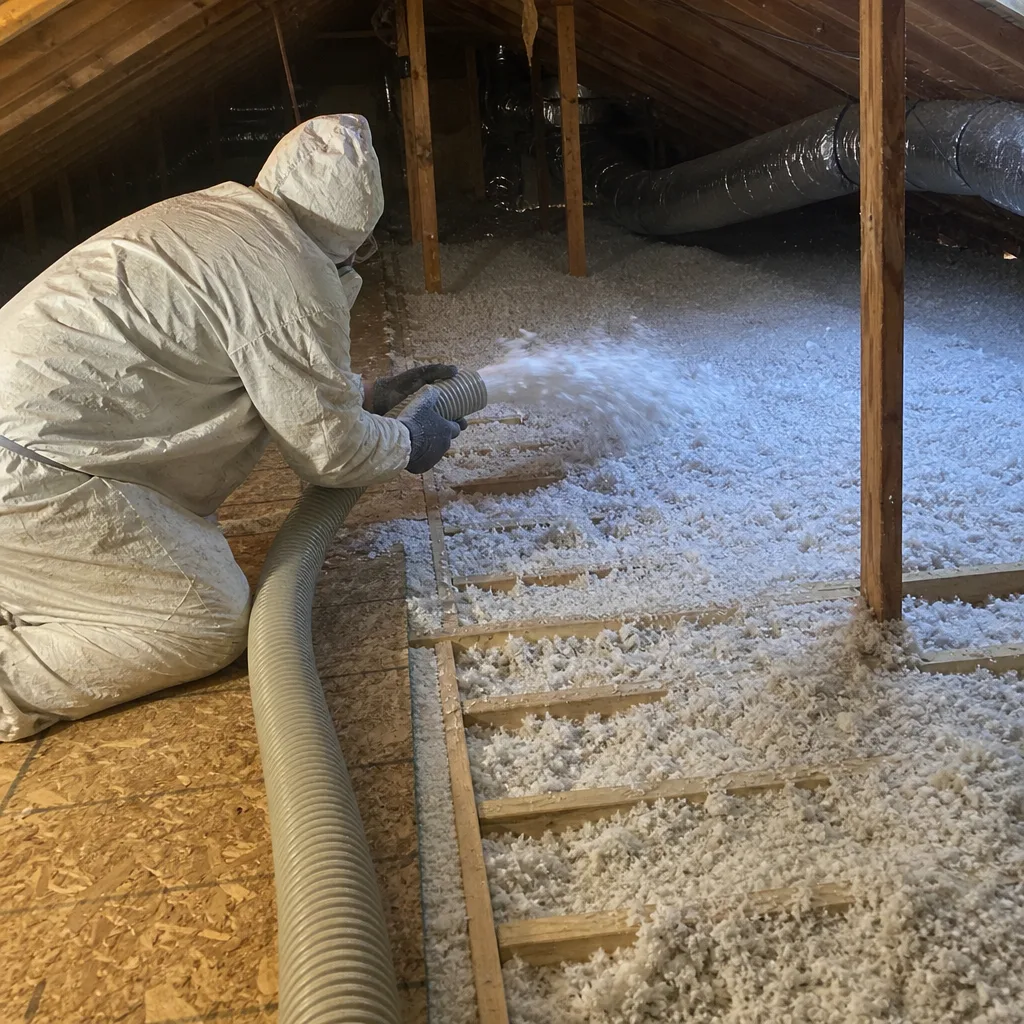
You can safely check a few things yourself: look for standing water under the liner, feel for moisture on the floor joists, and confirm the vapor barrier is still attached at the rim. Beyond that, this gets into real risk. Spray foam application requires proper surface prep, temperature control, and PPE (isocyanate exposure is a genuine hazard), and re-sealing a barrier around penetrations without trapping moisture is the exact thing most homeowner installs get wrong. Encapsulating over an active moisture source doesn’t fix the problem; it hides it until the wood rots. If you’ve found a failed barrier or foam separation, call (844) 320-5338. We’ll give you a written price and a free second opinion on any estimate you’ve already received.
FAQs
The foam itself, properly installed, is a 20-plus year product. The vapor barrier and sealing typically need attention every 10 to 15 years in Southern Nevada’s climate, mostly because of UV exposure during installation and movement at penetrations. If your liner is older than 10 years and you’re seeing condensation, it’s worth a look.
Often yes. If the Demilec foam is well-adhered and only the liner or sealing has failed, a targeted repair runs $900 to $2,000 installed and gets you back to a functioning envelope. We test the foam adhesion before recommending replacement, and we’ll tell you honestly if a repair will hold.
Most single-day repairs on a standard Henderson crawl space are done in four to six hours. A full replacement with drainage correction runs two to three days, and we schedule it around your availability with a named technician and a text when they’re on the way.
We source Demilec foam through authorized distributors and use quality aftermarket liners and sealing materials rather than proprietary ones. You get the brand and spec of every material in the written scope, and the documented photo record shows exactly what went in. Call (844) 320-5338 for a free estimate.
Written by the team at Envelope Insulation Henderson, serving Henderson and nearby areas.