

Icynene Attic Air Sealing: The Henderson Owner’s Guide
Attic air sealing for a home insulated with Icynene in Henderson typically runs $850-$2,400 for a full attic floor and top-plate package, and we can often schedule it same-week with a written price before any work begins. The job means sealing the gaps, top plates, can lights, and penetrations that Icynene alone cannot close, so the insulation performs the way it was sold to perform.
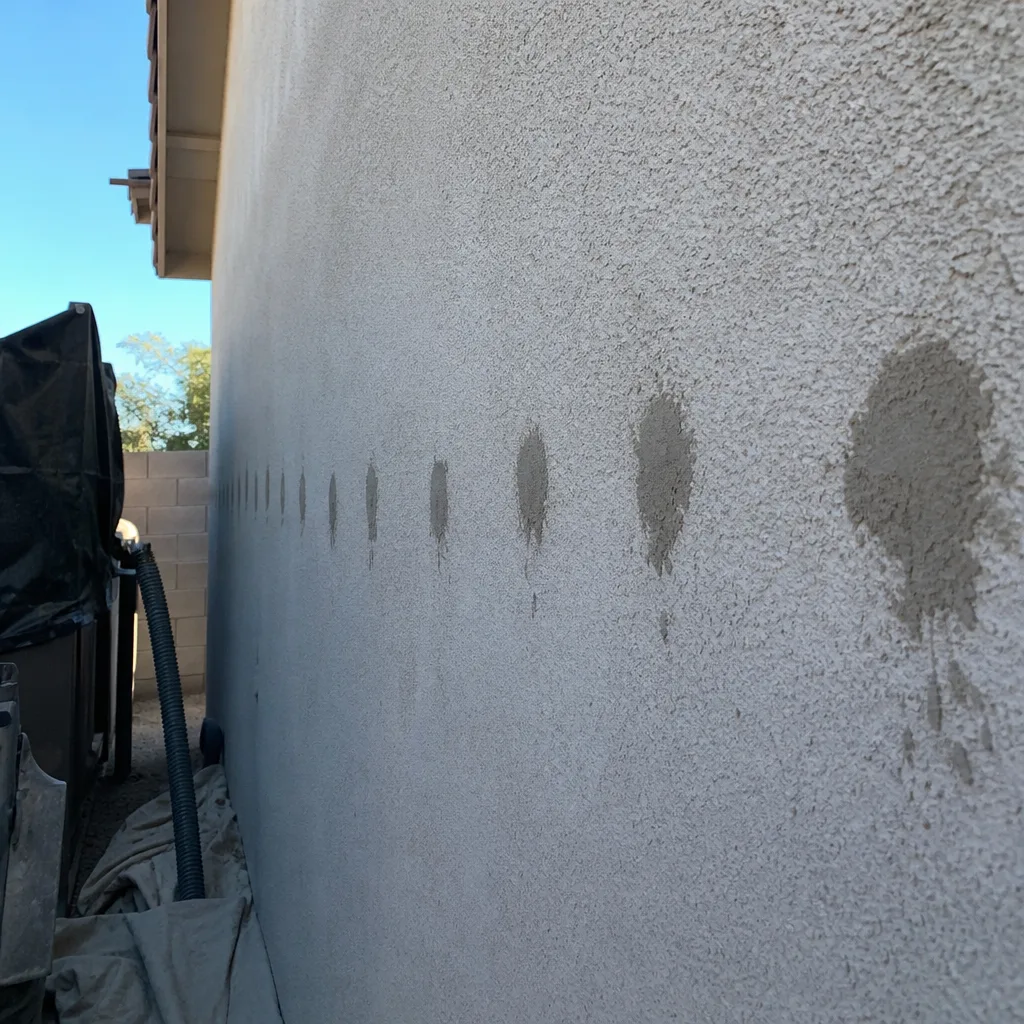
Owners usually find the problem in one of two ways. Either a blower-door test – a pressurization reading that shows, in one number, how much air your building envelope is losing – comes back higher than expected after an insulation job, or the house simply will not hold temperature. In Henderson, the second week of July is where that shows up: the AC runs without cycling off, the upstairs rooms drift 4-6 degrees warmer than the thermostat setting, and the utility bill climbs each month with no obvious cause. That pattern points to air movement, not missing insulation.
Which Icynene Models This Applies To
Icynene attic air sealing is not a product with model numbers the way a garage door opener is. Icynene is the insulation itself, and the air sealing that goes with it is a system of sealants, gaskets, and flashing details specified to the manufacturer’s published installation guidance. That said, the Icynene family splits into two broad groups that matter for compatibility.
Open-cell Icynene (often sold as Icynene Classic, Icynene LD-C-50, and similar open-cell lines) is soft, spongy, and vapor-permeable. It works as a combined insulation-and-air-barrier only when applied at the correct depth and thickness, and the sealant choices around it need to stay compatible with that permeability. Closed-cell Icynene (Icynene ProSeal, Icynene MD-C-200, and their closed-cell siblings) is denser, rigid, and its own vapor retarder, which means the sealing details around penetrations must be rated for the lower permeance. Put the wrong sealant against a closed-cell surface and it may not bond, or it may bond but crack as the foam moves with temperature swings.
To identify what you have, look at the labeling on the foam itself – most installers leave a small placard or stencil near the attic access. It should name the product line, the install date, and the nominal thickness. Measure the foam thickness in an accessible area with a straightedge; that thickness, not a model number, tells you whether you are working with an open-cell or closed-cell system and which sealing details apply.
The OEM-versus-aftermarket decision for Icynene is different than it is for mechanical parts. There is no “OEM sealant” you must buy to stay in spec. What matters is that the sealant is rated for contact with the Icynene type you have, that it carries an appropriate fire rating for the application (most attic floor sealing uses an ASTM E84 Class A or equivalent), and that the gaskets around can lights are rated for the fixture’s temperature. A quality aftermarket gasket and sealant matched to the foam will perform the same as anything branded for the job – provided the contractor knows which Icynene family is on the attic floor.
Signs Your Icynene Attic Air Sealing Is Failing
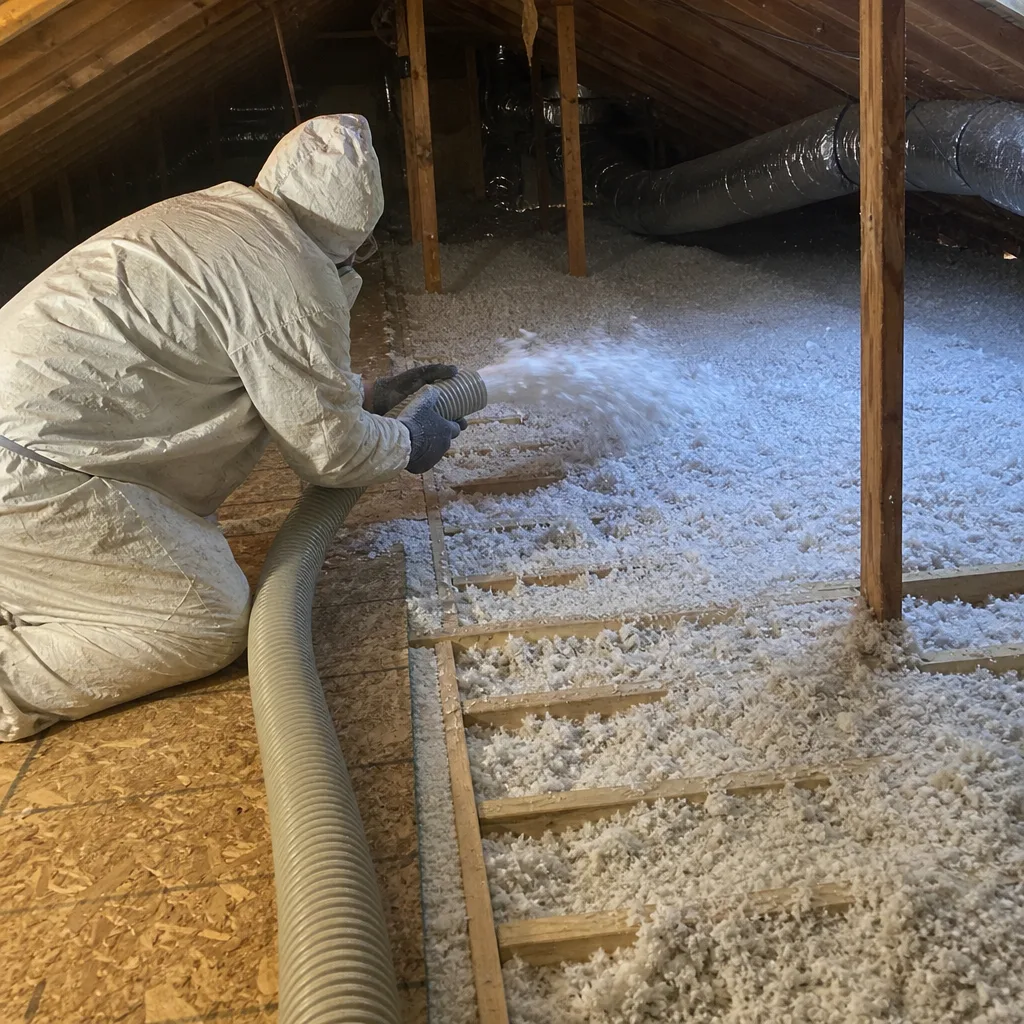
- Draft at the top plates where walls meet the attic floor. This is the most common failure we see. The Icynene was sprayed over the top plates without the gap underneath being sealed first, so as the foam cures and the house moves with the seasons, a small air channel opens. You feel it on a windy Henderson day as a slight cool draft on the back of your hand held near an exterior wall in the attic.
- Dirty insulation around recessed can lights. Dust-streaked Icynene around a can light means air has been filtering through that penetration for months or years. The can was never sealed, and Icynene coverage alone will not stop the flow. This is the second-most-common finding on a Henderson attic inspection.
- Utility bills that climb 15-25% between a mild month and a peak month. Some of that is normal, but a jump that steep usually means the house is losing conditioned air at a rate the insulation cannot compensate for. A blower-door reading before and after is the only way to know the real number.
- Ice-dam or condensation staining on the attic-side roof deck. In Henderson this is less common than in colder climates, but it does happen on north-facing roof sections in winter when warm, moist air from the house reaches the cold deck. The source is air movement from the living space, not a roof leak – and the cause is almost always an unsealed attic penetration.
- A blower-door test that reads high for the home’s size and vintage. If you have had a test done and the reading was above roughly 3.0 air changes per hour at 50 pascals (ACH50), that is your answer. The Icynene is not doing its job as an air barrier because the gaps around it were never closed first.
If you have ruled out a roof leak and the drafts continue, the next step is an attic inspection with a blower door. That measurement, not a guess, tells you whether the sealing needs to be redone and how much of the original Icynene work can be reused.
Replacement Cost & What’s Included
In Henderson, a full attic air sealing job over existing Icynene runs about $850-$2,400 installed, depending on attic square footage, the number of penetrations (can lights, plumbing vents, flues, wiring chases), and how much of the original Icynene needs to be pulled back or reworked to reach the failure points. Homes with 20 or more penetrations, or with complex HVAC chases running through the attic floor, land at the higher end of that range.
| Line item | Typical range |
|---|---|
| Top-plate sealing (exterior walls) | $250-$600 |
| Recessed can light sealing (per fixture) | $35-$75 |
| Penetration sealing (plumbing, flue, wiring chases) | $150-$450 |
| Attic hatch / kneewall door weatherstripping | $120-$300 |
| Blower-door measurement (before and after) | Included |
Every job begins with a written price before anyone lifts a tool – flat scope, written warranty, and no surprise additions. Materials come through Owens Corning, Johns Manville, Knauf, Rockwool, CertainTeed, Icynene, Demilec, and GreenFiber, so there is no proprietary product lock-in and no reason to pay a premium for a sealant that would do the same thing under a different label. The 365-Day Done Right Promise applies to all completed work, and every job closes with a Documented Photo Record – the before-and-after photos, the blower-door readings, and a written summary of what was sealed.
DIY or Call Us?
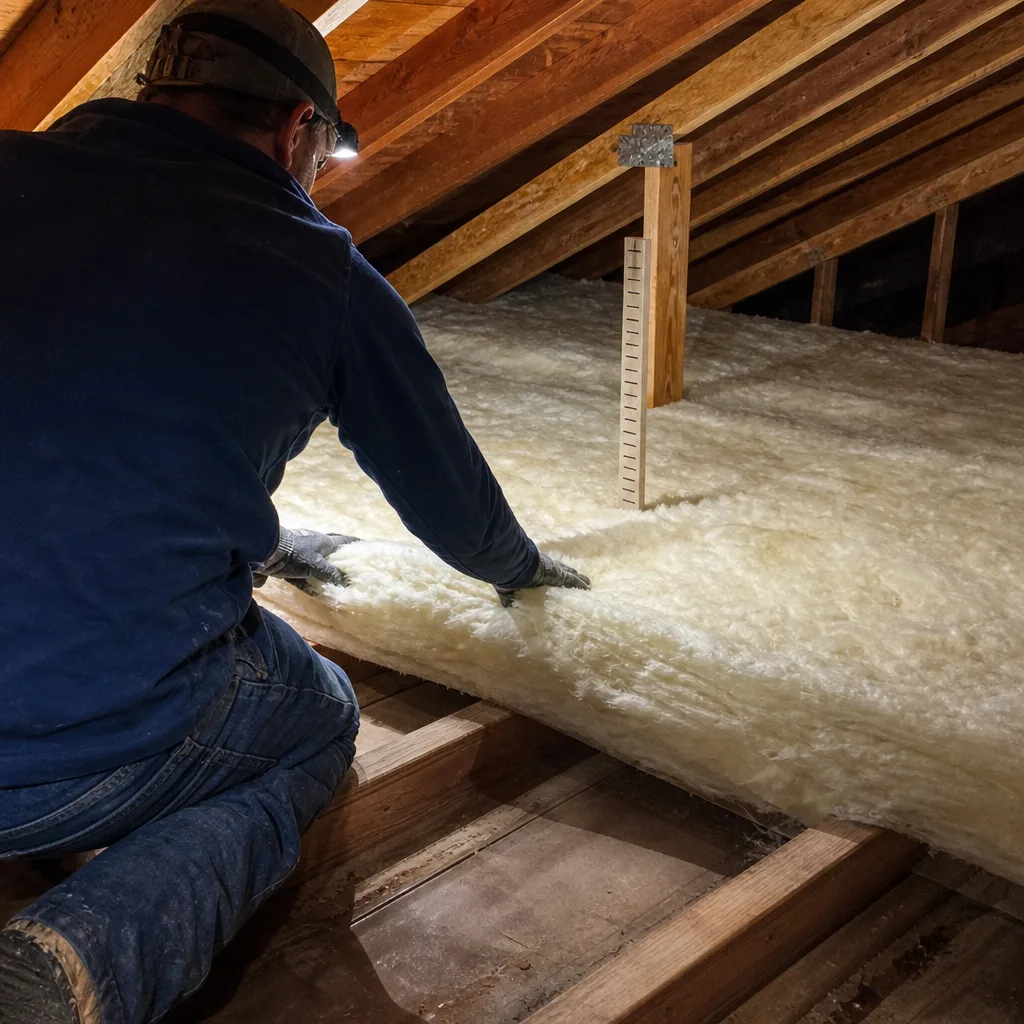
You can safely do three things yourself: locate the attic access, take photos of the Icynene with a tape measure visible so you can see the foam thickness and the labeling, and note the locations of can lights and other penetrations from below so you know what to ask about. That is the useful DIY work.
What you should not do is attempt the air sealing itself, and the reason is not only safety – though that matters when you are working near the attic floor with a foam-covered surface and a 220-volt circuit in reach. The real problem is that most DIY air-sealing failures are invisible. A sealant that bonds to open-cell Icynene in March can fail against closed-cell Icynene by August, and the only way to know is a blower-door test before and after. Without that measurement, you cannot tell whether the job worked or whether you just spent a weekend breathing attic air. And if you seal a penetration incorrectly, you can trap moisture on the cold side of the assembly – which is a much more expensive problem than the draft was.
That is why the sealing details need to match the actual Icynene family, not what a homeowner assumes is up there. If you are not sure which family you have, we can tell you from three photos and a measurement. Call (844) 320-5338 for a free estimate – a written price before any work starts, and a blower-door reading at the end so you can see what changed.
FAQs
How long does Icynene attic air sealing last in Henderson? A properly installed sealing job over Icynene generally holds 12-15 years before needing an inspection, though the extreme summer heat in Henderson shortens the service life of some gasket materials to around 8-10 years. The sealant is the part that ages; the Icynene foam itself does not degrade the same way. Have the attic inspected every 5-7 years as a practical interval, ideally with a blower-door reading so you have a baseline.
Can it be repaired instead of replaced? Yes, in most cases. If the Icynene foam is intact and the failures are at penetrations or top plates, we add and rework the sealing at those points rather than removing the foam. Full retreatment is only needed when the foam is damaged, has been compressed, or was installed to the wrong thickness. The honest answer depends on one thing: what the blower-door test shows after a targeted repair. Call (844) 320-5338 and we will read that with you.
How long does the swap take? A typical Henderson attic air sealing job on existing Icynene takes 3-6 hours for a single-story home and most of a day for a two-story with complex HVAC chases. The blower-door test before and after adds about an hour total. Most jobs are finished and documented the same day they start.
How do you source the part? We source sealants and sealing details from the same material network we use for every job – Owens Corning, Johns Manville, Knauf, Rockwool, CertainTeed, Icynene, Demilec, and GreenFiber – matched to the specific Icynene family on your attic floor. We do not carry parts on a truck or stock them locally; we specify what the job needs, source it, and bring it. Envelope Insulation Henderson is an independent service provider and is not affiliated with Icynene. If you also have a Reflectix radiant barrier in the attic, we can service that on the same visit.
Written by the team at Envelope Insulation Henderson, serving Henderson and nearby areas.