
Last updated November 17, 2026
The Complete Guide to Insulation in Henderson
Here’s a number that should bother you: a Henderson house with R-38 attic insulation and a leaky top plate loses more energy than a house with R-19 and a tight air barrier. Every big-box insulation calculator you’ve loaded into a browser ignores air leakage completely. They ask for square footage and zip code, then hand you a number that assumes your building envelope is a sealed box. It isn’t. This guide explains why the air barrier comes before the R-value math, how Henderson’s 115°F roof decks and 28°F January nights both shape material choice, and what a finished insulation job should hand you in writing.
Quick Answer
Insulation in Henderson works when air sealing happens first and insulation is sized second. Henderson sits in IECC Climate Zone 3B, which means ceiling, wall, and floor R-values differ from the generic “hot climate” numbers written for Phoenix or Southern California. The right sequence is: seal the leaks, verify with a blower-door test, then install insulation matched to the specific attic, wall, or crawl space condition.
Table of Contents
- Why Henderson’s Climate Zone 3B Demands Different R-Values
- The Sequence Problem: Why Air Sealing Comes First
- Material-by-Material Comparison for Henderson Conditions
- What a Finished Job Should Produce in Documentation
- How to Read Your Utility Bill Before and After
- Common Mistakes to Avoid
- When to Call a Professional
- Frequently Asked Questions
Why Henderson’s Climate Zone 3B Demands Different R-Values
Henderson is classified as IECC Climate Zone 3B: warm enough that cooling dominates, but cold enough in winter that a ceiling insulated for Bakersfield will underperform here in January. This is the part most “hot climate insulation” guides skip. They see the Nevada desert label and assume a single number solves everything.
Zone 3B expects different R-values on the ceiling, the walls, and the floor. The ceiling carries the highest target because heat rises and escapes through the attic. The walls sit lower. The floor over a vented crawl space or above a garage sits lower still, and it’s the surface most Henderson homeowners forget entirely. Getting the ceiling right while leaving the floor at builder-grade values is the most common partial job we see.
There’s a local wrinkle. Henderson’s temperature swing is genuinely two-headed. A roof deck in mid-July can reach 150°F surface temperature during the day while the same attic drops near or below freezing on a clear January night. Insulation has to slow heat flow in both directions. That rules out materials chosen purely for summertime performance.
Under The Haven Standard since 2016, we size every job to the actual assembly: what’s on the ceiling plane, what’s behind the drywall, what’s under the floor. The number goes on the written scope before anyone lifts a tool.
The Sequence Problem: Why Air Sealing Comes First
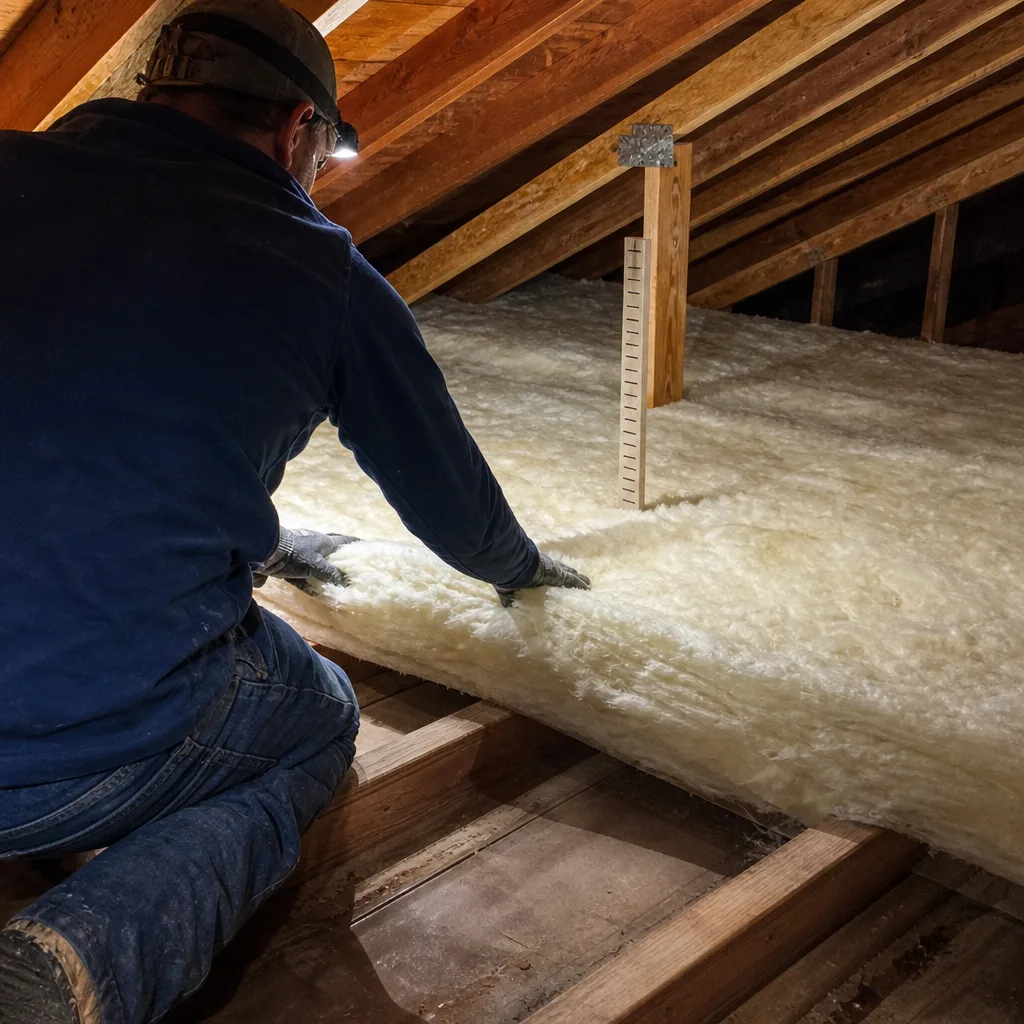
Blown insulation over an unsealed attic floor is money spent on a problem that isn’t fixed. The top plates, can lights, wiring penetrations, plumbing chases, and the attic hatch are all continuous leaks. Blowing fiberglass over them doesn’t seal anything. It just buries the leak under a blanket.
Our rule is simple: we will never blow insulation over an unsealed attic floor. Air sealing of top plates, can lights, and penetrations is completed before any insulation is added. That’s not an upsell. It’s the prerequisite that makes the insulation purchase worth making.
How do we know the sealing worked? A blower-door test: a pressurization reading that shows, in one number, how much air the building envelope is losing. The reading is expressed in CFM50 (cubic feet per minute at 50 pascals of pressure) and often converted to ACH50 (air changes per hour at that pressure). Lower is tighter. A leaky pre-war home can read well above 8 ACH50; a well-sealed home trends toward the lower end. The exact target varies by house, but the principle doesn’t: you measure before and after, and you publish the numbers.
- Baseline blower-door test. Record the starting CFM50 and ACH50.
- Air seal. Top plates, can lights, plumbing and wiring penetrations, attic hatch.
- Verify. Re-run the test to confirm the envelope is tight enough to insulate.
- Insulate. Install the material and R-value matched to the assembly.
- Document. Before-and-after readings, thermal images, and the R-value installation certificate in the homeowner’s hands.
If a contractor quotes you insulation with no air-sealing step and no test, ask what your ACH50 is before and after. If there’s no answer, there’s no proof the work did anything measurable.
Material-by-Material Comparison for Henderson Conditions
Four materials come up in nearly every Henderson conversation. Each one fits a specific condition better than the others. Matching the material to the assembly matters more than the brand on the bag.
Blown fiberglass
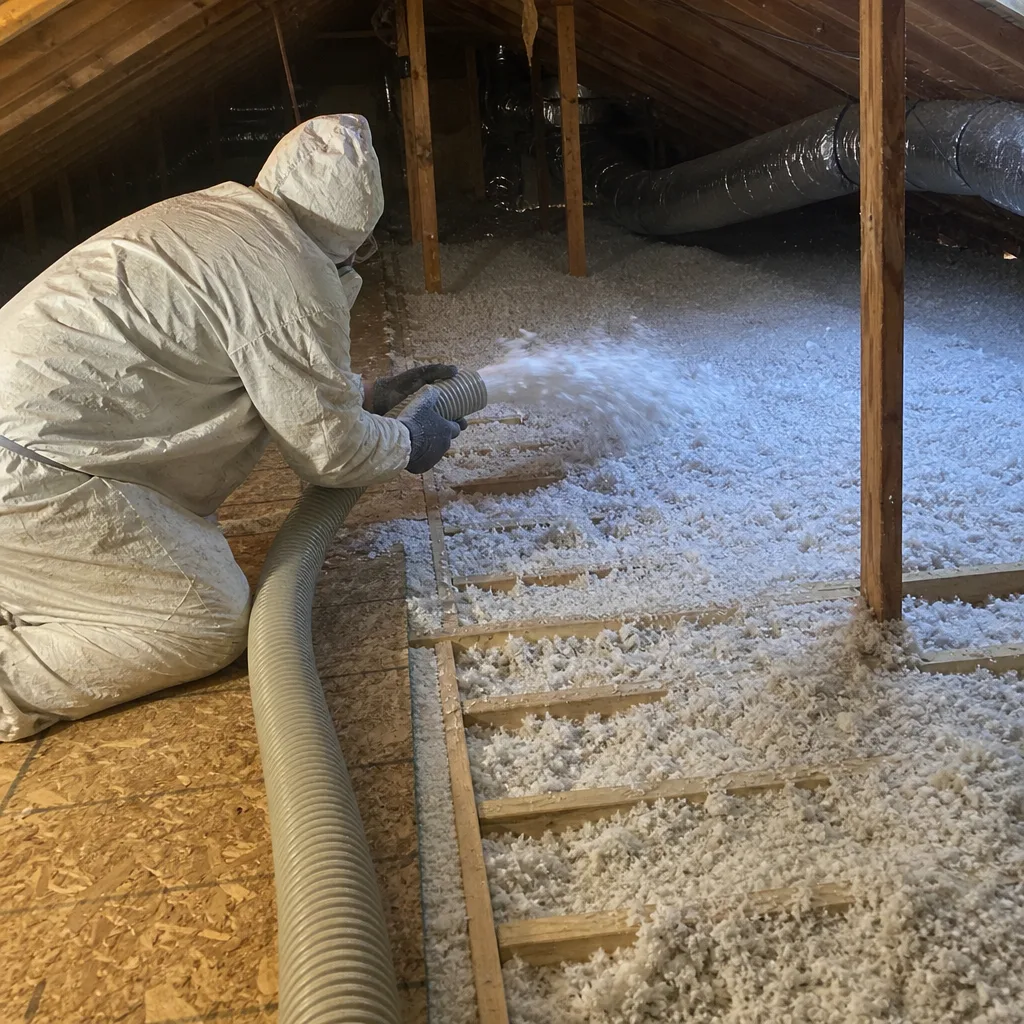
Loose-fill fiberglass, including GreenFiber and Owens Corning products, is the standard choice for open ceiling planes. It’s economical, it fills around obstructions, and it does well where the attic is unconditioned and vented. Its weakness: it filters air rather than blocking it. That’s exactly why the sealing step comes first. Fiberglass performs to its rating only when the envelope beneath it is tight.
Open-cell spray foam
Open-cell foam, from manufacturers like Icynene, expands to fill every irregular cavity and rounds off at the back of the stud bay. It air-seals and insulates in one pass, making it useful for wall assemblies and rim joists where you cannot get at the surface otherwise. In Henderson, it’s a common answer to difficult transitional cavities between conditioned and unconditioned space.
Closed-cell spray foam
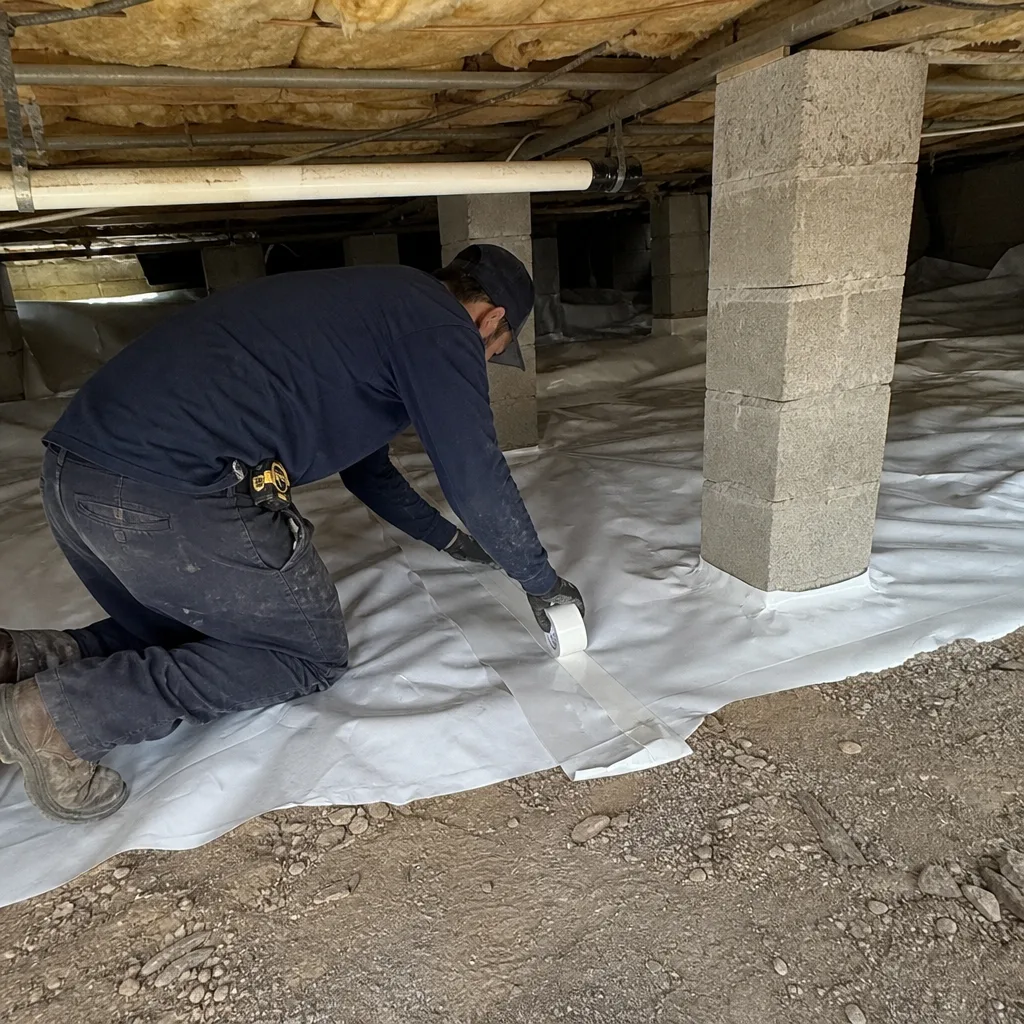
Closed-cell foam brings a higher R-value per inch and acts as a vapor retarder. That combination is valuable at the roof deck when a homeowner wants the attic inside the building envelope, and in below-grade assemblies where moisture management matters. Demilec closed-cell systems show up in a lot of our crawl space and rim joist work. It costs more per square foot, so we usually reserve it for where its properties earn the price.
Mineral wool batts
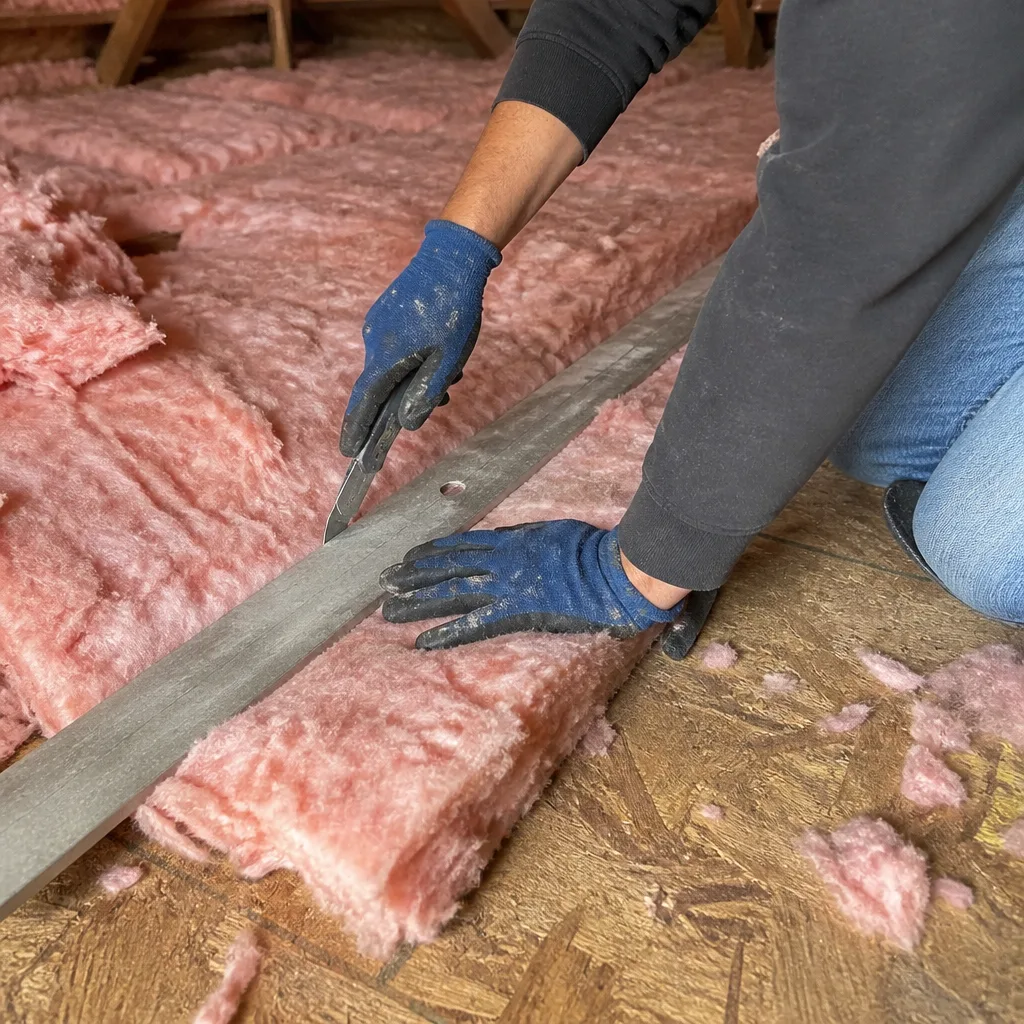
Mineral wool, including Rockwool and Knauf products, holds its shape and resist fire and moisture better than fiberglass batts. In a Henderson attic that swings from 150°F surfaces to near-freezing winter nights, those properties matter. It’s a strong fit for walls and for any cavity where the batt needs to stay put against movement or a small leak.
We source from Owens Corning, Johns Manville, Knauf, Rockwool, CertainTeed, Icynene, Demilec, and GreenFiber. There’s no proprietary product lock-in, so the recommendation is driven by the assembly, not by what a sales sheet pushes.
What a Finished Job Should Produce in Documentation
You should not have to take a contractor’s word for it. A finished job in Henderson should hand you three documents: a before-and-after blower-door report showing the CFM50 readings, a thermal-imaging scan of the key assembly showing where hot or cold air was moving, and an R-value installation certificate stating the R-value actually installed. Under The Haven Standard: Have it in writing, that’s the standard, not an extra.
Two more things belong in the file. A Documented Photo Record on every visit, not on request. And the written scope and written warranty delivered before anyone starts, which is Haven Standard Clause 1. The documentation is what lets a future buyer or appraiser see what changed.
For the assembly-by-assembly version of this, see our attic insulation page, which walks through the ceiling plane in more depth. Crawl space and wall assemblies follow the same documentation logic.
How to Read Your Utility Bill Before and After
Before you spend money on insulation, establish a baseline. Pull a utility bill from the same month last year and divide your kWh by the square footage of your home. That kWh-per-square-foot ratio is a rough but honest measure of how hard your home works to condition itself. Write it down.
Sixty days after the work, pull the equivalent bill and do the same math. Compare the ratio, not the total. Seasonal weather and rate changes make the raw total unreliable; the ratio over the same months in consecutive years filters most of that out. A meaningful air-sealing and insulation job should move the ratio in the direction you paid for. If it doesn’t, that’s a documented conversation to have, which is why the before-and-after blower-door numbers exist.
Common Mistakes to Avoid
- Insulating over leaks. Blowing fiberglass or foam over an unsealed attic floor traps the leak under the insulation and hides the problem. Seal first, then insulate.
- Trusting a calculator with no air-leakage input. Any online R-value tool that ignores your ACH50 is guessing. The number it produces isn’t sized to your house.
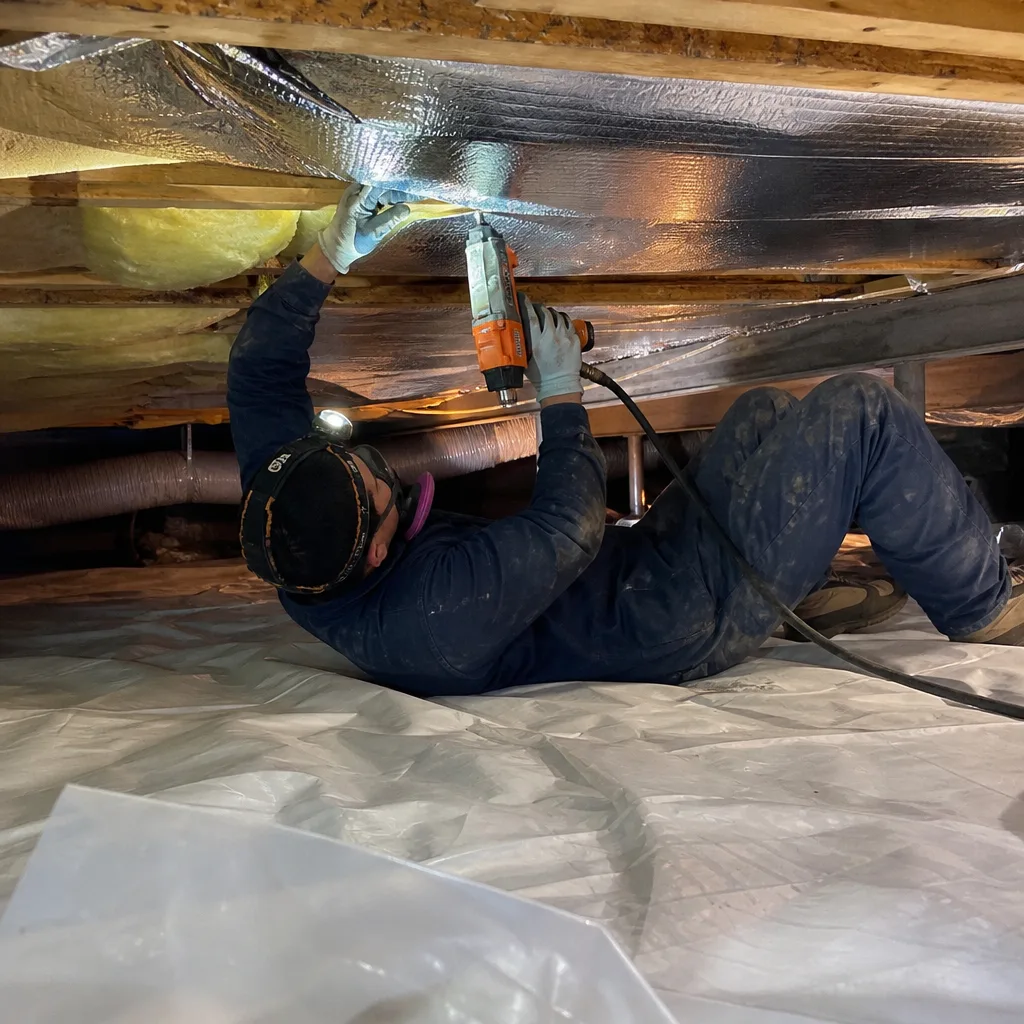
- Upgrading the attic and forgetting the crawl space. In Henderson, the floor over a vented crawl space is a major path for both heat gain and cold-air intrusion. Leaving it at builder grade undoes a lot of what the attic work gained.
- Skipping the blower-door test. No before-and-after readings means no proof the job changed the envelope. If a contractor won’t test, the savings claim is a guess.
- Choosing a material by brand instead of by assembly. Open-cell foam in the wrong cavity, or fiberglass over a leaky plane, will underperform a cheaper material correctly applied.
- Ignoring the attic hatch. A well-insulated attic with an unsealed hatch is a hole in the envelope. It’s a small line item that shows up as a real number on the test.
- No written scope or warranty. A verbal promise is not a spec. Under Haven Standard Clause 1, you get a written price, written scope, and written warranty before work starts.
When to Call a Professional
Some of this is plainly a professional’s job. Any work near a gas appliance, electrical panel, or wiring junction, and any job that requires a blower-door test or thermal scan, belongs with a trained technician. The attic itself is a safety factor: blown-in insulation burying a hot can light, an unsealed attic hatch, or a compromised vent can create real risk, and opening a wall or crawl space without knowing what’s inside is a bad plan.
Call a professional if the house is a 2015-2025 build with builder-grade insulation and rising bills, if you have a vented crawl space, if the attic has never been air sealed, or if you want documented before-and-after numbers you can put in front of a buyer. Envelope Insulation Henderson offers free estimates in Henderson; call (844) 320-5338 and a live person answers, 24/7. Bring us a competing quote and we’ll read it with you on a free second opinion.
Frequently Asked Questions
Most residential attic insulation jobs in Henderson land in the low-to-mid four figures for a typical single-story home, with the exact figure depending on the square footage, the R-value target, and how much air sealing is required before installation. Spray foam runs higher per square foot than blown fiberglass. Because the price depends on the assembly, we put a written price on the scope before any work starts. Call (844) 320-5338 for an exact quote – estimates are free.
Repair usually wins when the existing insulation is intact and the real problem is air leakage, which is the case in most Henderson homes. Replace when the material is compressed, wet, contaminated, or has been disturbed by rodents. A blower-door test and a visual inspection tell you which situation you’re in before you commit.
You need it to know what your envelope is losing and to prove the air sealing worked. The test gives a single number, CFM50, before and after. Without it, there’s nothing to measure against. Our position is that the test is part of the job, not a separate line item.
Not as a shortcut around air sealing. Spray foam can be applied to many substrates, but blowing it over existing insulation without addressing the penetrations and top plates usually leaves hidden leaks. The right move is to evaluate the assembly, seal the leaks, and then insulate.
Henderson is Climate Zone 3B, and the ceiling plane carries the highest target of any surface. The correct R-value depends on the attic assembly, ventilation, and roofline, so it’s set by the assembly rather than a single national number. We state the installed R-value on the R-value installation certificate you receive at the end.
Often, yes, for estimates and inspections. A live person answers calls 24/7, so you can reach us even on a weekend. Call (844) 320-5338 to schedule; if today isn’t possible, we’ll give you the next available slot in writing.
The Bottom Line
Insulation in Henderson is a sequence, not a product. Seal the envelope, verify it with a blower-door test, then size the material to the assembly and the climate zone. Match the material to the attic, wall, or crawl space condition rather than to a brand. Keep the documentation: before-and-after readings, thermal images, the R-value certificate. Then check the ratio on your utility bill sixty days later and see the number move. If you want that work done against a written price and a documented record from start to finish, call (844) 320-5338 for a free estimate from Envelope Insulation Henderson. Start with our Henderson insulation home page, or read more on crawl space encapsulation and vapor barriers and spray foam insulation in Henderson.
Written by the team at Envelope Insulation Henderson.