
Last updated November 17, 2026
Insulation Cost Breakdown: The Henderson Homeowner’s Reference for 2026
On a 2,000-square-foot Henderson attic in 2025, the average gap between the lowest and highest insulation bid was roughly $1,400. That number looks like a shopper’s win for the low bidder, until you compare blower-door results. The cheap jobs showed no statistically meaningful improvement in air leakage, which means the savings never reached the utility bill. This guide breaks down every line item in a Henderson insulation bid, names 2026 price ranges for each, and shows you the one metric that makes bids comparable: cost per verified ACH50 reduction.
Quick Answer
Insulation in Henderson, NV typically runs $1,800 to $4,200 for a blown fiberglass attic top-up with air sealing, $3,500 to $7,500 for closed-cell spray foam in a crawl space, and $400 to $900 for air sealing as a standalone line item. The total on the page rarely tells you what you’re buying. The number that does is the before-and-after blower-door reading, and any bid that doesn’t promise one is asking you to trust a receipt instead of a measurement.
Table of Contents
- What’s actually in an insulation bid? The line items, named
- Cost by scope: four common Henderson jobs, priced
- What does air sealing cost, and why does it disappear from some bids?
- The blower-door test: $250-$400 standalone, and worth it
- Clark County permits and energy plan review: what you’ll pay
- Cost per verified ACH50 reduction: the bid-comparison metric
- Common mistakes to avoid
- Frequently asked questions
What’s actually in an insulation bid? The line items, named
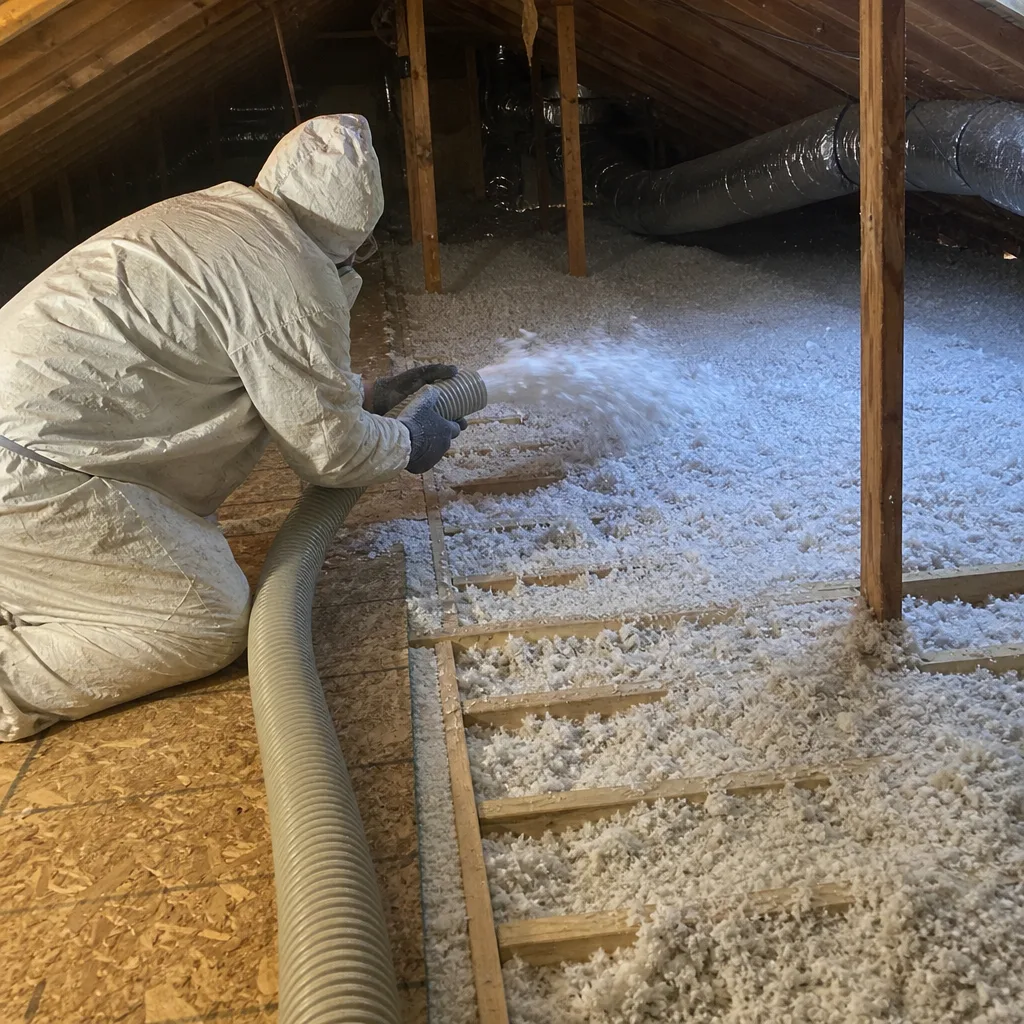
Henderson insulation bids look incomparable because contractors bundle and unbundle three different things: air sealing, material, and labor. One bid folds air sealing into the insulation price and never says so. The next quotes insulation only, then adds sealing as a change order once the crew is on site. A third skips sealing entirely because the salesperson doesn’t do it. Comparing their totals is comparing three different products.
Here are the line items that should appear separately on any bid you sign:
- Air sealing labor and materials. Foam and caulk at top plates, can lights, plumbing and electrical penetrations, and the attic hatch. This is the work that closes the holes before insulation goes down.
- Insulation material, by type and R-value. Blown fiberglass, blown cellulose, open-cell foam, or closed-cell foam, priced per square foot at a stated depth.
- Installation labor. Separate from material on a good bid. Hoses, staging, and access matter in Henderson attics, which often run low and hot.
- Removal and disposal, if needed. Old, wet, or contaminated insulation comes out before new goes in. Contaminated material is heavier and costs more to haul.
- Diagnostics. Blower-door testing before and after. Some bids include it, some charge for it, and some quietly don’t do it at all.
- Permit and plan review fees. See the permit section below. These are pass-through costs and should be itemized.
If a bid shows one number with no breakdown, ask for the breakdown in writing before you compare it to anything. Under Haven Standard Clause 1, a written price and written scope come before anyone lifts a tool. That’s the standard we hold every job to, and it’s the standard you should ask every bidder to meet.
Cost by scope: four common Henderson jobs, priced
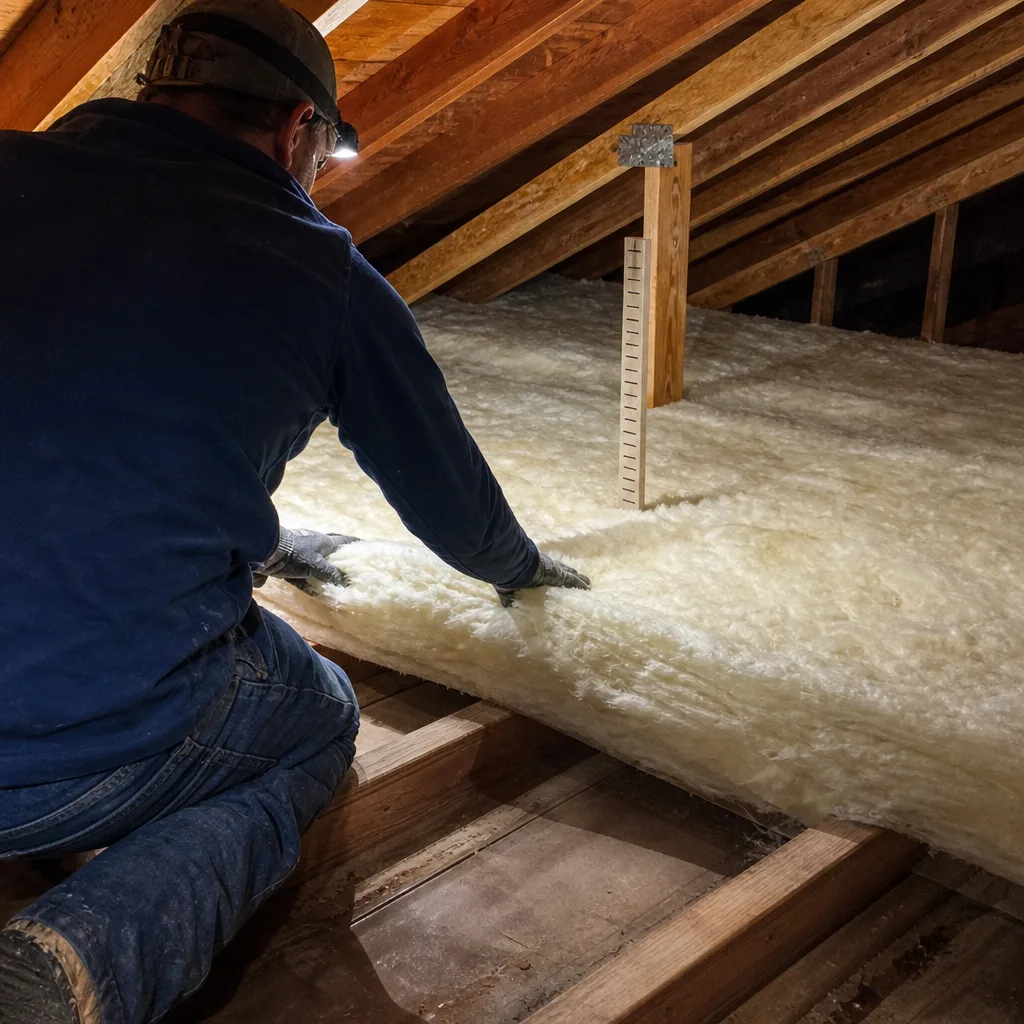
The four jobs below cover most of what we quote in Henderson. Prices are 2026 ranges for a typical single-family home, with material and labor broken out. Your house will land somewhere in the range based on square footage, attic access, and how much sealing it needs.
Blown fiberglass attic top-up (with air sealing)
- Material: $0.60-$1.10 per square foot at R-38 to R-49
- Labor: $0.50-$1.00 per square foot
- Air sealing: $400-$900 (see next section)
- Total for 2,000 sq ft: $1,800-$4,200
Full attic air seal plus blow
- Air sealing first, top plates, can lights, penetrations: $400-$900
- Blown insulation, R-49 across the sealed floor: $1,300-$3,300
- Total: $1,700-$4,200, and this is the sequence that produces a measurable blower-door change
Closed-cell spray foam in a crawl space
- Material: $1.75-$3.50 per board foot at 2-3 inches
- Labor and setup: 30-40% of total on a typical job
- Total for a 1,200 sq ft crawl space: $3,500-$7,500
Open-cell spray foam at a cathedral ceiling
- Material: $0.70-$1.40 per board foot at 5-6 inches
- Labor: $0.50-$1.00 per board foot
- Total for 800 sq ft of ceiling: $2,800-$5,800
Two things move these numbers more than anything else. First, attic access. A Henderson attic with a narrow hatch and a low roofline slows a crew down, and labor is where that shows up. Second, the age of the house. Homes built before the 1990s in the older parts of Henderson usually need more sealing because the building codes at the time didn’t demand much of it. Our attic insulation in Henderson page walks through the fiberglass and cellulose options if you want to narrow the material choice down.
What does air sealing cost, and why does it disappear from some bids?
Air sealing in a typical Henderson attic costs $400 to $900 as a standalone line item. It covers the top plates where the walls meet the ceiling, the can lights, the plumbing and electrical penetrations, and the attic hatch. That work is what stops conditioned air from leaving the house through the attic floor.
It appears as an upsell in some bids because the first contractor quoted insulation only. Sealing shows up later, once the crew is on site, and the homeowner is already committed. It’s absent from other bids because the person writing the quote doesn’t do air sealing at all.
This is the part of the job we won’t skip. We will never blow insulation over an unsealed attic floor, because a sealed floor is the difference between insulation that performs and insulation that just sits there. Insulation without sealing is a blanket on an open window.
Watch for these three signals in a bid:
- Sealing listed as a separate line item with a price. That’s the honest version.
- Sealing folded into the insulation line with no detail. Ask what’s included and get it written down.
- No mention of sealing anywhere. The bid isn’t finished. Ask why, and be suspicious of the answer.
If you’re weighing spray foam against a sealed and blown attic, the spray foam insulation in Henderson page covers where closed-cell and open-cell each make sense.
The blower-door test: $250-$400 standalone, and worth it
A blower-door test – a pressurization reading that shows, in one number, how much air your building envelope is losing – costs $250 to $400 as a standalone diagnostic in Henderson. As part of a full installation scope, it’s often included at no extra charge. That’s a real decision point, not a rounding error.
Here’s why paying for it separately is often worth it. A diagnostic test before you accept any bid gives you a baseline reading of your own house. You can then read every competing bid against that number and ask a pointed question: what will this scope get my CFM50 down to, and how will you prove it? Bidders who can’t answer that question, or who wave off the measurement as unnecessary, are telling you something useful.
The CFM50 figure is cubic feet per minute of air leakage at 50 pascals of pressure. ACH50 is that number converted to air changes per hour at 50 pascals, which normalizes for house size. Both appear on the reports we publish for every applicable job.
What to expect if you order one:
- Setup: a calibrated fan seals into an exterior door frame and pressurizes the house.
- Measurement: the test runs 20-30 minutes, with readings taken at several pressure points.
- Report: you get the before number in CFM50 and ACH50, written down, and a list of the leak locations the test reveals.
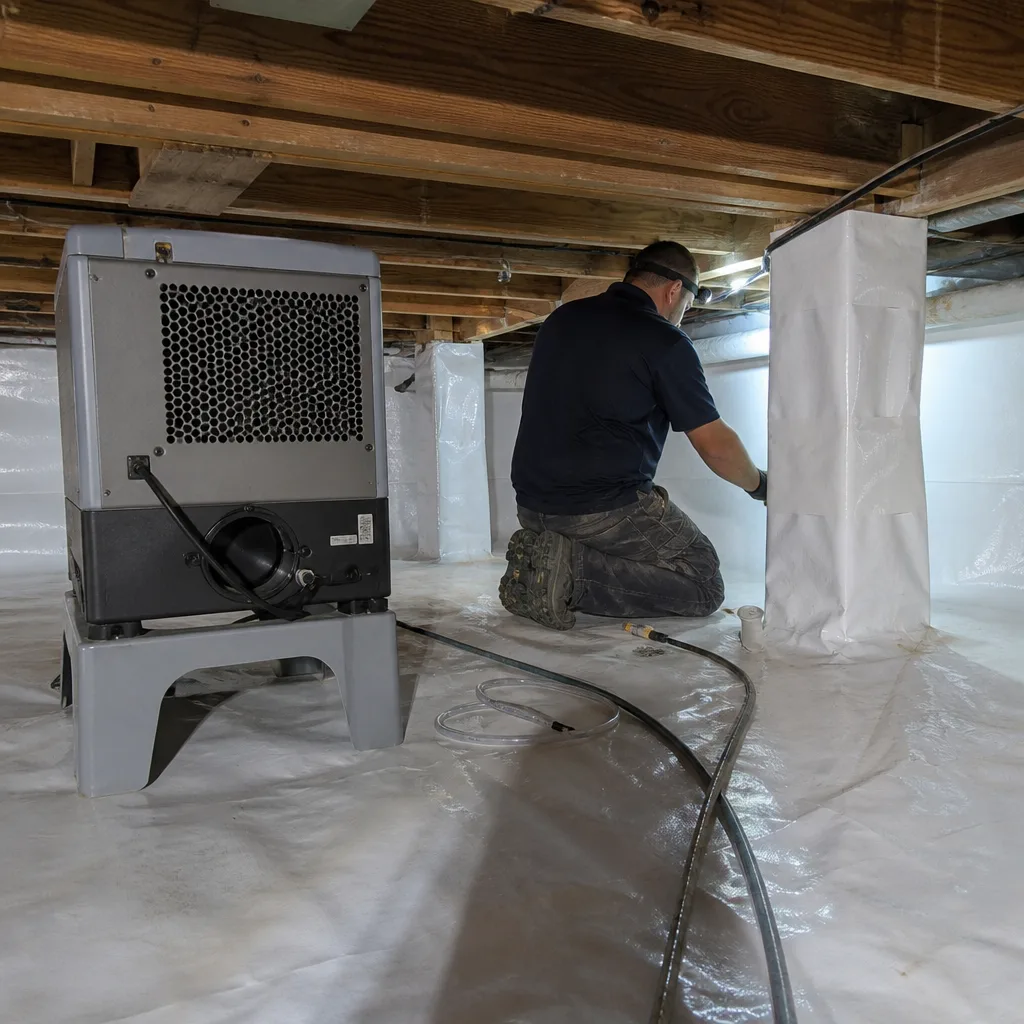
If you’re also looking at the crawl space, see our crawl space encapsulation & vapor barrier in Henderson page. Vapor work and envelope work share the same diagnostics.
Clark County permits and energy plan review: what you’ll pay
Clark County permit fees on insulation work are modest compared to the rest of a remodeling budget, but they’re not zero, and they should appear on a bid when required. Insulation is typically a trade permit filed alongside the general scope. Fees scale with valuation and inspection count, so a small attic top-up and a whole-crawl-space foam job don’t cost the same to permit. Expect a few hundred dollars on a straightforward residential job, more when energy plan review is triggered by other work being done at the same time.
Energy plan review adds a step when the project touches thermal envelope performance as part of a larger remodel. The review draws an engineering fee on top of the base permit, and it can add a week or two to the timeline. That’s the trade: more paperwork, a tighter envelope, and a better performance floor.
When do you recoup permit costs through utility savings? In our experience, the permit line on a properly sealed Henderson attic pays itself back within the first two cooling seasons on a home with a meaningful before-after blower-door change. On a job with no measurable change, it never pays back. That’s the blower-door number doing its job again: it’s the receipt for the performance you paid for.
Ask any bidder who’s handling the permit, who’s paying the fee, and whether the inspection is included in the written scope. Vague answers on permits usually mean the paperwork hasn’t been thought through.
Cost per verified ACH50 reduction: the bid-comparison metric
Here’s how to make bids comparable when the totals don’t mean what they look like. Divide the total job cost by the verified reduction in ACH50, the air changes per hour your envelope loses at 50 pascals of pressure. The result is a dollar figure for each unit of verified performance improvement. Lower is better on a genuine measurement, and a low total with no measured improvement can’t be scored at all.
The formula, in steps:
- Get the before reading. Order a standalone blower-door test if no bid includes one. Or ask each bidder to include a before measurement in writing.
- Get the promised after reading. Ask every bidder for the CFM50 reduction their scope is designed to achieve.
- Subtract. Before ACH50 minus after ACH50 equals the verified reduction.
- Divide. Total job cost divided by verified ACH50 reduction equals cost per point of improvement.
A worked example. Say one bid totals $2,600 and promises an ACH50 drop of 3.0. That’s $867 per point. A second bid totals $3,900 and promises a drop of 6.0. That’s $650 per point. The higher bid delivers more performance per dollar, and the utility bill sees the difference every month of the cooling season. That’s the number the cheapest-looking bid can’t produce, and the reason the $1,400 gap in the opening hook doesn’t tell you which job to take.
Before-and-after blower-door numbers published on every applicable job are the mechanism that makes this framework usable. If a contractor won’t stand behind a measured result, ask what they will stand behind. If you want to see the documentation that comes with a full job, start at the Envelope Insulation Henderson home page.
Common Mistakes to Avoid
- Comparing totals without comparing scopes. Two bids that differ by $1,400 can be the same job or two different jobs. Read the line items before you compare the bottom number.
- Accepting a bid with no air sealing line. Blowing insulation over an unsealed attic floor is the most expensive way to buy nothing. The performance never arrives, and the savings never show up.
- Skipping the blower-door baseline. Without a before reading, you have no way to prove what the job achieved, and no leverage if it didn’t.
- Letting a contractor quote spray foam for the whole attic without a reason. Foam is the right choice in some Henderson attics. A bid that can’t explain why it’s right in yours is selling a product, not a result.
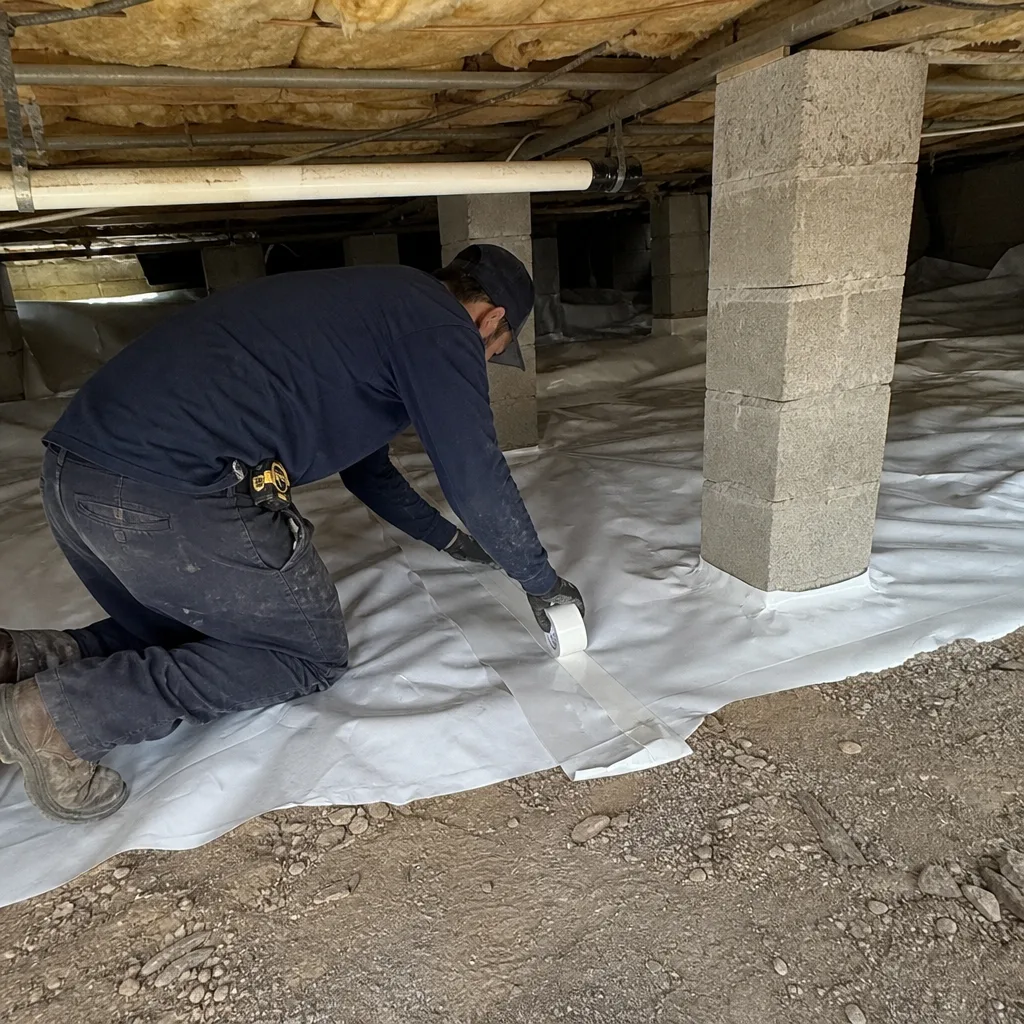
- Forgetting the crawl space. In older Henderson homes, a vented crawl space pulls humid air up through the floor. Sealing the attic and ignoring the crawl space leaves half the envelope open.
- Paying a deposit before a written scope exists. A deposit on an unwritten job is a deposit on a guess. Get the written price, written scope, and written warranty first.
- Choosing on price alone when the mid-range bids are close. When two comparable bids land within a few hundred dollars, the diagnostics and the documentation are what separate them. Ask what you’ll hold in your hand when the crew leaves.
When to Call a Professional
Some envelope work is a genuine weekend project. Insulation and air sealing over a top plate or around a can light, where the work touches a conditioned ceiling, is not. Neither is spray foam at a cathedral ceiling, where adhesion, thickness, and cure all affect performance, and where the coverage gaps that fail often aren’t visible until the first summer. If your attic runs hot in July, your upstairs bedrooms drift four degrees warmer than downstairs, or your utility bill climbed without a change in usage, those are all signals to get a diagnostic before you buy anything. Envelope Insulation Henderson offers free estimates in Henderson – call (844) 320-5338. A written price before any work starts is the whole point of the conversation.
Frequently Asked Questions
A blown fiberglass attic top-up with air sealing runs $1,800 to $4,200 for a 2,000-square-foot home in Henderson in 2026, with air sealing alone priced at $400 to $900. The total depends on attic access, the age of the house, and the R-value you’re targeting. Call (844) 320-5338 for a written price on your specific attic – our estimates are free.
Repair is usually cheaper when the existing insulation is dry, uncontaminated, and below its target R-value; a top-up and a seal fixes it. Replacement is the right call when the insulation is wet, compressed from rodents, or contaminated, because new material over old doesn’t perform. A diagnostic reading tells you which situation you’re in before you spend. Call (844) 320-5338 and we’ll walk through what a top-up versus a full replacement would cost your house.
The low bid is usually missing air sealing, a blower-door test, or both, and those are the two line items that produce a measurable result. On the 2025 Henderson jobs where we compared bids, the low quotes showed no meaningful air-leakage improvement when tested. Call (844) 320-5338 with both bids in hand – our free second opinion reads them line by line with you.
A standalone blower-door test in Henderson runs $250 to $400, and it’s often included at no extra charge when it’s part of a full installation scope. Paying for it before you accept a bid gives you a baseline to hold every bidder to. Call (844) 320-5338 if you want to schedule one first.
Insulation work is typically permitted as a trade permit in Clark County, and the fee scales with valuation and inspection count, so it varies by job; energy plan review can add a fee when a larger remodel triggers it. Ask any bidder who’s handling the permit and whether the fee is in the written scope. Call (844) 320-5338 and we’ll tell you what your job needs.
Same-day estimates are often possible depending on schedule, and calls are answered by a live person. Have your attic square footage, the age of the house, and any competing bids ready when you call. Call (844) 320-5338 – under Haven Standard Clause 1, you’ll get a written price before any work starts.
The Bottom Line
The total on an insulation bid tells you what you’re paying. The blower-door reading tells you what you’re getting. In Henderson, the four common scopes break down into clear 2026 ranges: a sealed and blown attic at $1,800 to $4,200, closed-cell crawl space foam at $3,500 to $7,500, air sealing alone at $400 to $900, and a standalone blower-door test at $250 to $400. Compare bids by dividing total cost by verified ACH50 reduction, and the cheap bid stops looking cheap. Get the line items in writing, get the before reading, and get the after reading. That’s how the savings actually show up.
Call (844) 320-5338 for a free estimate. A written price before any work starts, a documented photo record when the crew leaves, and before-and-after blower-door numbers on every applicable job. That’s the record you walk away with.
Written by the team at Envelope Insulation Henderson.