
Last updated November 17, 2026
Insulation Emergency Preparedness Guide for Henderson Homes
Most emergency-preparedness advice written for American homeowners assumes blizzards, frozen pipes, and ice dams. Henderson doesn’t work that way. During the July 2023 Western heat dome, NV Energy post-event customer surveys found that Henderson homes with verified air-sealing work held interior temperatures 11-14°F cooler than the ambient outdoor temperature for six to eight hours after HVAC failure. Homes without documented envelope work showed no meaningful thermal lag at all. The threat here is heat, not cold, and the passive defense is your building envelope. This guide shows you how to measure your home’s thermal lag, which improvements extend it, how to handle post-fire smoke infiltration, and how to assess insulation damage after a heat event.
Quick Answer
A well-sealed, well-insulated Henderson home can hold a survivable interior temperature for roughly six to eight hours after the air conditioning fails during a triple-digit heat event, depending on thermal mass and R-values. The three improvements that buy you the most time are air sealing at the attic floor, a radiant barrier in the attic, and weatherstripped interior doors to isolate one cool room. Measure your home’s actual performance with a blower-door test before you need it, not after the grid goes down.
Table of Contents
- Why Henderson’s Insulation Emergencies Look Nothing Like the Rest of the Country
- How to Calculate Your Home’s Thermal Lag Time
- The Envelope Improvements That Extend Thermal Lag During Outages
- Post-Wildfire Smoke Infiltration and Your Building Envelope
- Emergency Supply Checklist Tied to Insulation Performance
- How to Assess Post-Event Insulation Damage
- The Documents to Keep in Your Home Emergency File
- A Year-Round Envelope Prep Calendar for Henderson
Why Henderson’s Insulation Emergencies Look Nothing Like the Rest of the Country
Henderson sits in a high-desert bowl where July afternoon temperatures routinely climb past 110°F and the overnight low sometimes refuses to drop below 90°F. That combination changes everything about what an insulation emergency means. There’s no overnight relief to look forward to, no freeze-thaw cycle to design around, and no basement to retreat into. Green Valley, Anthem, and Seven Hills are packed with homes built between 2015 and 2025 that were insulated to code minimums for energy cost, not for survivability during a grid event.
The emergencies we actually see here fall into three categories:
- Extreme-heat grid events. Rolling outages during heat domes, when demand outruns supply and air conditioning stops for hours at a stretch. Interior temperatures in poorly sealed homes spike within 30 to 45 minutes.
- Rapid HVAC failure during triple-digit temperatures. A compressor dies in July. The replacement part is three days out. What happens to the house in the interim depends almost entirely on the envelope.
- Post-fire smoke infiltration. Wildfire smoke from the Spring Mountains or the McCullough Range pushes into the valley on southwest winds. A leaky house takes on smoke like a sieve.
In all three scenarios, the same passive defense applies: a tight, well-insulated envelope that slows heat transfer and keeps outside air outside. It’s the only part of your home’s thermal system that works when the power doesn’t. That’s the core of how we approach Envelope Insulation Henderson home work, and it’s why we treat air sealing as a hard prerequisite, not an add-on. Insulation blown over an unsealed attic floor is a blanket over an open window.
How to Calculate Your Home’s Thermal Lag Time
Thermal lag is the number of hours a house can maintain a survivable interior temperature after the cooling system fails. It’s not a single manufacturer spec. It’s a product of three things: how much thermal mass your home has (the mass of drywall, concrete, tile, and furniture that absorbs heat), your attic and wall R-values (the resistance to heat flow), and the gap between your interior temperature and the expected outdoor peak. You can build a rough estimate yourself with the numbers below.
- Write down your envelope R-values. Attic R-value, wall R-value, and window U-factor. If you don’t have them, an energy audit or your builder’s spec sheet will supply them. Attic R-38 to R-49 is a common starting point in Henderson homes built since 2015.
- Estimate your home’s air leakage. This is the number that dominates. A home measured at 5 ACH50 (air changes per hour at 50 pascals of pressure) leaks roughly five times as fast as one at 1 ACH50. If you don’t have a blower-door reading, assume 4 to 6 ACH50 for a house built to minimum code, 2 to 3 ACH50 for a well-sealed home, and 1 to 2 ACH50 for a deeply air-sealed one.
- Note your thermal mass. Tile floors set in mortar, block walls, and concrete slab all store cooling. A single-story ranch with slab-on-grade and tile floors will hold meaningfully longer than an upstairs bedroom under a low-slope roof.
- Pin the outdoor peak. Your scenario is built around a 110-115°F July afternoon with no overnight relief. That’s the real-world number to plan against, not the 100°F average high.
Then apply a simple rule of thumb, which is what the survey data from that heat dome reflects: a home at 3 ACH50 or tighter with attic R-values of R-38 and above will hold a survivable interior temperature for roughly six to eight hours in that scenario. A home at 5-6 ACH50 will hold it for two to three hours, if at all. Every blower-door reading we take and publish gives a homeowner a real measuring stick for that range. Blower-door test, for anyone new to the term, is a pressurization measurement that shows, in a single number, how much air your building envelope is losing.
The Envelope Improvements That Extend Thermal Lag During Outages
You can’t make a house survive an indefinite outage in Henderson July. What you can do is buy enough time to keep the house at a survivable temperature until power returns or until you can get somewhere cooler, and stretch the cool you’ve already paid for. Three envelope improvements extend thermal lag most:
1. Air sealing at the attic floor
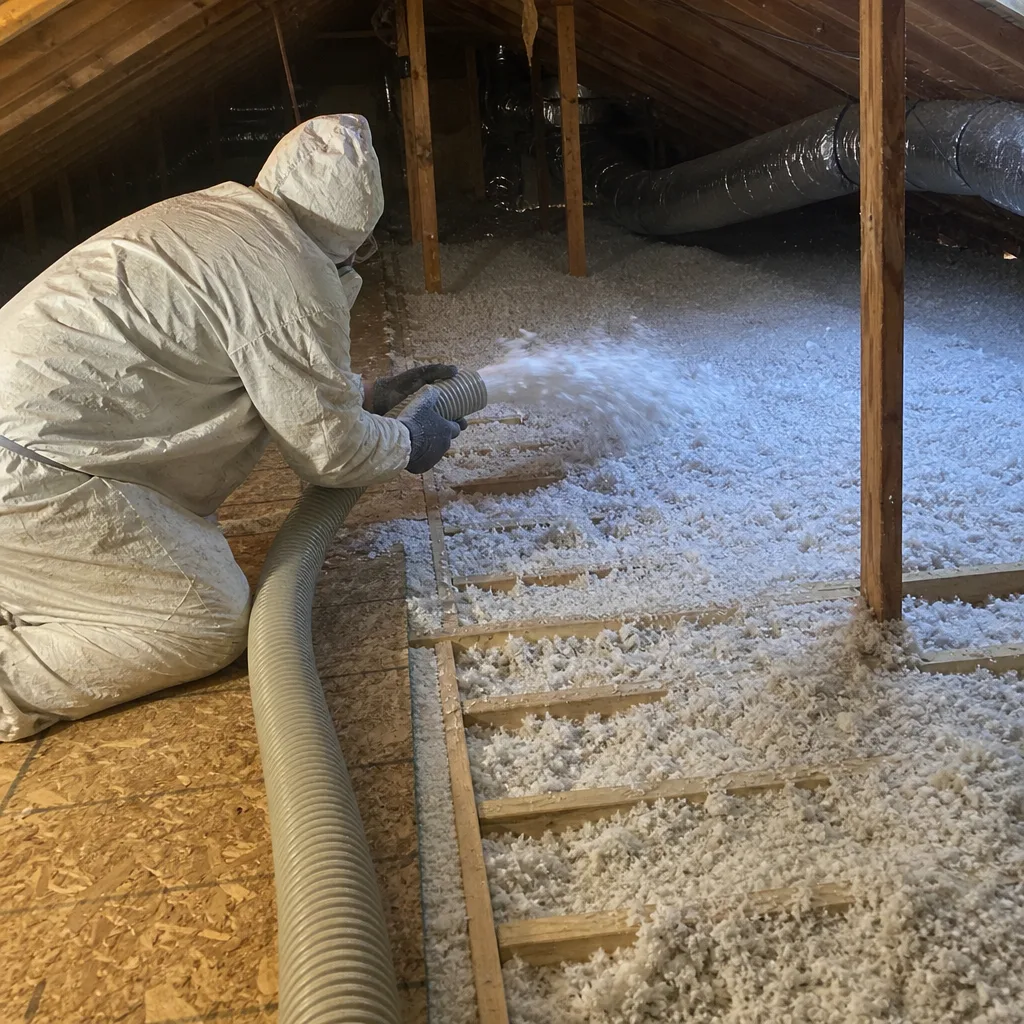
This is the single highest-value step. Every top plate, every recessed can light, every wire and plumbing penetration through the ceiling plane is a hole for hot attic air to pour down into the conditioned space. In a heat event, that convective path is the biggest driver of interior temperature rise. Sealing those penetrations before any insulation is installed can cut air leakage dramatically, and that’s the sequence we hold to: sealing first, then insulation. Blowing insulation over an unsealed floor is the one mistake we refuse to make. If you want to know what a properly sealed floor looks like before insulation goes down, the team working on Attic Insulation in Henderson handles the full rule-out.
2. Radiant barrier in the attic
An attic under a Henderson summer sun can top 150°F. A radiant barrier, a reflective foil installed on the underside of the roof sheathing or across the rafter bay, reflects radiant heat before it ever reaches the attic floor. That reduces the conducted heat load into the house during an outage. It doesn’t cool the house by itself, but it slows the rate at which the attic overwhelms the ceiling insulation.
3. Weatherstripped interior doors to isolate one cool room
When the HVAC fails, a house’s cool air becomes the whole benefit. If every interior door is open and every gap is leaking, that cool air migrates to the warm rooms fastest. Weatherstrip and door-sweep a single interior room, ideally the coolest ground-floor room with the fewest windows, and you create a thermal refuge. Add a towels-under-doors plan for the same purpose.
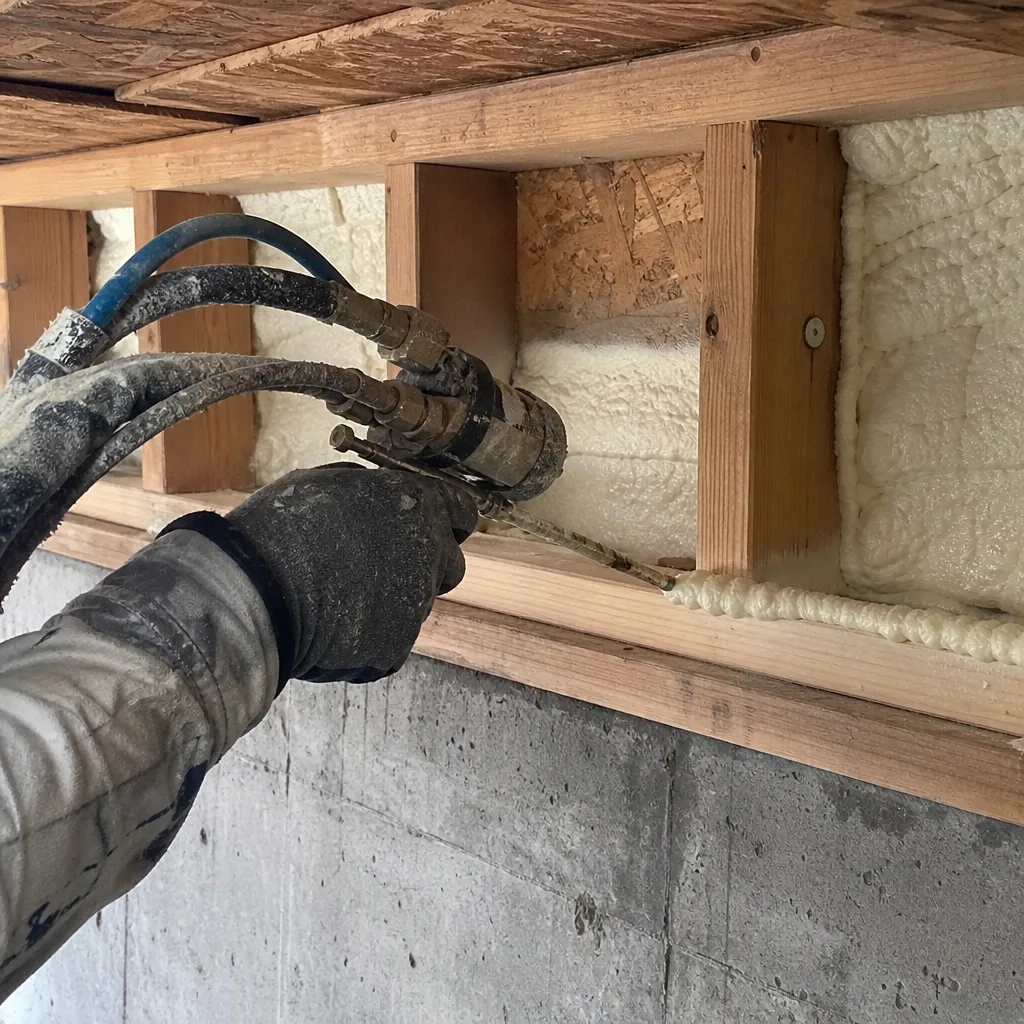
In Henderson, the mix matters. Spray foam delivered by a certified installer using Icynene or Demilec formulations at the attic roof deck extends thermal lag in vaulted-ceiling homes where there’s no accessible attic floor to seal. If that describes your house, the detail is covered in Spray Foam Insulation in Henderson. Loose-fill, whether GreenFiber cellulose or Owens Corning fiberglass, is the usual answer for an open attic floor.
Post-Wildfire Smoke Infiltration and Your Building Envelope
A tight envelope does more than hold cool air. It also keeps wildfire smoke particles out. Measured at 3 ACH50 or below, a house has a meaningfully lower indoor smoke particle concentration during a smoke event than a leaky one at 5-6 ACH50, because the smoke has fewer paths inward and the pressure differentials have less to work with. There’s no perfectly sealed house, but “tight” and “leaky” produce very different indoor air on the same smoke day.
If a smoke event is forecast (Henderson sees them when southwest winds carry smoke off the Spring Mountains or from fires elsewhere in the region), take these steps:
- Close and lock every exterior window and door. Locking compresses the weatherstripping and closes the gap more than shutting does.
- Weatherstrip the two exterior doors used most. A fresh sweep and a fresh gasket make a measurable difference.
- Set your HVAC to recirculate. Filter on, fan running, outdoor air intake closed. MERV-13 filters help on the return side.
- Tape the seams on any window that visibly leaks air with blue painter’s tape. It’s a temporary measure and it comes off clean.
- Seal the fireplace flue and any through-wall penetrations. A damper that doesn’t close fully is a smoke path.
The long-term answer is a tighter envelope and a properly sealed attic floor, because once air sealing is done, this concern is handled on every future smoke day rather than one at a time.
Emergency Supply Checklist Tied to Insulation Performance
Emergency supplies in Henderson should be chosen with your envelope and thermal lag in mind, not copied from a generic list meant for a Minnesota winter. These are the items that actually matter here:
- Thermal mass items: several cases of bottled water (the water itself is thermal mass, and it’s also the drink supply), plus frozen gel packs pulled from the freezer the night before a forecast heat event. Placed in the refuge room, they add cool mass and extend the interior temperature you’re holding.
- Room isolation materials: a door sweep or rolled towel for the refuge room door, blue painter’s tape for window seams, and a battery-powered fan. A fan doesn’t cool the air, but it speeds the transfer of your stored cool into the room and helps you tolerate a warmer room.
- A digital thermometer and hygrometer for the refuge room. You need to know the actual interior temperature, not what it feels like.
- Airtight storage for medications, documents, and masks in a smoke event. Wildfire smoke will not respect a screen door.
- N95 masks for everyone in the household.
- A written power-outage plan that names which room is the refuge, where the thermometer lives, and who checks the interior temperature each hour.
How to Assess Post-Event Insulation Damage
After a serious heat event, a smoke event, or a prolonged outage, some insulation products show damage. Some of what looks like damage isn’t, and some of what looks like nothing is a real problem. These are the signs to look for, and the ones that need a contractor rather than a homeowner:
- Spray foam delamination. Look for foam that has pulled away from the roof deck or the studs in visible sheets, especially near the ridge where attic temperatures peak. Delamination means the foam has lost contact with the surface it was meant to insulate, which is a performance failure, not a cosmetic one. A contractor assessment.
- Smoke contamination of blown insulation. Cellulose and fiberglass both pick up smoke odor and fine particles. A light surface exposure can often be remediated with a HEPA vacuum pass and the right air-scrubber; deep contamination in a thick loose-fill blanket usually means replacement. A contractor assessment.
- Thermal-shock cracking in rigid foam board. Look for cracks along board seams and at fasteners. Hairline cracks reduce effectiveness locally; through-cracks compromise the vapor path. A contractor assessment.
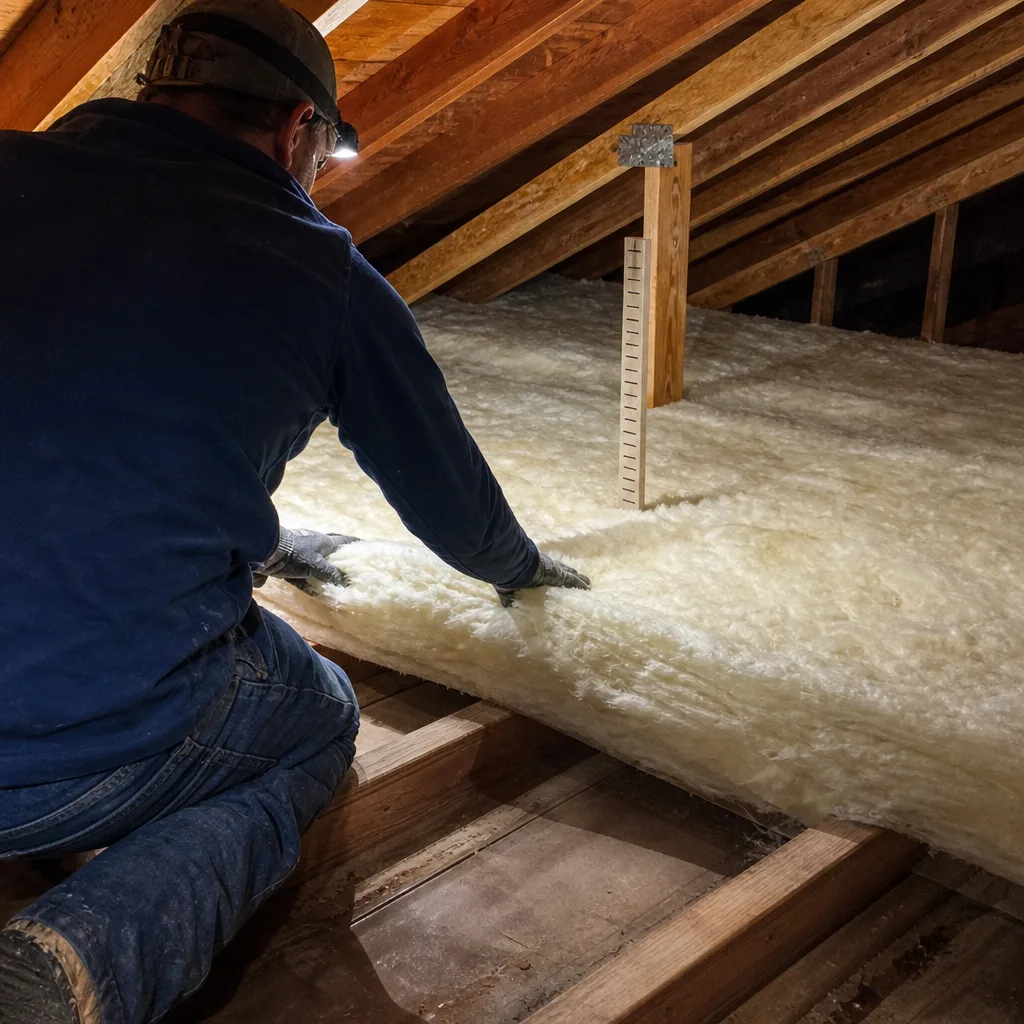
- Compression and settling. Blown cellulose and fiberglass settle over time and lose R-value where they’re compressed. If the settled depth has dropped well below the labeled depth, top-up is the fix. A homeowner can measure depth with a ruler and photograph it; the fix is a contractor job.
- Visible water staining or damp spots. This is a separate issue from heat, but worth watching after any event. Water in insulation is a removal-and-replace job.
What a homeowner can reasonably do without a contractor: measure settled depths against the labeled depth, photograph anything suspicious, note any smoke odor that doesn’t clear within a few days, and check attic vents and soffit screens for obvious dislodging. Everything else in this list, and anything involving a spray-foam or rigid-board failure, gets a contractor eyes-on.
The Documents to Keep in Your Home Emergency File
When a grid event, a fire, or a smoke event damages a home, insurance and FEMA processes both want documentation of what was there and how it performed. Keep these in a home emergency file, physical and digital:
- The blower-door report from your last envelope work. Before-and-after cfm50 readings, with the date and the technician’s notes. This is your proof of pre-event performance when you file a claim.
- The R-value certificate or insulation spec sheet for your attic, walls, and any spray foam. Product names matter (GreenFiber, Owens Corning, Icynene, Demilec, and others), because adjusters value materials by specification.
- The written scope and written price from the job that was done. This is what proves the work was in place and performed as documented.
- Your Documented Photo Record. Before-and-after photographs of the attic floor, the sealed penetrations, and the installed insulation.
- Your wildfire smoke log if you’ve noted any smoke event and your mitigation steps, plus receipts for any remediation.
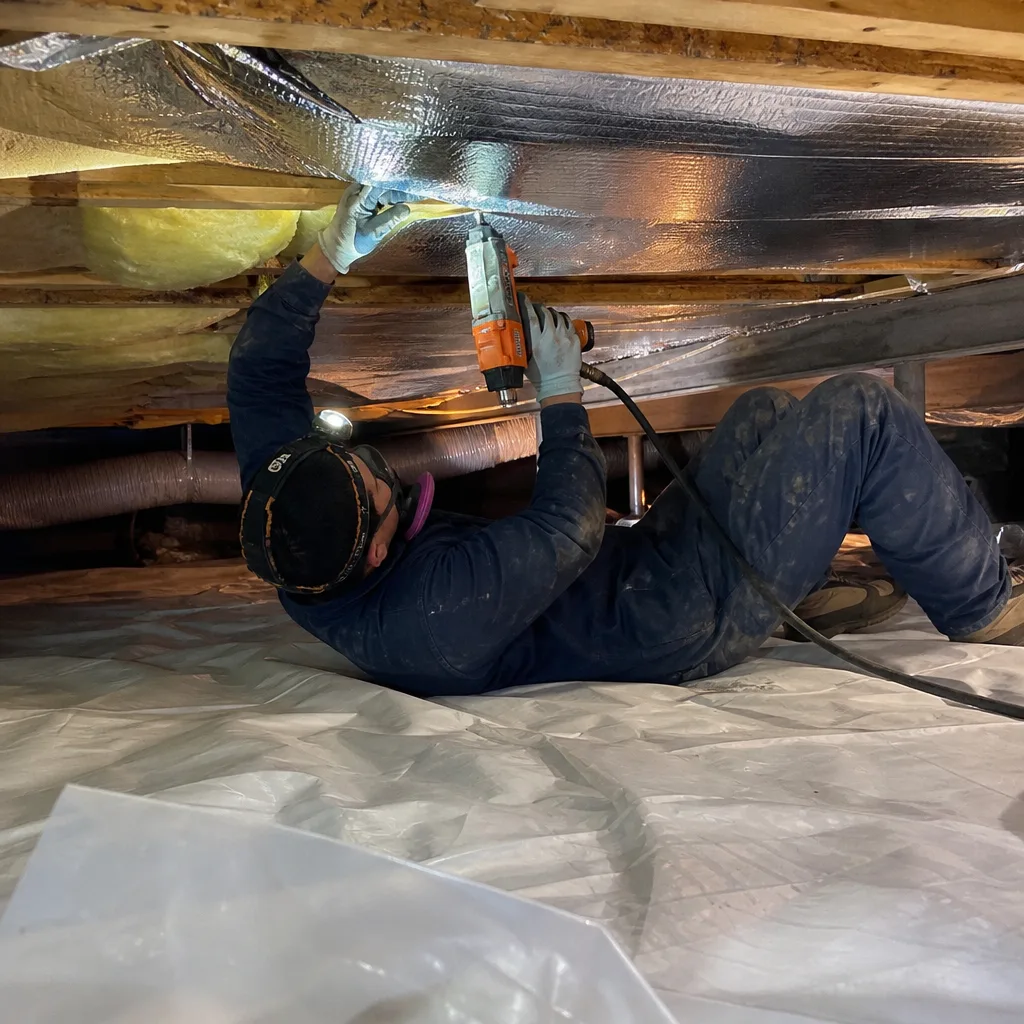
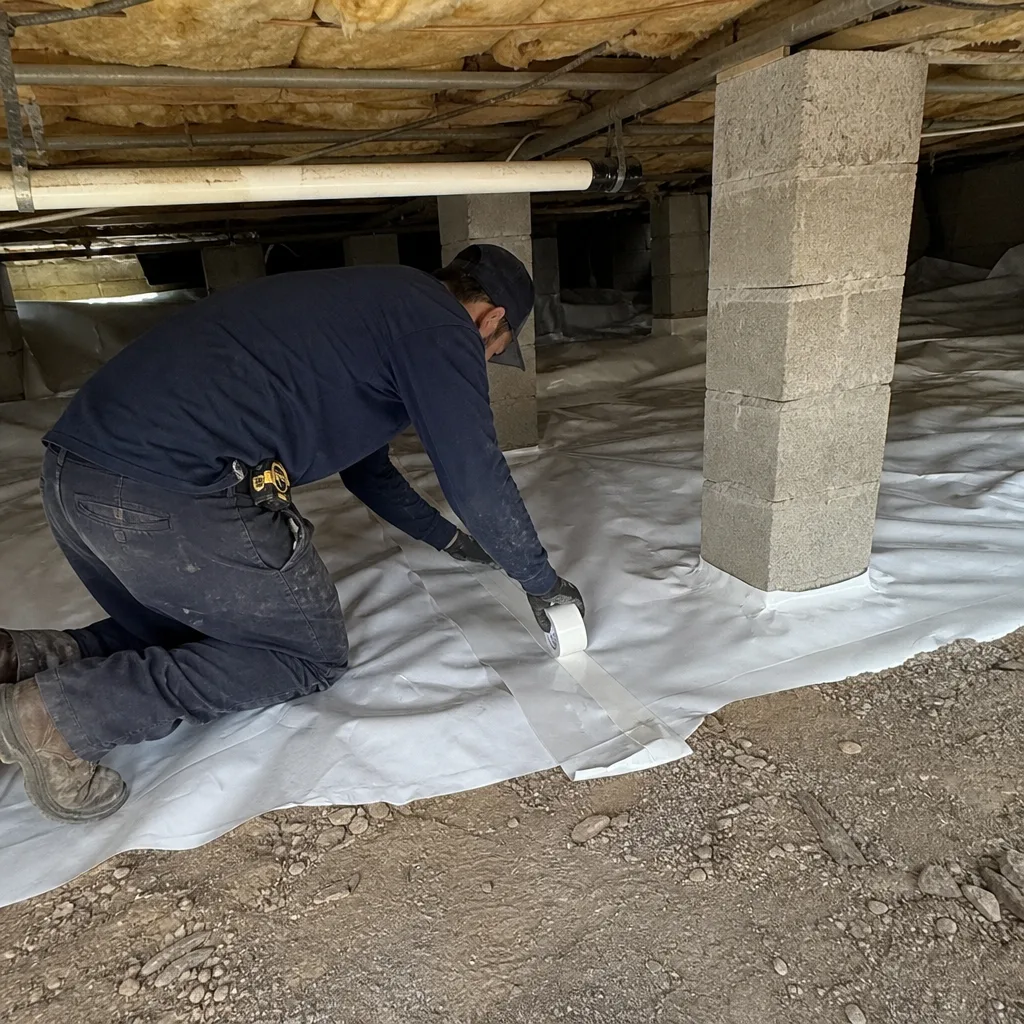
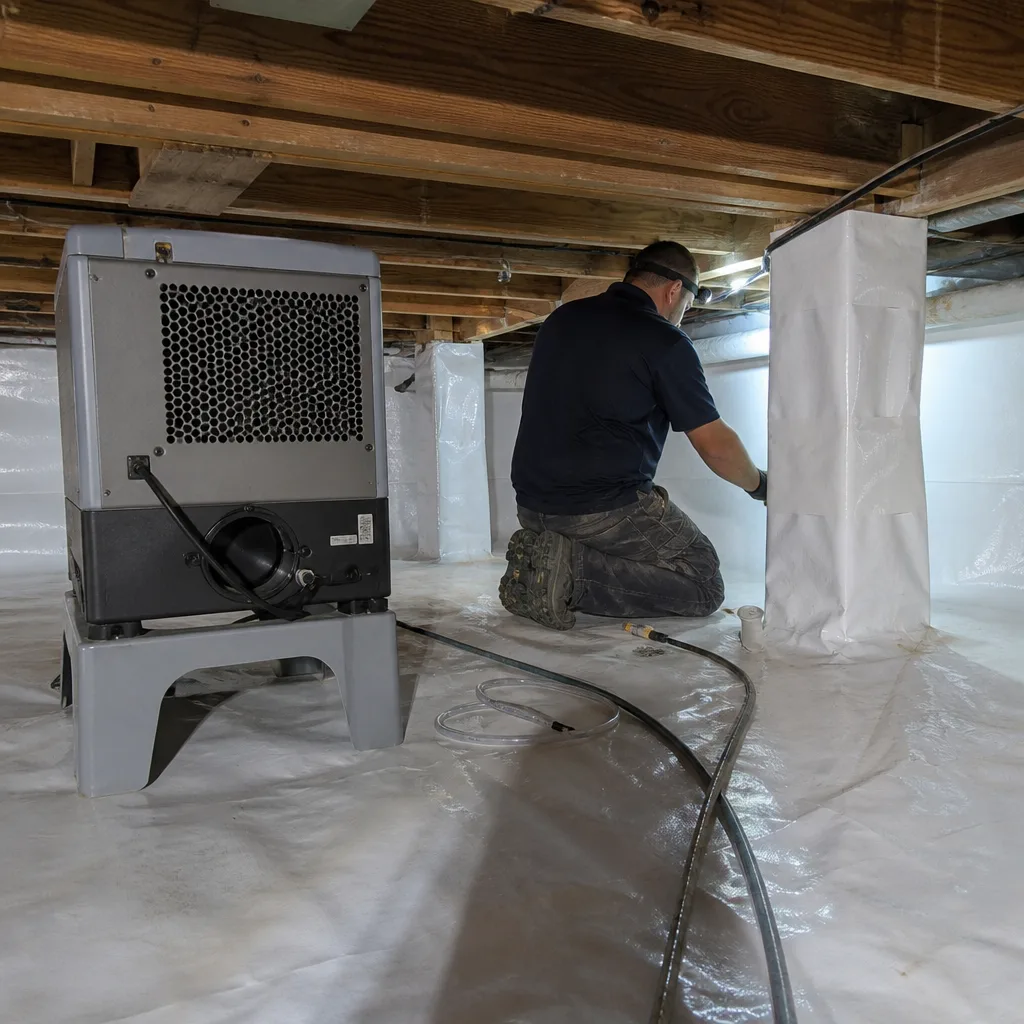
This is the documentation side of how we work. Under Haven Standard, every job closes with a Documented Photo Record and, on applicable jobs, before-and-after blower-door readings. That’s not a marketing flourish. It’s the exact paperwork a homeowner needs at claim time, and it’s why we hand it over rather than filing it away. The crawl space side of the same record-keeping applies when a home’s lower envelope is part of the work; the crew at Crawl Space Encapsulation & Vapor Barrier in Henderson documents that the same way.
A Year-Round Envelope Prep Calendar for Henderson
Preparedness here is seasonally driven, and the calendar is short. The right sequence for a Henderson home:
- February through April (before the heat): Get a blower-door baseline and an energy audit. Find out your actual ACH50 number. Air sealing and insulation top-up done in spring pays off in the July grid events.
- Late April: Confirm the refuge room is set. Door weatherstripping and a working door sweep. Thermometer, gel packs, bottled water, fan.
- May: HVAC service. A healthy compressor is one less outage of its own.
- June through September (heat-dome season): Pull the frozen gel packs the night before a forecast heat advisory or extreme-heat warning. Have the plan posted.
- Fire season (typically May through October): Close and lock windows and doors on smoke days, recirculate the HVAC, and keep N95s in the kit.
- October: Post-season assessment. Photograph the attic, check settled depth, note any spray-foam or rigid-board concerns, and get a second opinion if anything looks off.
That schedule is short by design. The work that matters happens before the heat does. Getting it done in Henderson is a spring project, not a July emergency project, even though it only feels urgent in July.
Common Mistakes to Avoid
- Blowing insulation over an unsealed attic floor. Ten minutes of air sealing around top plates and can lights beats a foot of added loose-fill every time. Doing them in the wrong order is the single most common heat-event vulnerability we see in Henderson attics.
- Assuming the problem was fixed because the AC was. A new compressor doesn’t change how long a house holds cool after a grid outage. The envelope is the only part that runs without power.
- Ignoring vaulted ceilings. Homes in Anthem and Seven Hills frequently have vaulted ceilings with no accessible attic floor. The right fix there is spray foam at the roof deck, not blowing loose-fill into a space that doesn’t exist.
- Skipping the blower-door test before and after. Without the numbers, you can’t know if the work actually changed the air leakage, and you don’t have a documented baseline for insurance. If your current contractor won’t provide before-and-after readings, that’s your answer about the work.
- Treating post-smoke insulation as fine because it looks the same. Cellulose holds onto smoke particles. If the attic still smells of smoke a week after the event, the insulation needs a real assessment.
- Sealing the refuge room halfway. A door sweep with a gap at the top of the frame does very little. Weatherstrip the full perimeter of the door and seal the window seams if you want the isolation to work.
- Not keeping the paperwork. A claim without the blower-door report, R-value certificate, and photo record is a harder claim. Keep them where you’d grab them in a hurry.
When to Call a Professional
Call a professional, not a handyman, when the work involves any of the following: a spray-foam or rigid-board failure anywhere in the envelope, any insulation that needs to be removed because of smoke or water contamination, any attic work in a home with vaulted ceilings where the roof deck is the only barrier, and any air-sealing job that involves recessed lighting housings, flue penetrations, or the top of a wall cavity. These are all cases where a mistake is expensive and a proper blower-door measurement tells you if the job actually worked. A homeowner can measure settled depth, photograph what’s visible, and close up a smoke path. Anything beyond that deserves an assessment. In Henderson, Envelope Insulation Henderson offers a free second opinion on any written estimate, including one from a competitor, so you can see the numbers before you commit. Call (844) 320-5338 and we’ll read a competing quote with you.
Frequently Asked Questions
A well-sealed Henderson home at 3 ACH50 or tighter with attic R-38 or above can hold a survivable interior temperature for roughly six to eight hours during a triple-digit heat event, which is consistent with the NV Energy survey findings from the July 2023 heat dome. A leaky home at 5-6 ACH50 often holds it for two to three hours. A blower-door test tells you which house you have. Call (844) 320-5338 to schedule one before the next heat advisory.
Yes. The blower-door test is the only measurement that tells you how fast your home is losing conditioned air, and it gives you the documented number you’ll want at claim time. Homeowners without that baseline can’t tell whether their envelope is buying them time or not. Estimates are free and the reading is a few hours of work.
Attic-floor air sealing is the highest-value step, and it’s typically the lowest-cost portion of an attic job because it’s done before insulation, not after. A can-light and top-plate sealing pass is often the difference between a leaky ceiling plane and a tight one. Call for a written price before any work starts.
If the attic still smells of smoke more than a week after the event, or if you can see visible soot on the loose-fill layer, the insulation needs a real assessment. A surface-level exposure can usually be cleaned with a HEPA pass; deep contamination in a loose-fill blanket often means replacement. Call us for a walkthrough before you file a claim.
Yes. Weatherstripping the full perimeter of an interior door, installing a door sweep, and taping leaking window seams are all homeowner work. What you can’t do yourself is verify the air-leakage number for the whole house. If your goal is a refuge room during an outage, do both: isolate the room yourself, and get the blower-door reading that tells you how much time it buys you. Estimates are free.
Your before-and-after blower-door report, R-value certificate, written scope and written price, and photo record are the four documents an adjuster will ask for. If you don’t have all four, that’s a sign the work before it wasn’t documented. We hand over all four on every applicable job, under Haven Standard: have it in writing.
The Bottom Line
Henderson’s insulation emergencies are heat-driven, not cold-driven. A sealed attic floor, a radiant barrier, a weatherstripped refuge room, and a documented blower-door number are the four controls that determine whether your home buys you six hours or two when the grid fails in July. Smoke events and post-event insulation damage follow from the same envelope: tighter is better. Get the work done in spring, get the numbers in writing, and keep the paperwork in a file you can grab. If you want a baseline reading or a second opinion on a written estimate in Henderson, the team at Envelope Insulation Henderson is one call away at (844) 320-5338.
Written by the team at Envelope Insulation Henderson.