
Last updated November 17, 2026
Attic Insulation Maintenance Schedule: What to Do and When
The advice to “inspect your attic every five years” was written for temperate climates with stable attics. Henderson attics are not stable. A single HVAC duct repair done by an unlicensed technician can displace enough blown insulation to drop effective R-value by 30 percent in one afternoon, and we’ve walked into attics in Green Valley where a raccoon turned a foot of cellulose into a matted, compressed mess in a single season. Insulation doesn’t wear out on a calendar. It degrades in response to events. This guide explains the four triggers that demand an immediate inspection, how to measure settled depth yourself, and how to keep the documentation that proves what your home is actually worth.
Quick Answer
Attic insulation should be inspected whenever a triggering event occurs (roof replacement, HVAC service, rodent activity, or new recessed lighting) and visually checked once a year from the hatch. Most Henderson homes need no scheduled replacement, but they do need trigger-based inspections, occasional top-offs to restore settled R-value, and full replacement only when the insulation is contaminated or compressed beyond recovery.
Table of Contents
- Why a Trigger-Based Schedule Beats a Calendar
- The Four Events That Require an Immediate Inspection
- How to Measure Settled Depth (and What the Number Means)
- What Pest Intrusion Leaves Behind in Cellulose vs. Fiberglass
- The 60-Second Annual Check From the Attic Hatch
- Keeping the Documentation Chain: Your Installed-R Certificate
- Henderson-Specific Concerns: Heat, Dust, and Monsoon Season
Why a Trigger-Based Schedule Beats a Calendar
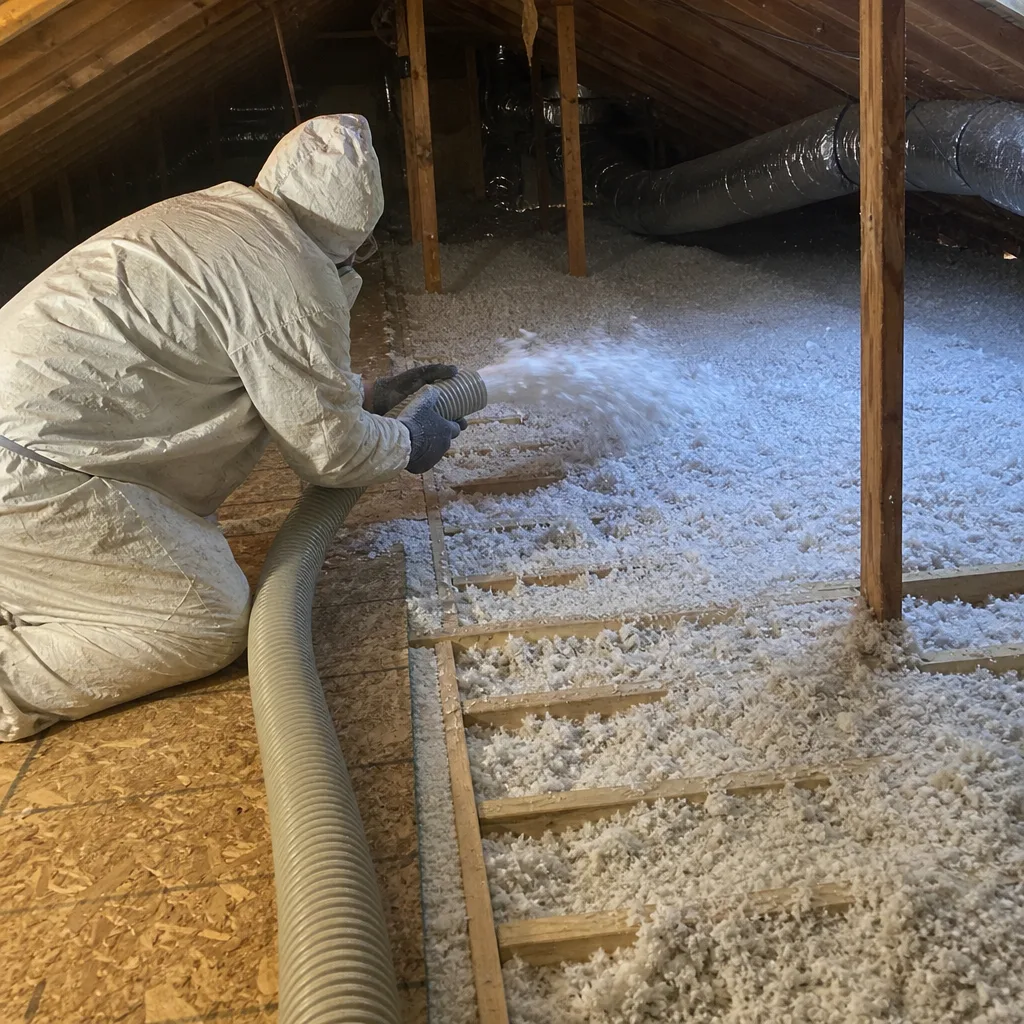
Insulation is a passive material, but the space it lives in is not. Blown fiberglass and cellulose settle under their own weight, and settling reduces the depth that produces R-value. Every inch of settled blown fiberglass loses roughly R-2.5 to R-3, so a 14-inch installation that compresses to 10 inches in five years is quietly giving up a quarter of its performance without any visible failure.
But settling is the slow part. The faster variables are what people actually do to attics: contractors crawling through to service equipment, roofers dropping material and compressing batts, pests tunneling through the field. Those events compress or displace insulation far faster than gravity does. A five-year inspection interval could easily miss two or three of them.
In our experience across Henderson neighborhoods like Anthem, Seven Hills, and the older ranch homes near downtown, the homes that perform best are not the ones inspected on a strict schedule. They are the ones where the homeowner picked up the phone the week after a roofer was in the attic. That is the whole logic of trigger-based maintenance. The calendar doesn’t know your roof was replaced. You do.
The practical schedule looks like this: a fast annual visual check, a professional depth measurement every 3 to 5 years as a backstop, and an immediate inspection any time one of the four triggers below fires.
The Four Events That Require an Immediate Inspection
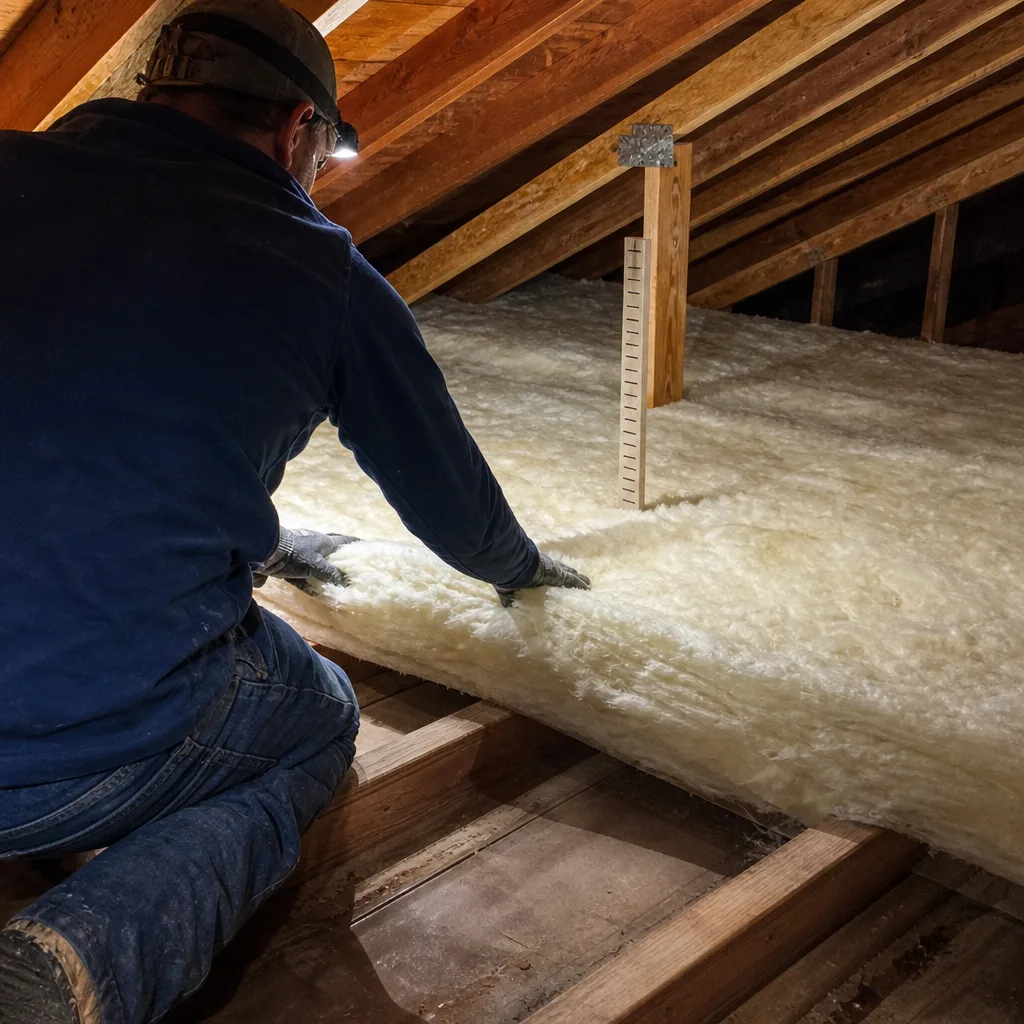
These four events should send you into the attic (or onto the phone) within days, not months. Each one has a specific mechanism by which it damages insulation, and each is easy to overlook because the damage is invisible from inside the house.
- Roof replacement or repair. Roofers work directly over the attic floor. They step on insulation, drop shingles and tools, and disturb the field to reach the decking. Even a careful crew compresses the material around the work zone. Ask for a photo of the attic floor after the roof is done, or walk it yourself.
- HVAC service. This is the biggest silent offender in Henderson. Technicians crawling to a handler or replacing flex duct will knock blown insulation aside, and a homeowner rarely notices. When the duct work is finished, the insulation around it should be restored to the marked depth. Ask the contractor to confirm that happened.
- Rodent activity. Any sound of movement, droppings, or nesting material in the attic warrants a full inspection and separate remediation. Rodents compress insulation into tunnels and trails, and in cellulose they leave contamination that cannot be topped over.
- New recessed lighting. Every new can light is a hole cut in the ceiling plane, and in an insulated attic each one needs a sealed, insulated cover. If the electrician didn’t coordinate with an insulation contractor, you now have a thermal bridge and a potential air leak, plus a pile of displaced material around each fixture.
If any of those four happened in the past year, the inspection is not optional. A $150 measurement today prevents a $900 top-off in two years, and it prevents the more expensive problem of discovering at resale that the R-value you paid for isn’t there.
How to Measure Settled Depth (and What the Number Means)
Blown-in insulation is required to have an installed-depth label on every job, and that label is your baseline. It is typically a small ruler or marker taped near the attic hatch stating the target depth and the R-value it produces. If your job didn’t get one, get a written certification from the contractor stating the installed R-value instead; a reputable contractor will provide it.
To measure settled depth, follow these steps:
- Take a stiff ruler or a marked dowel and a flashlight to the attic hatch. Do not walk the deck unless you have safe, visible joists.
- Insert the ruler straight down through the insulation to the top of the ceiling drywall until it stops.
- Read the depth at the top of the material. Do this in at least four locations: near the hatch, at the center, against the far wall, and over the area that was serviced or disturbed.
- Compare the readings to the installed-depth label. Note the difference in inches.
- If the average reading is more than 2 inches below the label, or if any single reading is more than 3 inches below, topping-off is likely warranted.
One caveat: the label is the depth at installation, so a small amount of settling is normal. What you’re looking for is a gap that is both measurable and uneven. A ceiling that reads 13 inches in three places and 7 inches over the HVAC handler tells you exactly where the loss is coming from. On top of that, if the material is visibly compressed, dark, or matted, depth alone understates the loss. Compressed insulation loses R-value even where the depth looks acceptable.
For homes in Henderson’s hotter pockets, the target matters. The U.S. Department of Energy recommends R-49 to R-60 for our climate zone, which works out to roughly 16 to 20 inches of blown fiberglass or 13 to 16 inches of cellulose depending on the manufacturer. GreenFiber cellulose, for example, installs deeper per inch of R than fiberglass, so comparing depth between materials without the R-value is a mistake. Compare depth to the label; compare R-value to the climate-zone target.
What Pest Intrusion Leaves Behind in Cellulose vs. Fiberglass
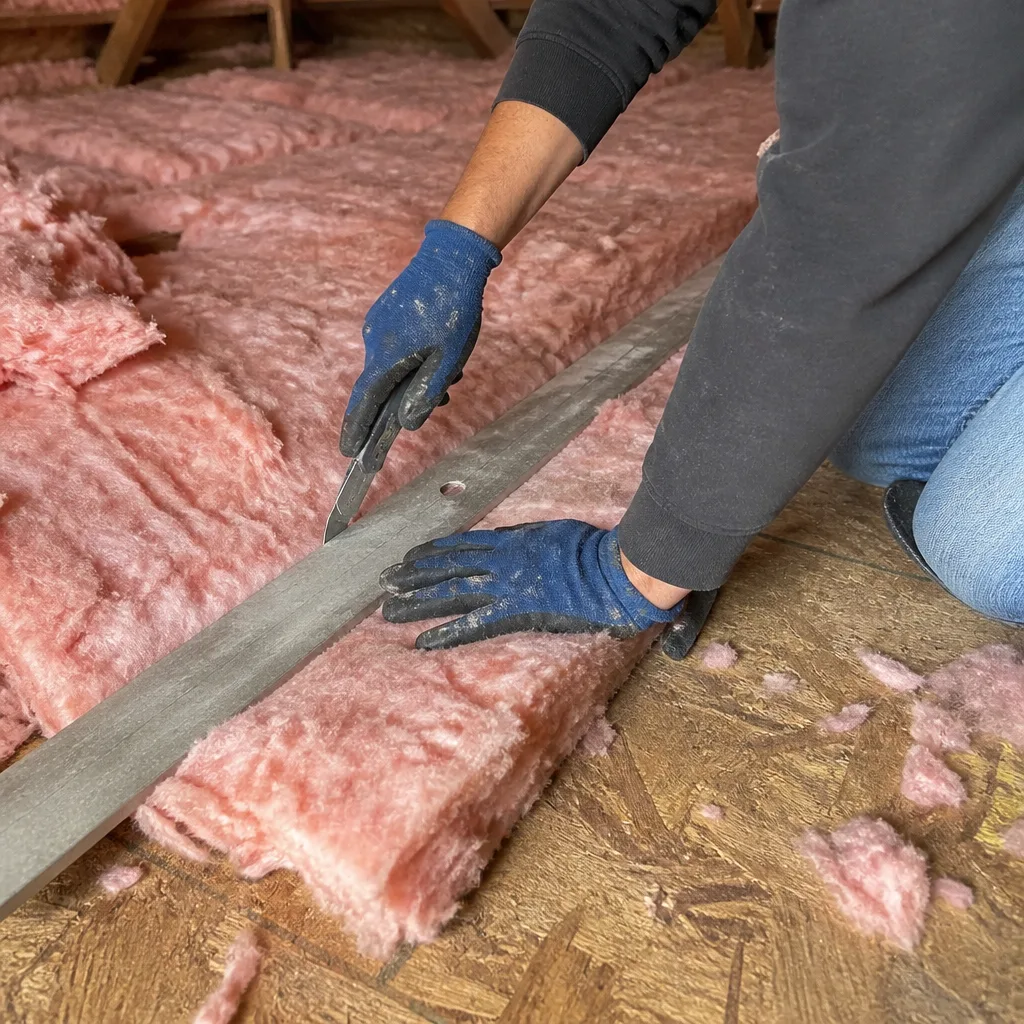
The two common blown materials fail differently under pest pressure, and that difference determines whether you can top off or must remove.
Blown cellulose is the more attractive material to rodents and insects because it’s paper-based. It also holds moisture and odor, and once it’s contaminated with droppings, urine, or nesting debris, it is no longer salvageable. A mattress-shaped mat or a tunneling pattern in cellulose needs removal, not a top-off. The material also compresses into a dense plug where rodents travel, which can look like settled material but is actually a contaminated tunnel.
Blown fiberglass is less attractive but still subject to rodent trails. Fiberglass fibers are more likely to remain dimensionally stable, but they compress where animals pass through, and the physical disturbance can reduce coverage over that path. Fiberglass also holds odor less than cellulose, but it does not sanitize itself. Any area with visible droppings or tunneling should come out before new material goes in.
Why this matters for a maintenance schedule: the temptation after pest cleanup is to top off the disturbed area. Don’t. Topping over contaminated insulation traps odor, traps the pest problem, and leaves you with a compromised layer underneath. In our experience in Henderson homes near the foothills and open desert washes, the right sequence is remove, sanitize, seal air leaks and pest entry points, then reinstall. That’s a full-building-envelope job, which is why attic insulation in Henderson begins with a check of what’s there before we ever quote material.
The 60-Second Annual Check From the Attic Hatch
You can do this without stepping off the ladder, and it catches most of the problems that matter.
- Look for daylight. A flashlight sweep of the field should not show daylight through the roof or soffits. Visible light means an air or water leak worth investigating.
- Check the material surface. It should be level and loose. Ruts, trails, or a dark matted patch are signs of pest or moisture.
- Look around penetrations. Any duct, pipe, or light coming through the ceiling should have insulation fluffed around it, not a bare gap.
- Sniff the air. A musty or animal smell in the attic is a finding, not a quirk.
- Look at the roofline for stains. Water staining on the roof deck or joists is a leak, and wet insulation has to come out regardless of depth.
Take a photo of your reading and date it. That photo becomes part of the documentation file described below. Do this once a year, ideally in the fall before the heating season, and after any of the four trigger events above.
Keeping the Documentation Chain: Your Installed-R Certificate
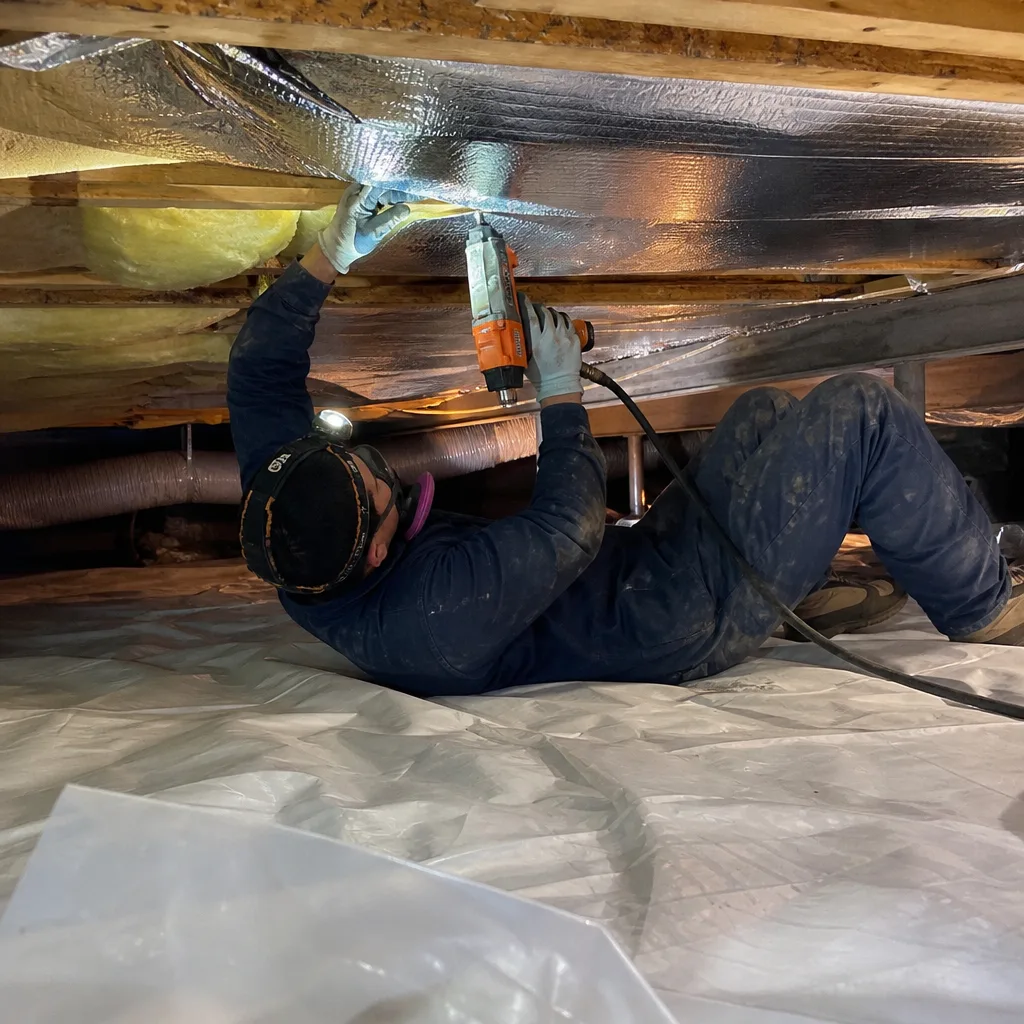
Most homeowners lose the paper trail and don’t discover the cost until they’re selling. A properly documented attic insulation job is worth real money at resale, and in Henderson’s competitive market near Green Valley and Lake Las Vegas, a buyer’s inspector will look at the attic and ask what’s there.
Your file should contain:
- The original installed-R certificate or depth label from the insulation job, with the material and R-value stated.
- Before-and-after blower-door readings if the contractor measured them. That single number, a pressurization reading that shows in one figure how much air the building envelope was losing, is the strongest proof of performance a homeowner can hand a buyer.
- Annual inspection photos with dates and readings.
- Any work orders from roof, HVAC, or electrical contractors that touched the attic, plus a note on whether insulation was restored.
This is the file Envelope Insulation Co. ships on every applicable job: a written price and scope before work starts, a documented photo record, and before-and-after blower-door numbers you can keep. Under Haven Standard: Have it in writing, the paperwork is part of the job, not a favor. If you’ve lost the original certificate, an energy audit or a fresh documented inspection can rebuild most of the file for you.
Henderson-Specific Concerns: Heat, Dust, and Monsoon Season
Henderson’s climate works on insulation in ways that temperate-climate maintenance advice ignores. Summer attic temperatures routinely climb past 130 degrees Fahrenheit, and that heat cycling accelerates the settling of blown materials and stresses the sealants around can lights and top plates. Monsoon season brings wind-driven rain that finds its way in through ridge vents and compromised flashing, and wet insulation has to be removed.
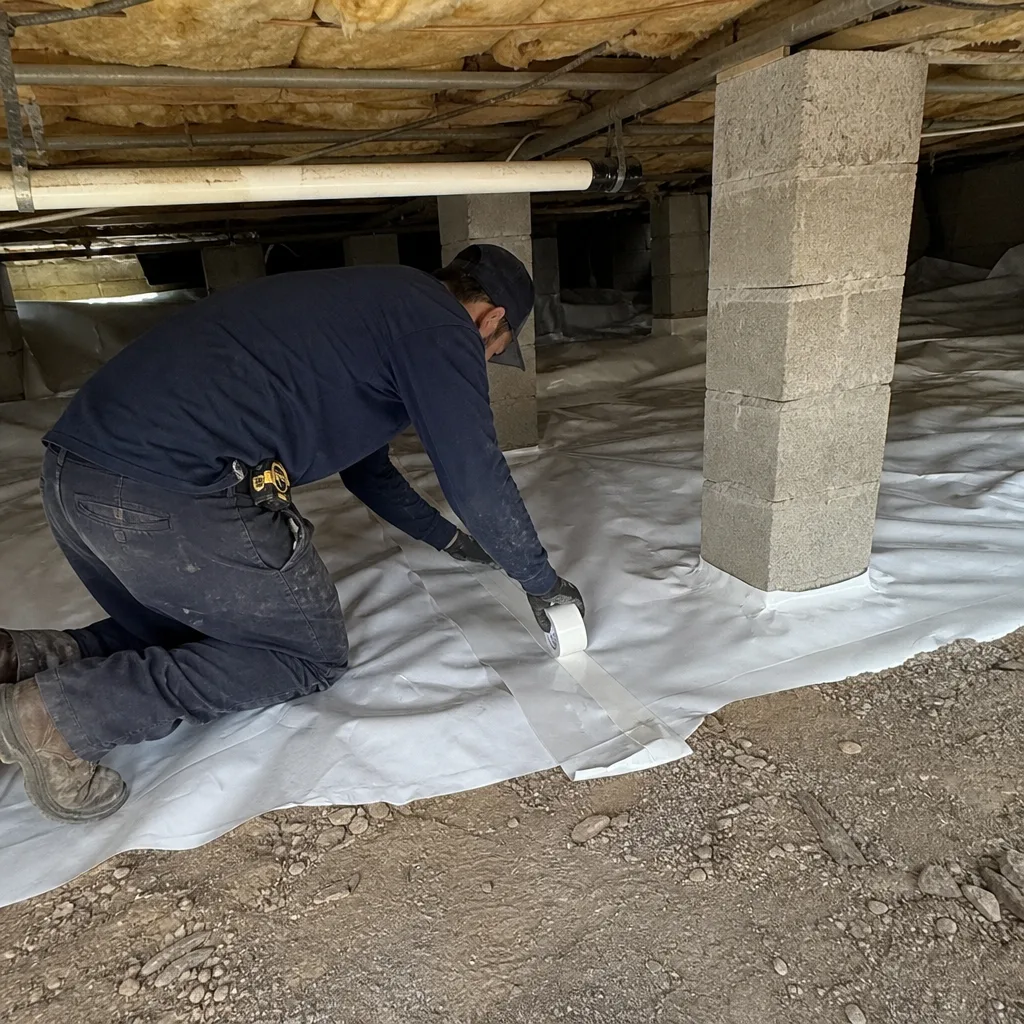
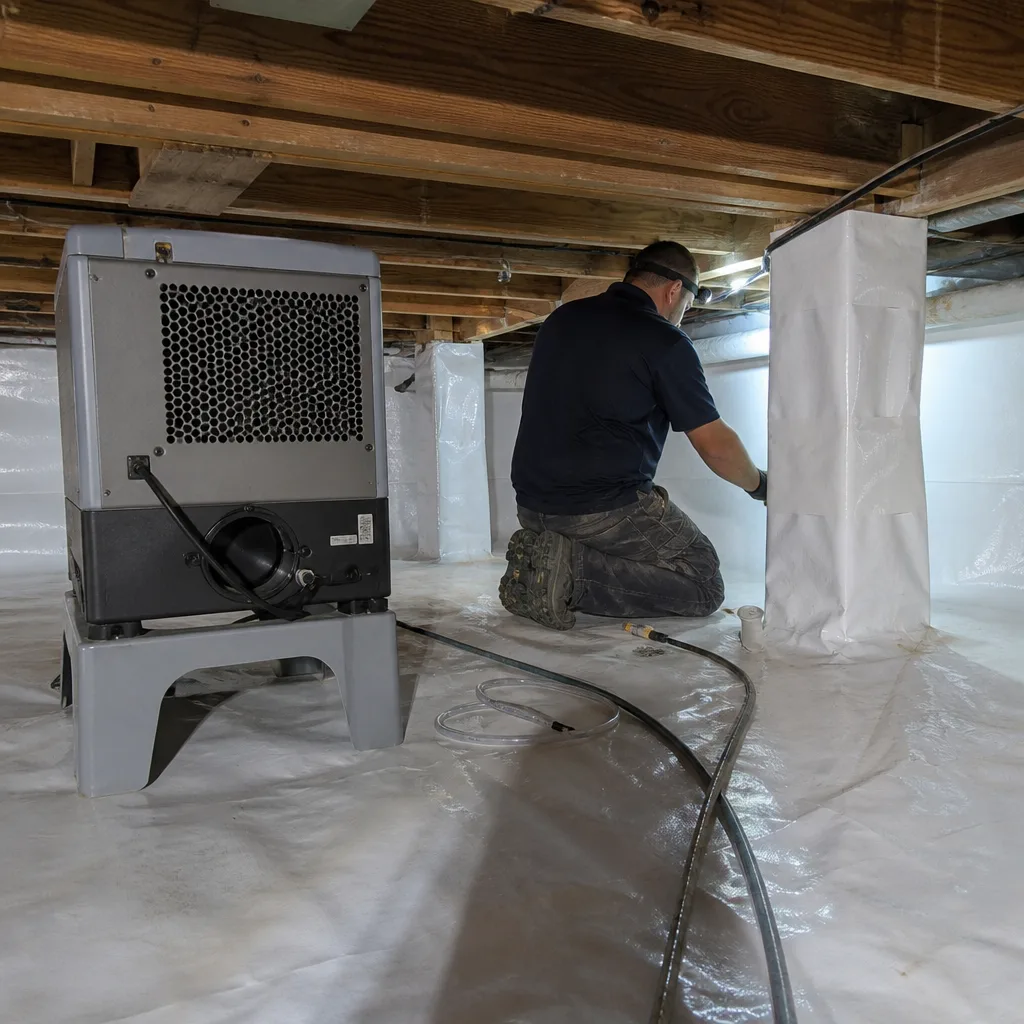
Dust is the quiet one. Henderson homes accumulate fine desert dust, and a dusty attic field changes how you read the material. Dark insulation is not necessarily wet; it may just be layered with dust. Look for texture and compression, not just color. And in the older neighborhoods where attics were retrofitted over the years by different contractors, you’ll often find two materials stacked with no documentation of either. A measurement and a written scope before any work begins protects you from paying to fix the wrong layer. If you’re not sure what’s up there, our Envelope Insulation Henderson home page lays out the full building-envelope service line, from attic air sealing to crawl space encapsulation and vapor barrier in Henderson.
Common Mistakes to Avoid
- Topping off without checking for air leaks first. Blowing insulation over an unsealed attic floor buries the leaks and traps the conditioning loss. Seal top plates, can lights, and penetrations first, then insulate. We won’t do it the other way around.
- Trusting depth alone. A compressed 14-inch field can perform like 9 inches. R-value is the number that matters, and compressed material can’t deliver the label’s number.
- Throwing out the installed-R certificate. The label is your baseline for every future measurement. Lose it and you lose the ability to prove settling.
- Ignoring an HVAC service visit. The most common cause of a sudden R-value drop in Henderson attics is a contractor who moved insulation and didn’t put it back.
- Topping over rodent contamination. In cellulose, contamination has to be removed. Topping traps the problem and the odor.
- Adding recessed lights without sealing them. Each new can light is a hole in the ceiling plane and needs an insulated, sealed cover once the insulation goes back.
- Assuming a new roof means the attic is fine. Roofers compress insulation. Inspect after every roof, not just when something feels wrong.
When to Call a Professional
Call a professional if you can’t safely measure depth (a steep roof pitch or no safe deck to stand on is reason enough), if the annual visual check finds daylight, water staining, pest evidence, or bare gaps around penetrations, or if measurement shows more than a 2-inch average shortfall from the installed-depth label. Also call if any of the four triggers fired and you haven’t seen the attic since. Because Henderson attics get dangerously hot in summer, don’t do a full crawl inspection in July. A documented inspection with before-and-after blower-door readings is the right way to know whether topping off is warranted. For a full building-envelope assessment, spray foam insulation in Henderson is the right option for rim-joist gaps and hard-to-reach cavities. Envelope Insulation Henderson offers free estimates in Henderson – call (844) 320-5338.
Frequently Asked Questions
Inspect once a year from the hatch and schedule a professional depth measurement every 3 to 5 years. But the more important schedule is trigger-based: inspect immediately after a roof replacement, HVAC service, any sign of rodents, or the addition of recessed lighting. Call (844) 320-5338 to book a documented inspection.
For our climate zone, target R-49 to R-60, which is roughly 16 to 20 inches of blown fiberglass or 13 to 16 inches of cellulose depending on the manufacturer. Most Henderson homes with a shortfall need a top-off of 3 to 6 inches rather than full replacement. Call for a free written estimate before any work starts.
You can top off your own insulation if you have a safe deck, the depth measurement, and a clear understanding that air sealing must come first. In practice most attics need air sealing around top plates and penetrations before new material goes down, and that’s the step that delivers the real savings. Call us for a free second opinion on any written estimate.
A blower-door test measures how much air your building envelope is leaking, in a single number (CFM50), before and after air sealing. Depth tells you how much insulation is there; the blower-door reading tells you how well the whole assembly is performing. We publish before-and-after blower-door numbers on every applicable job so you can verify the change.
Compare a ruler and a photo to the installed-depth label or certificate. A gap of more than 2 inches on average, or an uneven gap over a serviced area, is a signal that topping off is warranted. Call (844) 320-5338 and we’ll measure and document it in writing.
Not always, but it always disturbs it, and disturbed insulation should be inspected within days. Our technicians have up to 10 years of experience restoring insulation around service work, and we’ll tell you in writing whether a top-off is needed. Estimates are free.
The Bottom Line
Attic insulation doesn’t degrade on a calendar. It degrades when a roofer compresses it, an HVAC tech displaces it, a rodent tunnels through it, or a new can light cuts through the ceiling plane. The reliable schedule is a 60-second annual visual check, a professional depth measurement every few years, and an immediate inspection after any of the four trigger events. Measure against your installed-R certificate, keep the documentation, and treat contamination as removal, not a top-off. That file is worth real money at resale. For a written price and a documented record, Envelope Insulation Henderson is here. Call (844) 320-5338 for a free estimate.
Written by the team at Envelope Insulation Henderson.