
Last updated November 17, 2026
DIY vs Professional Attic Insulation: What’s Safe to Do Yourself
Home Depot will rent you a blower machine for blown-in insulation. It will not rent you a blower door. That asymmetry defines exactly where DIY ends and where a verifiable result begins. You can buy batts, rent the hopper, watch the same four videos everyone watches, and blow fiberglass across your attic floor on a Saturday. What you cannot do is prove the job worked. The skill gap between a careful homeowner and a trained installer is real but narrower than most contractors admit. The gap in measurement equipment is absolute. This guide covers what’s genuinely safe to handle yourself in Henderson, where the line sits, and what documentation a professional job produces that yours can’t.
Quick Answer
You can safely add blown-in insulation over an already-sealed attic floor, replace a single damaged batt in an open joist bay, and install a hatch cover kit. You should not do the air sealing that makes insulation perform, because sealing without a blower-door test before and after is unverifiable, and an unverified seal is functionally no seal. Any insulation work tied to a permitted remodel, or any disturbance of pre-1980 insulation in Henderson, belongs to a licensed contractor.
Table of Contents
- What You Can Legitimately Do Yourself
- Why Air Sealing Without a Blower Door Is Unverifiable
- What Unverifiable Sealing Costs Over Five Years
- Henderson Code Triggers That Require a Licensed Contractor
- Safety Facts That Apply Regardless of Skill Level
- The Documentation Package a DIY Job Can’t Produce
- How to Decide: A Step-by-Step Checklist
What You Can Legitimately Do Yourself in a Henderson Attic
Three jobs are within reach for a homeowner with reasonable caution and a free weekend. We’ve walked attics in Green Valley and Anthem where the previous owner did exactly these and did them fine.
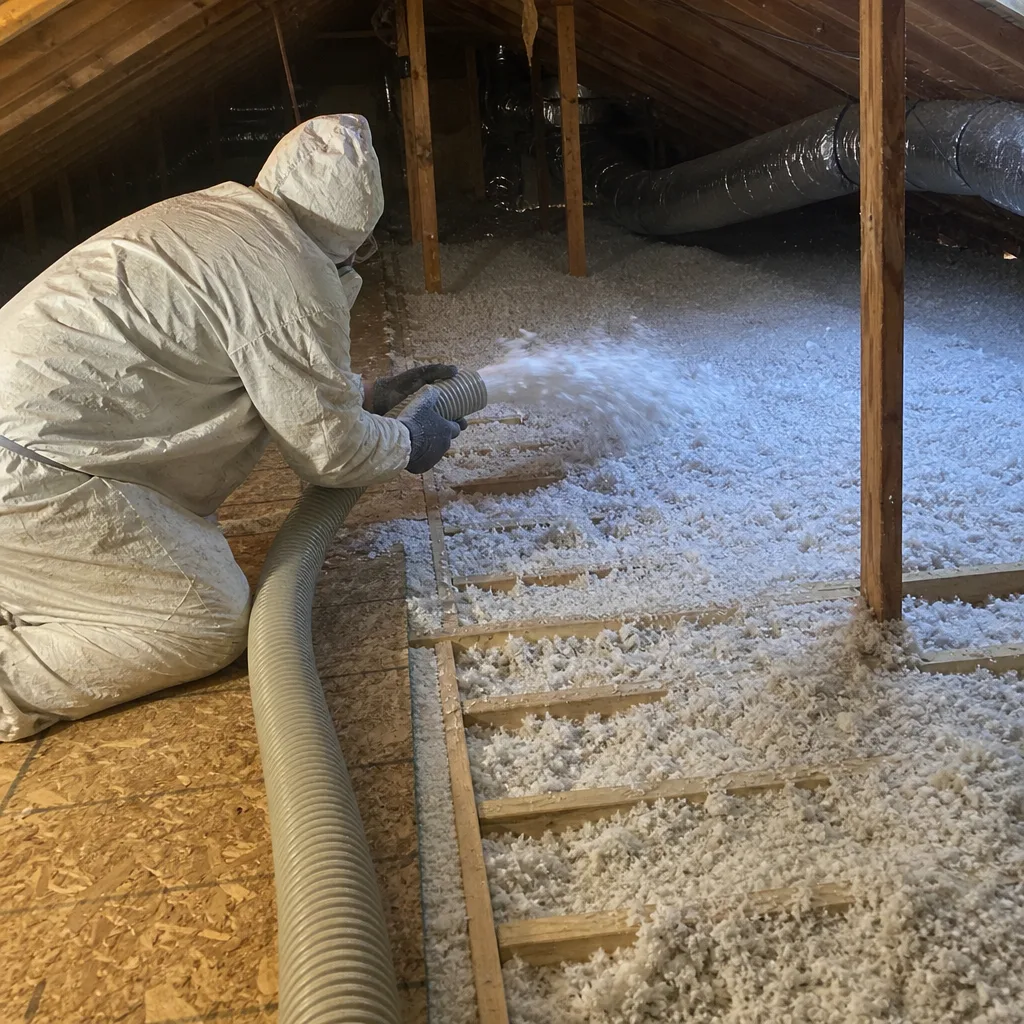
- Adding blown-in depth over an already-sealed floor. If a prior contractor air-sealed the attic and you’re simply topping up from R-30 to R-49, renting the blower and adding loose-fill is a legitimate DIY project. The work is additive and doesn’t require opening the envelope.
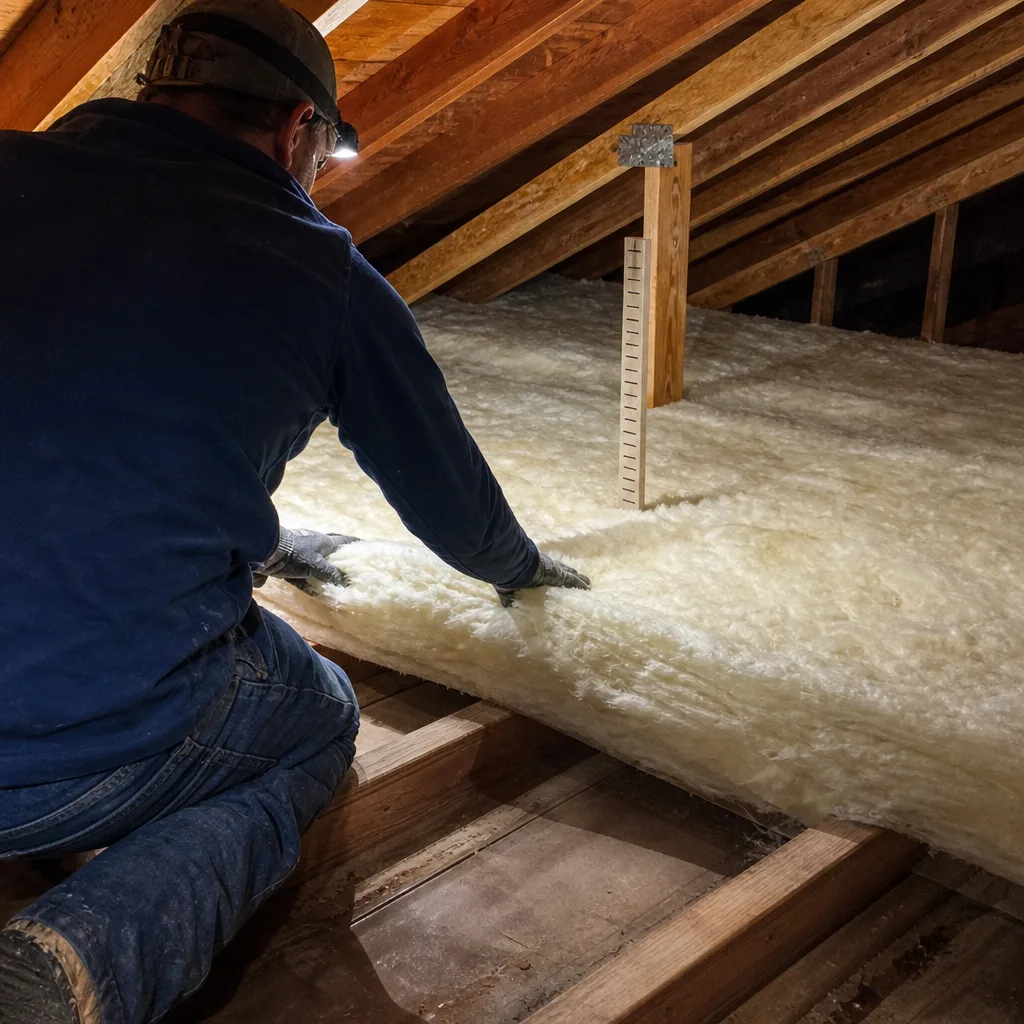
- Replacing a single damaged batt. A batt knocked out of place by a cable installer or a raccoon, sitting in an open joist bay you can reach without crawling over ducts, is a 15-minute fix with a $20 batt.
- Installing an attic hatch cover kit. These are insulated boxes that drop over the access hatch. They’re cheap, they work, and installing one doesn’t touch the envelope’s seal.
What ties these together: none of them requires you to seal a penetration and then prove you sealed it. That distinction matters more than the difficulty of the work itself, and it’s the whole subject of the next section. If you’re weighing whether to top up at all, our attic insulation in Henderson page covers what R-value actually means for a Las Vegas Valley climate.
Why Air Sealing Without a Blower Door Is Unverifiable
A blower door is a calibrated fan that mounts in an exterior doorway and pressurizes the house to 50 pascals. The reading it produces, in CFM50 (cubic feet per minute at 50 pascals), shows in one number how much air the building envelope is losing. Before-and-after readings tell you whether your sealing work did anything. There is no rental channel for this equipment, no app that substitutes for it, and no homeowner-accessible alternative that produces the same number.
Here’s the problem with sealing by feel. You crawl the attic with a can of spray foam and a caulk gun, you hit the top plates, the can lights, the plumbing penetrations, the wire holes. You feel productive. You come down dusty and satisfied. And you have no idea whether you sealed the big leaks or the small ones, because you can’t see air. The largest holes in a typical Henderson attic aren’t the ones that look obvious. The top plate gap where the drywall meets the framing runs the full perimeter of the house and looks like nothing. The recessed can light housings leak around their rims invisibly. Attic stair covers leak at the frame, not the panel.
We’ve tested attics where a homeowner spent a full day sealing and cut leakage by 8%. We’ve tested attics where a trained crew cut it by 52% in four hours. Same house style, same era of construction, similar neighborhood. The difference wasn’t effort. It was knowing where to point it, which comes from a pressure test and a smoke pencil, not a visual scan.
What Unverifiable Sealing Costs Over Five Years
An unverified seal isn’t just incomplete. It’s a cost you carry every summer month for years. Henderson’s cooling season runs long, and a leaky attic floor means the air you paid to cool is leaving through the ceiling before it ever cools the room.
Put it in rough terms. A home with a leakage rate around 4,500 CFM50 and a homeowner-sealed attic that only gets to 3,900 CFM50 is still losing meaningfully more air than a professional job that reaches 2,200. Over five Henderson summers, that gap shows up in every electric bill, and it compounds against you. The system runs longer, the ducts in a 140-degree attic absorb more heat, and the equipment wears harder. There’s no single dramatic moment where the cost lands. It’s a slow leak in your household budget that never gets fixed because nothing tells you it’s there.
This is why our approach treats air sealing as a prerequisite, not an add-on. We won’t blow insulation over an unsealed attic floor, because insulation’s only job is to slow heat moving through trapped air, and if air is moving through the floor, the insulation is doing nothing. That sequence, seal first, then insulate, is the difference between an R-value on paper and an R-value the house actually holds.
Henderson Code Triggers That Require a Licensed Contractor
Some attic work stops being a homeowner project the moment it touches a permit. In Henderson, three situations cross that line:
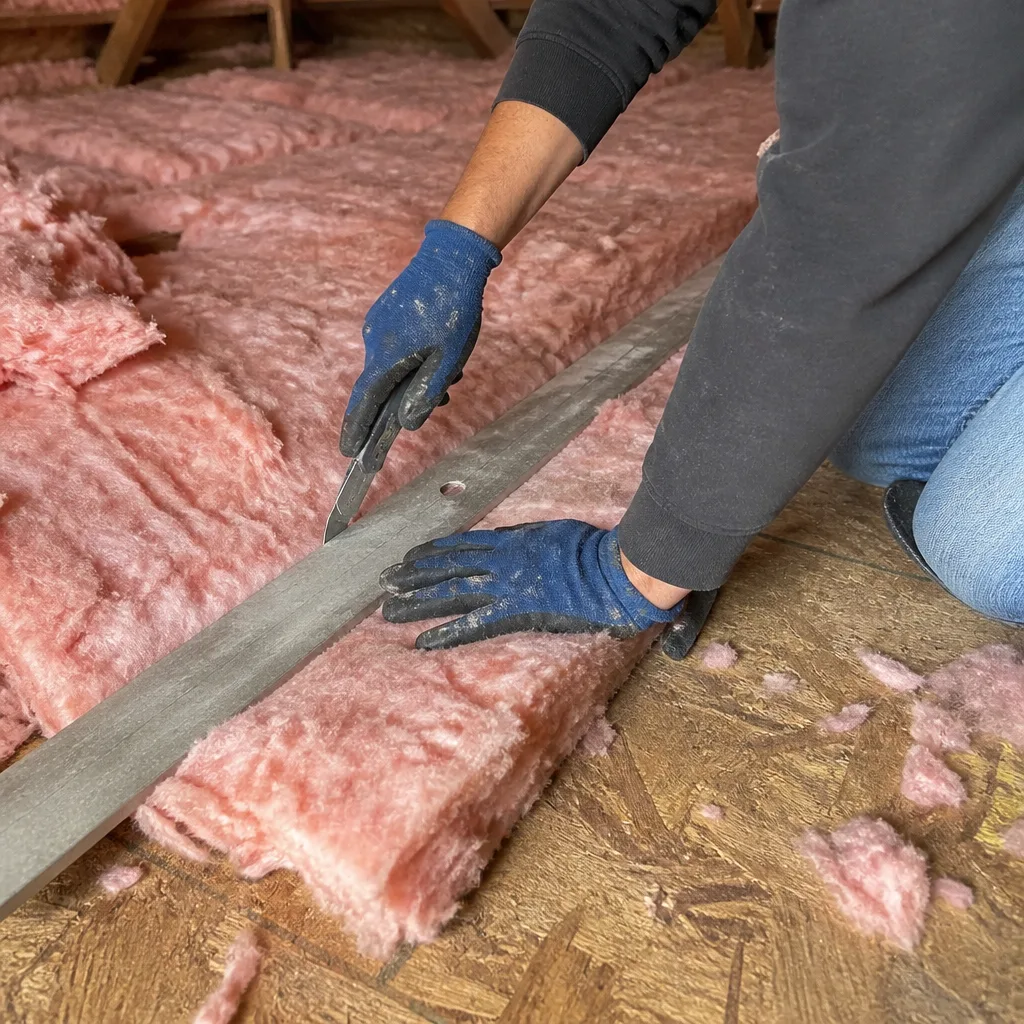
- Any job that changes the building envelope’s total R-value as part of a permitted remodel. If you’re pulling a permit for an addition, a window replacement program, or a major renovation that includes insulation upgrades, the insulation scope has to be documented and inspected, which means a licensed contractor’s name goes on it.
- Any work on a pre-1980 home where existing insulation will be disturbed. Clark County’s older housing stock can contain asbestos in vermiculite-based insulation, and disturbing it without testing is a hazard, not a code question. Testing comes first.
- Any job where spray foam is the chosen material. Two-part spray foam involves isocyanates, exothermic reaction, and a level of PPE most homeowners don’t own. It’s a trained-installer material.
Pull a Henderson building permit and the inspection record follows the job. That record is worth something if you ever sell, because the buyer’s inspector will ask about it. For more on where insulation fits in a full envelope upgrade, the spray foam insulation in Henderson page explains when foam makes sense versus blown-in.
Safety Facts That Apply Regardless of Skill Level
Skill level changes what you attempt. It doesn’t change what can hurt you. These apply to everyone who enters a Henderson attic in July.
- Blown fiberglass requires an N95 respirator and sealed eye protection. Not a dust mask from a drawer. An N95 fit properly, plus goggles. Fiberglass fibers in your eyes and lungs are a bad afternoon and a worse night.
- Attic temperatures in Henderson reach well past 150°F in summer. Do the work before 9 a.m. or don’t do it. Heat illness in an attic is fast and disorienting.
- Walk on joists or the decked path, never on the ceiling between them. Drywall fails under a footfall, and a fall through a ceiling into a room below is a real injury pattern.
- Pre-1980 homes require an asbestos check before you disturb existing insulation. This is non-negotiable. Vermiculite insulation in older Clark County homes can contain asbestos fibers, and once airborne, they stay a problem for decades.
- Wear long sleeves, long pants, and a hat. Exposed skin against blown fiberglass, and against roofing nails protruding from the deck above, is the most common minor injury we hear about.
You can read more about protecting the whole envelope, including the vapor barrier side of the equation, at our crawl space encapsulation and vapor barrier in Henderson page. The attic isn’t the only place Henderson’s dry heat and occasional monsoon humidity fight each other.
The Documentation Package a DIY Job Can’t Produce
Here’s what a professionally documented attic job closes with. It’s the answer to “what do I actually get for the extra money.”
- A signed installed-R certificate. A document stating the R-value actually installed, with the material and depth recorded, signed by the installing company. This is what an appraiser wants, what a buyer’s inspector wants, and what your energy rebate paperwork asks for.
- Pre- and post-blower-door numbers. The actual CFM50 readings before sealing and after. A single figure pair that shows what changed. We publish these on every applicable job because the number is the proof.
- A thermal scan record. Infrared images of the attic floor and walls showing where heat is moving, taken after the work, confirming that the insulation is where the documentation says it is.
- A documented photo record. Photos of the before condition, the sealing work in progress, and the finished insulation, delivered with the job.
None of this is available from a rental blower and a Saturday. And it’s exactly what makes a result verifiable rather than asserted. You can see the full scope of what our team covers at Envelope Insulation Henderson home.
How to Decide: A Step-by-Step Checklist
Walk through these in order and the answer for your specific attic will usually present itself.
- Has the attic floor been air sealed before? Look for visible spray foam or caulk around top plates, penetrations, and can lights. If yes, you can top up the insulation yourself. If no, air sealing comes first, and that’s the professional job.
- Was the house built before 1980? If yes, stop. Get an asbestos check on the existing insulation before anyone, including you, disturbs it.
- Is the work tied to a permitted remodel? If yes, it needs a licensed contractor and an inspection.
- Are you topping up an already-sealed floor, or replacing a single damaged batt? Those are DIY-eligible. Everything involving new sealing, spray foam, or wall insulation is not.
- Do you need documentation? If a sale, refinance, rebate, or energy audit is on the horizon, the certificate and blower-door numbers matter. If you need them, you need the professional job.
The pattern here: DIY ends exactly where verification begins. For a Henderson homeowner who wants to know what their attic actually leaks, that’s the boundary that counts.
Common Mistakes to Avoid
- Blowing insulation over an unsealed floor. You’ve now buried the leaks under loose fill, which means sealing later costs more because the insulation has to come back out or be laboriously moved. Seal first, always.
- Sealing by feel and assuming it worked. Without before-and-after blower-door numbers, you’re guessing. We’ve tested homes where the homeowner’s day of work reduced leakage by less than a tenth of what a scoped crew achieved.
- Skipping the asbestos check on a pre-1980 home. In older Henderson and Clark County housing, vermiculite insulation is not rare. Disturbing it and spreading fibers through the house is the single most expensive “savings” in this guide.
- Working in a Henderson attic in the afternoon. The heat is the hazard. Before 9 a.m. or schedule it for a cooler month.
- Using the wrong PPE for blown fiberglass. A cloth mask and no eye protection is the most common mistake we see in DIY photos. N95 and sealed goggles, every time.
- Blocking soffit vents with insulation. Loose fill blown carelessly against the eaves cuts off attic ventilation and creates a moisture problem. Baffles go in first, every time.
- Confusing R-value on the bag with R-value in the attic. Settled depth is what counts. Wind-washing from an open vent or compression from a footstep drops the real number below the bag’s claim.
When to Call a Professional
Call a licensed professional if your attic hasn’t been air sealed, if your home was built before 1980, if the work is part of a permitted remodel, if spray foam is the right material, or if you need documentation for a sale, refi, or rebate. Call them also if you can’t verify your own work, which, absent a blower door, you can’t. The distinction between an 8% and a 52% leakage reduction is not effort. It’s measurement. Our technicians have up to 10 years of experience, and every applicable job closes with before-and-after blower-door numbers, a signed installed-R certificate, and a documented photo record. Envelope Insulation Henderson offers free estimates in Henderson, a written price before any work starts, and a free second opinion on any written estimate you bring us. Call (844) 320-5338.
Frequently Asked Questions
Yes, in three specific cases: adding blown-in depth over an already-sealed attic floor, replacing a single damaged batt in an accessible joist bay, and installing an attic hatch cover kit. You cannot DIY the air sealing that makes the insulation perform, because you have no way to test the result. Any work tied to a permitted remodel or any disturbance of pre-1980 insulation requires a licensed contractor. Call (844) 320-5338 for a free estimate if you want a professional read on your specific attic.
No. Blower doors are not available through rental channels, and no homeowner-accessible app or device produces the same calibrated CFM50 reading. The absence of a rental blower door is the single biggest reason air sealing is a professional job. It’s also why an unverified seal is functionally no seal. Call (844) 320-5338 and we’ll tell you what your attic would need before any work starts.
For the DIY-eligible jobs (topping up an already-sealed floor, replacing a batt, adding a hatch cover), DIY is genuinely cheaper and the result is verifiable because you’re only adding material. For anything requiring air sealing, the DIY “savings” are usually unverifiable, and in homes we’ve tested, a homeowner seal cut leakage by a fraction of what a scoped crew achieved. The five-year energy cost of that gap usually exceeds the labor you saved. Call (844) 320-5338 for a written price before any work starts.
A signed installed-R certificate, before-and-after blower-door readings, a thermal scan record, and a documented photo record. Those four documents are what make the job verifiable to a buyer’s inspector, an appraiser, or a rebate program. DIY produces none of them. Call (844) 320-5338 to see a sample documentation package from a recent Henderson job.
For a simple DIY top-up over an already-sealed floor, no permit is typically required. A permit gets triggered when the insulation work is part of a permitted remodel that changes the building envelope’s total R-value. In that case, a licensed contractor has to be on the job and the work has to pass inspection. When in doubt, ask before you start. Call (844) 320-5338 if you’re not sure which side of the line your project sits on.
Not without an asbestos check first. Pre-1980 Henderson and Clark County homes can contain vermiculite insulation, which may contain asbestos. Disturbing it without testing is a hazard that outlasts any energy savings you’d get from the work. Have the existing insulation tested before any disturbance, then reassess. Call (844) 320-5338 and we’ll walk you through what the test involves.
The Bottom Line
The honest boundary between DIY and professional attic insulation isn’t skill level. It’s whether air sealing is required, because an unverified seal is no seal. You can top up an already-sealed floor, swap a damaged batt, and fit a hatch cover. You can’t do the pressure testing that makes a new seal real. Henderson’s heat makes the cost of an unverified job land every summer month for years, and the documentation package a professional job closes with, the installed-R certificate, the blower-door numbers, the thermal scan, is what proves the work actually happened. For everything past the top-up, call (844) 320-5338 for a free estimate. We’ll read your attic honestly and put the price in writing before anyone lifts a tool.
Written by the team at Envelope Insulation Henderson.