
Last updated November 17, 2026
DIY vs Professional Blown-In Insulation: What’s Safe to Do Yourself
The insulation blower at the rental counter runs about $20 for 24 hours, and the math looks great until you realize the top-plate gaps you just buried are now permanently inaccessible. That’s the trap in the DIY vs professional blown-in insulation question: the machine is the easy part, and the energy bill won’t tell you what went wrong. This guide separates the parts of the job a careful homeowner can genuinely handle from the parts that quietly wreck the thermal performance you paid for. We’ve opened enough Henderson attics to know which is which.
Quick Answer
DIY blown-in insulation is physically safe if you wear proper PPE and work carefully, but it is thermally counterproductive without air sealing first. In Henderson, every attic penetration is also a pressurized air pathway, so blowing insulation over unsealed top plates and recessed light cans traps the leak under new material. The blower is do-it-yourself territory; the envelope science and the documentation are not.
Table of Contents
- What’s Actually Low-Risk About DIY Blown-In
- What’s High-Risk: Bypasses, Top Plates, and Recessed Cans
- Dense-Pack Walls: Why Rental Machines Can’t Do It
- What You Can Legitimately Do Before a Pro Arrives
- The Documentation Gap at Resale and Insurance
- NV Energy Rebates and the Paper Trail DIY Skips
- Blower-Door Numbers: The Proof DIY Can’t Produce
What’s Actually Low-Risk About DIY Blown-In
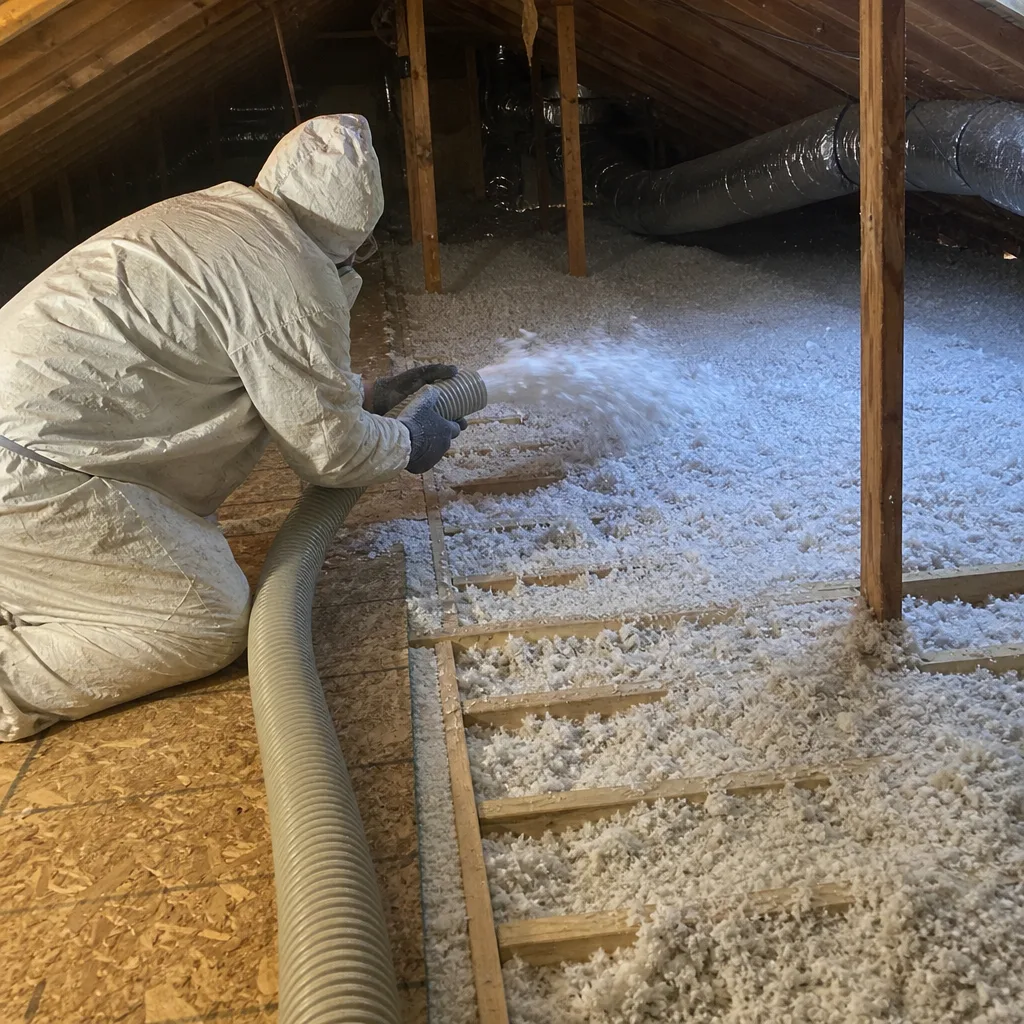
The physical risks of blown-in are lower than people fear. The machine feeds loose fiberglass or cellulose through a hose while you stand back and aim. You don’t touch high-tension springs, gas lines, or energized wiring, and there’s no open flame. With a respirator rated for fiberglass dust, goggles, long sleeves, and knee pads, a homeowner can run a blower without injury.
The hazards that do exist are ordinary and manageable:
- Fiberglass dust and itch: a N95 or better respirator, goggles, and gloves handle most of it. Wash work clothes separately.
- Attic heat: Henderson attics hit 130°F or more by mid-morning in July. Start at dawn, bring water, and take breaks. Heat illness, not the insulation, is the real DIY danger.
- Footing and joists: step only on joists or a laid walkway board. A missed step through a ceiling costs more than the insulation saves.
- Electrical: don’t touch or move wiring. If you see exposed junctions, stop and call an electrician.
So the machine and the material handling are fair game. It’s the next section where DIY blown-in insulation stops being a bargain. Our attic insulation in Henderson page covers the depth and R-value targets we build to in this climate.
What’s High-Risk: Bypasses, Top Plates, and Recessed Cans
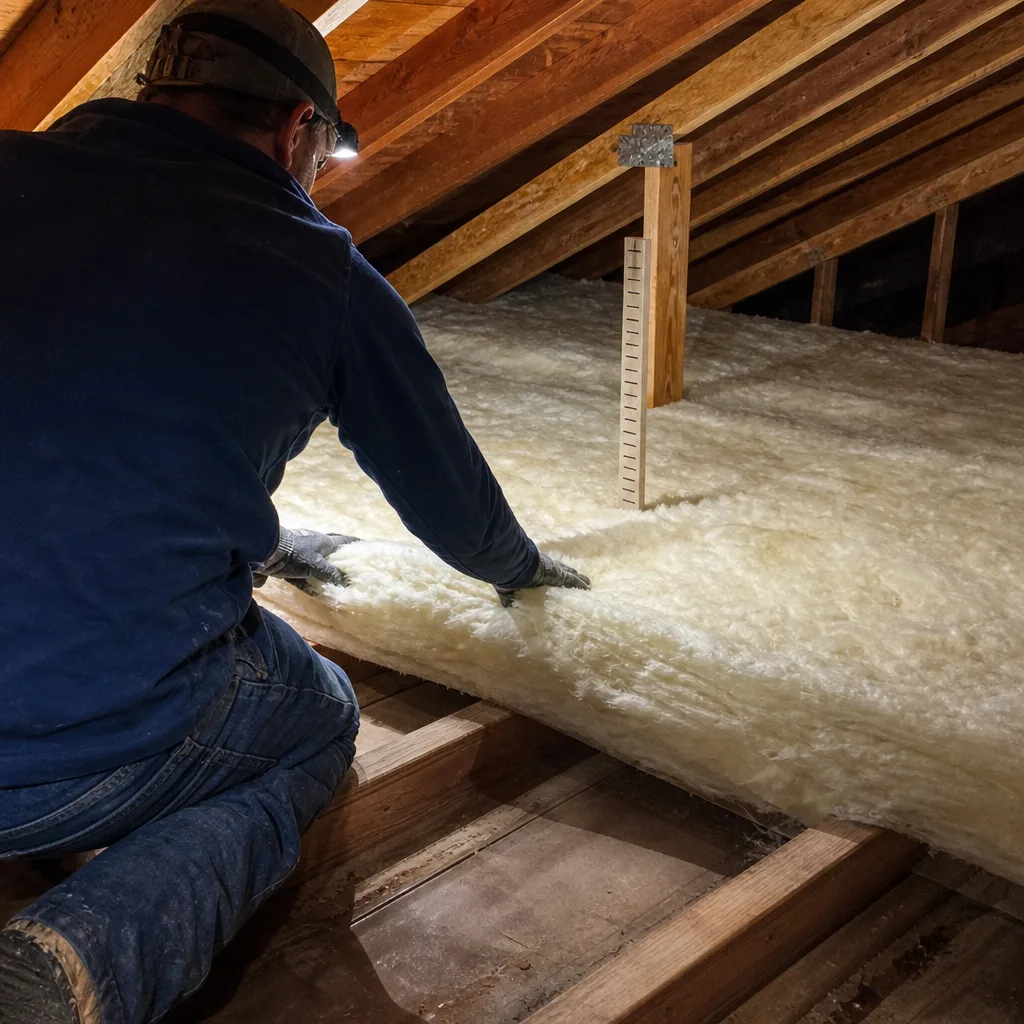
An attic floor is not a sealed lid. It’s a sieve. Every wire penetration, plumbing chase, top plate, chimney chase, and recessed light can is a hole that connects the conditioned air in your living room to the unconditioned attic above. Insulation slows heat transfer; it does not stop air movement. Blow fiberglass over an unsealed bypass and you’ve built a blanket over a hole that keeps leaking.
Worse, you can’t see the leak anymore. Air sealing is done before insulation, when the penetrations are visible. Seal first, then insulate, in that order. That’s the whole method, and it’s the reason we won’t blow insulation over an unsealed attic floor. In Henderson the problem is compounded by summer heat: a leaky ceiling plane pulls 110°F attic air down into the house, and the new insulation just sits on top of the pathway.
Recessed light cans are the classic offender. Older “non-IC” cans can’t be covered with insulation at all because they dissipate heat through the housing. Covering them creates a fire risk and traps air. The right move is to seal and box them properly, or replace them with IC-rated units, before any material goes down.
Air sealing of top plates, can lights, and penetrations is a separate, meticulous job. Reading a building-envelope assessment in Henderson starts with finding every bypass before a single bag of GreenFiber or Owens Corning goes in.
Dense-Pack Walls: Why Rental Machines Can’t Do It
“Dense-pack” means blowing insulation into a closed wall cavity at high density so it settles into a solid mass with no voids. The target is roughly 3.5 lb/ft³ for cellulose. At that density the material stops convective air loops inside the cavity, which is what actually delivers the R-value in a wall. Below that density the material settles over time and leaves a cold gap at the top of the wall.
Hitting 3.5 lb/ft³ requires calibrated equipment that reads backpressure at the nozzle and a technician who adjusts feed rate in response. A standard rental blower is designed for open attic floors, where you want light, fluffy coverage. It cannot regulate density for a closed cavity. Running a rental machine into a wall gets you either a loose fill that underperforms or a burst cavity. This is the category error: dense-pack belongs to a different machine and a different skill set than the attic floor job.
If your Henderson home has uninsulated exterior walls, that’s a professional job from start to finish. Our spray foam insulation in Henderson service handles the cavity and rim-joist sealing that a wall retrofit needs.
What You Can Legitimately Do Before a Pro Arrives
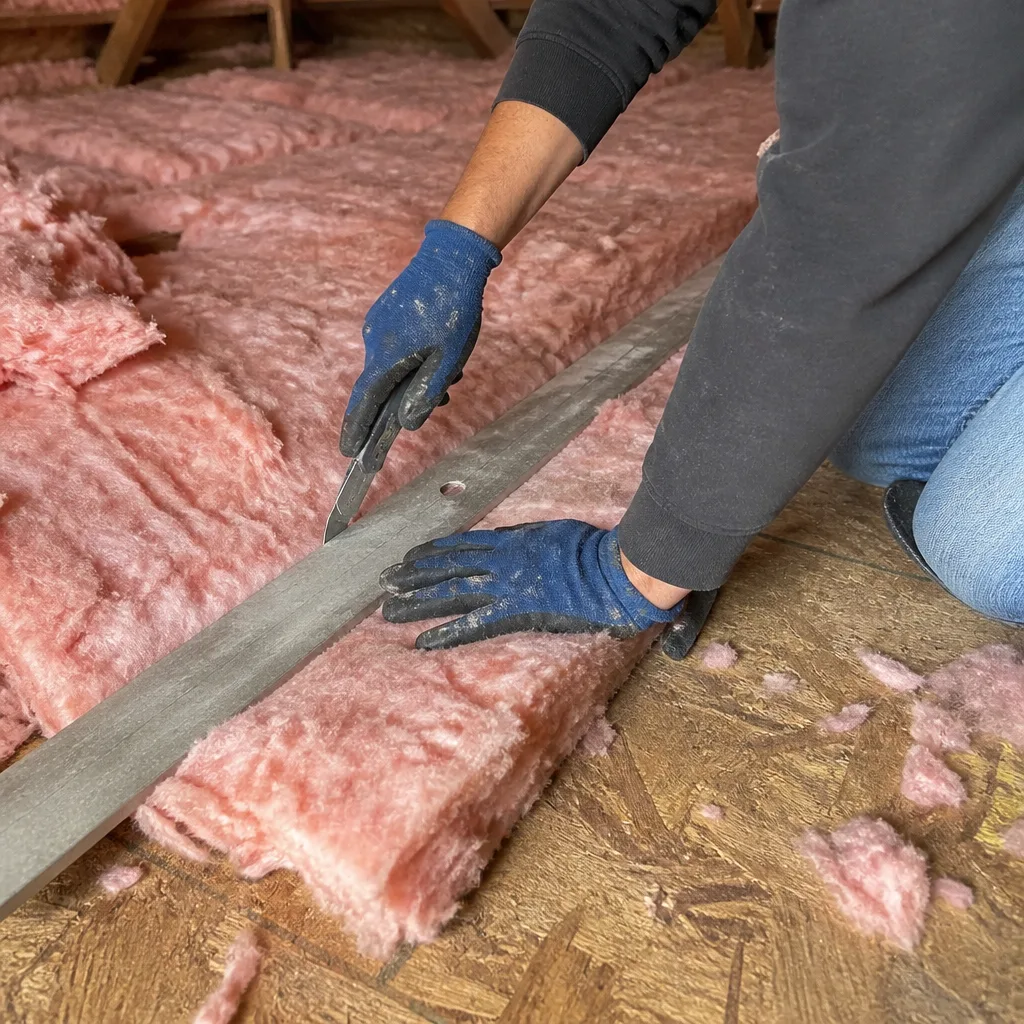
There is real, useful prep work a homeowner can do, and it lowers the bill and speeds the visit. Here’s the shortlist we’d give any Henderson customer before the crew shows up:
- Clear the attic access. Move stored boxes, holiday decor, and anything blocking the hatch or the ladder path. A clear path saves setup time.
- Label HVAC equipment. Tag the furnace, air handler, flue, and any duct runs with painter’s tape so nothing gets buried or blocked.
- Photograph the existing depth stakes. Take a tape-measure photo of the current insulation depth at a few spots. That’s your “before” record and it helps the estimator quote accurately.
- Note the problem areas. Write down the rooms that run hot in August. That tells the estimator where the bypasses probably are.
- Gather prior utility bills. The last two years of NV Energy statements give a baseline for the blower-door comparison.
Getting this prep right is exactly the difference Haven Standard Clause 1 describes: a written price, written scope, and written warranty delivered before anyone lifts a tool. If you’d rather tackle drainage or moisture first, our crawl space encapsulation and vapor barrier service in Henderson is the natural starting point for the bottom of the envelope.
The Documentation Gap at Resale and Insurance
A DIY insulation job produces no record. There’s no blower-door reading, no R-value certificate, and no installation photos. Here’s what that gap costs:
- At resale: a buyer’s inspector can measure depth but can’t verify what’s underneath the material or that the air sealing was done. Real estate agents in the Green Valley and Anthem areas tell us buyers discount unverifiable efficiency claims, and an unpermitted retrofit is a known negotiation point.
- At insurance: if a claim touches the attic, an adjuster wants to see documented scope and materials. A homeowner-installed improvement with no receipt trail complicates the claim.
- At the next upgrade: the next contractor has no idea what was installed or where the penetrations are, and has to start the diagnosis from scratch.
Professional jobs close with a Documented Photo Record and, on applicable jobs, before-and-after blower-door readings. That’s the difference between a receipt and a record. We’ve done this on 9,000+ homes sealed and insulated since 2016, and the record is part of the deliverable, not an add-on.
NV Energy Rebates and the Paper Trail DIY Skips
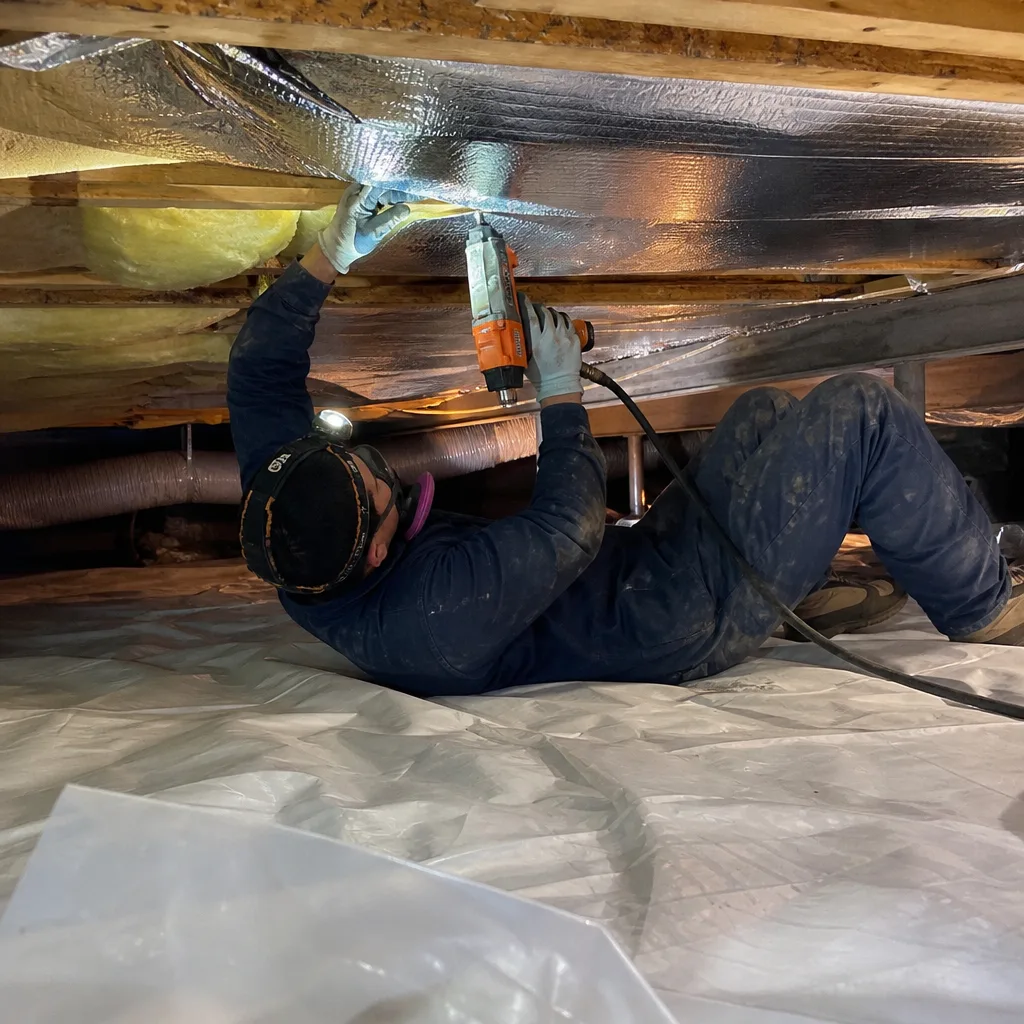
Here’s a detail that trips up DIY-minded Henderson homeowners: rebate programs don’t just reward efficiency, they require documentation. NV Energy’s efficiency incentives for insulation work typically require proof of a qualified installation, a verified R-value, sometimes a pre- and post-installation blower-door result, and materials documentation. A self-installed job rarely clears those requirements because there’s no third-party record to submit.
Local code and program requirements parallel Title 24-style standards: attic assemblies have to hit prescribed R-values for our climate zone, and the record has to prove it. When you hire a professional, the rebate paperwork, R-value certificate, and test results come with the job. When you DIY, you skip a rebate that can offset a meaningful chunk of the price. On a typical Henderson attic, that’s money back in your pocket that the rental savings never recovers.
Confirm current program terms directly with NV Energy before you bank on a number. The requirements change, and we won’t quote a rebate figure that isn’t in front of us in writing.
Blower-Door Numbers: The Proof DIY Can’t Produce
A blower-door test is a pressurization reading that shows, in one number, how much air your building envelope is losing. The figure is measured in CFM50: cubic feet per minute of air leaking at 50 pascals of pressure difference. A leaky Henderson attic might read 4,200 CFM50; after proper air sealing it might read 2,100. That single drop is the evidence that the money you spent changed the building, not just the attic.
DIY can produce a fuller attic. It cannot produce that number, because the test requires a calibrated door and a technician. So the homeowner who blew their own material has a warmer home and no way to prove it by even one CFM50. The blower-door reading is what you show a buyer, an adjuster, or your own skeptical spouse who wants to know the bill actually moved.
In our experience, the second number matters more than the first. Without a “before” reading, there’s no way to know whether sealing or insulating is doing the work. That’s why the reading goes on the record on every applicable job.
Common Mistakes to Avoid
- Blowing over unsealed top plates. The plate gaps at every wall become buried, and the leak stays. Seal first, insulate second, always.
- Covering non-IC recessed cans. Older cans can’t handle insulation contact. That’s a fire risk, not just a performance loss. Box or replace them first.
- Trying to dense-pack a wall with a rental blower. The machine can’t read backpressure, so it can’t hit 3.5 lb/ft³. Walls are a professional job in Henderson.
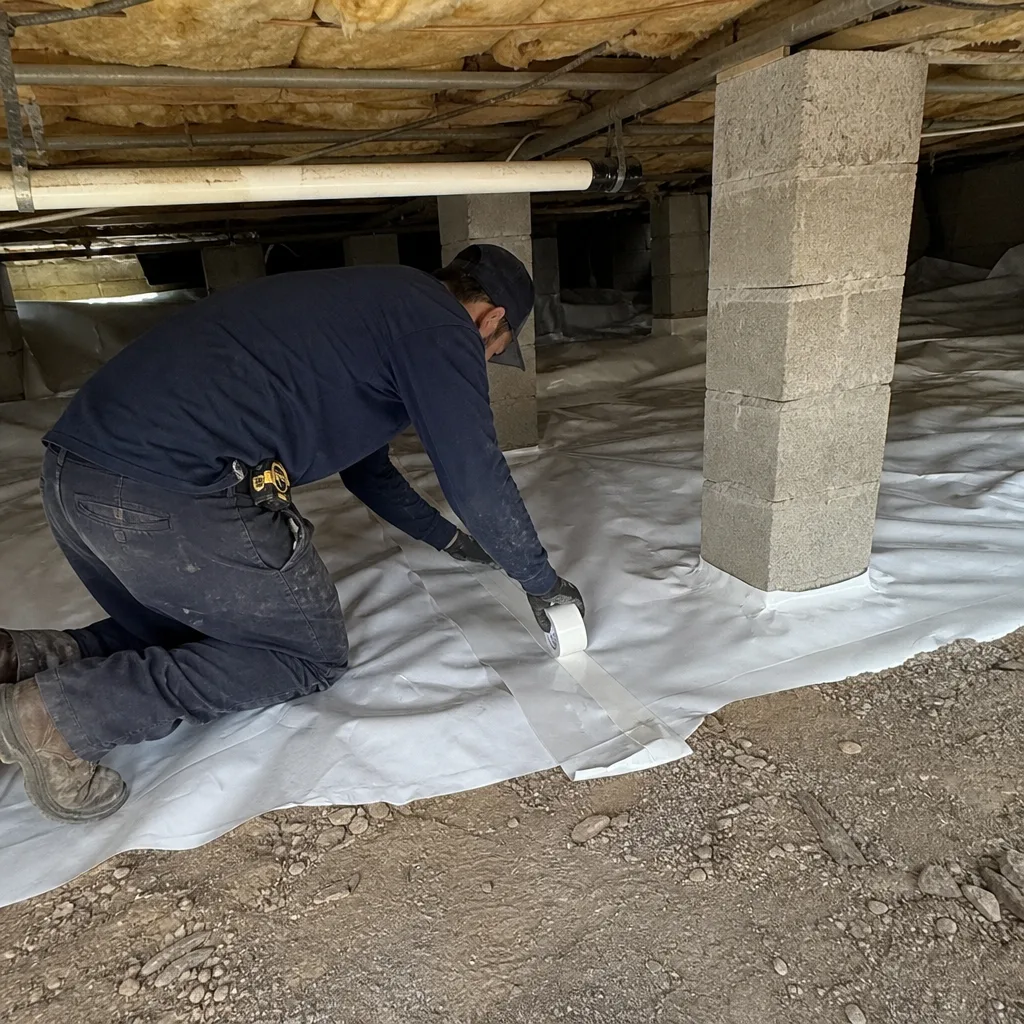
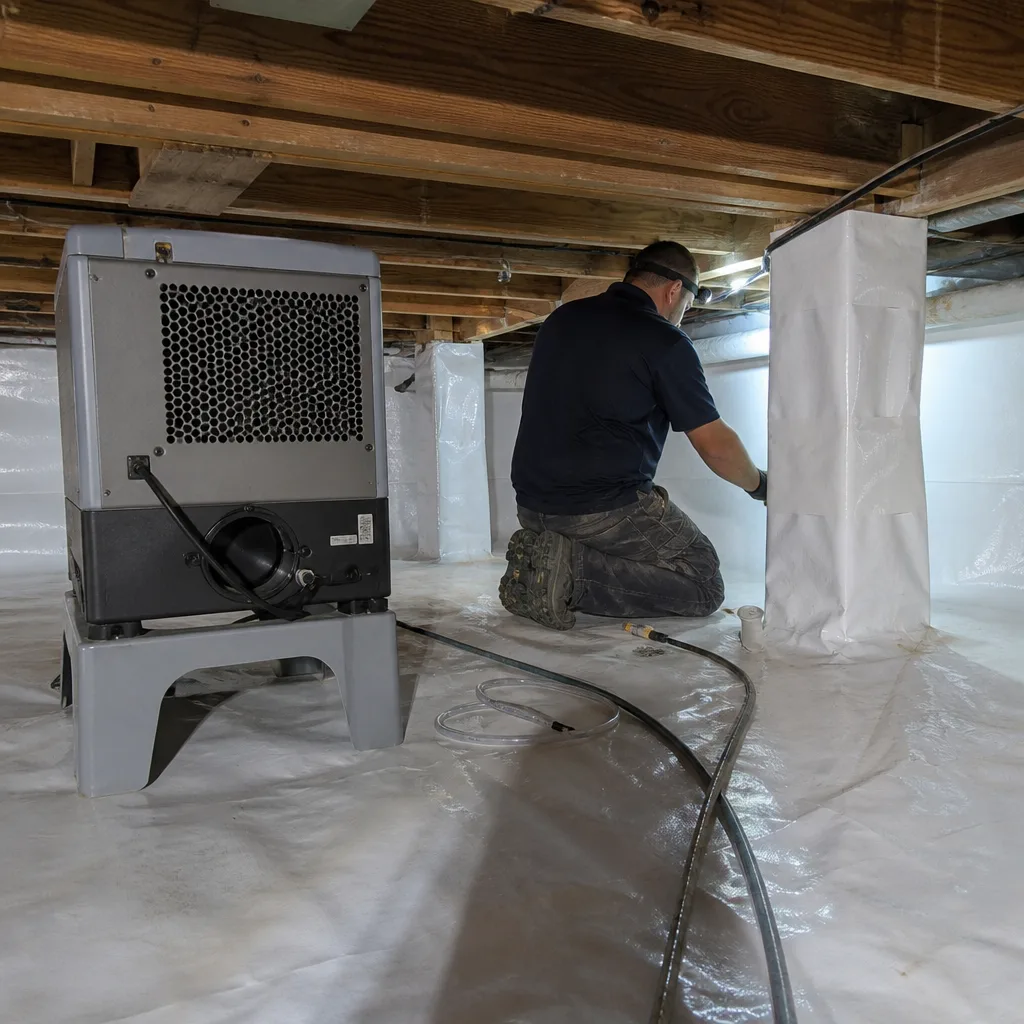
- Ignoring the craw space while insulating the attic. Heat and moisture move both ways. An unsealed crawl space undercuts the attic work; our crawl space encapsulation page covers why.
- Rushing a 130°F attic. Heat illness is the real DIY hazard in a Henderson summer. Start at dawn and hydrate.
- Not saving the material labels. Even a DIY job should photograph the bag labels and keep the receipt; without them the material R-value is unverifiable later.
- Assuming a receipt is a record. A rental receipt proves you bought a machine for a day. It doesn’t document what R-value went where.
When to Call a Professional
Call a professional when the job involves dense-packing walls, sealing around recessed lights and chimneys, an attic with unknown wiring, or any rebate you intend to claim. Call when the home runs hot in specific rooms and you don’t know why, because that’s a diagnostic job before it’s an insulation job. Call when you need documentation for a sale or an insurance policy. And call when the attic floor has already been insulated once and you can’t tell what was sealed underneath. Envelope Insulation Henderson offers free estimates in Henderson. A written price before any work starts is a promise we keep on every job; call (844) 320-5338 to get yours, or bring us a competing estimate for a free second opinion.
Frequently Asked Questions
Yes, physically safe with proper PPE: a respirator, goggles, gloves, and careful footing. The risk isn’t the machine; it’s that DIY insulation without air sealing traps bypasses under new material and delivers less performance than you paid for.
You can rent an attic blower and cover an attic floor, and many homeowners do. What you can’t do with a rental machine is achieve the 3.5 lb/ft³ density needed to dense-pack a wall cavity, so wall work stays a professional job.
Because insulation slows heat transfer but doesn’t stop air movement. Every top plate, wire penetration, and recessed can is a hole connecting your living room to the attic. Seal the holes while they’re visible, then insulate over them.
Often, yes. Rebate programs generally require documented installation, verified R-value, and sometimes before-and-after blower-door results, none of which a self-installed job produces. Confirm current terms with NV Energy directly.
Most attic blown-in jobs in a typical Henderson home run in the low-to-mid four figures, with air sealing adding to that when the attic floor is unsealed. We put an exact written price on the page for your home before any work starts; call (844) 320-5338 for a free estimate.
Usually as a gap, not a red flag. A buyer’s inspector can measure depth but can’t verify what’s underneath, and an adjuster wants documented scope. No photo record, no R-value certificate, and no blower-door reading means nothing verifies the work.
The Bottom Line
DIY blown-in insulation is safe to do with the right PPE, and the blower is a legitimate weekend rental. But the cylinder of fiberglass is not the job; the job is the envelope. In a Henderson attic, every penetration you blow over becomes a buried air leak that no future contractor, buyer, or adjuster can find. Seal first, insulate second, and document both. If you want the blower-door number that proves the change, and the NV Energy paperwork that comes with it, that’s what a professional brings. Our technicians have up to 10 years of experience, we work with GreenFiber and Johns Manville materials, and every completed job closes with a Documented Photo Record and our 365-Day Done Right Promise. Call (844) 320-5338 for a free estimate and a written price before any work starts.
Written by the team at Envelope Insulation Henderson.