
Last updated November 17, 2026
Insulation Warning Signs: A Henderson Homeowner’s Reference Guide
A 15% rise in July kWh compared to the same month two years prior, with the same thermostat setpoint and no new appliances in the house, is a more reliable early warning of insulation or air-sealing trouble than anything you can see with your eyes. The visible failures homeowners search for, wet insulation, mold, collapsing batts, show up two to five years after the invisible ones. This guide catalogs the quiet, low-signal indicators that surface first in Henderson homes, and shows you how to measure each one so you can act on evidence rather than a hunch.
Quick Answer
The earliest reliable signs of insulation failure in a Henderson home are a year-over-year rise in summer kWh with no lifestyle change, a ceiling-to-thermostat temperature spread above 4°F in July, a climb in HVAC cycles per hour, and small visual clues in the attic, walls, and crawl space. Any sign of moisture or rodent activity in the insulation warrants a faster call than thermal performance drift alone.
Table of Contents
- 1. The kWh-per-Cooling-Degree-Day Ratio: Your Best Early Warning
- 2. Temperature Differential: The $20 Infrared Thermometer Test
- 3. Visual Signs by Location: Attic, Walls, and Crawl Space
- 4. HVAC Runtime: What Your Smart Thermostat Is Telling You
- 5. Which Signs Need Measurement vs. an Immediate Call
- 6. Why Henderson’s Climate Accelerates Insulation Wear
- 7. What a Proper Contractor Measurement Visit Documents
The kWh-per-Cooling-Degree-Day Ratio: Your Best Early Warning
Your NV Energy bill already contains the data you need to catch insulation degradation years before it becomes obvious. The trick is normalizing consumption against how hard Henderson’s weather pushed your HVAC that summer, so a hot July doesn’t make you think something’s wrong when nothing is. This is what energy analysts call the kWh-per-cooling-degree-day ratio, and building it takes about twenty minutes once a year.
Here’s how to do it:
- Pull twelve consecutive months of NV Energy usage history from your online account. The monthly kWh figure is the number you want, not the dollar amount.
- Look up the cooling degree days (CDD) for each summer month in Henderson. A cooling degree day measures how far the average daily temperature exceeded 65°F, so a day averaging 90°F counts as 25 CDD. Your utility, NOAA climate data, or a weather-history site will have monthly totals.
- Divide each month’s kWh by that month’s CDD. June 2026 with 1,200 kWh and 700 CDD equals 1.71 kWh per CDD.
- Compare the same month across years. June 2026 against June 2025 against June 2024.
If that ratio climbs 10% to 15% across two summers with no change in equipment, thermostat schedule, or occupancy, your envelope is losing conditioned air faster than it used to. In our experience running blower-door tests across Henderson, a ratio drift of that size almost always traces to attic air sealing that has failed at the top plates or around recessed can lights, not to a failing air conditioner. The AC itself doesn’t usually degrade gradually, it fails suddenly. Insulation and air sealing degrade quietly, which is exactly why the ratio catches them first.
Temperature Differential: The $20 Infrared Thermometer Test
A $20 infrared thermometer aimed at your ceiling on a July afternoon in Henderson tells you more about your attic insulation than any visual inspection from the ground. The measurement is simple: take the ceiling surface temperature at several points in your hottest rooms, and compare the highest reading against your thermostat setpoint. A well-insulated, well-sealed ceiling should hold within about 3°F to 4°F of the interior air temperature.
- A spread of 4°F to 6°F suggests moderately degraded attic insulation or air leakage pulling hot attic air down through penetrations. Worth a measurement visit.
- A spread above 6°F to 8°F in a home built before the 2010s strongly points to settled or compressed insulation, missing air sealing, or both.
- A wide spread in one room only points to a localized problem: a displaced batt, a top-plate gap near that exterior wall, or a recessed light that was never sealed.
Do the reading at 3 p.m. to 5 p.m. in mid-July, when Henderson attic temperatures routinely exceed 140°F. Take three readings per room, ideally in a room with west- or south-facing ceilings, since solar gain through the roof deck drives the biggest differential. Write the numbers down and date them. A single reading tells you little; a reading repeated in July 2026 and again in July 2027 tells you whether the envelope is drifting.
One caution: infrared thermometers read surface temperature, not air temperature, and glossy paint or a freshly painted ceiling can skew the number a degree or two. Aim at the same spot each year to keep the comparison honest.
Visual Signs by Location: Attic, Walls, and Crawl Space
Visual inspection is the last line of early detection, not the first, but certain clues appear well before full failure. Here is what to look for in each part of a Henderson home’s building envelope. For a deeper walkthrough of the attic specifically, see our guide to attic insulation in Henderson.
Attic
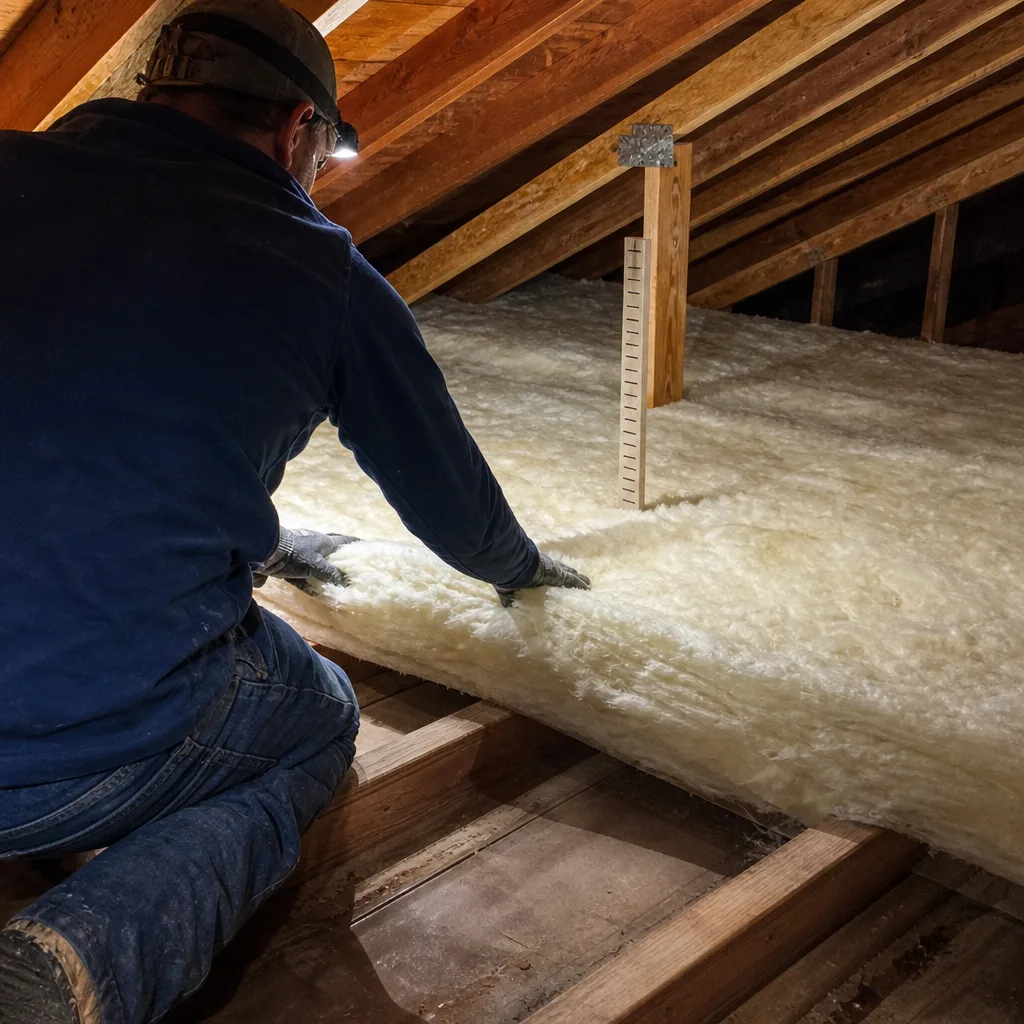
- Compressed or settled batts: Fiberglass batts lose R-value when they’re crushed by storage or settled by years of heat cycling. If your batt depth has dropped below the top of the ceiling joists, coverage has drifted.
- Rodent tunnels: House mice tunnel through loose-fill insulation and displace it, leaving visible channels and bare patches. You won’t always see the mice, but you’ll see their roads.
- Daylight around top plates: With the attic dark, look for daylight at the intersection of the wall top plate and the ceiling framing. Any visible light is a straight air path between conditioned space and the attic.
- Discolored or matted insulation under roof penetrations: A small water stain here is a moisture sign, not a thermal one, and jumps to the immediate-call category.
Walls
- Outlets that feel cold to the touch in winter: Exterior wall receptacles leaking air are a common air-sealing failure. Feel them in January; a cold draft is an envelope gap.
- Uneven floor-to-ceiling temperatures: A wall with poor insulation shows a strong vertical gradient. If the room feels 4°F to 5°F warmer at the ceiling than the floor in summer, the wall assembly is underperforming.
Crawl Space
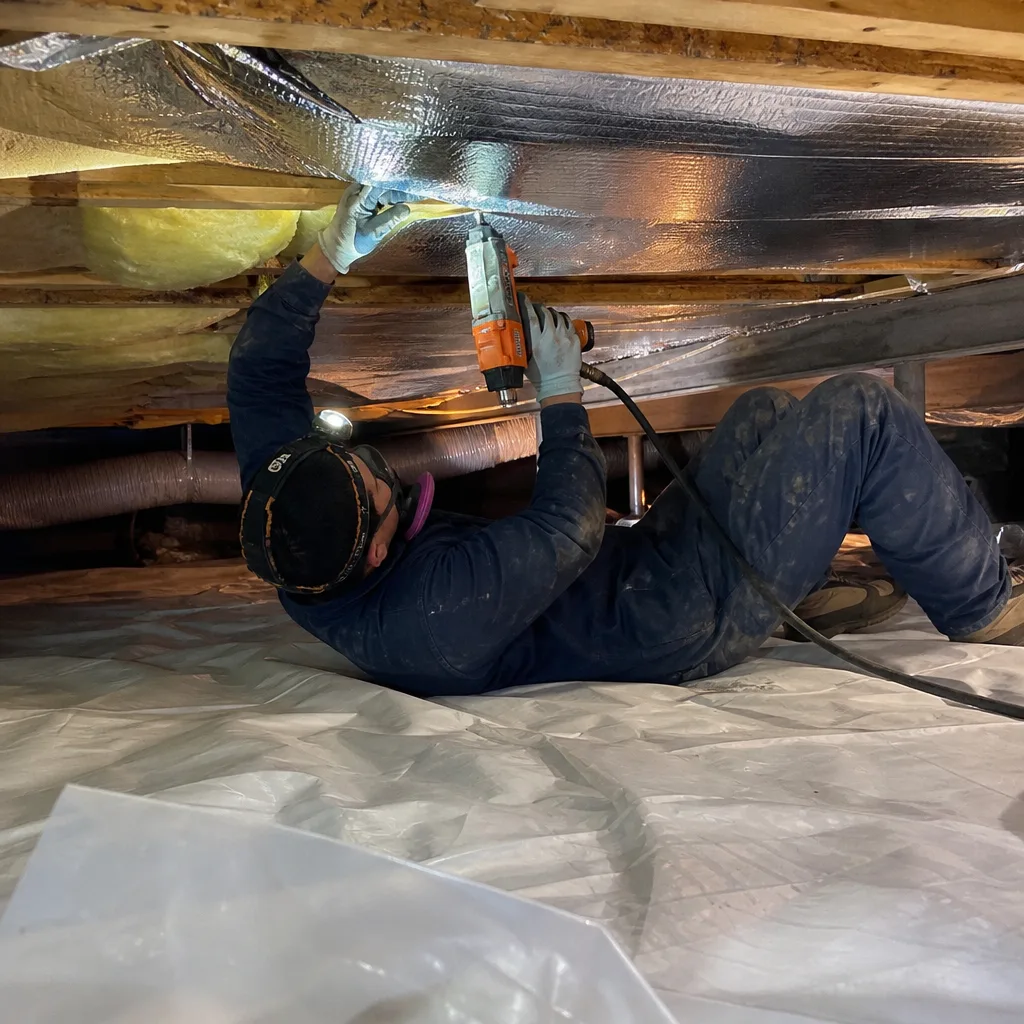
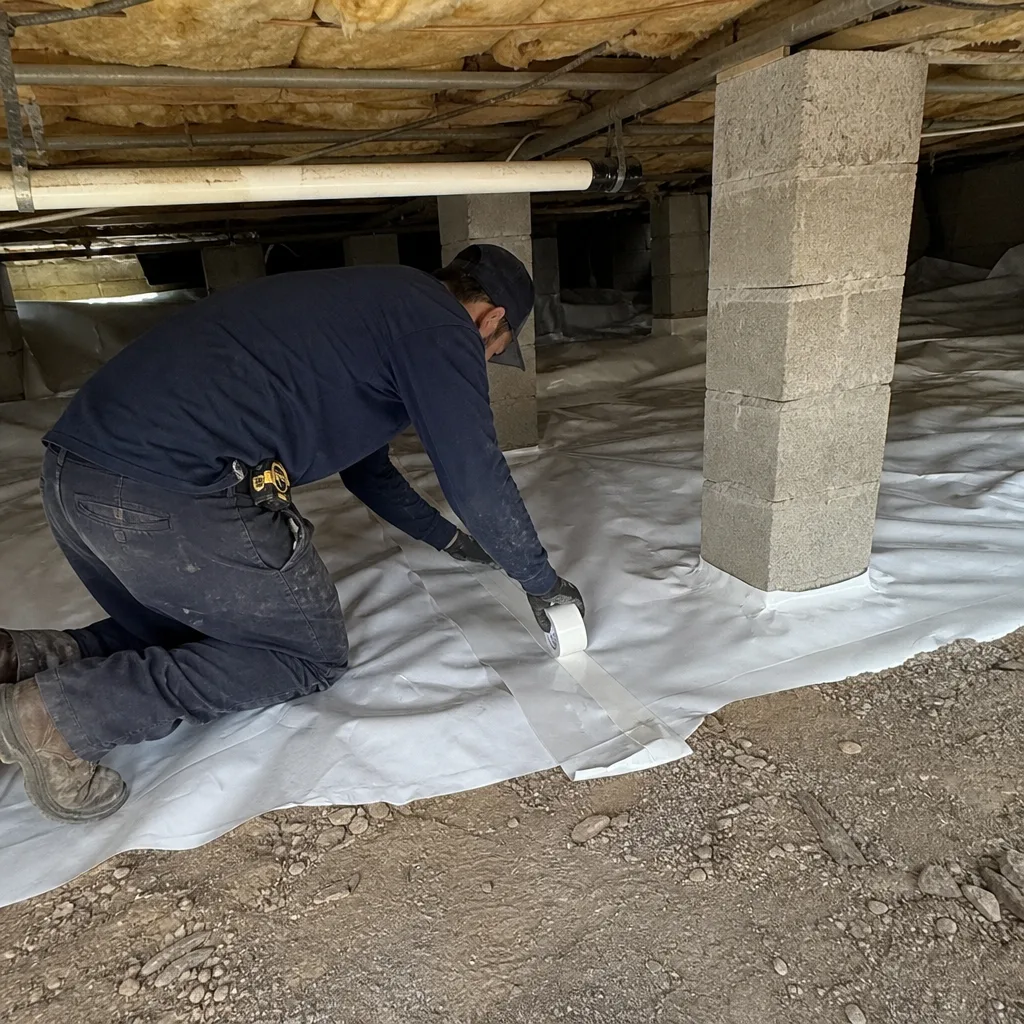
- Vapor barrier punctures: A torn or displaced 6-mil or 10-mil vapor barrier lets Henderson’s soil moisture drive into the crawl space. In a dry desert climate this still matters, because irrigation and plumbing leaks concentrate moisture at the soil.
- Batt drop from between joists: Floor insulation that has fallen away from the subfloor above does nothing. Look up from the crawl space access and see whether the batts are still in contact with the floor.
If you find crawl space problems, our crawl space encapsulation and vapor barrier service in Henderson covers the repair path in detail.
HVAC Runtime: What Your Smart Thermostat Is Telling You
If you have a smart thermostat, you already own a diagnostic instrument most homeowners ignore. The runtime log records how many minutes per hour your system runs and how many on/off cycles it completes. Both numbers drift upward when the envelope starts leaking.
- Open your thermostat app and find the runtime history for the previous summer.
- Look at the peak afternoon hours, roughly 2 p.m. to 6 p.m., during a July or August heat wave.
- Note cycles per hour. A system running 3 to 4 cycles per hour in peak heat is working normally for a well-sealed Henderson home. A jump to 5 or 6 cycles per hour in the same conditions suggests the system is losing ground faster than it can recover.
- Compare against the same period last year. An increase of two cycles per hour with no equipment change is an envelope signal.
A sudden rise in cycles per hour combined with a rising kWh-per-CDD ratio is corroborating evidence: two independent measurements pointing at the same failure. A rise in cycles per hour with a flat energy ratio more often points at the HVAC equipment itself, which is a different call. This is the value of using multiple signals. Any single number can mislead; two or three that move together rarely do.
Which Signs Need Measurement vs. an Immediate Call
Not every warning sign carries the same urgency, and treating them all the same wastes money in one direction or exposes your home in another. Here’s how we sort them.
Signs that warrant a measurement visit (schedule within a few weeks)
- A 10% to 15% year-over-year rise in the kWh-per-CDD ratio.
- A ceiling-to-thermostat temperature differential above 4°F in July.
- An upward drift in smart thermostat cycles per hour.
- Visibly compressed attic batts or a batt depth that has dropped below the joist line.
- A crawl space with fallen floor insulation or a displaced vapor barrier.
These are thermal performance signals. They cost you money every month, but they don’t damage the structure quickly.
Signs that justify a faster response (within days)
- Any moisture intrusion into insulation, visible staining, or a matted, damp texture.
- Any rodent or pest activity in insulation, whether tunnels, droppings, or nesting material.
- A vapor barrier that is torn, missing, or pulled away in a crawl space that shows condensation or a persistent musty smell.
Moisture and pests compound. Wet insulation loses R-value fast and can support mold growth in the framing it touches. Rodent contamination means the insulation needs removal and replacement, not topping off. These require a faster response than a thermal drift problem, and they’re the category where delay gets more expensive by the day.
Why Henderson’s Climate Accelerates Insulation Wear
Henderson’s specific conditions age insulation faster than most of the country, and the reasons are worth knowing because they change what you should watch for. Attic temperatures here routinely hit 140°F to 160°F in July, and that heat cycling, repeated across two decades, compresses fiberglass and drives the thermal drift that shows up in your kWh ratio years before anything looks wrong.
Our dry air is a double-edged factor. It keeps most above-grade insulation from staying wet, which is why you rarely see the dramatic mold story in a Henderson attic that you’d see in a humid climate. But the same dryness causes wood framing to shrink and pull away from sealant at the top plates and around penetrations, which is one of the most common air-sealing failures we find in Henderson neighborhoods like Green Valley, Anthem, and Seven Hills. Summer monsoon humidity, brief but intense, can still push moisture into an attic that has an air path from the living space below, which is why an unsealed attic floor matters even in the desert.
Newer Henderson subdivisions built between 2015 and 2025 often have builder-grade air sealing that was never pressure-tested at completion. That’s why a data-driven homeowner in a five-year-old home can find a 15% efficiency drift before a visible sign ever appears. The house isn’t old; the air sealing was never verified.
What a Proper Contractor Measurement Visit Documents
The word “measurement” should mean something specific. When a contractor comes out to assess your insulation, ask what numbers you’ll walk away with, because “it looks a little thin up there” isn’t a measurement. Here’s what a documented visit should produce.
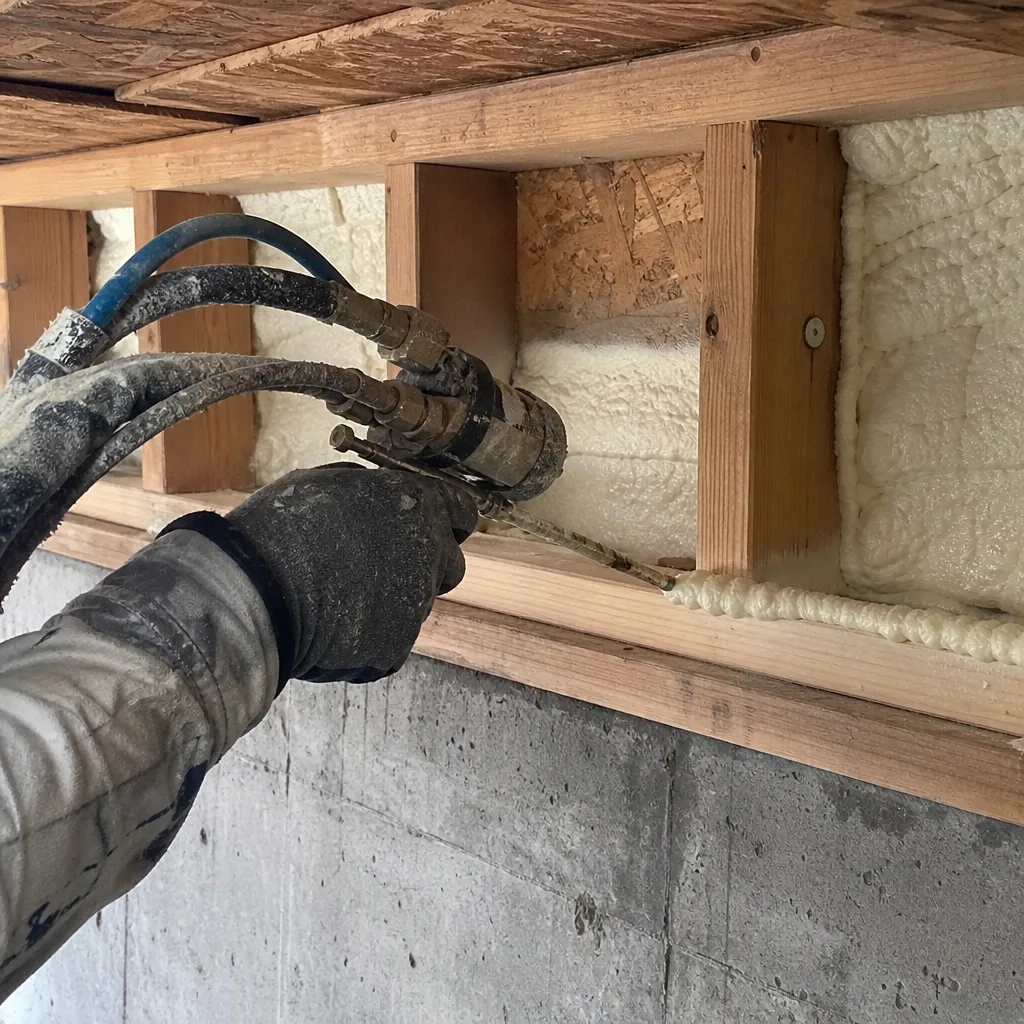
At minimum: a blower-door test, a pressurization reading that shows in one number how much air your building envelope is losing, recorded before and after any corrective work. On homes with attic air-sealing problems, that number is the entire point, because it quantifies the change you paid for. Alongside it, a written scope describing exactly what will be sealed and what will be added, a written warranty, and a documented photo record of the attic, walls, and crawl space as found and as left. A proper visit for spray foam applications, for example, should also document the existing cavity depth and moisture condition before any foam goes in, which you can read more about in our guide to spray foam insulation in Henderson.
We follow this standard on every job. If you’re comparing estimates, our Envelope Insulation Henderson home page lays out the full process, and we’ll read a competing written estimate with you at no charge, line by line, so you can see what’s specified and what’s missing.
Common Mistakes to Avoid
- Reacting to a single hot summer. One brutal July in Henderson will spike your kWh whether or not your insulation changed. Compare same-month-to-same-month across years, or normalize against cooling degree days, before concluding anything.
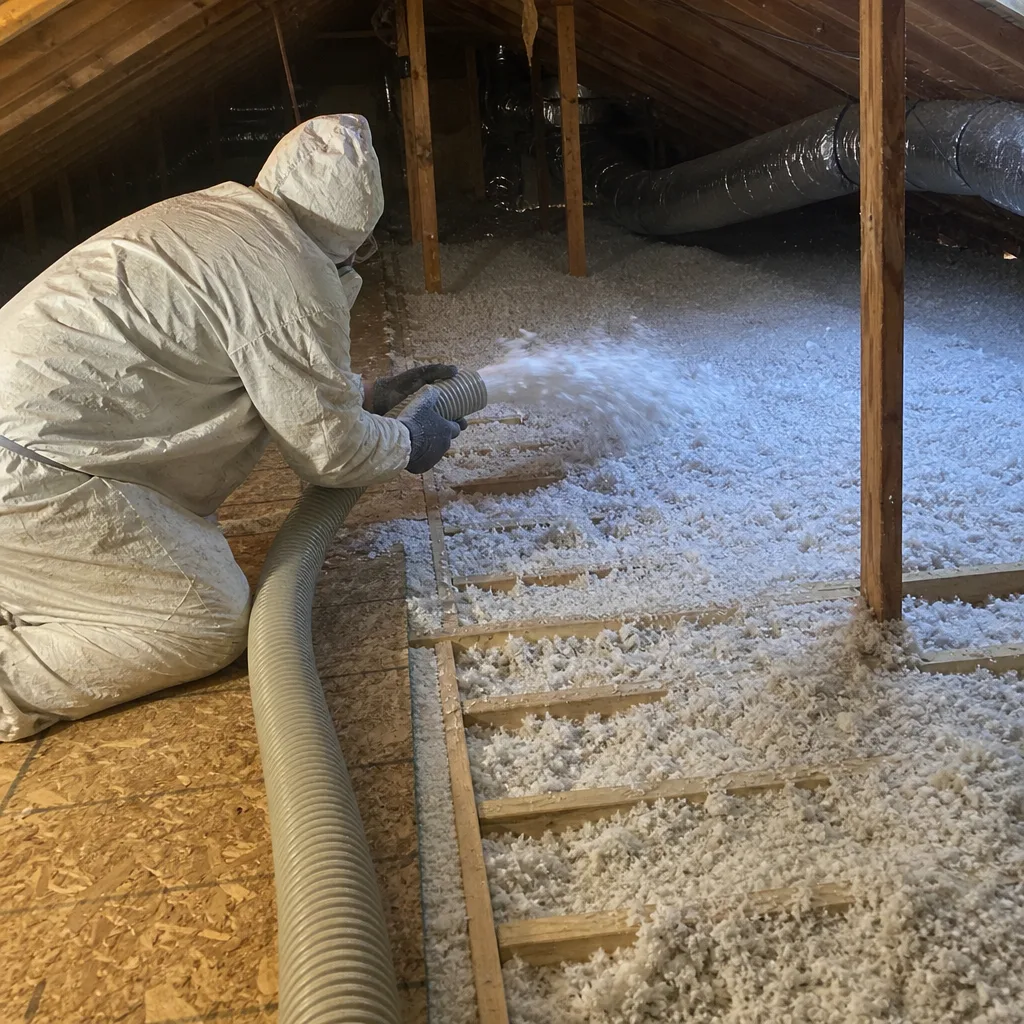
- Topping off insulation over an unsealed attic floor. Adding batts or loose fill over open top plates and unsealed can lights traps the air leakage under a fresh layer of insulation, which makes the attic look better and performs worse. Air sealing has to come first.
- Trusting a visual inspection from the attic hatch. Most of the failures that matter hide at the far corners of the attic, around penetrations, and under decking. A look from the hatch catches maybe a third of them.
- Ignoring a vapor barrier puncture because the crawl space “feels dry.” Henderson’s soil moisture concentrates around irrigation and plumbing, and a puncture that seems minor in April is a moisture path by August.
- Buying a new air conditioner before ruling out the envelope. A failing envelope makes a perfectly good AC work harder, and homeowners in Henderson sometimes replace equipment that wasn’t the problem.
- Skipping the documentation. If a contractor won’t give you a written scope, a written warranty, before-and-after numbers, and photos, you have no way to verify the work later. That’s the whole record.
- Assuming a newer home is fine. Builder-grade air sealing in a 2018 Henderson build was often never pressure-tested. Age is not a guarantee of performance.
When to Call a Professional
Call a professional if you’ve measured a 10% or more year-over-year drift in your kWh-per-CDD ratio, if your July ceiling-to-thermostat differential is above 4°F, if your smart thermostat’s cycles per hour have climbed with no equipment change, or if you’ve seen compressed batts, rodent tunnels, fallen floor insulation, or a damaged vapor barrier. Call sooner, without waiting on measurements, if there’s any moisture intrusion or pest activity in the insulation. The distinction matters: thermal drift is a performance problem you can schedule, while moisture and pests are a structural problem that gets more expensive with delay. Envelope Insulation Henderson offers free estimates in Henderson, publishes before-and-after blower-door numbers on every applicable job, delivers a written price before any work starts, and answers calls with a live person around the clock. Call (844) 320-5338 to schedule your measurement visit.
Frequently Asked Questions
The most reliable early sign is a year-over-year rise in your summer kWh-per-cooling-degree-day ratio, backed by a July ceiling temperature spread above 4°F and a drift in smart thermostat cycles per hour. Visual signs like compressed batts or rodent tunnels usually appear later. Call (844) 320-5338 for a free estimate if you’re seeing any of these.
A well-sealed, well-insulated ceiling should stay within about 3°F to 4°F of your thermostat setpoint in July. Above 4°F suggests degradation, and above 6°F to 8°F points to a real problem worth measuring. Call (844) 320-5338 to get your attic and air sealing evaluated.
Often yes, but usually for air sealing rather than for R-value. Newer Henderson subdivisions frequently have builder-grade air sealing that was never pressure-tested, so a blower-door reading often reveals leakage a visual inspection misses. A free second opinion on any written estimate starts with a call to (844) 320-5338.
A blower-door test is a pressurization measurement that shows in a single figure how much air your building envelope is losing, typically in CFM50. Before-and-after readings show how much the air sealing changed. Call (844) 320-5338 to schedule a measurement visit that includes before-and-after numbers.
Fiberglass batts typically last 15 to 20 years before settling and heat cycling erode performance, and Henderson’s attic temperatures can shorten that. Compressed depth is the visual clue, but the kWh ratio usually reveals the drift before the eye does. Call (844) 320-5338 for a documented assessment.
Yes. Henderson’s soil moisture concentrates around irrigation and plumbing, and a puncture lets that moisture drive into the crawl space and the framing above it. It’s a moisture-intrusion sign, which means it warrants a faster call than routine thermal drift. Call (844) 320-5338 for a free estimate.
The Bottom Line
In a Henderson home, the reliable early warning signs of insulation failure are measured, not seen. Track your summer kWh against cooling degree days, check your July ceiling temperature with an infrared thermometer, and watch the cycles-per-hour log on your smart thermostat. Those three numbers will catch degradation two to five years before compressed batts or discolored insulation show up in the attic. Sort your findings by urgency: moisture and pest signs need a quick call, thermal drift needs a scheduled measurement visit. And whatever you do, don’t blow new insulation over an unsealed attic floor, because that’s the one mistake that makes the problem worse while it looks better.
Written by the team at Envelope Insulation Henderson.