
Last updated November 17, 2026
How Long Does Attic Insulation Take? Timelines and What to Expect
A 2,000-square-foot attic takes 2 – 3 hours to blow full of insulation. The air sealing that must precede it takes 4 – 6 hours. When a one-day job arrives and finishes in two hours, something was skipped. That gap between the hours you’re told and the hours the work actually requires is where most homeowner disappointment lives, and it’s the reason we wrote this guide. We work attics in Henderson every week, and we’ve learned that someone asking how long attic insulation takes is almost always asking a different question: how much of my day does this eat, who’s in my house, and what will be different when they leave? Below, the full phase-by-phase timeline, the two conditions that legitimately stretch a job, and the exact deliverables a crew should hand you before the truck pulls away.
Quick Answer
Most attic insulation projects take one working day, roughly 6 to 10 hours on site, but only when proper air sealing is included before the insulation goes down. The installation itself is the short part: 1 – 4 hours depending on square footage and material. The prerequisite work of sealing top plates, can lights, and penetrations takes 3 – 8 hours, and skipping it is why some crews finish in two hours and your energy bill barely moves. Total time from arrival to documentation handoff in a typical Henderson home runs 8 – 10 hours.
Table of Contents
- The Phase-by-Phase Timeline
- Why Air Sealing Comes Before Insulation
- How Attic Access Size Changes Your Timeline
- Scheduling Around Henderson Heat
- What “One Day” Actually Means in Writing
- Two Conditions That Extend a Job Without Padding
- What the Crew Should Hand You Before Leaving
- Common Mistakes to Avoid
The Phase-by-Phase Timeline
A properly executed attic insulation job in Henderson breaks into six phases, and each carries its own time block. When you get a written estimate from attic insulation in Henderson, the scope should name these phases rather than lumping everything into “install insulation.” Here’s how the hours actually divide on a 1,800 – 2,200 square foot home:
- Initial blower-door test (45 – 90 minutes). A blower-door test is a pressurization reading that shows, in a single number, how much air your building envelope is leaking. The technician sets up the door fan, takes a baseline reading in CFM50 (cubic feet per minute at 50 pascals of pressure), and walks the attic with the homeowner to point out bypasses.
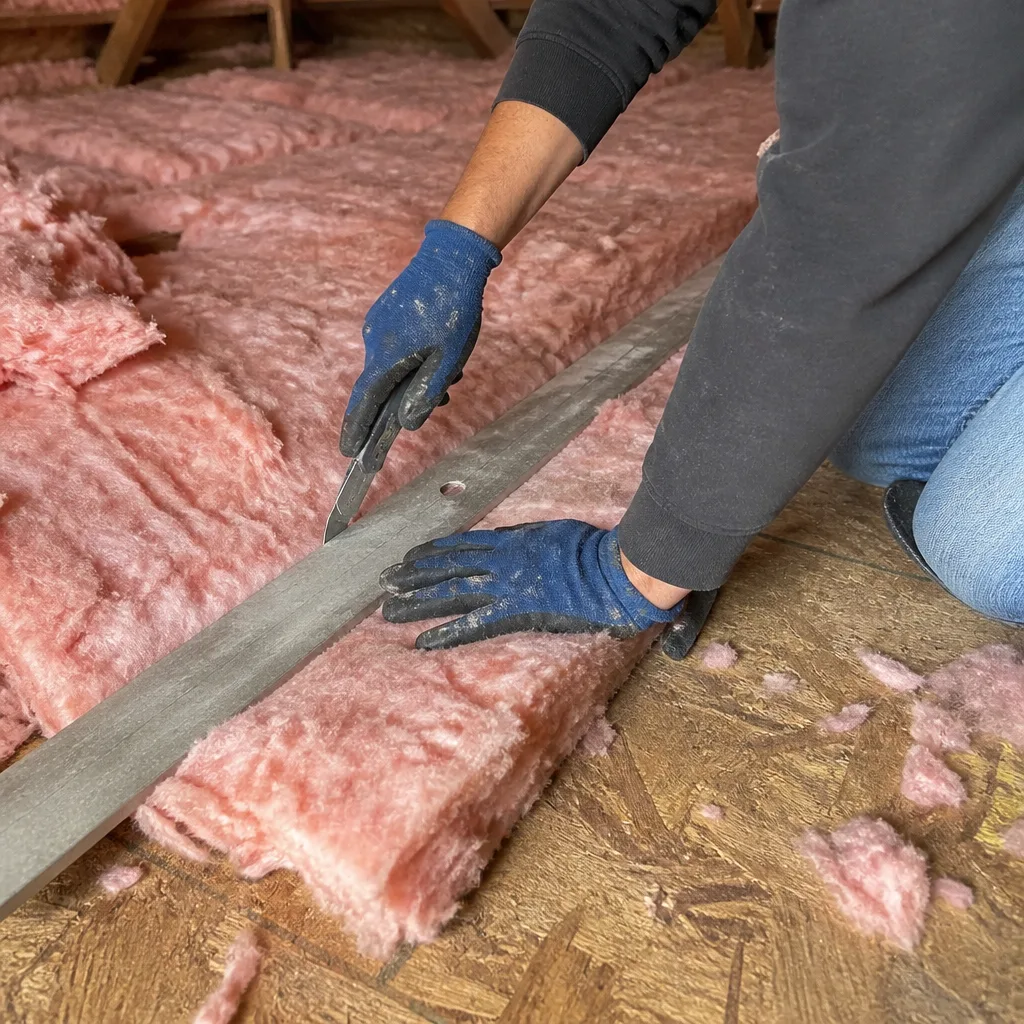
- Air sealing (3 – 8 hours). Foam, caulk, and rigid barriers go into top plates, can lights, plumbing and electrical penetrations, and the attic-to-wall junctions. The low end of that range is a simple rectangular ranch with a handful of penetrations; the high end is a complex roofline with a dozen can lights and dropped soffits.
- Post-seal verification test (45 minutes). The blower door runs again. The difference between the two readings is the number you paid for, and it should be written down and given to you.
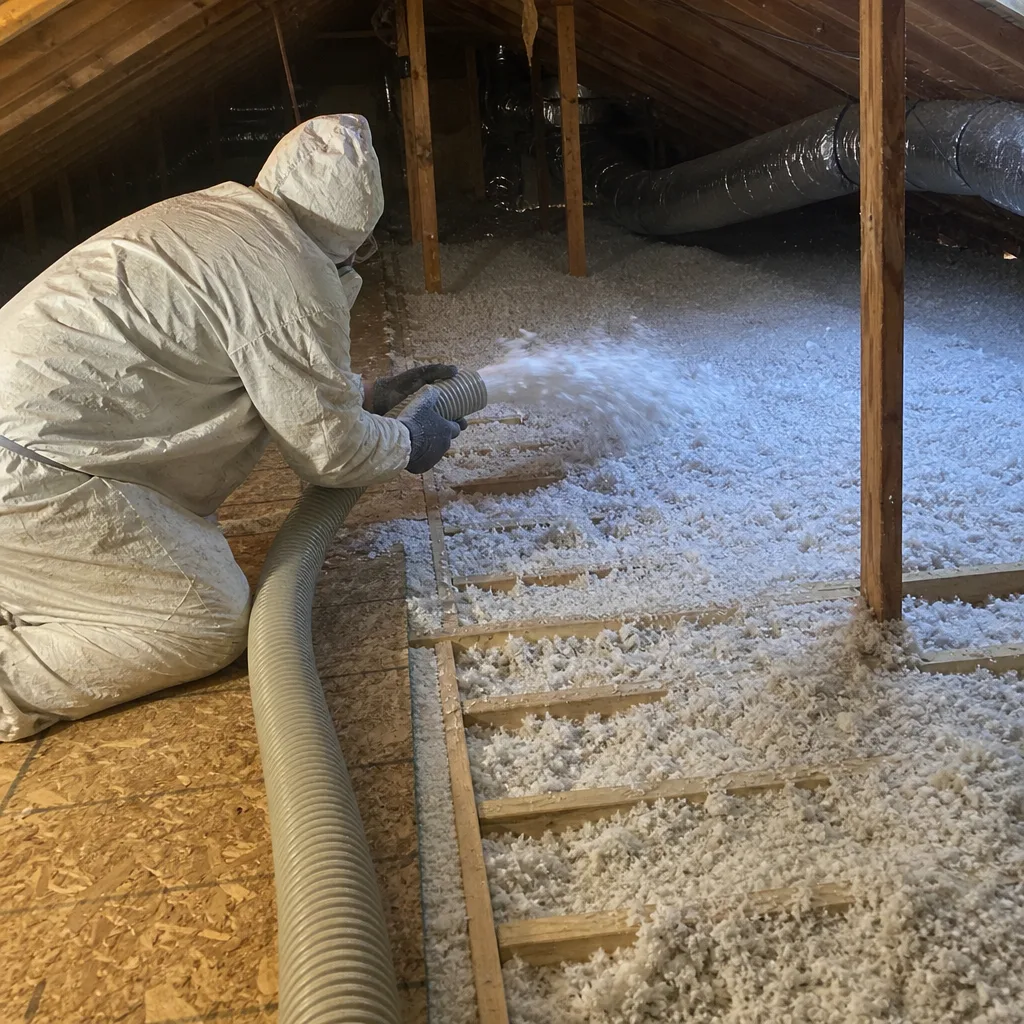
- Insulation installation (1 – 4 hours). Blown-in fiberglass or cellulose goes in fast once the floor is prepped; spray foam and mineral wool take longer per square foot.
- Final thermal scan (30 minutes). An infrared camera catches voids, thin spots, and gaps over the ceiling plane.
- Cleanup and documentation handoff (30 – 45 minutes). Photos, readings, and warranty paperwork transfer to you.
That’s 8 to 14 hours of real work. On a well-organized crew, most of the phases overlap and the day lands under 10 hours. If a bid promises “two hours and done,” you now know which phases got dropped.
Why Air Sealing Comes Before Insulation
Insulation doesn’t stop air from moving; it slows heat transfer. If your attic floor is leaking conditioned air through top plates and can lights, the insulation on top is a filter, not a barrier. Warm air pushes up through the gaps, colder attic air pulls back down, and you’re paying to condition the sky. In our experience across Envelope Insulation Henderson‘s service area, this is the single most common reason a homeowner’s new insulation underperforms.
Air sealing is what closes those pathways. The work is unglamorous: spray foam into the recessed light housings that aren’t IC-rated, foam around the plumbing stack, a bead of caulk along the top plate where the wall meets the ceiling, rigid barriers over the open chases. It’s not the insulation, but it’s the reason the insulation works.
That’s why we will not blow insulation over an unsealed attic floor. It’s not an upsell, it’s the sequencing. A sealed-then-insulated attic, verified with before-and-after blower-door readings, gives you a number you can point to: “the envelope read 4,200 CFM50 before sealing and 2,100 after.” Insulation alone gives you nothing you can measure except a slightly lower gas bill, and sometimes not even that.
How Attic Access Size Changes Your Timeline
Attic access is the quiet variable most bids ignore. A full-size pull-down stair (roughly 22 to 30 inches wide with a ladder you can actually climb) lets a crew walk materials in, stage equipment at the opening, and cycle through fast. A 22-by-30-inch hatch in a hallway closet, the kind common in Henderson homes built before the mid-1990s, means every bag of insulation and every tool goes up a ladder by hand.
What that difference costs you in hours:
- Full-size pull-down stair: staging time is 15 – 30 minutes. The shroud for the blower machine sits over the opening; material feeds continuously.
- 22×30-inch hatch: staging time is 1.5 to 3 hours on a large job. Bag-by-bag transfer, plus a safe shroud build, plus a walkable platform on the attic floor so the crew isn’t climbing through joists.
- No access hatch (rare, usually a renovation shortcut): the crew cuts one, which adds a framing and drywall repair line item to your written price before anyone starts. Under our Haven Standard, that line appears before the work, not after.
If you know your access is tight, mention it on the call. It doesn’t change the price quote you should trust (a written price before any work starts still stands), but it does change the realistic schedule and confirms you’re not dealing with a bid that was priced for a different attic than yours.
Scheduling Around Henderson Heat
Henderson attics get hot enough in July and August to change the behavior of both the materials and the crew. Attic temperatures routinely exceed 140°F on a Las Vegas Valley afternoon, and that figure is not an inconvenience, it’s a work-conditions threshold.
Why we schedule attic insulation before 10 AM or after 4 PM in Henderson:
- Spray foam adhesion. Two-component spray foam (we install Icynene among others) has a temperature window. Above roughly 120°F at the substrate, adhesion quality drops and the foam cures unevenly. Warm-weather installs get sequenced into the cooler part of the day.
- Blown-in settling. Loose fiberglass and cellulose settle differently in a hot attic; the material has to be installed to a target depth that accounts for the settled R-value, and that calibration is easier before the attic has been baking for hours.
- Crew safety and stamina. Two workers in Tyvek suits in a 140°F attic are twelve-minute work-rest cycling at best. The schedule has to absorb those breaks, and it does – which is another reason “two hours” is generous fiction on a hot day.
We measure attic temperature with an infrared thermometer when we arrive, and if the reading is above the safe threshold, we stage the air sealing first (the cooler part of the work) and hold the insulation until the attic cools. That’s a planning detail, not a delay tactic – the crew is not standing around.
What “One Day” Actually Means in Writing
“One day” is meaningless unless the scope defines what’s completed before the crew leaves. Our written price does, and any reputable contractor’s should. Here’s what “one day” delivers when it’s a real commitment:
- Air sealing is complete and verified. Post-seal blower-door reading taken, recorded, and compared to the baseline.
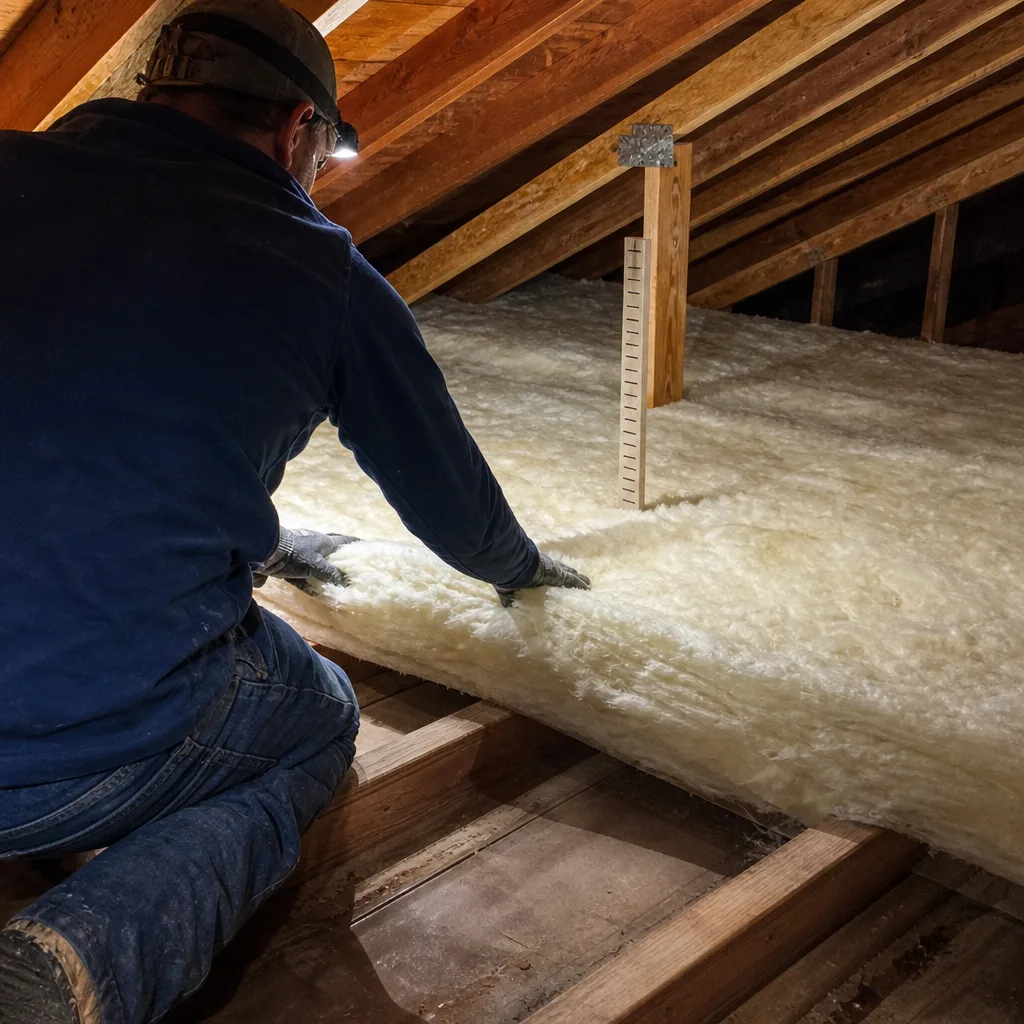
- Insulation is installed to the specified depth. The R-value target is in the written scope (R-38 to R-49 is typical for Henderson climate zone), and the depth gauge confirms it before the crew leaves the attic.
- Final thermal scan completed. Any voids are re-blown before cleanup.
- Cleanup. Attic access closed, floor patched if a hatch was cut, hallway swept, and no material left behind.
- Documentation handoff. Your photo record, your blower-door numbers, and your written warranty in one packet, before the crew leaves the property.
A one-day job that doesn’t deliver all five of those items in writing isn’t a one-day job, it’s a partial day with a full-day price. The documentation isn’t paperwork theater; it’s how you verify the work in six months when the thermal difference either holds or doesn’t. Under the Haven Standard, every job we complete comes with the photo record and – on applicable jobs – the blower-door readings, and the 365-Day Done Right Promise backs the whole thing with a written commitment to make it right if it isn’t.
Two Conditions That Extend a Job Without Padding
Two real-world discoveries push a job beyond one day, and neither is a contractor working slowly. Both should surface during the initial attic walk, but occasionally the crew finds them once the insulation comes up.
Discovery of knob-and-tube wiring. Older homes in Henderson’s established neighborhoods – parts of downtown Henderson, the older pockets near Water Street – still have active knob-and-tube wiring in the attic. Insulation cannot cover it: the wire has no ground and covering it is a fire hazard and a code violation. The electrical work to clear or replace it has to happen first, which means calling in an electrician and possibly rescheduling the insulation. That can push the job a week, not an afternoon. We flag this at the estimate stage whenever we can see it through the access hatch.
Existing damaged insulation requiring removal. Water intrusion, rodent contamination, or compressed batt insulation older than the home’s roof can mean the old material has to come out before the new goes in. Removal runs 2 – 4 hours for a typical attic, plus disposal. A severe rodent situation (we see this in homes near the washes and open desert edges of Henderson) can add attic cleaning and proofing as separate phases – see attic cleaning and rodent proofing for the scope on those jobs.
Neither of these is padding. Both show up on the written scope as separate line items before the work starts, so you can see the hours and the price in advance.
What the Crew Should Hand You Before Leaving
The most under-appreciated part of the timeline is the handoff. Ten minutes of explanation and a packet of documents is what turns a one-day job into something you can hold a contractor to for a year.
The package should include:
- Before-and-after blower-door readings in CFM50, written out, on jobs where sealing was part of the scope.
- A photo record of the pre-sealing condition, mid-sealing, post-sealing, and post-install depth. Not available on request – included on every visit.
- The final thermal scan images where the contractor ran one.
- The written warranty document, with the coverage period and remediation terms spelled out.
- The written price you were quoted, matched line-for-line to the invoice. If there’s a discrepancy, that’s a conversation before payment, not after.
We hand every Henderson homeowner a documented photo record on every visit; on applicable jobs, the blower-door numbers go in with it. If a contractor tries to leave without any of that packet, ask for it. If the answer is “we’ll email it later,” expect that it won’t come.
Related Work and How It Fits Your Timeline
Attic insulation is the highest-return envelope project for most Henderson homes, but it’s not the only one. Two related jobs commonly get quoted alongside it and can share a schedule for efficiency.
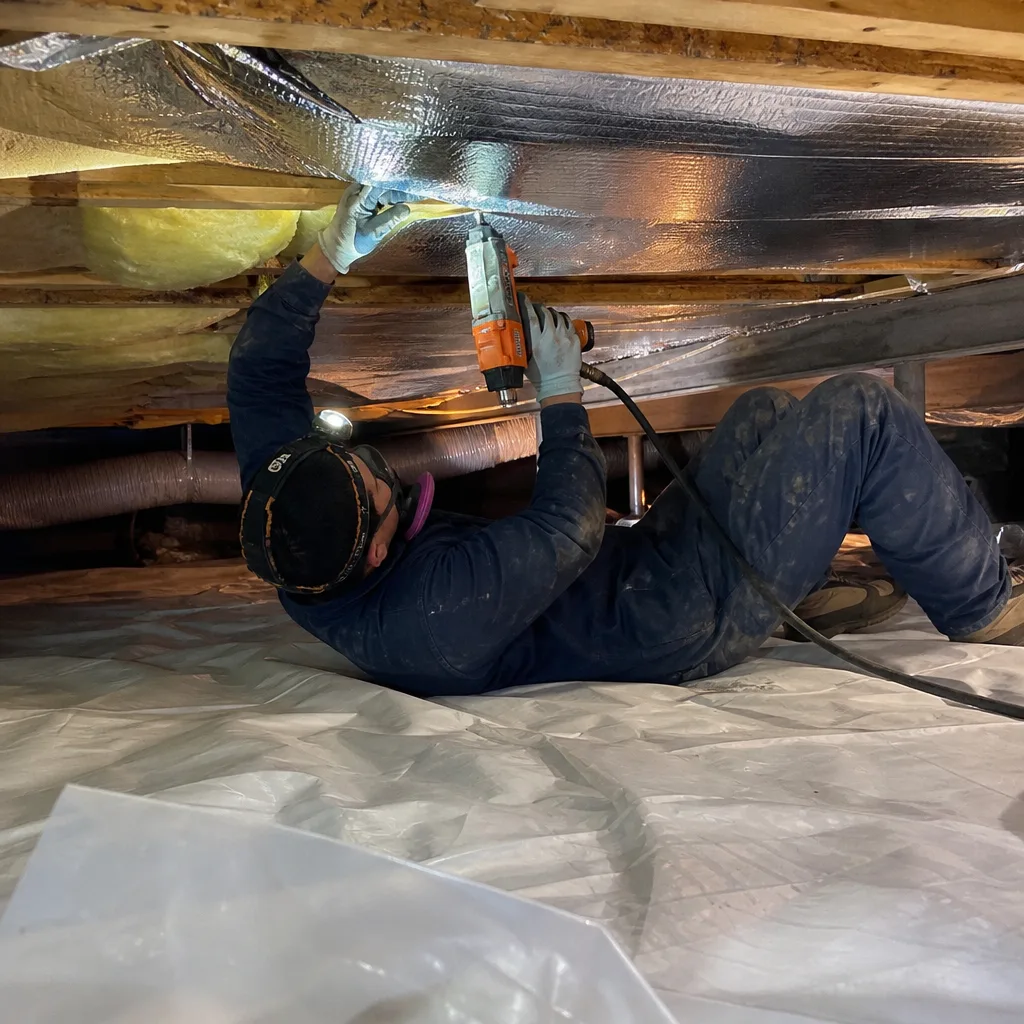
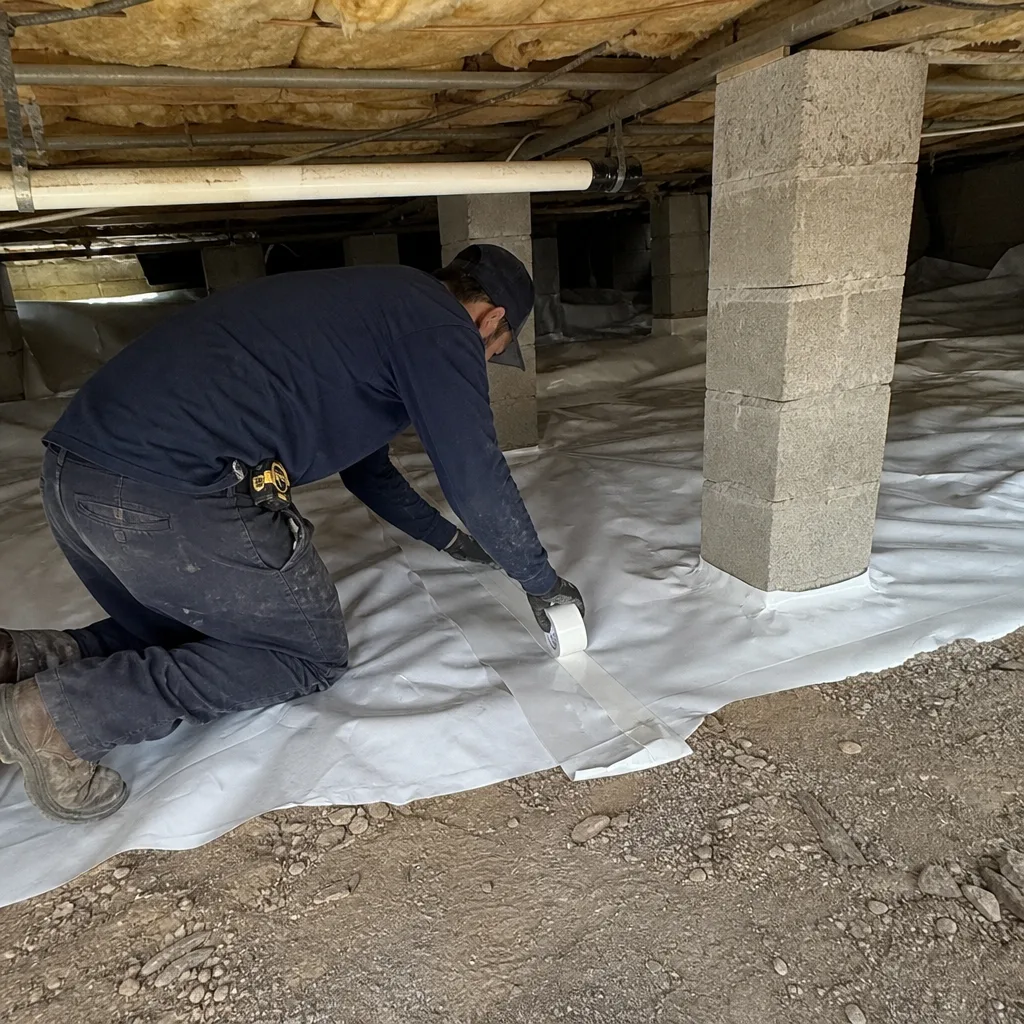
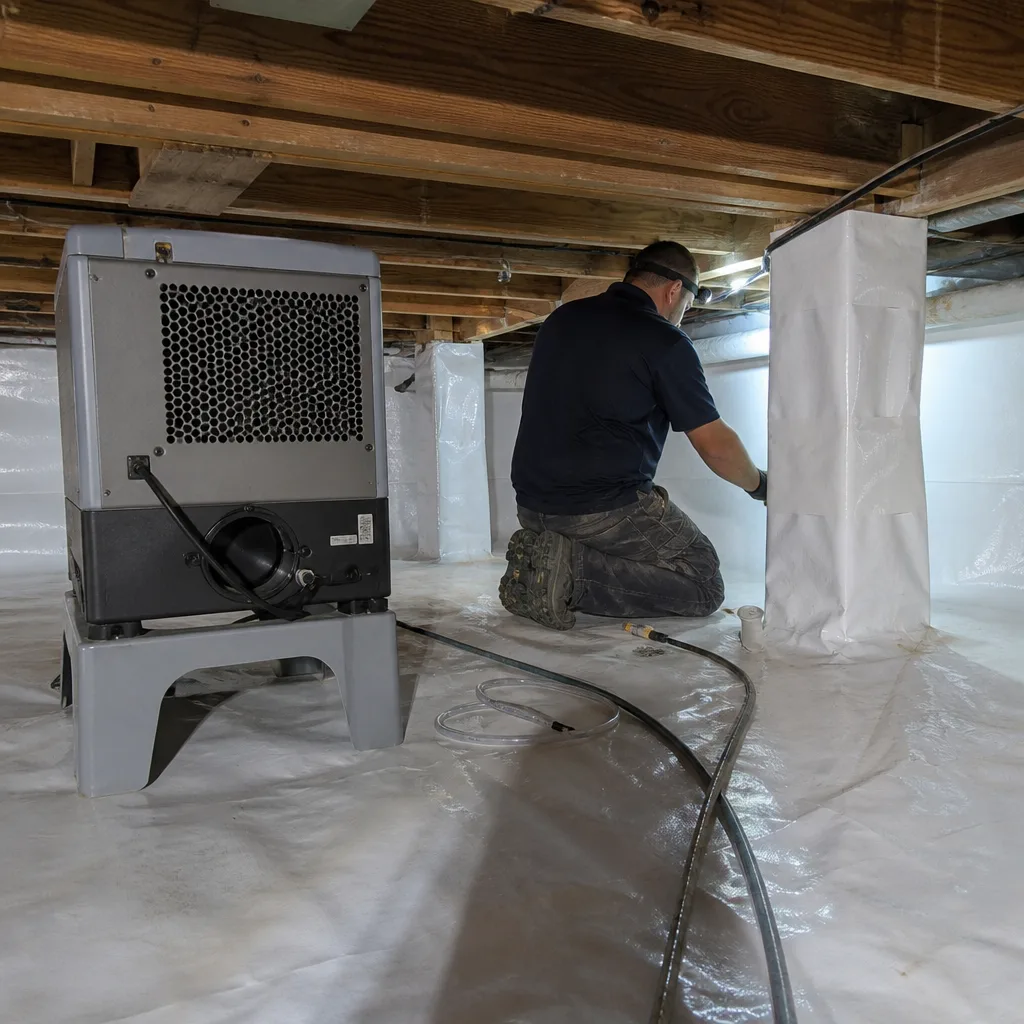
Crawl space encapsulation and vapor barrier in Henderson is a separate one-to-two-day job on its own, but when a homeowner has both a vented crawl space and an underperforming attic, sequencing the attic sealing and the crawl encapsulation on adjacent days keeps the household disruption concentrated. The vapor barrier work is also where a lot of Henderson homes hide their moisture problems – the same desert heat that roasts your attic can leave a vented crawl space drawing humid air upward into the floor system.
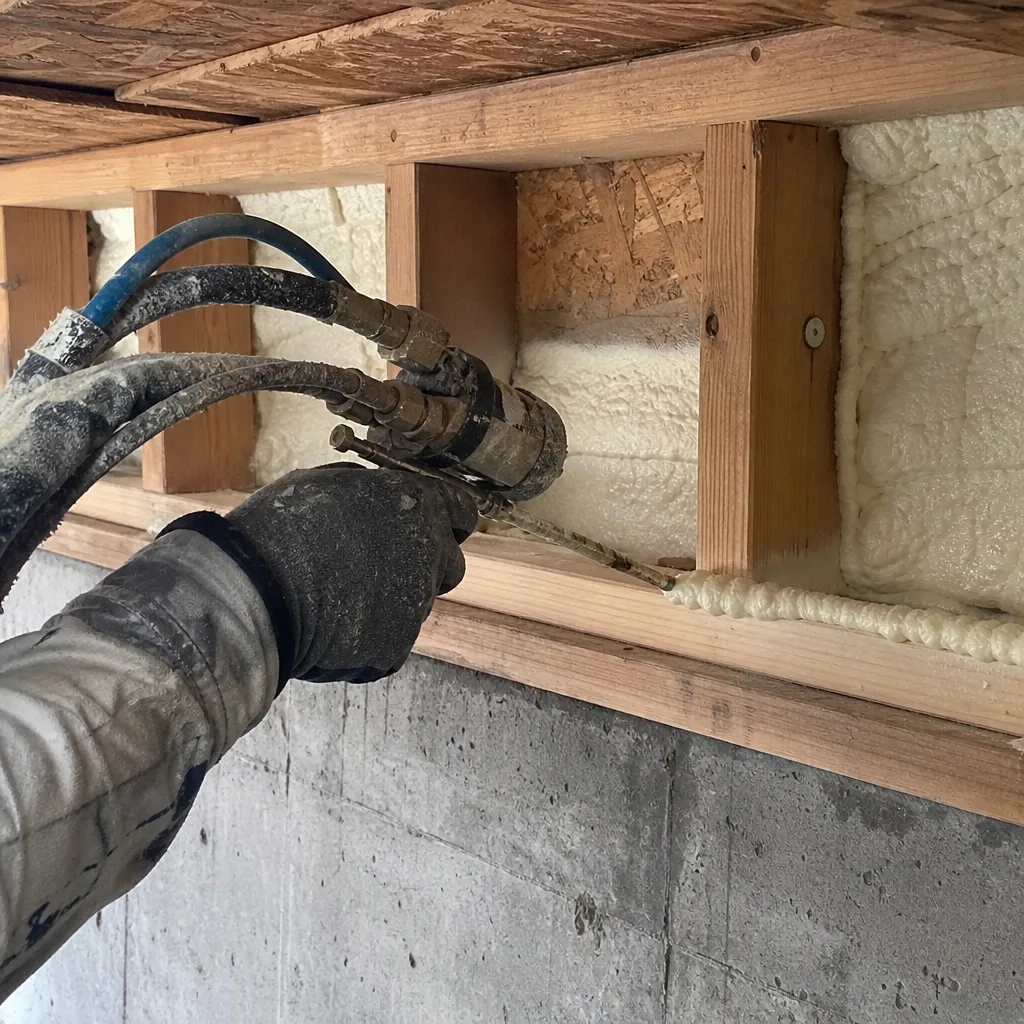
Spray foam insulation in Henderson is another common pairing. When the attic floor is being sealed and insulated, spray foam in the rim joists and the attic-to-wall junctions closes the remaining pathways that blown-in material alone can’t. It also adds a half-day to the schedule if it’s part of the same trip. We quote it separately so the scope and price stay clear.
Common Mistakes to Avoid
- Trusting a two-hour quote on a 2,000-square-foot attic. The math doesn’t work. Either air sealing got skipped, or the R-value target is below code, or the crew is staging a partial job. Ask which phases are in the written scope.
- Scheduling an install for midday July in Henderson. Attic temperatures and material behavior both argue for early morning or late afternoon. A contractor who insists on noon on a 110°F day either works inefficiently or cuts corners.
- Letting the installer skip the post-seal blower-door test. Without that reading, you have no idea what you paid for. Insulation without a verified seal is a number you can’t measure.
- Overlooking tight attic access when comparing bids. A quote priced for a pull-down stair is not the same job as one priced for a 22×30 hatch. Mention the access on your call.
- Blowing insulation over knob-and-tube wiring. It’s a code violation and a fire risk. If the crew sees it and proceeds anyway, stop the job.
- Accepting “we’ll send the paperwork.” Photos, readings, and warranty should leave the property with you. Under Haven Standard: Have it in writing, and that’s before anyone starts, not after.
- Choosing a bid on price alone, with no scope detail. A $2,200 bid with no specified R-value and no sealing is more expensive than a $3,400 bid that’s documented – the first one gets you “add more insulation later.”
When to Call a Professional
We get the call when something visible has changed: a ceiling stain after a monsoon, a hot second floor that never cools no matter what the thermostat says, or a sudden pest problem in the attic. Any of those is a reason to have someone walk the attic before deciding what to do – the insulation situation usually isn’t what the homeowner assumed. Compressed batt insulation from a 1980s build still looks fine and does almost nothing; a small plumbing leak can soak a 4-foot section of insulation you’d never notice from inside. We also get called after a DIY insulation purchase that turned out to be a filter over unsealed top plates. Envelope Insulation Henderson offers free estimates in Henderson – call (844) 320-5338. Our technicians have up to 10 years of experience and we’ll tell you honestly which phases your home needs and which it doesn’t.
Frequently Asked Questions
One working day, 8 – 10 hours on site, for most homes in Henderson, and that includes the air sealing that must precede the insulation. The insulation installation itself is 1 – 4 hours; air sealing runs 3 – 8 hours depending on your bypass count. If a contractor quotes you two hours, they’ve dropped the sealing phase. Call (844) 320-5338 for an exact timeline on your attic – estimates are free.
No, though somebody should be present for the initial attic walk and the documentation handoff at the end. The middle of the day is crew work time; you don’t need to supervise. We’re background-checked and uniformed, and every visit gets a documented photo record. Call us to talk through the access and scheduling details on your Henderson home.
Yes, one day is the realistic norm, provided the scope includes air sealing, a post-seal verification test, and the documentation handoff. The scope has to specify all of that in writing before work starts. If the estimate only says “blow insulation,” the timeline is fiction. Call (844) 320-5338 and we’ll read a competing quote with you under our Free Second Opinion offer.
Two things extend a job without it being padding: discovery of knob-and-tube wiring that must be cleared by an electrician before insulation can cover it, and existing damaged or contaminated insulation that requires removal first. Tight attic access (22×30 hatch rather than a pull-down stair) also adds 1 – 3 hours of staging on a large job. Call us if you’re unsure which of these applies to your home.
Most attic insulation jobs in Henderson run between $2,400 and $5,800 depending on square footage, existing condition, and whether air sealing is included. Insulation alone (no sealing) typically lands $1,800 – $3,900; a full sealed-and-insulated package with blower-door verification lands $3,200 – $5,800. Any written estimate should show line items, not a lump sum. Call (844) 320-5338 for an exact quote – the estimate is free.
R-38 to R-49 is the working range for the Las Vegas Valley climate zone, with R-49 the better target on older Henderson homes with ceiling joists that allow for the depth. R-value is a measure of thermal resistance – the higher the number, the slower heat moves through the material. Depth matters as much as the number: blown-in fiberglass at R-49 has to go in at roughly 16 inches of depth, and the contractor should verify with a depth gauge before the crew leaves. Call us with your attic’s square footage and we’ll quote the correct R-value target.
The Bottom Line
The honest answer to how long attic insulation takes is 8 – 10 hours on site, and the installation that gets all the attention is the shortest phase of the day. The air sealing, the blower-door verification, and the documentation handoff are what make the work worth what you paid. Any contractor who quotes a two-hour job on a 2,000-square-foot Henderson attic is either skipping the sealing or skipping the verification – or both. When you compare written scopes, look for the phase list, the specified R-value, and the deliverables in the handoff packet. Those three items tell you what a “one-day job” actually means in that contractor’s hands. If you want the timeline and the price in writing before anyone lifts a tool, that’s the Haven Standard we work under, and it’s the basis for every free estimate.
Ready to schedule? Call (844) 320-5338 for a free estimate. A live person answers, 24/7.
Written by the team at Envelope Insulation Henderson.