
Last updated November 17, 2026
Crawl Space Encapsulation & Vapor Barrier Maintenance Schedule: What to Do and When
A 20-mil reinforced crawl space liner carries a manufacturer-rated service life of about 25 years. The butyl tape holding its seams together has a rated adhesion life closer to 10. The liner outlives the seams by a wide margin, and nobody tells you that when the job is sold. In Henderson, where soil swells and shrinks through a summer-to-winter temperature swing that can top 40 degrees, those seams and the fasteners at the footing line take more punishment than they would in a stable-soil climate. This guide lays out the maintenance calendar the installation companies usually skip: what to inspect annually, what to check every three years, which events override the schedule entirely, and how to keep a humidity log that shows degradation before it turns into a repair bill.
Quick Answer
Inspect your crawl space encapsulation once a year, check perimeter fasteners and seam tape every three years, and service any sump pump or perimeter drain annually. A proper encapsulation in Henderson should hold interior relative humidity at 50% or below; a reading more than 10 points above your installation-day baseline means something in the system has failed and needs attention before mold or wood rot sets in.
Table of Contents
- The 20-Minute Annual Inspection Checklist
- Why Henderson Soil Movement Stresses Liner Terminations
- Maintaining Sump Pits and Perimeter Drains
- Event-Based Triggers That Override Your Calendar
- Building a Humidity Trend Log Against Your Baseline
- Seam Tape and Fastener Checks Every Three Years
- Common Mistakes to Avoid
- When to Call a Professional
The 20-Minute Annual Inspection Checklist
Pick the same month every year and walk the crawl space with a flashlight, a moisture meter, and a phone for photos. Twenty minutes is enough if you know what to look at. The whole point is comparison: you’re checking today’s condition against the day the crew finished, which is why your post-installation photo record matters more than any checklist on the internet.
Work through these four checks in order:
- Seam tape edge lift. Run a thumb along the seam tape at three or four random points. Tape that has started to lift at the edges will peel back within a season. Photo each spot.
- Liner pooling or displacement. Look for water standing on top of the liner or liner that has shifted off the walls. Pooling means water is getting in somewhere it shouldn’t.
- Perimeter termination adhesion. Check where the liner meets the footing and the rim joist. Any gap wider than a finger-width is a leak path.
- Humidity reading. Take a reading with a calibrated hygrometer near the center of the crawl space and write it down with the date. Compare it to your baseline.
Homes in Green Valley and Anthem tend to sit on graded lots where the crawl stays dry through spring, so a high summer reading there is more likely a seam or fastener issue than groundwater. Homes closer to the valley floor, including the older stock around Water Street, see more seasonal moisture movement and warrant a second look mid-summer.
Why Henderson Soil Movement Stresses Liner Terminations
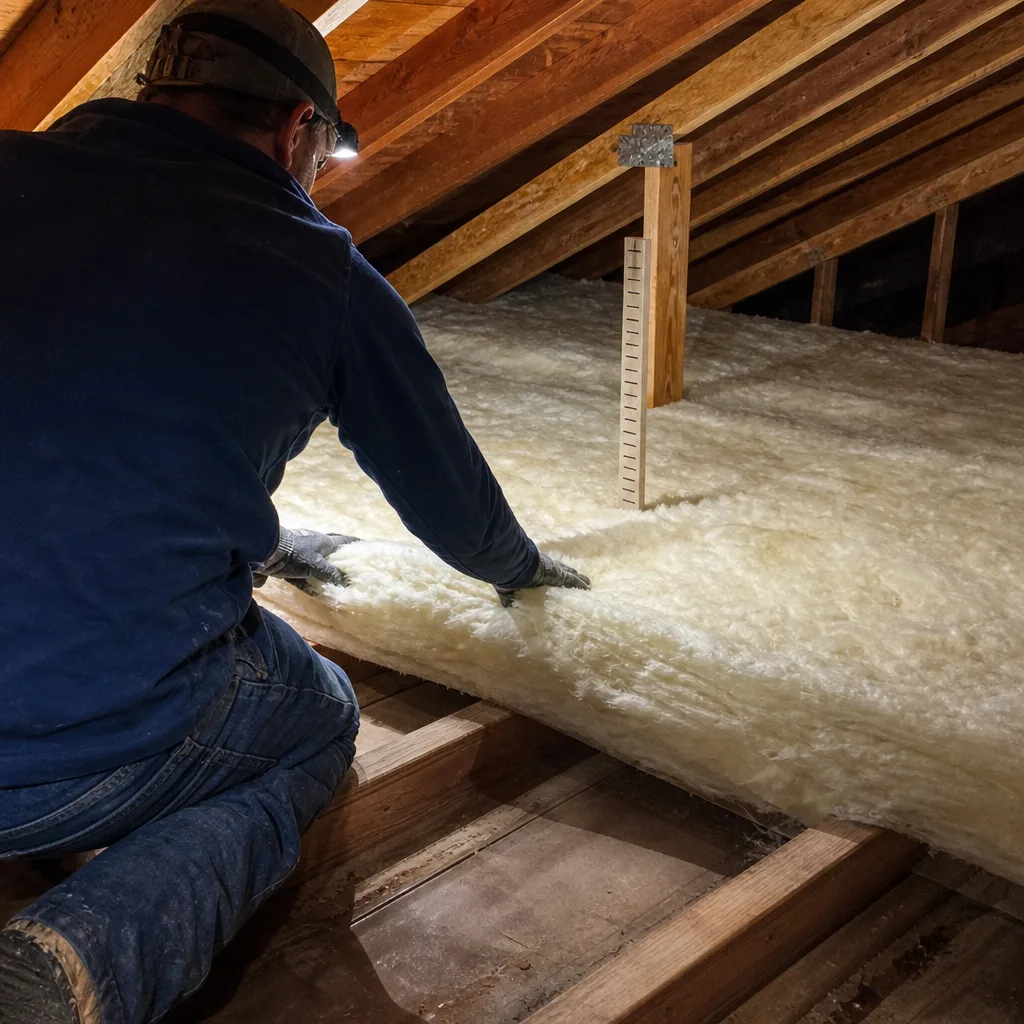
Henderson’s shrink-swell clay does something to a crawl space liner that a homeowner in a stable-soil market never deals with. Through summer, the soil dries and contracts; through winter, it takes on moisture and expands. That cycle pushes and pulls against the foundation, and the liner’s perimeter termination – the point where it’s fastened to the footing – absorbs that movement directly. Over a few seasons, mechanical fasteners at the termination can work loose even when the liner itself is perfectly intact.
This is why we recommend a specific fastener check every three years, independent of your annual visual pass. The check involves pulling gently on the liner at intervals along the perimeter and looking for fasteners that have backed out or washers that have cracked. It isn’t glamorous work, but it’s the difference between a liner that lasts its rated life and one that fails at the footer in year eight.
If you’re comparing written estimates from more than one contractor, ask each one what fastener schedule they use at the termination and whether they stand behind it past the first year. Under Haven Standard Clause 1, our written scope spells out the fastener spacing and the warranty in the same document, so there’s no ambiguity about what’s covered. The soil doesn’t care which company did the work; it stresses the same joint either way. What matters is whether the company documented what they installed.
Maintaining Sump Pits and Perimeter Drains
If your encapsulation includes a sump pit or a perimeter drain, those components need their own service schedule. They’re the part of the system most likely to fail quietly. A drain that has silted up doesn’t announce itself; the crawl space humidity just creeps up a few points a month until someone notices a musty smell upstairs.
Sediment check: once a year, lift the pit lid and look at the bottom of the pit. Sediment deeper than the strainer basket’s lower edge needs to be pumped and vacuumed out. In Henderson, where wind-driven dust finds its way into everything, we’ve seen pits fill faster than homeowners expect – especially on properties near the open desert margins on the east side of town.
Pump function test: pour two or three gallons of water into the pit and time how long it takes the float to trigger and the pump to clear it. If the float hesitates or the pump runs without moving water, call for service before the next rain event. Test in spring and fall, not just once a year.
Backup indicator: if your humidity reading climbs more than 10 points above baseline in a week with no visible leak, suspect the drain. Water is pooling under the liner instead of draining away, and the moisture is wicking up through the seams.
We install encapsulation systems with these service intervals in the written scope from day one. When you look at crawl space encapsulation and vapor barrier in Henderson, ask specifically which drain components are included and what the service schedule is for each. A liner without a functioning drain is a plastic sheet with a moisture problem underneath it.
Event-Based Triggers That Override Your Calendar
Some inspections aren’t scheduled – they’re provoked. Three events in a home should send you into the crawl space within two weeks, regardless of where you are in the annual cycle.
- Any plumbing repair in or near the crawl space. A slow fitting leak under the subfloor can soak the liner for months before it shows. Get eyes on the repair area and re-check humidity against baseline.
- Any foundation crack repair. Foundation work moves soil and may disturb liner terminations or fasteners. Even a hairline crack that gets sealed can shift the adjacent footing enough to open a seam.
- Any regrading of soil adjacent to the foundation. Landscaping, new patio work, or drainage corrections change how water moves toward the house. If grading now slopes toward the foundation instead of away, the liner will find out before you do.
Add one more Henderson-specific trigger: any significant winter freeze. Henderson gets hard freezes occasionally, and the freeze-thaw cycle in the soil acts on the footing line the same way a foundation repair does. If the temperature dropped into the low twenties for more than a night, do a quick perimeter fastener check when you can.
Building a Humidity Trend Log Against Your Baseline
The single most useful maintenance habit isn’t a tool or a test – it’s a record. Every encapsulation job we complete includes a post-installation humidity baseline and a documented photo record. That baseline is the number that makes every future reading meaningful. Without it, “48% relative humidity” tells you nothing about whether the system is working.
Build the log in a spreadsheet or a notebook. One row per reading: date, relative humidity, temperature, location in the crawl space, and a note on anything unusual. Take readings at the same spot every time. A reading taken against the far wall is not comparable to one taken near the access hatch.
Watch for these patterns:
- Steady within 5 points of baseline: system is healthy. Keep to your annual schedule.
- Creep upward over three readings: a seam or drain is degrading. Schedule a closer look.
- Sharp spike in a single week: an event has occurred. Check for water intrusion or a failed pump immediately.
- Wild swings season to season: the liner may not be sealed at the perimeter, letting outside air in. This is a fastener or termination issue.
Two years of readings create a trend line. A trend line shows a fade before it becomes a failure. That’s the entire value of the discipline: you’re not fixing problems, you’re catching them at the point where the fix is still cheap. For comparison, most HVAC and air sealing work we do also includes documented before-and-after numbers, and our attic insulation in Henderson and Envelope Insulation home pages describe how those records work on a typical job.
Seam Tape and Fastener Checks Every Three Years
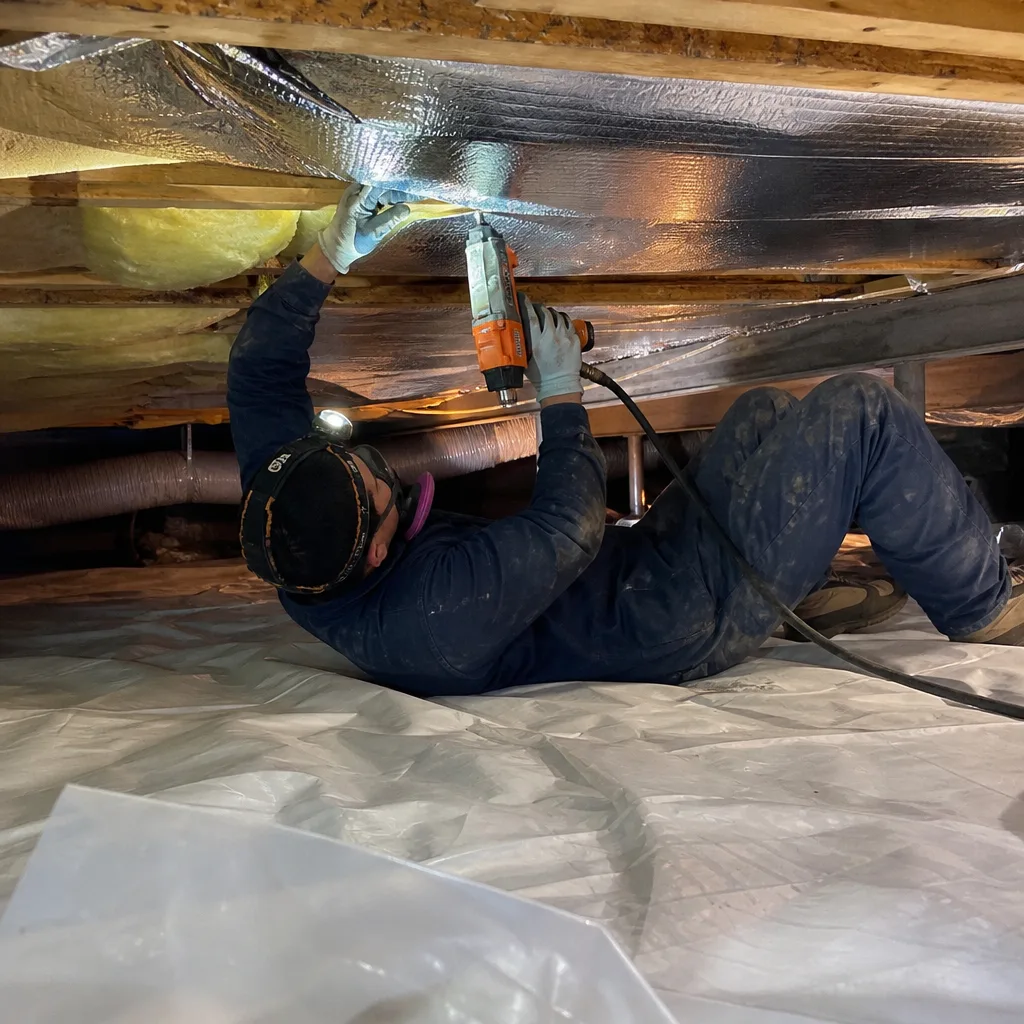
Set a calendar reminder for year three, six, nine, and so on past your installation date. The annual visual pass catches obvious problems, but the three-year check is the deeper service that prevents quiet failures. This is the interval where seam tape adhesion and mechanical fasteners begin to show wear even on a well-installed system.
What a three-year check involves:
- Lift seam tape at multiple points to confirm adhesion – not just at the edges but in the middle of each run.
- Pull-test fasteners at the perimeter termination at intervals of four to six feet.
- Inspect washers for cracking, especially at the footing line.
- Re-seat any fasteners that have backed out and re-tape any seams showing edge lift.
- Compare this reading against the humidity log and confirm the baseline is still holding.
If you do this yourself, take photos of each seam before and after. If you’d rather hand it to a technician, this is exactly the kind of work we do on crawl space systems – our spray foam insulation in Henderson team handles air sealing alongside crawl space work, so the two disciplines line up. Icynene and Demelec spray foams are among the materials we use for sealing at the rim joist and band, and they hold up to the same seasonal movement that stresses the liner below.
Common Mistakes to Avoid
- Waiting for a musty smell before inspecting. By the time you can smell it inside the house, moisture has been building in the crawl space for months. Inspect on the schedule, not on the smell.
- Skipping the humidity baseline at installation. A reading without a baseline is just a number. Insist on a documented post-installation reading – it’s part of what you’re paying for.
- Re-taping seams with the wrong product. Standard duct tape will peel off a humid liner within a season. Use a butyl or mastic tape rated for below-grade use, and use the same brand as the original installation if you can.
- Pumping the sump pit without checking the strainer. A clogged strainer clogs again within weeks. Clear the strainer first, then pump.
- Ignoring perimeter fasteners. The liner can look perfect while the fasteners holding it at the footing have backed out. Silent failure lives at the perimeter.
- Skipping the post-plumbing-repair inspection. Any plumbing event in or near the crawl is an unscheduled inspection trigger. Don’t wait for the next annual cycle.
- Assuming desert climate means no moisture issue. Henderson’s dry air pulls moisture up through soil at a surprising rate, especially on properties with irrigation nearby. The liner is doing more work than you’d think.
When to Call a Professional
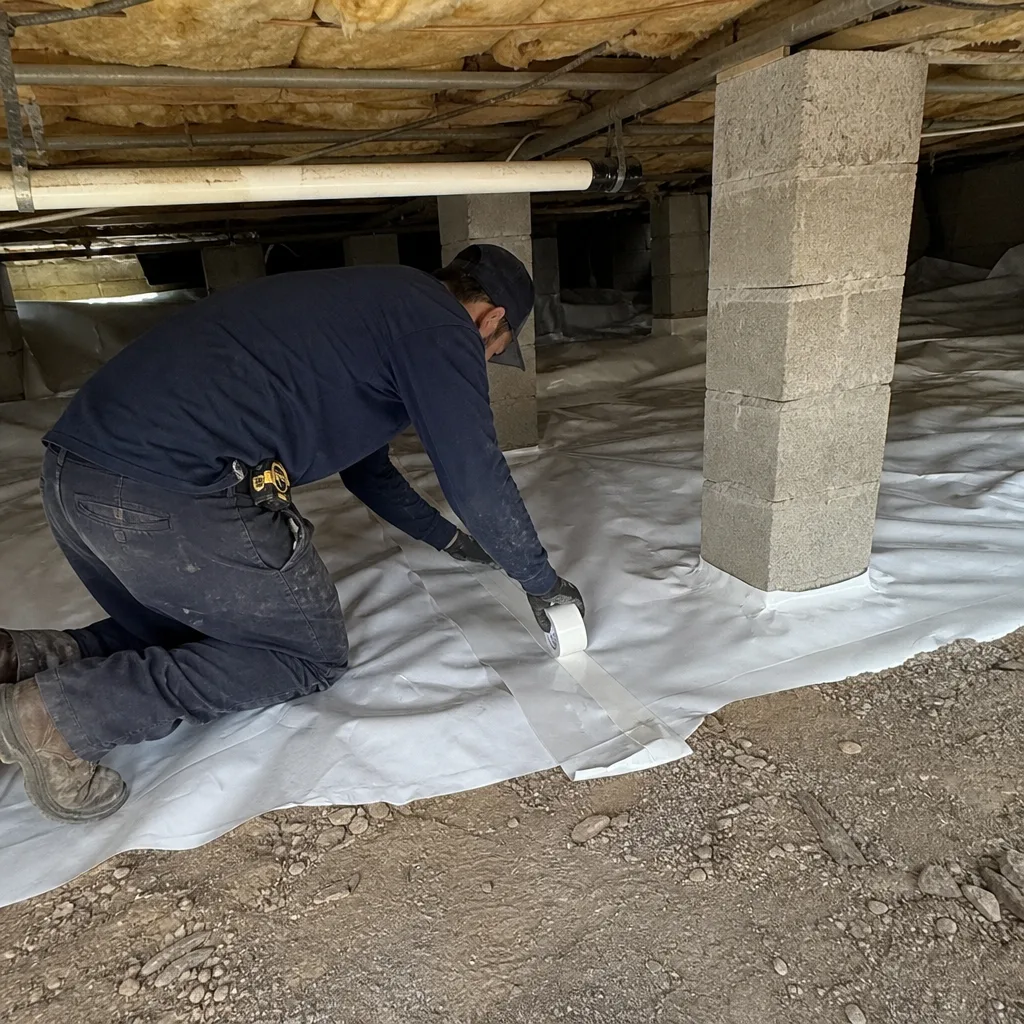
Call a technician when you find seam tape lifting across multiple runs, when any perimeter fastener has backed out at the footing line, when the humidity reading has climbed more than 10 points above baseline and stayed there through two readings, or when a sump pump fails its function test. Also call if the crawl space hasn’t been inspected in more than five years and you don’t have a documented baseline to compare against – the first professional visit should include establishing one.
If you have a 20-mil liner installed in a Henderson home and you’ve never had a fastening check, that first inspection is worth scheduling now rather than waiting for a problem to surface. Envelope Insulation Henderson offers free estimates in Henderson – call (844) 320-5338. Every visit comes with a Documented Photo Record so you have a reference point for the next year’s inspection.
Frequently Asked Questions
Once a year for the visual pass, plus a deeper seam-and-fastener check every three years. Henderson’s shrink-swell clay stresses perimeter fasteners faster than in stable-soil markets, so the three-year interval matters more here than the general industry guidance of five years.
50% relative humidity or below, and ideally within 5 points of your post-installation baseline. A reading above 60% means the system is losing its seal somewhere. Call (844) 320-5338 for a humidity reading and inspection if yours has climbed.
Yes. The liner itself will last its rated 25 years, but seam tape adhesion and perimeter fasteners fail on a shorter cycle – often around 10 years for the tape and sooner at the footing line. Maintenance keeps the liner performing, not just present.
Yes for the visual checklist – seam tape, pooling, termination gaps, and a humidity reading. Skip the deeper fastener and drain service unless you’ve been shown what to look for. The consequence of a missed footing fastener is a slow leak behind the liner.
Stop using the sump for a few days, keep the pit lid on, and call for service. In Henderson, a failed pump during monsoon season can add significant moisture to the crawl in under a week. Test the float and pump function before the rainy season begins.
Neither is used inside the encapsulation itself; both are insulation brands used in attic and wall work. For crawl space air sealing at the rim joist, spray foam from Icynene or Demelec is more typical. Call (844) 320-5338 to talk through which products fit your specific job.
The Bottom Line
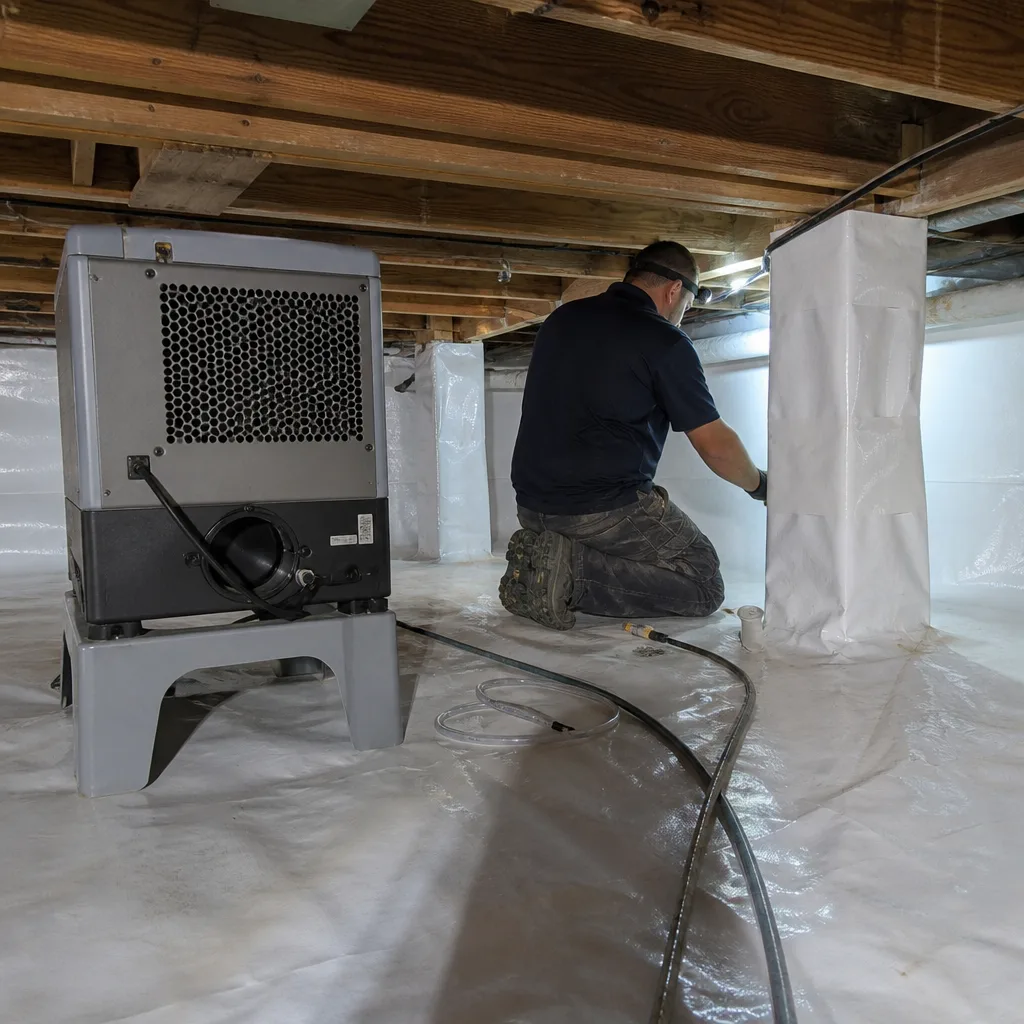
The liner is the easy part. The parts that fail are seam tape, perimeter fasteners, and drain components – and they fail on a predictable schedule that most installers never spell out. Inspect annually with a humidity reading against your baseline. Do the three-year fastening check. Service the sump and drain components every year. Log every reading so you can see a trend line before it becomes a repair. In Henderson, the soil cycle adds stress to the terminations, which makes the discipline more important here than in most markets. If you’d rather set this up with a documented baseline and a maintenance record you can hand to the next owner, call Envelope Insulation Henderson at (844) 320-5338 for a free estimate.
Written by the team at Envelope Insulation Henderson.