
Last updated November 17, 2026
The Complete Spray Foam Insulation Guide for Henderson Homeowners
Open-cell spray foam has an R-value of about 3.7 per inch. Closed-cell runs roughly 6.5. In most U.S. climates, the choice involves budget and vapor permeability. In Henderson, where attic deck temperatures can exceed 155°F, it also involves whether your foam retains its air-sealing properties past year three. That single climate variable reshapes almost every decision that follows – which foam goes where, how thick, what the code requires, and how you verify the job actually worked. This guide is organized around that variable, not around a generic R-value chart. You’ll leave knowing how to read a spray foam scope, what ACH50 means, why a permit is involved, and what a correct installation should look like from the rafters down.
Quick Answer
For most Henderson homes, the right spray foam decision depends on location, not just R-value: closed-cell foam belongs on the roof deck and any surface exposed to extreme heat or moisture, while open-cell can work on interior walls where budget matters and drying potential is understood. Henderson falls in climate zone 3B, a hot-dry zone where vapor drive runs inward during summer, which changes what Nevada energy code requires and why a vapor retarder is often specified. A correct job includes air sealing, the right foam type at each thickness, a permit through Clark County, and before-and-after blower-door numbers that show the ACH50 drop you paid for.
Table of Contents
- Why Henderson’s Heat Changes the Foam Conversation
- Open-Cell vs. Closed-Cell in Climate Zone 3B
- The Unvented Attic Assembly: What Correct Looks Like
- ACH50 and Blower-Door Numbers: What to Expect
- What a Written Spray Foam Scope Must Include
- Permits and Inspection in Henderson and Clark County
- What Spray Foam Costs in Henderson
- Common Mistakes to Avoid
- When to Call a Professional
- Frequently Asked Questions
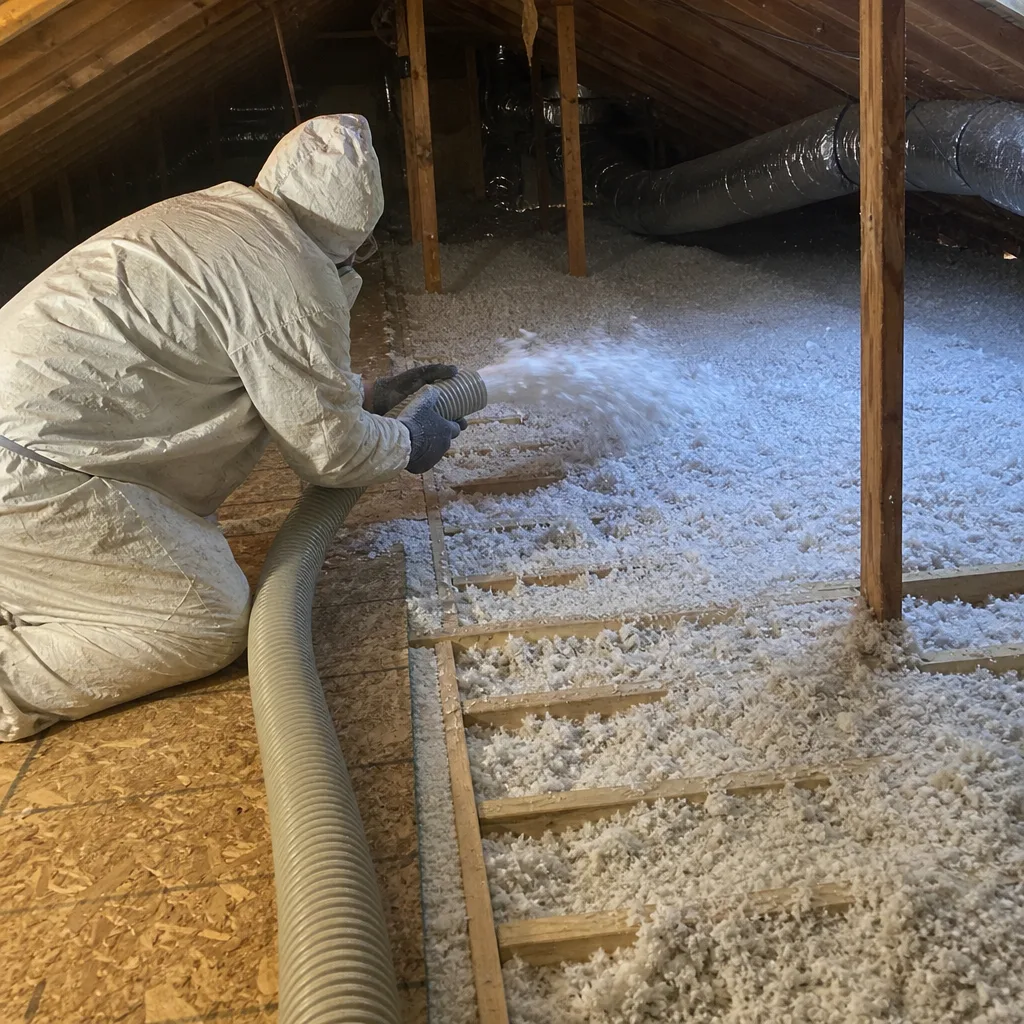
Why Henderson’s Heat Changes the Foam Conversation
Henderson sits at the eastern edge of the Las Vegas Valley, where summer air temperatures routinely push past 110°F and attic deck temperatures can climb above 155°F. That heat is not evenly distributed. It concentrates at the roof deck, radiates down onto the insulation surface, and stresses foam from two directions at once: thermal expansion on the hot face and the temperature swing when the sun drops behind the McCullough Range and the deck cools by 60 to 80 degrees overnight.
Foam that passes a simple R-value test can still fail in this cycle. Closed-cell foam, with its higher density and tighter cell structure, resists that thermal cycling better than open-cell. Open-cell foam is softer, more permeable, and more prone to shrinking and pulling away from framing after repeated high-heat cycles – and when it pulls away, the air seal it was supposed to provide goes with it.
We’ve seen this in homes across Green Valley and Anthem, where attics converted to spray foam in previous years now show measurable air leakage at the foam-to-rafter interface. In each case, the failure tracked to foam type and installation detail, not to the brand. Materials like Johns Manville and Knauf closed-cell products perform well when installed correctly in Henderson’s heat; the same products perform poorly when oversprayed thin or applied over an unsealed surface. The lesson is simple: in Henderson, the foam choice and the installation detail matter as much as the number on the datasheet.
Open-Cell vs. Closed-Cell in Climate Zone 3B
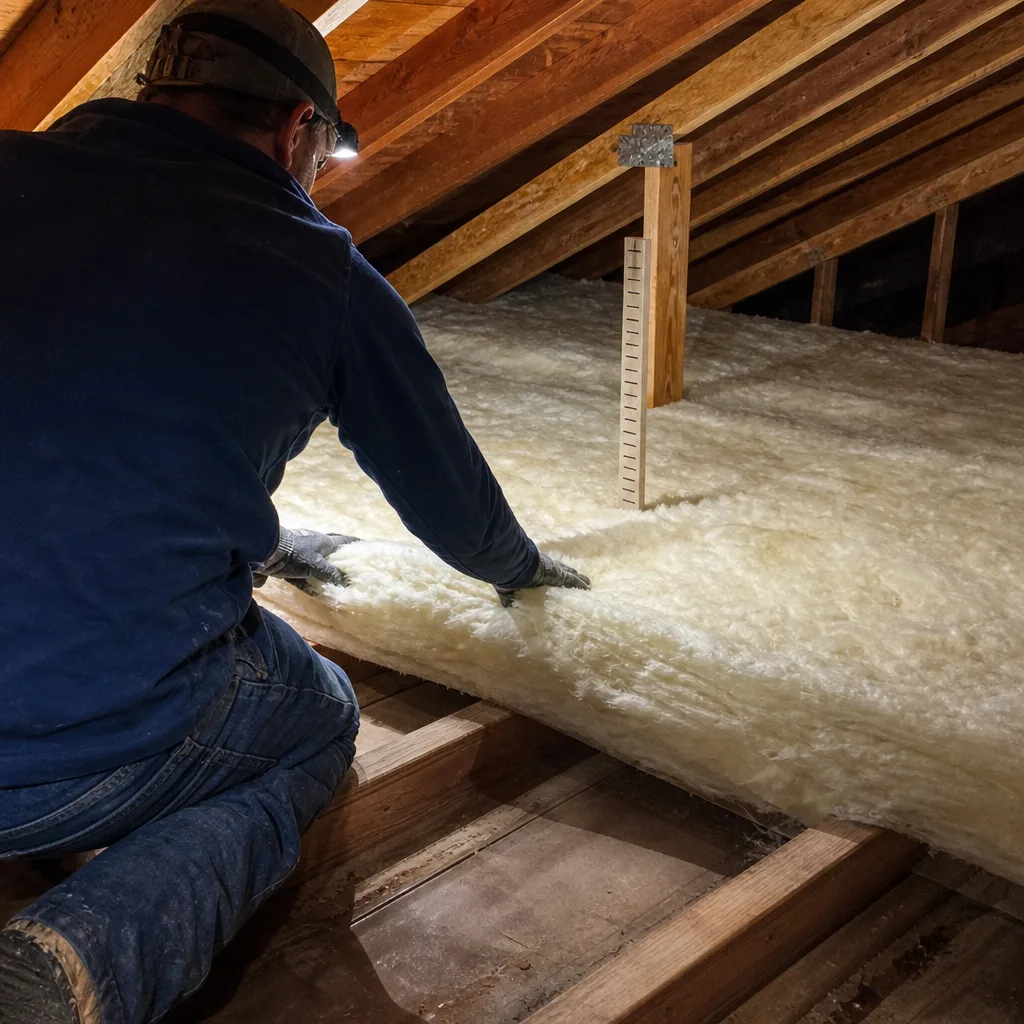
Henderson is in IECC climate zone 3B – hot-dry. That designation drives everything from vapor retarder requirements to how much insulation the code expects in an unvented attic. In zone 3B, vapor drive runs predominantly inward during the cooling season: moisture in the air wants to move toward the cooler, conditioned interior. That is the opposite of a cold climate, and it is why open-cell foam in the wrong assembly can trap moisture against the deck.
Here’s how the two foam types compare for a Henderson installation:
- Closed-cell (about 6.5 R per inch, 2 lb density): Acts as its own vapor retarder at 2 inches or more. Structurally rigid. Best choice for roof decks, rim joists, and any surface facing the exterior. The right default for unvented attics in Henderson.
- Open-cell (about 3.7 R per inch, 0.5 lb density): Permeable, softer, less expensive per inch. Fits interior walls and irregular cavities well. In zone 3B, it needs a separate vapor retarder strategy and should not be the sole barrier against inward vapor drive on a roof deck.
- Hybrid assemblies: Common in Henderson retrofits – closed-cell on the roof deck, open-cell or blown-in on interior walls. Material selection should follow the assembly, not a single global preference.
Roughly put, if the foam touches Henderson’s exterior heat, choose closed-cell. If it sits in an interior wall with no direct heat, open-cell can work. If you’re weighing spray foam against a lower-cost approach, our guide to attic insulation in Henderson covers where blown-in makes more sense.
The Unvented Attic Assembly: What Correct Looks Like
The unvented attic is the most common spray foam application in Henderson. Instead of the attic staying hot and vented, the foam moves the thermal boundary from the attic floor to the roof deck and gable ends. The attic becomes a conditioned – or semi-conditioned – space. The result is far less heat gain, no more duct losses to a 155°F attic, and a house that holds its temperature rather than chasing it.
A correct installation follows a specific order:
- Inspect and document the existing deck and framing. Sheathing condition, existing moisture, and any hidden leaks get caught before foam goes on. Skipping this step is why some Henderson spray foam jobs fail – the foam goes over a problem.
- Seal the top plates, penetrations, and recessed can lights. Air sealing happens first. Under The Haven Standard, air sealing of top plates, can lights, and penetrations is completed before any insulation is added – and we never blow or spray insulation over an unsealed attic floor.
- Mask and protect. Foam overspray will land on framing, ducts, and anything else in its path. Proper masking is part of the job, not an extra.
- Spray closed-cell at the specified thickness. For a Henderson unvented attic, 2 to 4 inches of closed-cell is typical, depending on the R-value target. Thickness is measured at multiple points and recorded, not estimated.
- Check and correct. Areas that came up thin, voids at the gable ends, and foam at the transition to the walls get the second pass.
- Document with photos. Every job closes with a Documented Photo Record – the deck before, the sealed penetrations, the finished foam at each location.
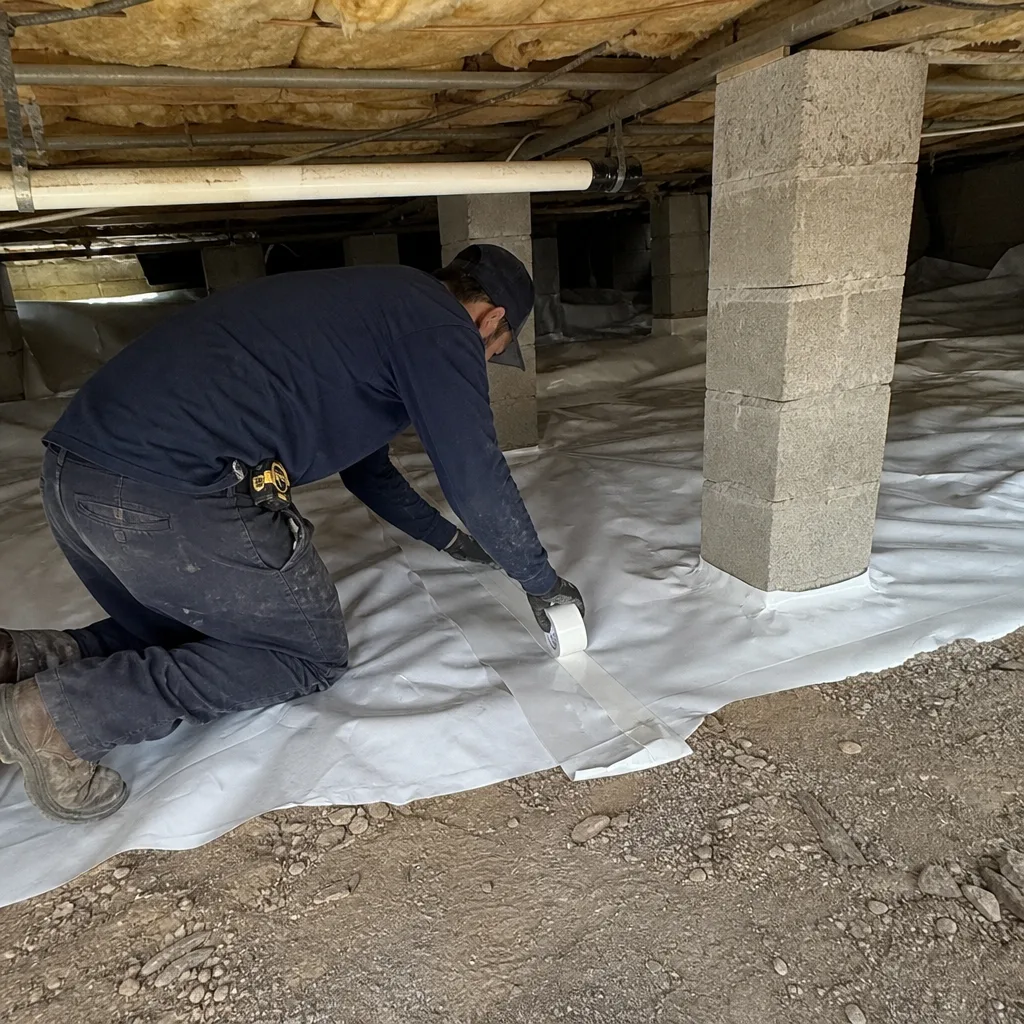
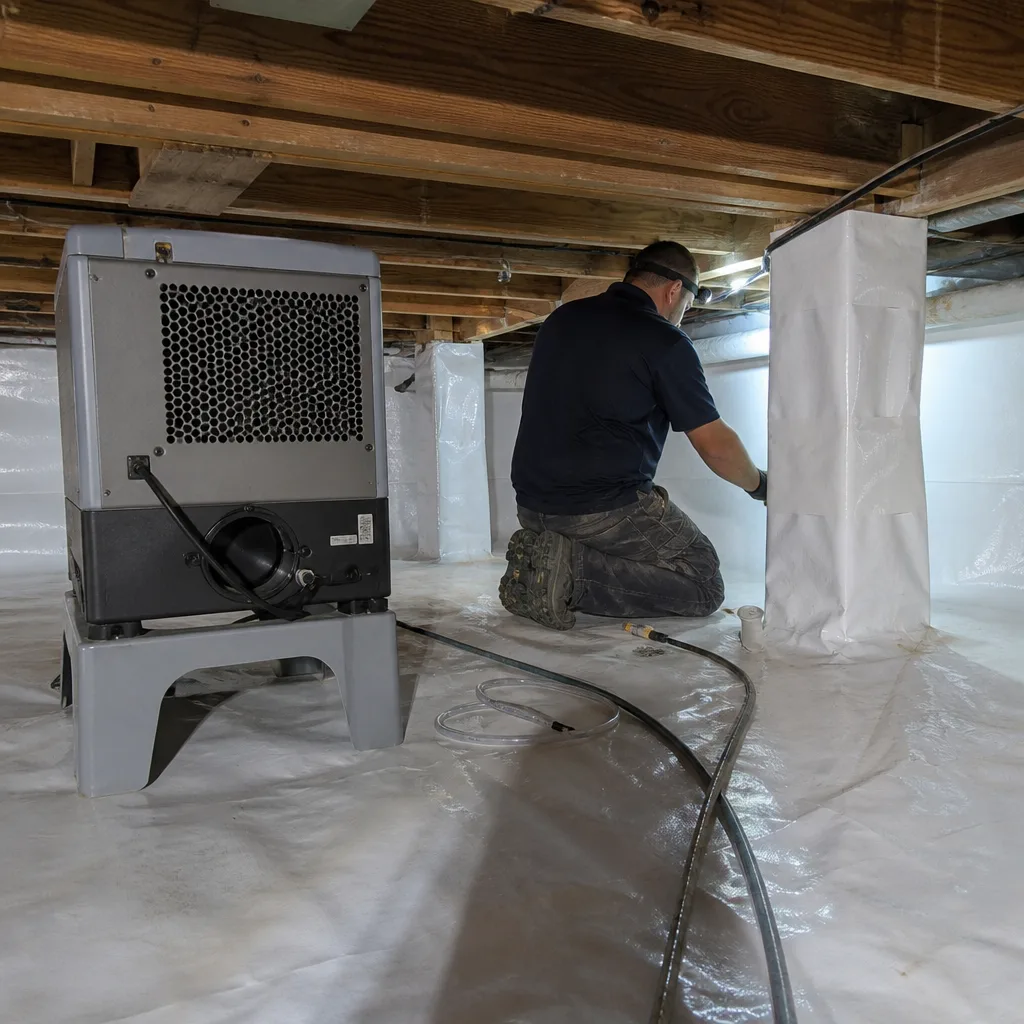
The full application details are in our guide to spray foam insulation in Henderson. If your attic has a vented crawl space below it, that assembly has its own set of rules – covered in crawl space encapsulation and vapor barrier in Henderson.
ACH50 and Blower-Door Numbers: What to Expect
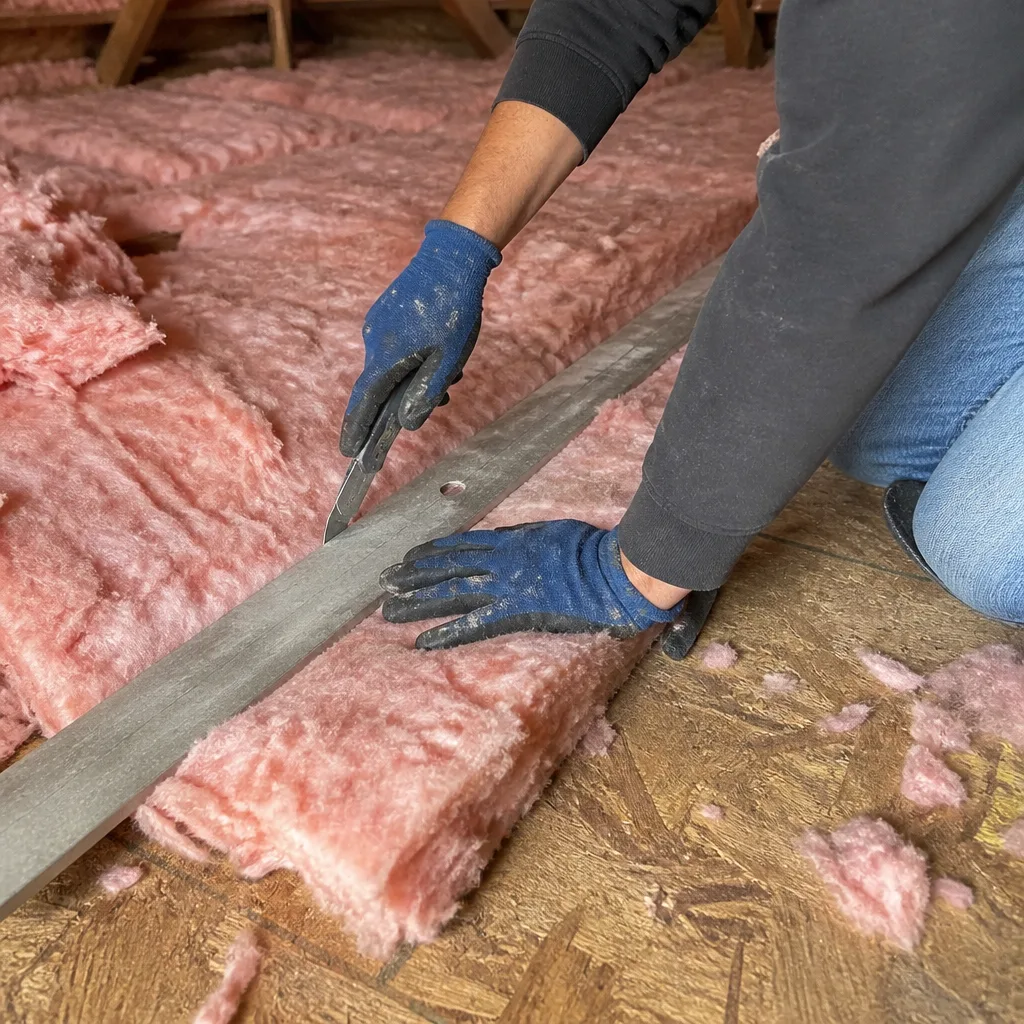
ACH50 stands for air changes per hour at 50 pascals. It’s the number a blower-door test produces – a pressurization reading that shows, in one figure, how much air your building envelope is losing. A blower-door test before and after spray foam is the only honest way to know whether the air-sealing part of your job worked.
For context, a typical unsealed Henderson home tested before insulation often reads between 5 and 8 ACH50. After a proper spray foam air-seal job on an unvented attic, the number commonly drops to 3 to 5 ACH50, sometimes lower depending on how much of the envelope was addressed. A reading that barely moves after the work usually means air sealing was skipped or incomplete.
Here’s what before-and-after house data should look like in a written report:
- Pre-work CFM50 reading: the total leakage in cubic feet per minute at 50 pascals, taken before any foam or air sealing is applied.
- Post-work CFM50 reading: the same measurement after the job, taken the same day.
- ACH50 conversion: the CFM50 number divided by the conditioned volume of the house and multiplied by 60, giving the air-changes figure most energy codes and programs care about.
- Notes on any areas not addressed – sometimes the crawl space or an attached garage wall is deferred, and the report should say so.
We publish before-and-after blower-door numbers on every applicable job so the homeowner can see the performance change they paid for. If you’d like a walk-through of what those readings mean in your own home, our main Envelope Insulation Henderson home page explains the process.
What a Written Spray Foam Scope Must Include
A written scope of work is not a nice extra. It’s the single document that decides whether the job you’re quoted is the job you get. Under Haven Standard Clause 1, you should have a flat price, written scope, and written warranty before anyone lifts a tool. Here’s what a spray foam scope must include to be worth the paper it’s on:
- Foam type – open-cell, closed-cell, or hybrid – named at each location. “Spray foam in attic” is not a scope.
- Installed thickness at each location, in inches, not just R-value. Closed-cell at 3 inches is the call-out, not “R-20.”
- Target R-value per assembly, matched to the IECC zone 3B requirement for that surface.
- Re-entry time after off-gassing – typically 24 hours, sometimes longer depending on foam type and ventilation. It should be written on the scope, not left to memory.
- Existing insulation removal, if any, and where it goes.
- Air sealing included as a listed line item with locations, not a vague “prep.”
- Permit responsibility and inspection schedule.
- Blower-door readings before and after, on applicable jobs.
- Warranty terms and the 365-Day Done Right Promise in writing.
If you’ve received a competing quote, our Free Second Opinion on any written estimate means we’ll read it with you – line by line – and flag what’s missing.
Permits and Inspection in Henderson and Clark County
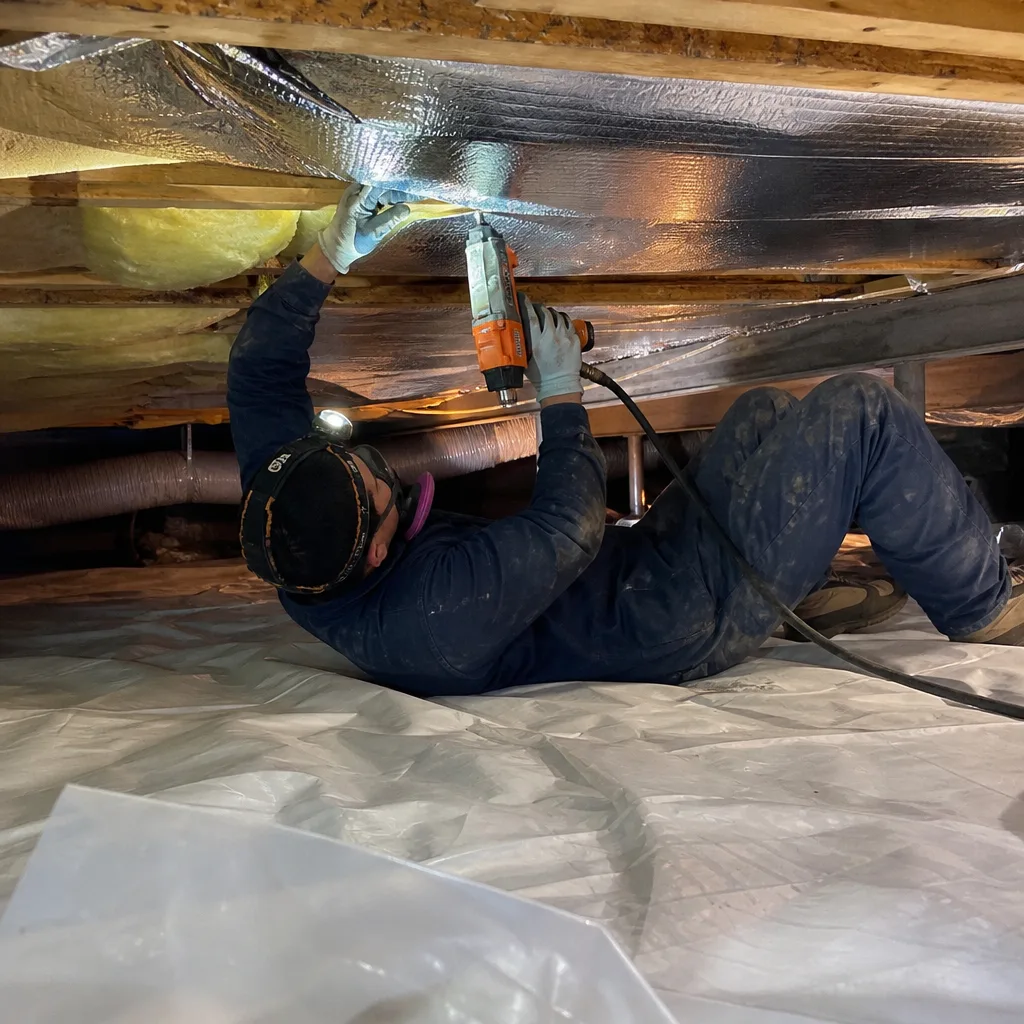
Most Henderson homeowners don’t know spray foam in a conditioned attic requires a permit. It does – under Clark County building department rules, an unvented attic using spray foam at the roof deck is treated as an assembly change with a thermal and ignition-barrier requirement. That means a permit, an inspection, and documentation that the foam was installed to the manufacturer’s thickness and the code’s R-value for zone 3B.
The permit does a few things that protect you:
- It confirms the assembly meets code. R-value at the roof deck, ignition barrier or thermal barrier as required, and vapor retarder strategy for zone 3B.
- It forces a paper trail. The permit is your record that a licensed installer did the work and the county inspected it.
- It affects resale. An unpermitted spray foam attic can complicate an inspection during a Henderson home sale – a permit number resolves that.
Beyond the permit, Henderson follows Nevada energy code adoptions of the IECC, which for zone 3B expects specific R-values on the roof deck, walls, and floor. Closed-cell spray foam at the right thickness meets the roof-deck R-value in most Henderson residential attics without a separate vapor retarder, because closed-cell at 2 inches or more qualifies as a Class II vapor retarder. That’s a meaningful Henderson-specific fact: the same foam that provides R-value also satisfies the vapor-retarder requirement, saving a separate product and labor step. Knauf and CertainTeed both publish the vapor-retarder data you’d need to confirm this for a specific assembly.
What Spray Foam Costs in Henderson
Spray foam pricing in Henderson tracks foam type, thickness, and square footage. Here’s what most Henderson homeowners actually pay, broken down by the situations we see most often:
| Application | Typical Henderson Price Range | Notes |
|---|---|---|
| Unvented attic – closed-cell, 3″ | $3,200 – $6,000 | Most common application; 1,000-1,800 sq ft attic |
| Unvented attic – closed-cell, 2″ | $2,200 – $4,200 | Minimum vapor-retarder thickness |
| Interior walls – open-cell, 3.5″ | $1,800 – $3,500 | Retrofit through existing cavities |
| Rim joists – closed-cell, 2″ | $60 – $110 per linear ft | Adds to any attic job |
| Blower-door test – before and after | $250 – $450 | Included in most full-scope jobs |
| Insulation removal (existing) | $1,200 – $2,400 | Where old material must come out first |
These ranges are what we see in Henderson specifically – Anthem, Green Valley, Seven Hills, and the older single-story neighborhoods off Boulder Highway all fall within them. Homes with complicated rooflines or multiple attic zones run higher; simple rectangular attics run lower. Every job we quote carries a written flat price before any work starts, so the number on the estimate is the number you pay.
Common Mistakes to Avoid
- Spraying foam over an unsealed attic floor. If top plates, can lights, and penetrations aren’t sealed first, the foam’s air-sealing benefit is undermined within a few years. Air sealing is always step one, in that order.
- Choosing open-cell for the roof deck in Henderson. Open-cell on the underside of a roof deck in zone 3B can trap moisture and shrink under heat cycling. Closed-cell is the right call at the deck in almost every Henderson application.
- Skipping the permit. An unpermitted conditioned attic can sour a Henderson home sale inspection. Permit the job, inspect the job.
- Accepting a scope without thickness. “R-20 spray foam” is not a scope. The written scope must list installed thickness at each location in inches.
- No blower-door numbers. If a contractor won’t produce before-and-after readings on an applicable job, you have no way to verify the air seal worked. This is the single most product-specific mistake in Henderson.
- Ignoring re-entry time. Walking back into a freshly sprayed attic before the off-gassing period ends is a real health mistake. Re-entry time belongs on the written scope.
- Choosing on price alone. The cheapest per-square-foot quote is usually the thinnest foam application, which fails the R-value and the air seal at the same time. Compare scopes, not just totals.
When to Call a Professional
Spray foam is not a homeowner project, and the reasons are specific. The two-component chemistry involves isocyanates and requires supplied-air respiratory protection; overspray will bond to anything in its path within seconds. Thickness measurement, moisture assessment on the existing deck, air sealing of top plates and can lights, and blower-door verification are all skilled-trade steps where small errors produce measurable failures a year or two later – exactly the kind of failure Henderson’s heat amplifies. If you’re considering a DIY kit for a small rim-joist patch, that’s the outer limit; anything involving the roof deck, an unvented attic conversion, or a full-envelope decision should go to a trained installer who will permit, document, and test the work. Envelope Insulation Henderson offers free estimates in Henderson – call (844) 320-5338 to schedule one. Every estimate comes with a written price before any work starts, and a Free Second Opinion on any competing written estimate you’d like us to read with you.
Frequently Asked Questions
Closed-cell is better for most Henderson applications because it handles the extreme roof-deck heat – above 155°F in summer – and acts as its own vapor retarder at 2 inches or more, which satisfies zone 3B code in a single product. Open-cell can work on interior walls where budget matters and the assembly has a separate vapor strategy. The general rule for Henderson: if the foam touches exterior heat, choose closed-cell.
Henderson is IECC climate zone 3B, and the roof deck in an unvented attic typically needs an assembly R-value matching the code’s zone 3B roof requirement – which usually means 3 to 4 inches of closed-cell foam (roughly R-19 to R-26) at the deck. Wall R-values run lower. The exact number depends on which IECC edition your jurisdiction enforces at permit time; the written scope should name the target R-value and the thickness that delivers it. Call (844) 320-5338 for a free estimate that specifies both.
Yes. Spray foam in a conditioned attic is treated as an assembly change under Clark County building department rules and requires a permit and inspection. The permit confirms the R-value, ignition or thermal barrier, and vapor retarder strategy meet code for zone 3B. It also protects you at resale – an unpermitted conditioned attic can complicate a Henderson home inspection.
ACH50 is air changes per hour at 50 pascals – a standard measurement of how leaky your envelope is. Most unsealed Henderson homes test between 5 and 8 ACH50 before insulation. After a proper closed-cell attic spray foam job, expect 3 to 5 ACH50, sometimes lower. A reading that barely moves after the work usually means air sealing was skipped. Call (844) 320-5338 for an exact quote – estimates are free, and before-and-after readings are published on applicable jobs.
Re-entry time is typically 24 hours after the spray completes, and closure is based on off-gassing rather than the foam feeling dry. The exact period depends on foam type – closed-cell vs. open-cell – and ventilation, and it should be written on the scope of work, not left to memory. If a contractor won’t state re-entry time in writing, that’s a red flag.
It depends on the assembly. In a Henderson unvented attic conversion, spray foam does the air sealing and the R-value in one step, which usually wins on total cost. In a standard vented attic where the roof deck stays outside the envelope, a proper air seal plus blown-in insulation is usually less expensive and performs just as well – because the attic was never meant to be part of the conditioned space. We’ll tell you which applies to your home before we write the price. Call (844) 320-5338 for a free estimate.
The Bottom Line
In Henderson, spray foam is a climate decision before it’s a budget decision. Closed-cell at the roof deck handles zone 3B heat and doubles as the vapor retarder. Open-cell belongs on interior walls where it has a drying path. The unvented attic is the right assembly for most Henderson homes, but only when air sealing comes first, thickness is specified in inches, the permit is pulled, and blower-door readings prove the air seal worked. If you take one thing from this guide, take this: verify the job with a number, not a feeling. A written scope, a permit, and a before-and-after ACH50 reading tell you more about the work than any brochure.
Envelope Insulation Henderson is independently owned and operated under The Haven Standard. Every job starts with a written price before any work begins and closes with a Documented Photo Record. On applicable jobs, before-and-after blower-door numbers are included so you can see the change you paid for. Our technicians have up to 10 years of experience, and calls are answered by a live person 24/7 – no voicemail loops. To schedule a free estimate in Henderson, call (844) 320-5338.
Written by the team at Envelope Insulation Henderson.