
Last updated November 17, 2026
The Complete Blown-In Insulation Guide for Henderson Homeowners
Nevada’s energy code requires R-38 in attic floors for climate zone 3B. A cellulose installation that hits R-38 on day one will measure somewhere between R-33 and R-36 after three years of settling, depending on product density and installation moisture content. No contractor is required to tell you that. We are telling you now. Blown-in insulation in Henderson gets sold almost entirely on the initial R-value, and the number you’re quoted on the estimate is rarely the number your attic will actually hold a few summers from now. This guide explains the difference between installed R-value and settled R-value, what depth a crew has to hit to guarantee the settled number meets code, and what written documents should be in your hands when the job is done.
Quick Answer
Blown-in insulation in Henderson only performs at its rated R-value when the attic floor is air-sealed first, and the R-value you should be buying is the settled number, not the day-one number. Cellulose and fiberglass both compact over time, so a contractor has to install to a depth that guarantees the settled R-value meets Nevada’s R-38 minimum for climate zone 3B. Ask for the installed depth at multiple points, the bags-per-square-foot used, and a before blower-door reading if air sealing was part of the job.
Table of Contents
- Installed R-Value vs. Settled R-Value
- Why Air Sealing Comes Before Blown-In
- The Depth Ruler and What It Documents
- The Henderson Attic: 150°F at the Deck
- Blown-In in an Unvented Attic
- The Written Deliverables From a Correct Job
- How to Buy Blown-In Insulation the Right Way
- What Blown-In Insulation Costs in Henderson
Installed R-Value vs. Settled R-Value
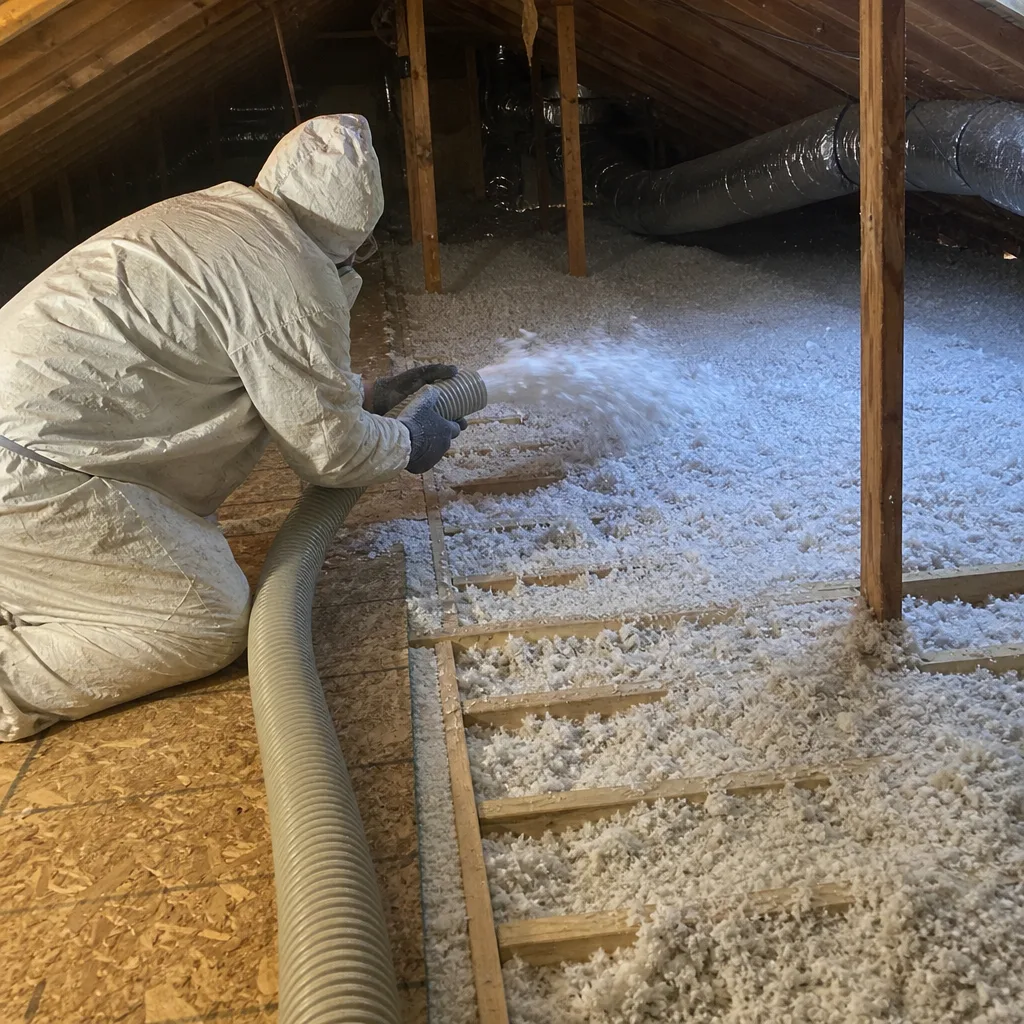
The number on the bag is not the number in your attic six months later. Blown-in cellulose and blown-in fiberglass both start loose and dense up as gravity, humidity swings, and the daily expansion and contraction of a Henderson attic work on them. The industry tracks this as “settled density,” and the settled R-value is always lower than the initial R-value on the product data sheet. For cellulose, a common rule of thumb is a loss of roughly 1 R per inch of depth if the product is installed at the low end of its density range. Fiberglass loses less, but fiberglass starts lower per inch, so the arithmetic still favors buying on settled performance.
Here’s the practical problem. Nevada’s energy code requires R-38 in an attic floor assembly in climate zone 3B. A crew that shoots for exactly R-38 at install and leaves is technically at code on day one but functionally below it within a few years. The right target is the settled R-value. For cellulose that means installing to a depth that guarantees R-38 once settled, which often means shooting for R-42 to R-44 at install. For fiberglass it usually means hitting R-49 at install so the settled number stays above R-38.
Three things determine how far the number drifts:
- Product density. Denser cellulose settles less. GreenFiber and other stabilized products are formulated for lower settle than older loose-fill blends.
- Installation moisture content. Cellulose installed into a humid attic or mixed with too much water for dust control settles more once it dries.
- Attic conditions. A Henderson attic that swings from 55°F in January to well over 150°F at the deck in July works the material harder than a mild-climate install ever would.
Why Air Sealing Comes Before Blown-In
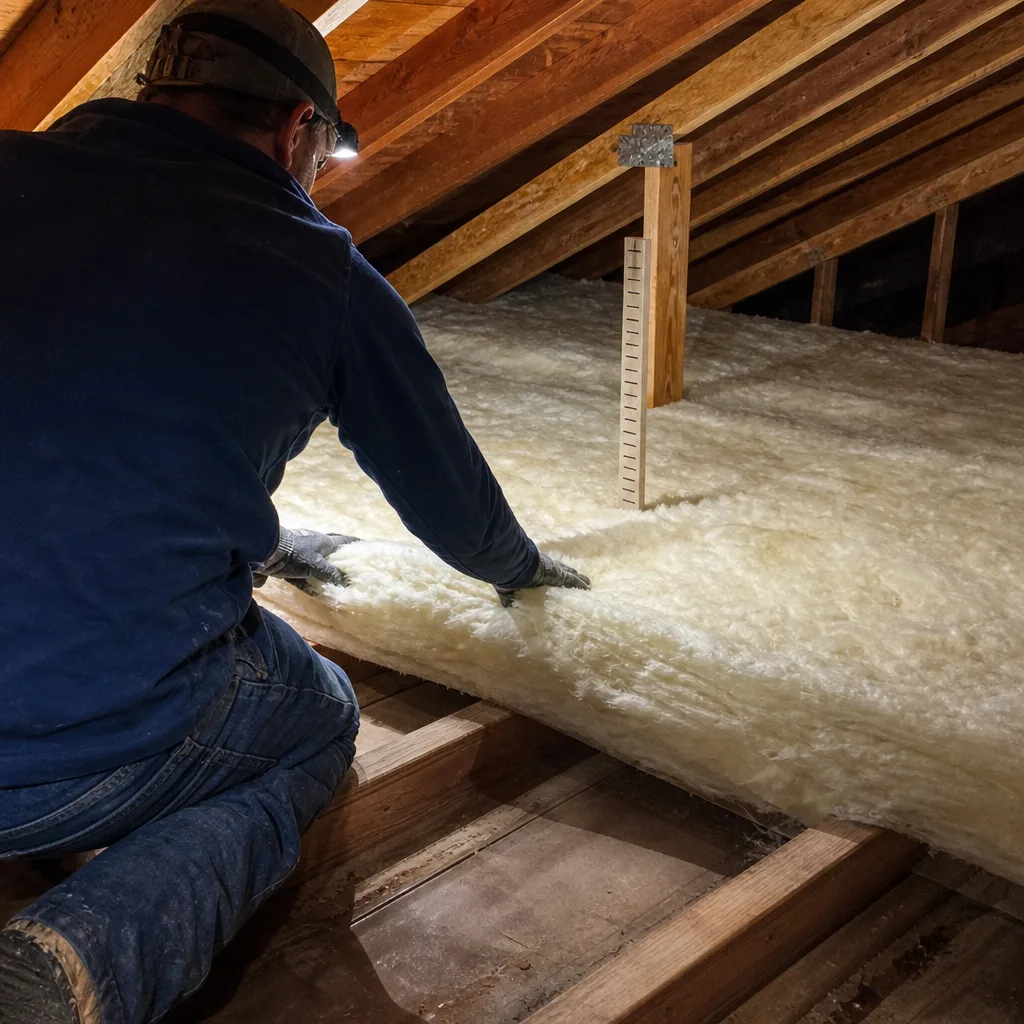
Blown-in insulation does one job: it slows conductive heat transfer. It does not stop air leakage. If the top plates of your walls, the can lights, the bath fan housings, the wiring penetrations, and the plumbing chases in your attic floor are open, adding insulation depth over them changes almost nothing about how much conditioned air the house loses. You’ve made a leaky attic floor a thicker, leakier attic floor. We’ve measured this. A home with no air sealing but R-49 blown in reads the same blower-door number as a home with no insulation at all.
A blower-door test – a pressurization reading that shows, in one figure, how much air your building envelope is losing – is the only honest way to know whether the work actually improved anything. On a typical Henderson home, we see pre-work readings in the 3,000 to 5,000 CFM50 range and post-work readings roughly 30 to 45% lower once the attic floor is properly sealed. That’s the number you paid for. That’s the number a correct contractor should be willing to publish on your job, before and after.
Air sealing the attic floor in Henderson means, at minimum:
- Foam the top plates at every exterior and interior wall intersection.
- Seal around can lights with an airtight, insulation-contact-rated cover or box.
- Seal bath fan and range hood housings to the drywall with caulk or foam.
- Seal wiring, plumbing, and HVAC penetrations with expanding foam.
- Close the dropped soffit and chase cavities that connect to the conditioned space below.
Only then does blown-in go in. Envelope Insulation Co. operates under The Haven Standard, and one of our hard rules is that we will never blow insulation over an unsealed attic floor. Not on a discount job, not on a rental turnover, not because the homeowner asked us to skip it. Our broader Envelope Insulation Henderson home page covers how this fits with the rest of the building-envelope service line.
The Depth Ruler and What It Documents
Most homeowners have never heard of this, and it should be the first thing you look for when the crew leaves. An insulation depth ruler – often called a ruler card or depth marker – is a small labeled card stapled to an attic joist or truss, marked with the target depth for the R-value you paid for. Code and product guidance expect the installer to leave one visible in the attic after installation. It’s not decoration. It’s the installer’s written statement of how deep the material was supposed to go.
What the ruler documents:
- The target depth. Where the settled R-value should land, based on the product’s coverage chart.
- The product match. Which blown-in product was used and what its published settle characteristics are.
- A verifiable anchor. Any later inspector, appraiser, or contractor can measure the actual settled depth against the card and see whether the job met the target.
If a crew installed blown-in insulation in your Henderson attic and you can’t find a depth ruler, that’s a signal worth noting. Ask for the installed depth at multiple measurement points across the attic, in writing, along with the bags-per-square-foot figure. On any attic insulation in Henderson job, that documentation should be standard – not something you have to chase down.
The Henderson Attic: 150°F at the Deck
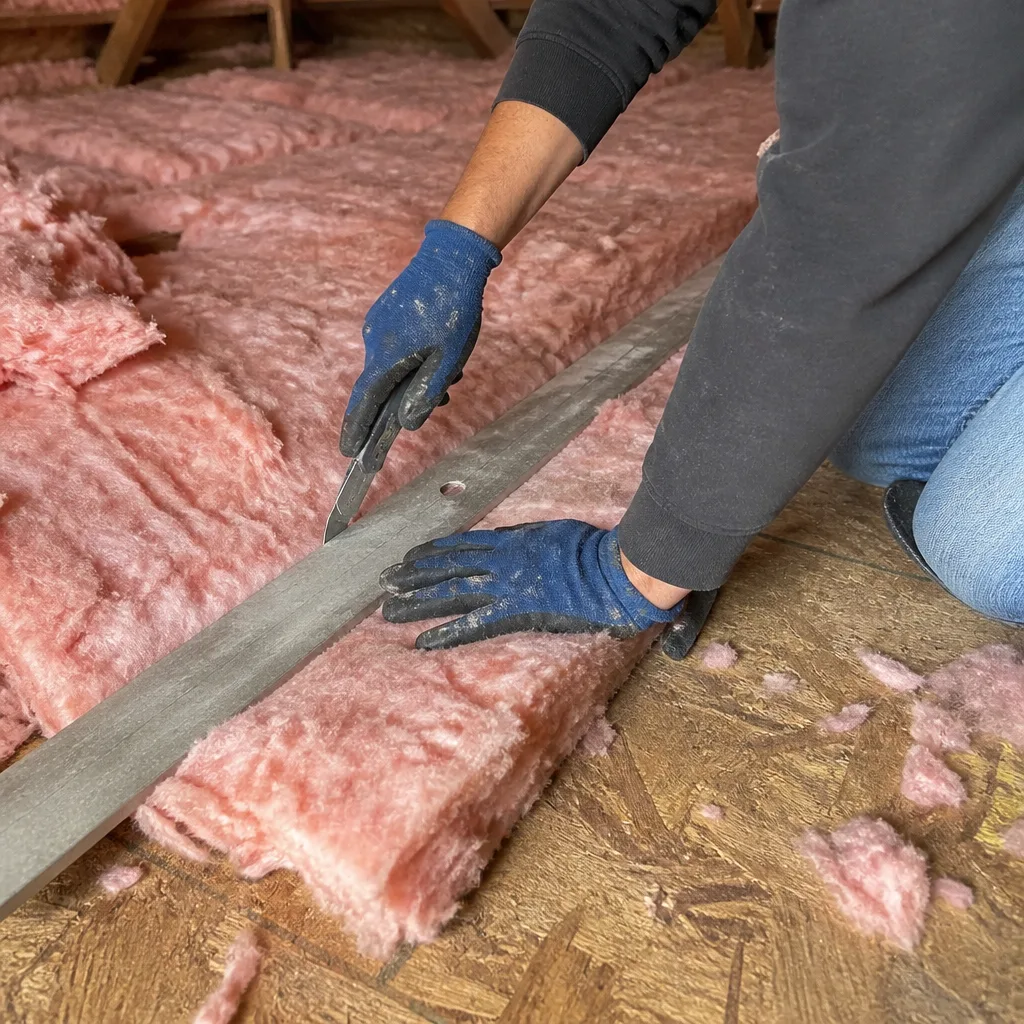
Henderson attics are not mild environments. Through June, July, and August, a vented attic under a dark shingle roof will run 140 to 160°F at the deck on a typical afternoon, and the air at the ridge can top 160°F on a bad day. The insulation at the attic floor sits under that heat load while the ceiling drywall below it holds 74°F conditioned air. That temperature differential is the whole reason your HVAC runs as hard as it does, and it’s why blown-in insulation here fails differently than it does in, say, Portland.
The material consequences:
- Cellulose settle accelerates under the day/night thermal cycling more than in a mild climate. A Henderson attic can see 40°F to 50°F of swing every single day between the ceiling drywall temperature and the attic deck temperature.
- Radiant heat from the deck drives additional heat into the attic floor assembly that loosely installed fiberglass doesn’t block well, because fiberglass is transparent to radiant transfer. That’s why a radiant barrier matters here in a way it rarely matters in coastal markets.
- Duct losses compound the problem. If your HVAC ducts run through the attic – and in most Henderson homes built in the 1990s through 2010s, they do – duct leakage into a 160°F attic can cost you 20% or more of your cooling capacity before the air ever reaches a register.
If you’re not already considering a radiant barrier installation alongside the insulation, ask about it. In this climate it’s the difference between buying depth and buying performance.
Blown-In in an Unvented Attic
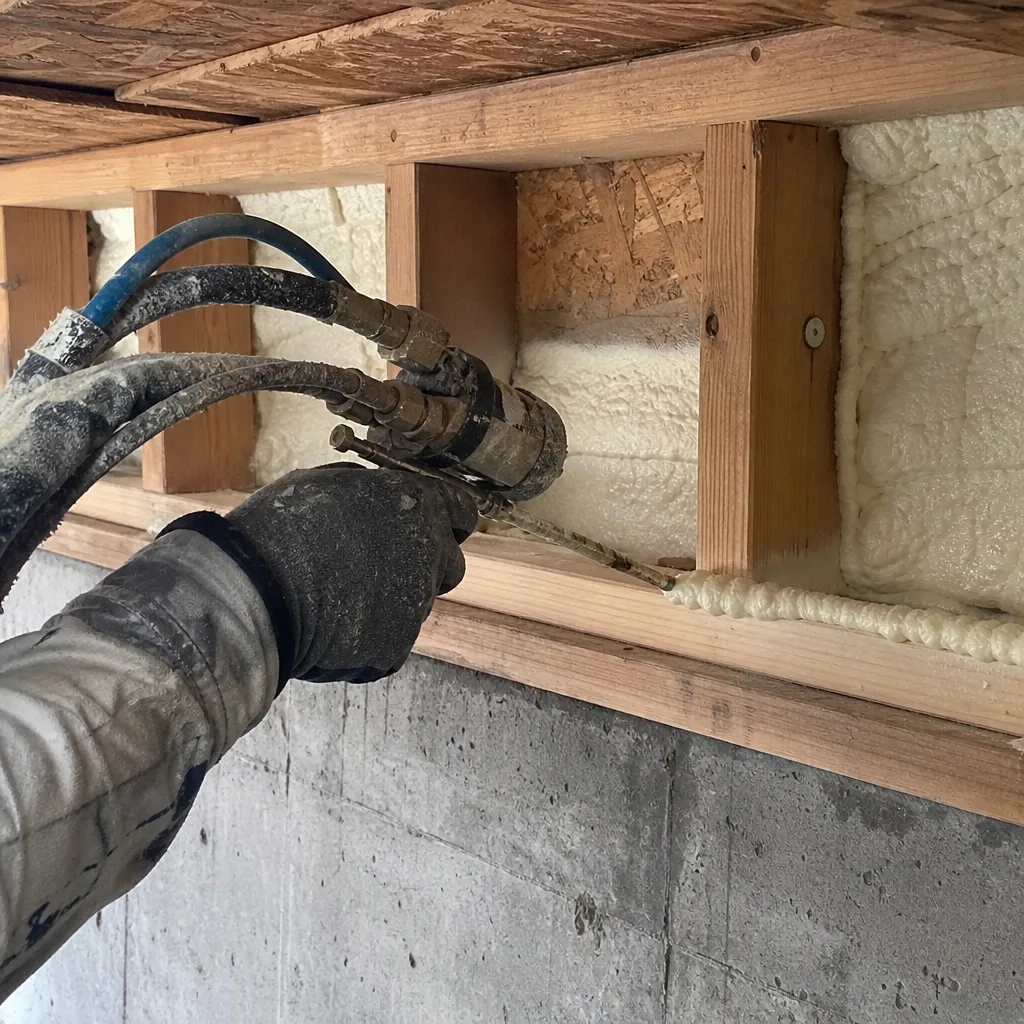
This is the single biggest mistake we see on Henderson attics, and it’s worth a dedicated section. An unvented attic – sometimes called a “sealed attic” or “conditioned attic” – is an assembly where the insulation and air barrier are moved from the attic floor up to the roof line, making the attic part of the conditioned envelope. In an unvented attic, the roof deck is insulated directly with spray foam, not blown-in at the floor.
Blown-in at the attic floor inside an unvented assembly almost never works, and here’s why. If the attic is unvented, moisture has nowhere to escape if the assembly is wrong, and blown-in at the floor with no venting collects that moisture until it sags and loses density. More urgently: blown-in insulation does not stop heat transfer through the roof deck in an unvented assembly. Henderson’s radiant load above 150°F at the deck will conduct and radiate straight down through the blown-in layer and into the conditioned ceiling. You’ve spent money on insulation that is fighting heat from the wrong side.
The right assembly for an unvented attic in this climate is closed-cell spray foam insulation in Henderson applied to the underside of the roof deck, which seals air, blocks radiant transfer, and handles the moisture profile correctly. Owens Corning, Icynene, and Demilec all publish climate-zone guidance for this, and any contractor recommending blown-in at the floor of an unvented attic is either selling you the wrong product or hasn’t looked up at the roof.
The Written Deliverables From a Correct Job
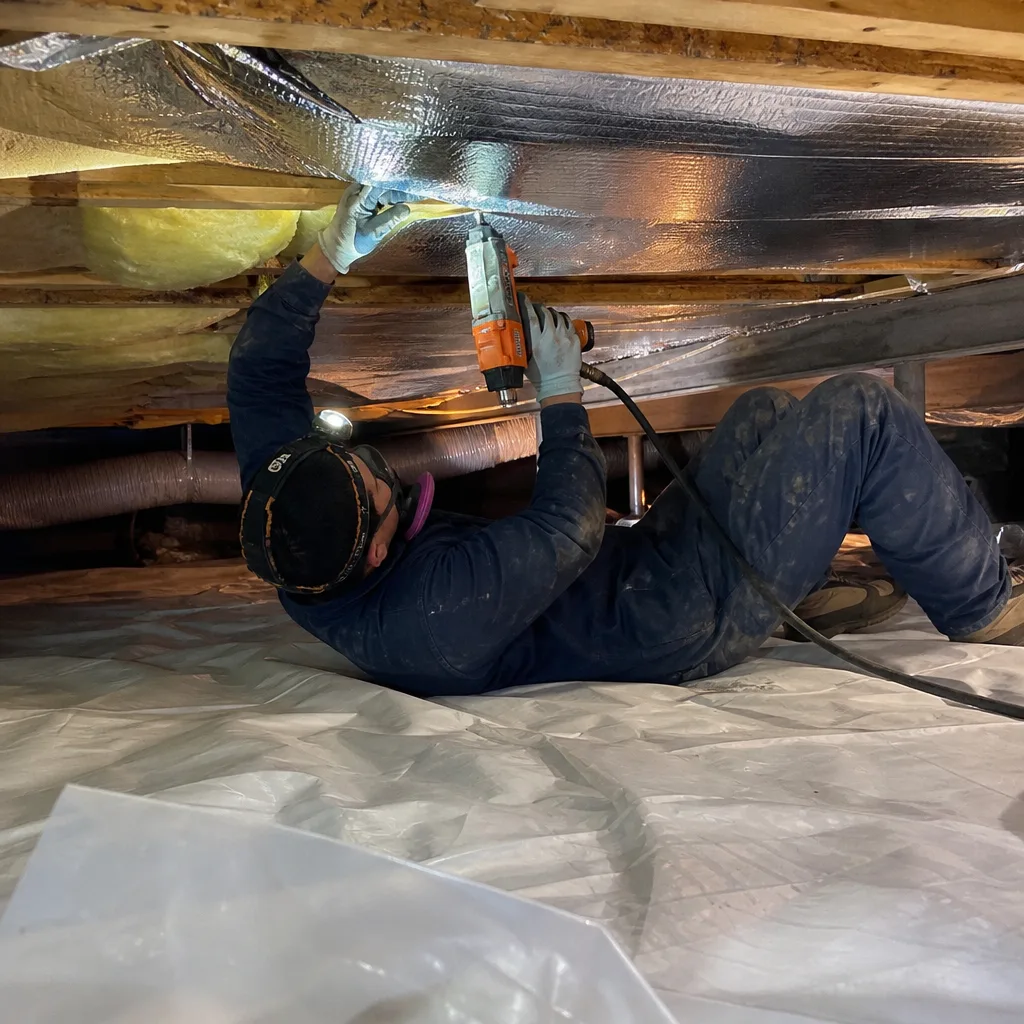
You should know what “done right” looks like before the crew shows up, and it isn’t a verbal “looks good from here.” On a blown-in insulation job in Henderson, these documents should be in your hands when the work closes out:
- Installed depth at multiple measurement points. Not one number. Four to six readings across the attic floor, photographed, with the depth ruler visible in frame.
- Bags per square foot installed. This is verifiable against the product data sheet. If the manufacturer says a bag covers 22 square feet at the target R-value and the crew used 15 bags for a 1,200 square foot attic, the math doesn’t close – and you can see it yourself.
- Pre-job blower-door reading if air sealing was included. This is the number that proves the air sealing did what it was supposed to do. Envelope Insulation Co. publishes before-and-after blower-door readings on every applicable job for exactly this reason.
- The photo record. Under The Haven Standard, a Documented Photo Record is included on every visit, not something you have to request.
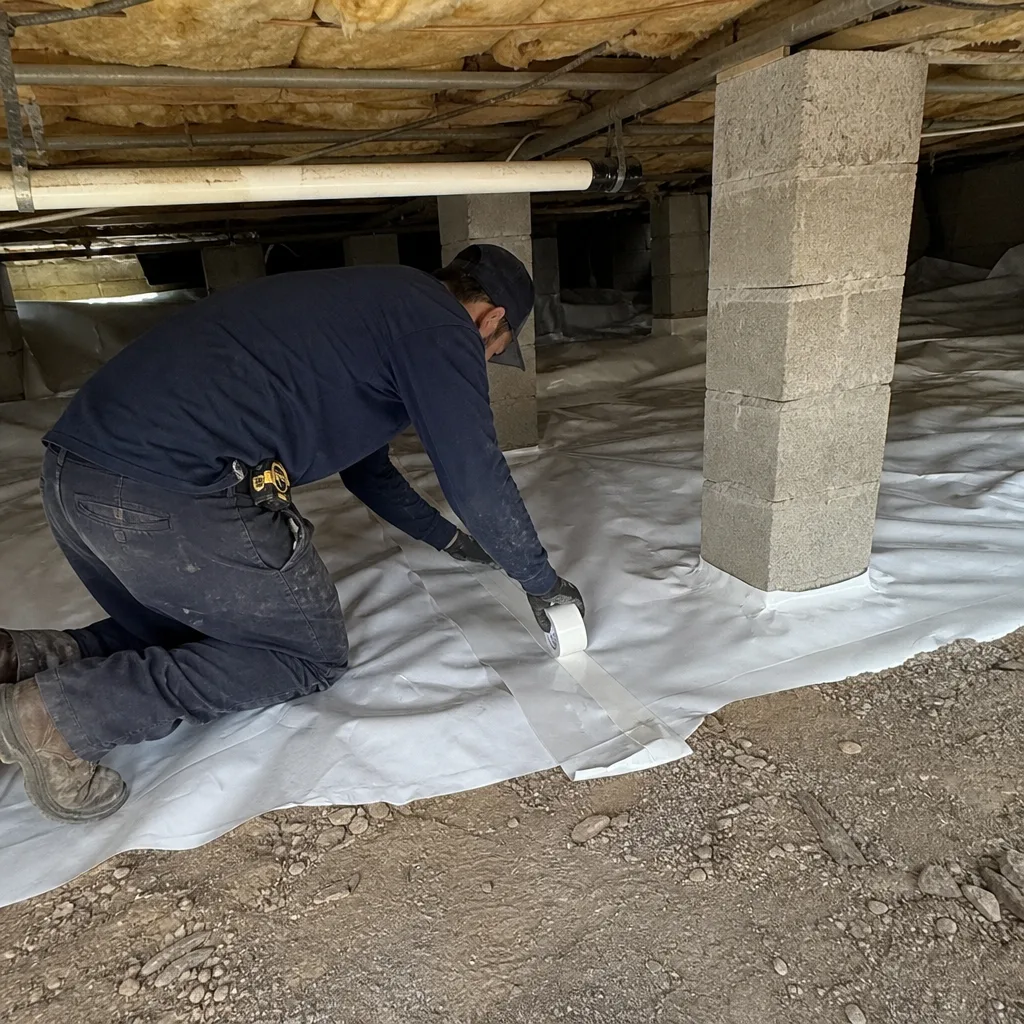
- The written warranty and written scope. Haven Standard Clause 1: flat price, written scope, written warranty before anyone lifts a tool. This applies to the whole envelope work, not just the blown-in – our crawl space encapsulation & vapor barrier service in Henderson is documented the same way.
If a contractor can’t tell you what documentation you’ll receive before the job starts, that’s your answer about how the job will run.
How to Buy Blown-In Insulation the Right Way
This is the part most contractors won’t put on their own page, and it’s the reason we wrote this guide. Buying blown-in insulation in Henderson comes down to asking for four numbers in writing, before any work starts.
- Ask for the settled R-value the job is targeting, not just the initial R-value. A contractor quoting “R-38” without quoting the settled number is telling you the day-one figure only.
- Ask for the installed depth required to guarantee that settled R-value. This should map to the product data sheet’s coverage chart. If the answer is vague, walk.
- Ask whether air sealing is included or excluded, and what the target blower-door reduction is. If air sealing isn’t part of the scope, the blown-in is going over open leaks and the money is partially wasted.
- Ask to see the depth ruler and measurement photo record in the closeout package. If the answer is “we don’t normally provide that,” you know what you’re buying.
Under The Haven Standard, every Envelope Insulation Co. job begins with a written price and ends with a documented record, and we offer a free second opinion on any competing estimate. Bring us the quote you’ve been given – we’ll read it with you, line by line, and tell you what’s missing. If it’s already right, we’ll say so.
What Blown-In Insulation Costs in Henderson
Blown-in attic insulation in a Henderson home typically runs $1,600 to $3,400 for a standard 1,200 to 1,600 square foot attic when the job includes attic air sealing. The line item breakdown matters as much as the total, and any estimate you receive should itemize the same way. Typical ranges:
- Attic air sealing (top plates, can lights, penetrations): $700 to $1,400
- Blown-in cellulose to a settled R-38: $900 to $1,700
- Blown-in fiberglass to a settled R-38: $1,100 to $1,900
- Blower-door testing, before and after: $300 to $500 (often bundled)
- Existing insulation removal, if the attic has rodent damage or contaminated material: add $600 to $1,500
- Radiant barrier foil on the roof deck: $1,200 to $2,200 on top of the insulation
These ranges reflect Henderson’s specific market: the labor to work in a 150°F attic in August costs more than the same job in a mild climate, and the amount of air sealing needed depends heavily on how the home was built. A 2018-built home in Cadence or Inspirada will usually have tighter rough framing than a 1998 build off Horizon Ridge, and that changes the sealing hours. Call (844) 320-5338 for an exact figure – estimates are free, and the written price is what you pay.
Common Mistakes to Avoid
- Buying initial R-value instead of settled R-value. If your quote only says “R-38” with no settled figure and no depth, you’re being sold a day-one number. Ask what the material will measure after three summers in a Henderson attic.
- Letting the crew blow over unsealed top plates and can lights. This is the single most common blown-in failure we see in Henderson, and it costs the homeowner real money. The blown-in has to go over a sealed floor or it doesn’t earn its price.
- Accepting a job with no depth ruler left in the attic. The ruler is the install crew’s own stated target. If it’s missing, you have no way to check the settled depth in a year or three.
- Choosing blown-in for an unvented attic assembly. In an unvented attic in this climate, blown-in at the floor fights radiant load from the wrong side. Foam at the roof deck is the right assembly.
- Paying extra for “premium” cellulose without checking the coverage chart. GreenFiber and similar products are fine materials, but the R-value per inch is published. Compare density and depth, not marketing language.
- Skipping the blower-door test on a “we already sealed it” promise. If air sealing is on the scope and no before-and-after blower-door reading is provided, you have no proof the sealing did anything.
- Ignoring the HVAC ducts while you’re up there. If the ducts run through the attic and leak, adding floor insulation does less than it looks like on the estimate. Duct sealing is often the highest-return add-on in a Henderson home.
When to Call a Professional
Call a professional if your attic has more than 2 to 3 inches of settled insulation at the floor, if you can see daylight around the top plates from inside the attic, if you’ve had a recent rodent issue in the insulation, or if your summer cooling bills have climbed noticeably against a prior-year comparison. Also call before buying blown-in if you aren’t sure whether your attic is vented or unvented – that single detail determines which product should go in. And call if your previous insulation job left no depth ruler, no measurements, and no documentation. Envelope Insulation Co. offers free estimates in Henderson – call (844) 320-5338, and a live person answers 24/7.
Frequently Asked Questions
Nevada energy code requires R-38 in the attic floor for climate zone 3B, but the number to buy is the settled R-38, not the day-one R-38. In practice that means installing cellulose to a depth that guarantees R-38 after settling, often landing in the R-42 to R-44 range at install, or fiberglass to roughly R-49 at install. Call (844) 320-5338 for a written settled-R-value target on your specific attic – estimates are free.
No. Blown-in insulation slows conductive heat loss but does nothing about air leaks through top plates, can lights, or penetrations, so a blown-in job over an unsealed attic floor performs well below its rated R-value. Envelope Insulation Co. air-seals the attic floor before any blown-in goes down, and we publish the before-and-after blower-door numbers so you can see the difference. Call (844) 320-5338 for a second opinion on any estimate that excludes air sealing.
Blown-in attic insulation in Henderson typically runs $1,600 to $3,400 for a standard attic when air sealing is included. Cellulose to settled R-38 usually lands between $900 and $1,700; fiberglass between $1,100 and $1,900. Call (844) 320-5338 for an exact written price before any work starts – there’s no obligation, and we don’t ask you to commit before you have the number.
Cellulose and fiberglass both stay functional for decades, but the R-value drifts down as the material settles – most of that loss happens in the first two to four years, then it stabilizes. Because Henderson attics run hotter than most markets, that settling works harder here than in a mild climate. The depth ruler left at install is how you or a future contractor can measure what actually happened to your attic.
Almost never. In an unvented attic, the insulation and air barrier belong at the roof line, not the floor, and the right assembly is closed-cell spray foam on the underside of the deck. Blown-in at the floor of an unvented attic in Henderson fights radiant heat from the wrong side and doesn’t seal the assembly. Call (844) 320-5338 and we’ll tell you which assembly your attic actually needs.
You should receive installed depth at multiple measurement points with photos, bags-per-square-foot used (verifiable against the product data sheet), a visible depth ruler in the attic, the written scope and written warranty, and a before-and-after blower-door reading if air sealing was part of the job. Envelope Insulation Co. provides a Documented Photo Record on every visit as a standard part of The Haven Standard, not on request. Call (844) 320-5338 to schedule your walkthrough.
The Bottom Line
Blown-in insulation in Henderson is worth buying – but only when it’s installed to a settled R-value target, over a sealed attic floor, with the documentation to prove it worked. The gap between the day-one R-value and the five-year R-value is real, it’s measurable, and it’s been quietly passed to homeowners for years because nobody asked. Ask for the settled number. Ask for the depth. Ask for the blower-door reading. Those three answers separate a job that pays you back from one that doesn’t.
Envelope Insulation Co. has sealed and insulated more than 9,000 homes since 2016 under The Haven Standard, with a written price before any work starts and a documented record when the crew leaves. Every applicable job includes published before-and-after blower-door readings. Call (844) 320-5338 for a free estimate anywhere in Henderson.
Written by the team at Envelope Insulation Henderson.