
Last updated November 17, 2026
Blown-In Insulation Maintenance Schedule: What to Do and When
A five-year-old cellulose attic that looks fine from the hatch can be sitting at R-11 instead of the R-38 it was sold as. Not because five years passed. Because a plumber ran a new pipe through the attic floor, pushed the blown material aside, and nobody re-netted the disturbed zone. That’s the pattern we see across Henderson: the calendar is almost never the failure mode. Physical disturbance is. This guide lays out an event-driven maintenance schedule for blown-in insulation in Henderson, how to read settlement in fiberglass versus cellulose, what a post-monsoon inspection really looks for, and which single task is genuinely safe to do yourself.
Quick Answer
There is no fixed annual maintenance schedule for blown-in insulation in Henderson. The schedule that matters is event-driven: inspect after any attic work (plumbing, electrical, HVAC, cable), after any confirmed roof moisture or monsoon intrusion, and after any HVAC equipment replacement. In Henderson’s dry heat, settlement and physical disturbance cause far more performance loss than moisture degradation. The one DIY-safe task is measuring settled depth against your original depth stakes with a ruler once a year.
Table of Contents
- Why Henderson Insulation Fails at Events, Not on a Calendar
- The Depth Rod Check: Reading Settlement in Fiberglass vs. Cellulose
- What a Post-Monsoon Inspection Actually Looks For
- The HVAC Swap: The Most Overlooked Trigger in Henderson
- The Documentation You Should Keep (and Why It Matters)
- The One DIY-Safe Task vs. What Requires a Contractor
- When to Call a Professional
- Frequently Asked Questions
Why Henderson Insulation Fails at Events, Not on a Calendar
Most maintenance advice for blown-in insulation is written for humid climates, where moisture degradation is the dominant failure mode and a yearly inspection makes sense. Henderson isn’t that climate. Our average annual rainfall sits under five inches, and the dry desert air pulls moisture out of attics fast. That changes the failure picture entirely.
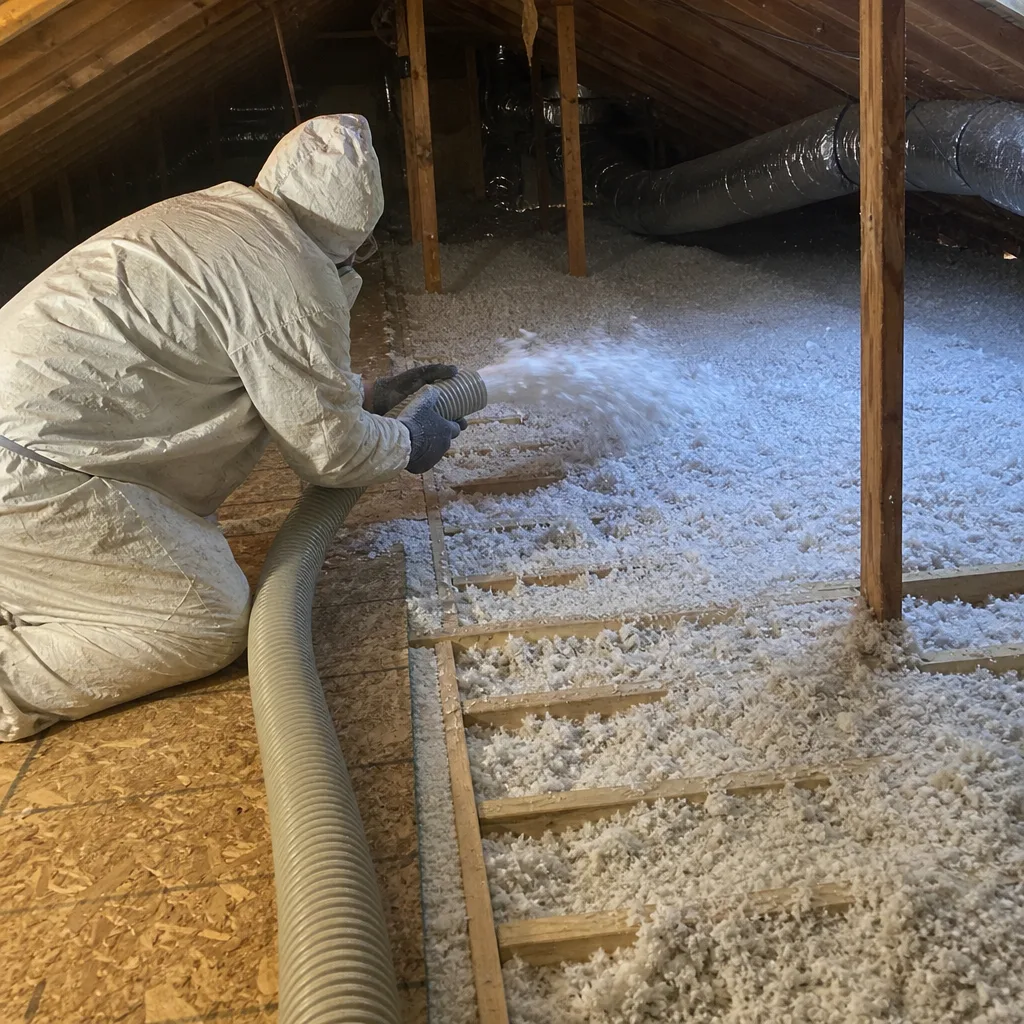
In Henderson, the dominant cause of lost R-value is physical disturbance. Attic floors here get walked on, cut open, and re-penetrated constantly: a plumber adds a drain line, an electrician pulls new wire for a mini-split, a satellite installer drops a coax cable through a top plate. Every one of those creates a gap or a compressed zone in the blown material. When we perform a Envelope Insulation Henderson home audit, we routinely find that a third of the attic is still at spec while the other two-thirds has lost anywhere from 30 to 60 percent of its rated depth around the penetration points.
The practical takeaway: stop thinking in years. Think in triggers. The four event triggers that justify a real inspection in Henderson are:
- Any work performed in the attic since your last inspection
- Any confirmed roof moisture or monsoon intrusion
- Any HVAC equipment replacement, including interior air-handler swaps
- Any substantial change to the home’s air-sealing boundaries (new recessed lights, added exhaust fans, siding work)
Outside those triggers, an annual visual check from the hatch and a depth measurement is enough. The calendar matters far less than what happened in the attic.
The Depth Rod Check: Reading Settlement in Fiberglass vs. Cellulose
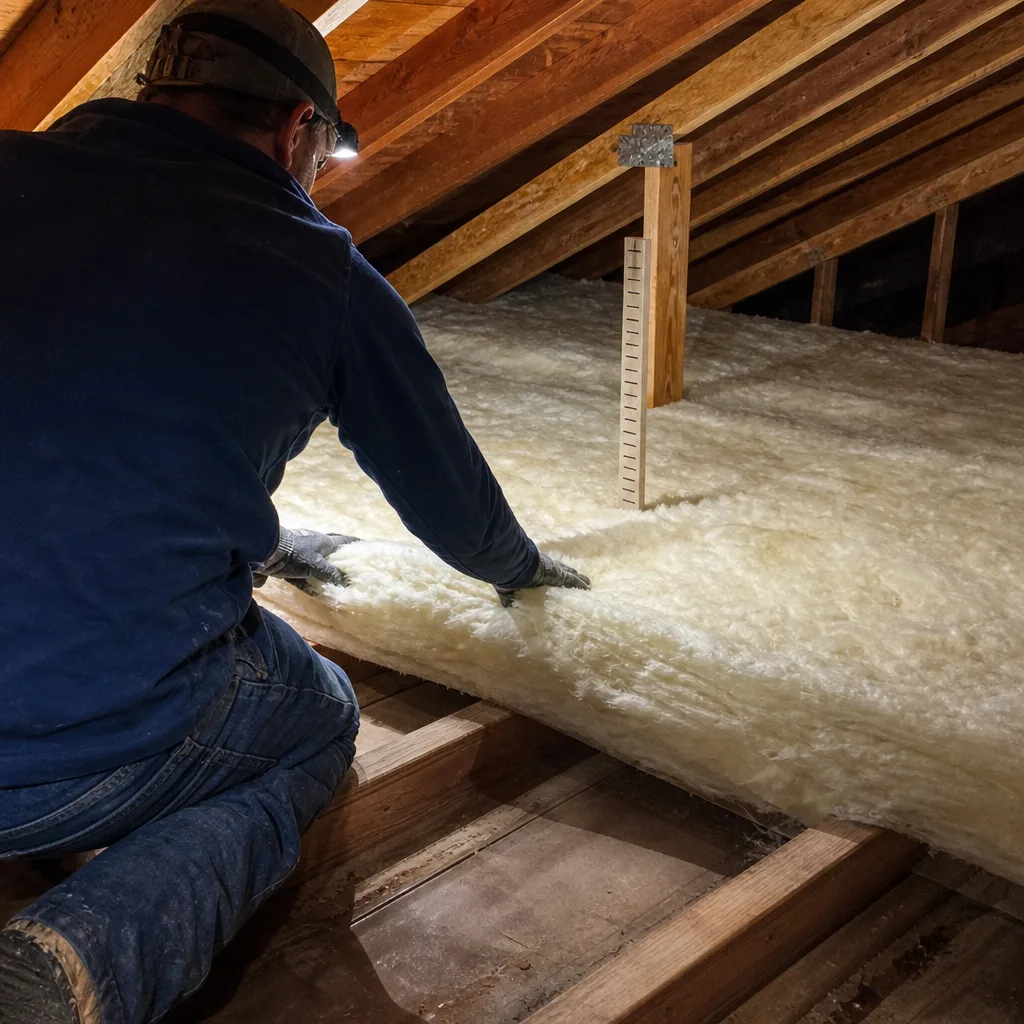
Depth stakes (sometimes called depth markers or depth rods) are the small rulers installers push into the attic floor at install time. They mark the target installed depth for the R-value you paid for. If your install crew didn’t leave stakes, the original depth is likely recorded on your invoice. Either way, that number is your baseline.
Here’s how the two common materials settle differently, and what a real drop looks like:
- Fiberglass blown-in is light and lofted. It settles moderately, typically 10 to 15 percent over the first several years, then stabilizes. A 15-inch install that reads 12 to 13 inches after five years is within normal.
- Cellulose blown-in is denser and settles more aggressively, especially in the first two years. Expect 15 to 20 percent settlement over five years. A 14-inch cellulose install reading 11 inches is not yet alarming; reading 9 inches signals a top-off.
The numeric rule we use: if the settled depth has dropped more than 20 percent below the original install depth, the R-value has dropped proportionally and a top-off is worth pricing. For a home in Henderson targeting R-38 (roughly 13 to 15 inches of cellulose, or 14 to 17 inches of fiberglass depending on the product), a drop of three inches or more warrants a call.
To measure: slide a stiff ruler or tape measure down to the attic floor at three or four points across the field, avoiding the disturbed zones around penetrations where a low reading is expected and unrelated to settlement. Average the readings. Compare against your baseline. That single average tells you more than any visual impression.
What a Post-Monsoon Inspection Actually Looks For
Henderson’s monsoon season runs roughly July into September and delivers intense, brief rain events. A roof that sheds water fine in a light drizzle can leak at the flashing or a vent boot during a two-inch-per-hour downpour. When water enters an attic, it doesn’t typically leave a single obvious stain; it wicks and spreads through the material.
A proper post-monsoon inspection covers more than “is there a wet spot.” Here’s what a trained eye looks for:
- Wicking patterns on the drywall below the attic. Look at ceiling drywall near exterior walls, chimney chases, and any roof-plane transitions. Faint tan or brown rings that weren’t there before the season are wicking evidence, even weeks after the rain.
- Compressed or crusty insulation around penetrations. Wet cellulose clumps, compacts, and hardens as it dries. Wet fiberglass mats and stays compressed. Either way, the affected zone loses R-value permanently.
- Whether the vapor drive direction changed anything. In Henderson’s dry summer, vapor drive is mostly outward (interior to exterior). After a heavy monsoon, exterior humidity briefly exceeds interior, and the drive reverses. This matters most near cool surfaces like HVAC ducts and air handlers, where condensation can form on the wrong side of the envelope and drip into the insulation below.
- Roof decking staining and rust on nails. Nail rust or dark staining on decking signals standing moisture that may have already saturated the insulation directly below.
- Odor near the attic hatch. That damp, earthy smell after a monsoon week is a real signal of moisture in the material, even when nothing is visibly wet.
If any of these are present, the fix isn’t just drying: it’s inspecting the vapor barrier, checking air-sealing integrity around the wet zone, and confirming the roof flashing that caused the intrusion is repaired before any material is topped off.
The HVAC Swap: The Most Overlooked Trigger in Henderson
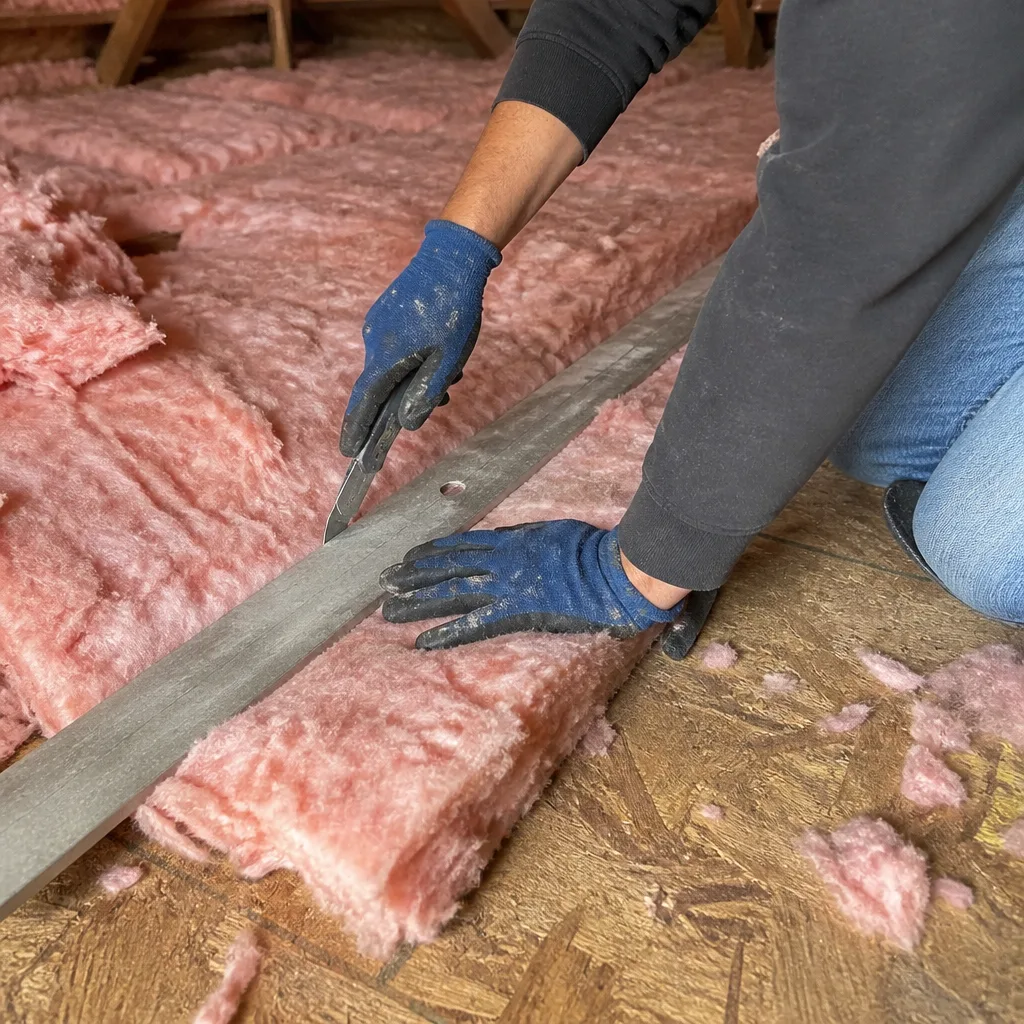
When a Henderson homeowner replaces an air handler or furnace, the new unit almost always comes with new duct connections, and those connections require the attic floor to be opened. The old unit gets pulled, the plenum gets rebuilt, the refrigerant and condensate lines get rerouted. And the insulation around the old connections gets pushed aside and stays that way.
This is the swap we see most often in Henderson: a 10-to-15-year-old builder-grade unit gets replaced, the crew does a tidy job on the mechanical side, and the blown-in insulation gets left in a disturbed ring around the new cabinet. Nobody re-nets it. Nobody re-blows it. And the attic sits with a thermal hole directly over the most sensitive equipment in the house.
A post-HVAC-swap inspection should verify:
- The platform around the new air handler is fully sealed (foam, mastic, or rigid barrier) before any material goes back over it
- The blown-in material has been re-netted and re-blown to the original settled depth around the new cabinet and duct connections
- New penetrations from refrigerant lines and condensate drains are air-sealed at the top plate
- Duct boots at ceiling registers are attached and mastic-sealed, not just taped
This is where our own bias shows: we won’t blow new material into an attic we haven’t air-sealed first. Under Haven Standard we also won’t let a job proceed without a written price before any work starts, which is why a post-HVAC inspection always begins with a documented scope, not a verbal estimate. When we return to an attic we’ve previously worked, we publish the before-and-after blower-door reading so the homeowner can see whether the envelope held.
The Documentation You Should Keep (and Why It Matters)
Most homeowners can’t answer three basic questions about their own blown-in insulation: what was the original install depth, what was the R-value per inch for the specific product used, and what was the blower-door reading at install. Without those, no future inspection can measure loss against a real baseline.
Here’s the short list of documentation worth keeping, ideally in the same folder as your HVAC records:
- Original install depth, in inches, per attic zone if the home has multiple zones. Pull it from the invoice or read it off the depth stakes.
- Product and R-value per inch. Cellulose is typically R-3.2 to R-3.8 per inch; fiberglass ranges roughly R-2.2 to R-4.3 depending on the product; mineral wool (like certain Rockwool products) sits around R-3.3 to R-4.2. The number matters because “R-38” means very different depths depending on material.
- The blower-door reading at install (ACH50 and CFM50). Blower-door testing – a pressurization measurement that records, in a single figure, how much conditioned air the building envelope is losing – gives you a numeric baseline for future air-sealing verifications. If a contractor didn’t provide a reading, ask why.
- Photos of the pre-seal and post-install attic. A documented photo record lets any future inspector confirm what was actually done.
- The written warranty, with its coverage term. Ours is the 365-Day Done Right Promise: if it’s not done right, we make it right, and the scope is written before anyone lifts a tool.
If a previous installer left you with nothing but an invoice line item reading “attic insulation – $X,” you can reconstruct the baseline in about 20 minutes with a ruler and a blower-door test. That baseline is the whole point of maintenance.
The One DIY-Safe Task vs. What Requires a Contractor
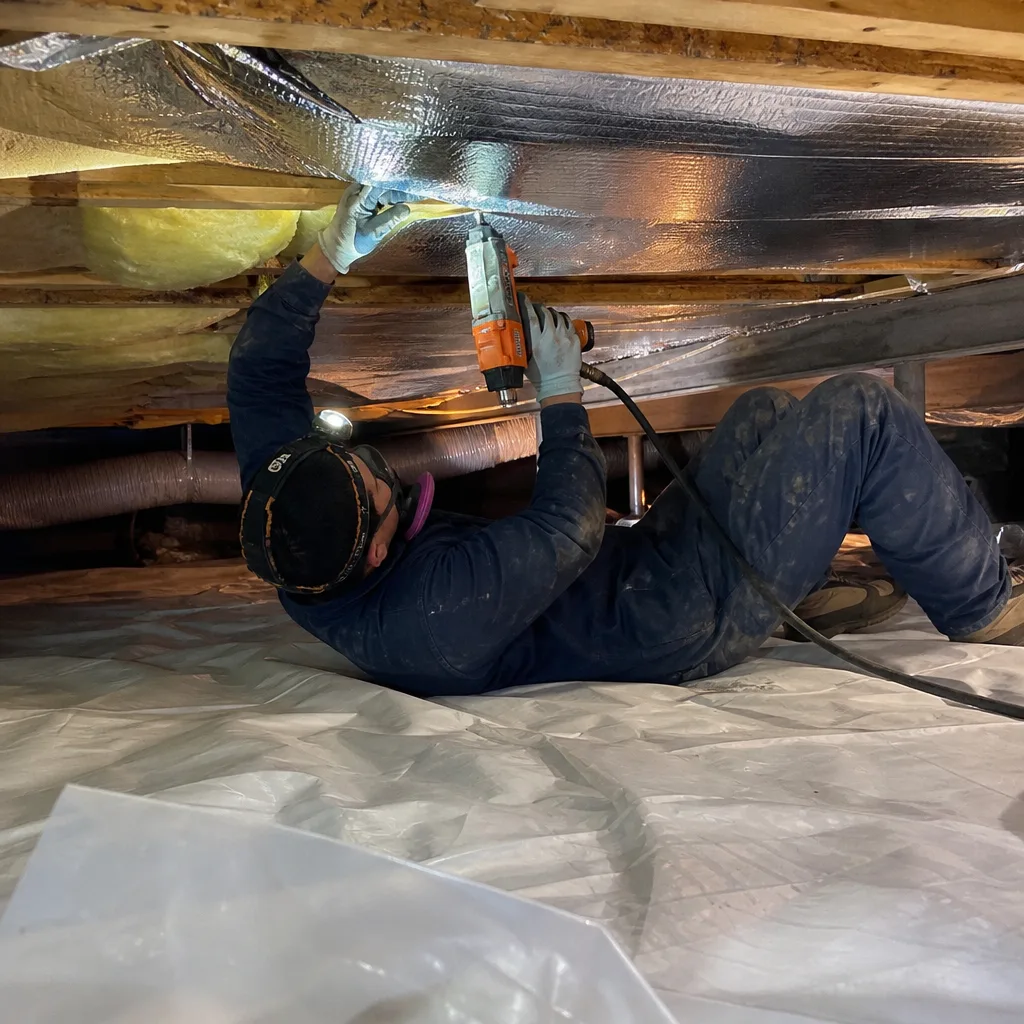
Blown-in insulation is not complicated to maintain, but there is exactly one task in the maintenance list that’s genuinely safe for a homeowner to do. Everything else involves either walking an attic on drywall ceilings, maneuvering around HVAC electrical connections, or working with material around the top plates of walls where a slip can compromise both the envelope and a person’s footing.
The single DIY-safe task: measure settled depth. Put on a mask (N95 at minimum), walk only on the marked joists or the plywood path your installer left, and slide a ruler to the floor at three to four locations across the field. Record the numbers. Compare against the baseline on your invoice. That’s it.
What requires a contractor:
- Re-netting and re-blowing disturbed zones. Getting the material back to correct depth requires blowing equipment, proper material handling, and air-sealing of the penetrations underneath the material first.
- Adding material around new penetrations. The seal goes under the insulation, not over it. Blowing new material over an unsealed top plate is the single most common mistake we correct.
- Any work on the air-sealing boundary (top plates, recessed can lights, plumbing chases, chimney flashing). These affect indoor air quality, combustion safety, and moisture path, and they’re not handled with a bag of material from the hardware store.
- Any inspection after a suspected moisture event. If a monsoon left a stain on the ceiling below the attic, the correct next move is a moisture inspection and possibly crawl space encapsulation and vapor barrier work if the intrusion extends down the stack. Don’t top off wet material.
If the attic is unfinished and you’re comfortable with it, the depth check is a 20-minute annual task. If you spot a gap larger than your hand, a moisture stain, or a disturbed zone you can’t safely reach, that’s the call.
Common Mistakes to Avoid
- Following a fixed annual schedule instead of an event trigger. A yearly inspection still misses the disturbance that happened last Tuesday when a plumber went into the attic.
- Trying to “top off” an unsealed attic. Blowing new material over unsealed top plates, can lights, and penetrations traps air but doesn’t stop it. The blower-door number doesn’t move. Seal first, insulate second, in that order.
- Assuming fiberglass and cellulose settle the same way. They don’t. A three-inch drop means very different things in each material, and applying a fiberglass rule to a cellulose attic leads to unnecessary top-offs or missed loss.
- Skipping the post-monsoon inspection because the roof “looked fine.” Wicking stains can take weeks to show through the drywall, and the insulation has already lost performance by the time the ceiling shows a ring.
- Replacing insulation without saving the blower-door baseline. Without a “before” number, there’s nothing to compare a future re-test against. This is one reason we publish before-and-after readings on every applicable job.
- Letting a contractor start work without a written scope and price. Verbal estimates leave no basis for comparison and none for accountability if the finished depth comes in short.
- Topping off wet material instead of removing it. Wet cellulose stays compressed and loses R-value permanently; it needs to come out, not get buried.
When to Call a Professional
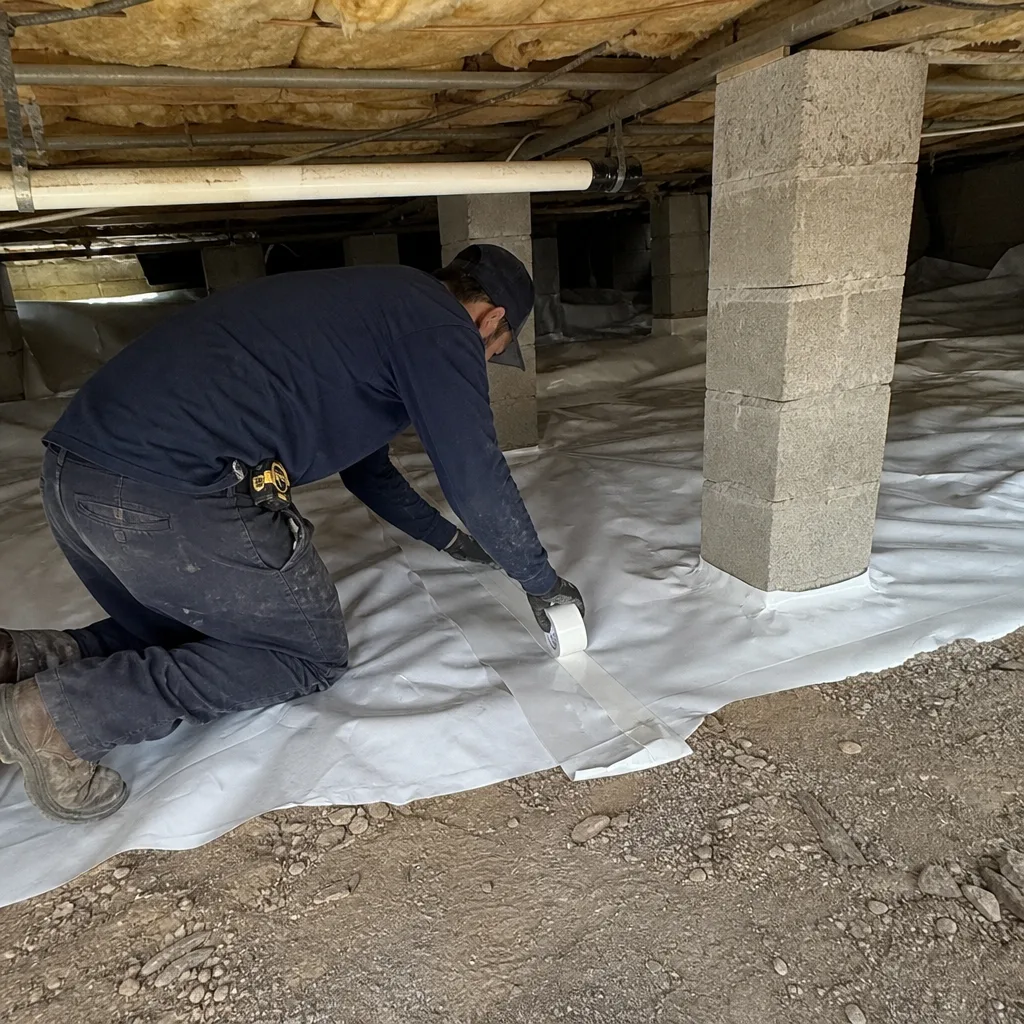
The right time to call a professional for blown-in insulation maintenance in Henderson is any of these: the settled depth has dropped more than 20 percent below your baseline; any HVAC equipment has been replaced since install; a monsoon left a stain, an odor, or a visibly compressed zone; a new penetration was added by a plumber, electrician, or satellite installer; or a previous contractor left no written documentation of depth, product, or blower-door readings. Any of those justifies an inspection visit, and most also justify a fresh attic insulation install or top-off afterward. If your home also needs spray foam around a duct chase or a rim joist, that work should be scoped alongside the top-off; we handle it as spray foam insulation in Henderson and stage it before the blown material.
Envelope Insulation Henderson offers free estimates in Henderson. Call (844) 320-5338 to schedule an inspection or request a second opinion on any written estimate you already have.
Frequently Asked Questions
Not on a fixed schedule; inspect after any of these events: attic work, HVAC replacement, confirmed roof moisture, or a monsoon season with any interior staining. In between those triggers, an annual depth measurement is enough. Henderson’s dry climate makes calendar-based inspection less useful than event-based inspection because moisture degradation is rare and physical disturbance is the dominant failure.
Measure settled depth against the original install depth on your invoice or depth stakes. If settlement exceeds 20 percent of original (for cellulose, roughly a three-inch drop on a 14-inch install; for fiberglass, roughly 2.5 inches on a 15-inch install), the R-value has dropped proportionally and a top-off is worth pricing. Call (844) 320-5338 for a documented measurement on site.
Not significantly, on its own. Henderson’s dry desert air keeps attics dry for most of the year, and the material itself holds up well. What degrades insulation in Henderson is disturbance: HVAC work, plumbing work, electrical runs, and roof moisture during monsoon season. Material compression from foot traffic is a close second.
Not just wet spots. A proper post-monsoon inspection looks for wicking stains on ceiling drywall (especially near exterior walls and roof-plane transitions), compressed or crusty insulation around penetrations, nail rust on roof decking, and odor near the attic hatch. It also confirms whether new condensation has formed on the wrong side of the vapor barrier after the monsoon reversed the vapor drive. Call (844) 320-5338 to schedule one.
Not safely, in most cases. Blowing new material over unsealed top plates, recessed lights, and plumbing chases traps air without sealing it, and the R-value gain is smaller than the depth suggests. The one safe DIY task is measuring settled depth with a ruler at three or four points against your original baseline. Re-netting, re-blowing around new penetrations, and any air-sealing work require a contractor.
Original install depth per attic zone, the product and its R-value per inch, the ACH50 and CFM50 blower-door readings at install, and the written warranty covering the scope of work. Under Haven Standard we deliver a written scope, written warranty, and documented photo record on every job, so there’s no ambiguity about what was installed or what it was rated to perform.
The Bottom Line
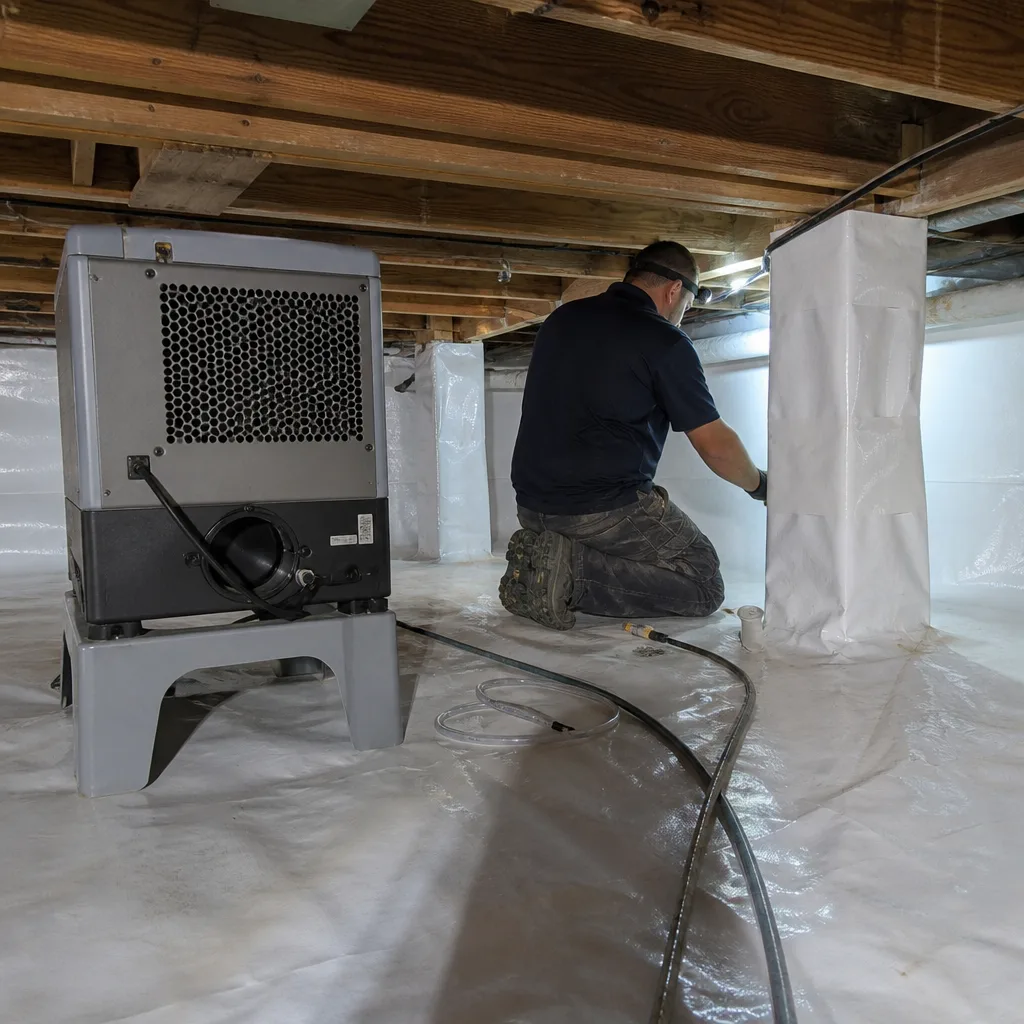
Blown-in insulation in Henderson fails at events, not on a calendar. The maintenance schedule worth following is: measure settled depth annually, inspect after every attic penetration, inspect after every HVAC swap, inspect after every monsoon season with confirmed roof moisture, and re-establish air sealing before any top-off. Keep the original install depth, the product’s R-value per inch, and the blower-door reading from install so any future inspection has a real baseline. Skip the calendar-based thinking; the attic doesn’t know what year it is, but it does know when someone cut through the floor last month. When in doubt, measure.
Written by the team at Envelope Insulation Henderson.