
Last updated November 17, 2026
Choosing the Right Insulation Brand: A Buyer’s Guide for Henderson
Blown fiberglass sold at R-2.9 per inch at 75°F can fall to roughly R-2.5 per inch at the mean temperatures inside a Henderson attic in July. That is about a 14% loss in the number your contractor’s proposal is built on, and most product data sheets bury it in the fine print. The brand name on the bag matters far less than two things: product category and installed density. But within a category, the real differentiators are third-party tested R-value at the thickness actually installed and whether the manufacturer publishes performance at elevated temperatures. This guide shows you how to read those sheets, compare blown fiberglass to cellulose, tell open-cell from closed-cell foam, and verify what got installed in your Henderson home.
Quick Answer
The right insulation brand for a Henderson home is the one whose published data sheet gives you R-value at elevated mean temperature (110 – 120°F, not the standard 75°F test), matched to the correct product category and installed at full density. Owens Corning, Johns Manville, and Knauf publish high-temperature data for their fiberglass; Rockwool and Thermafiber publish it for mineral wool. Choose the category first – blown fiberglass, cellulose, spray foam, or mineral wool – then pick a brand within that category that documents its numbers. The label is the least important variable in the decision.
Table of Contents
- Why brand matters less than category in Henderson
- How to read a product data sheet for Henderson heat
- Blown fiberglass vs. blown cellulose in Henderson attics
- Spray foam brand differences: open-cell vs. closed-cell chemistry
- When mineral wool earns its higher cost per R
- How to verify the specified brand was actually installed
- Common mistakes to avoid
- Frequently asked questions
Why Brand Matters Less Than Category in Henderson
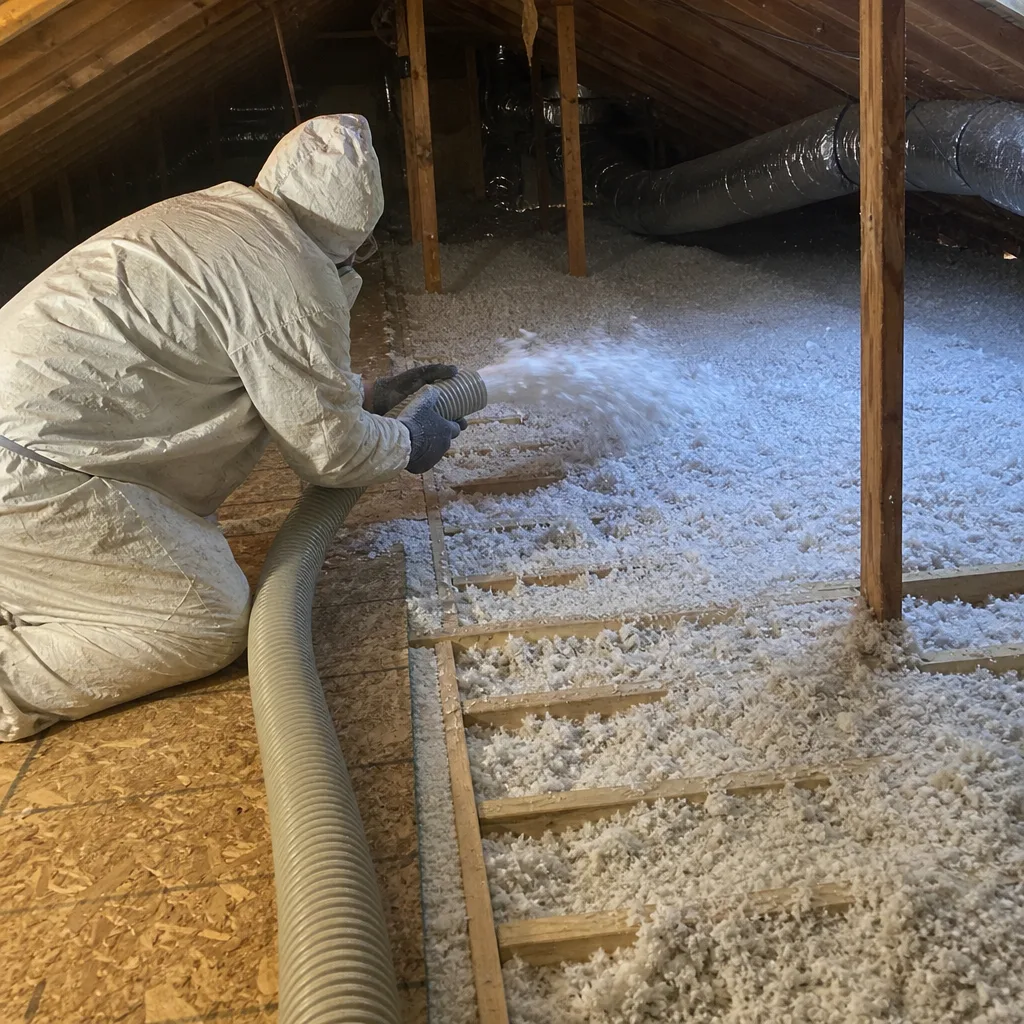
The largest variable in any insulation job is not the name on the bag. It is whether the category selected matches the assembly and the climate, and whether the material went in at the density the manufacturer specifies. A Henderson homeowner who buys premium Owens Corning fiberglass blown at 60% of spec density gets worse performance than one who buys a value brand installed correctly. Density is what determines the settled R-value; under-blowing is the single most common reason an attic underperforms its bid.
The second variable is air sealing. Insulation slows heat flow, but it does not stop air movement. In a Henderson home, a top plate gap behind the knee wall or a recessed can light leaking into the attic bypasses the fiberglass entirely. The order is: seal first, then insulate. Blowing material over an unsealed attic floor is a shortcut that hides the leaks and wastes the product. In our experience, the blower-door test read is the only number that tells the homeowner whether the envelope (the boundary between conditioned and unconditioned space) actually improved. A before-and-after reading shows the air-leakage change in a single figure.
So when a Henderson homeowner asks us which brand is best, the honest answer is that the brand question comes third. Category, density, and sealing come first. Once you have those, brand within category becomes a question of documented data quality, not marketing.
How to Read a Product Data Sheet for Henderson Heat
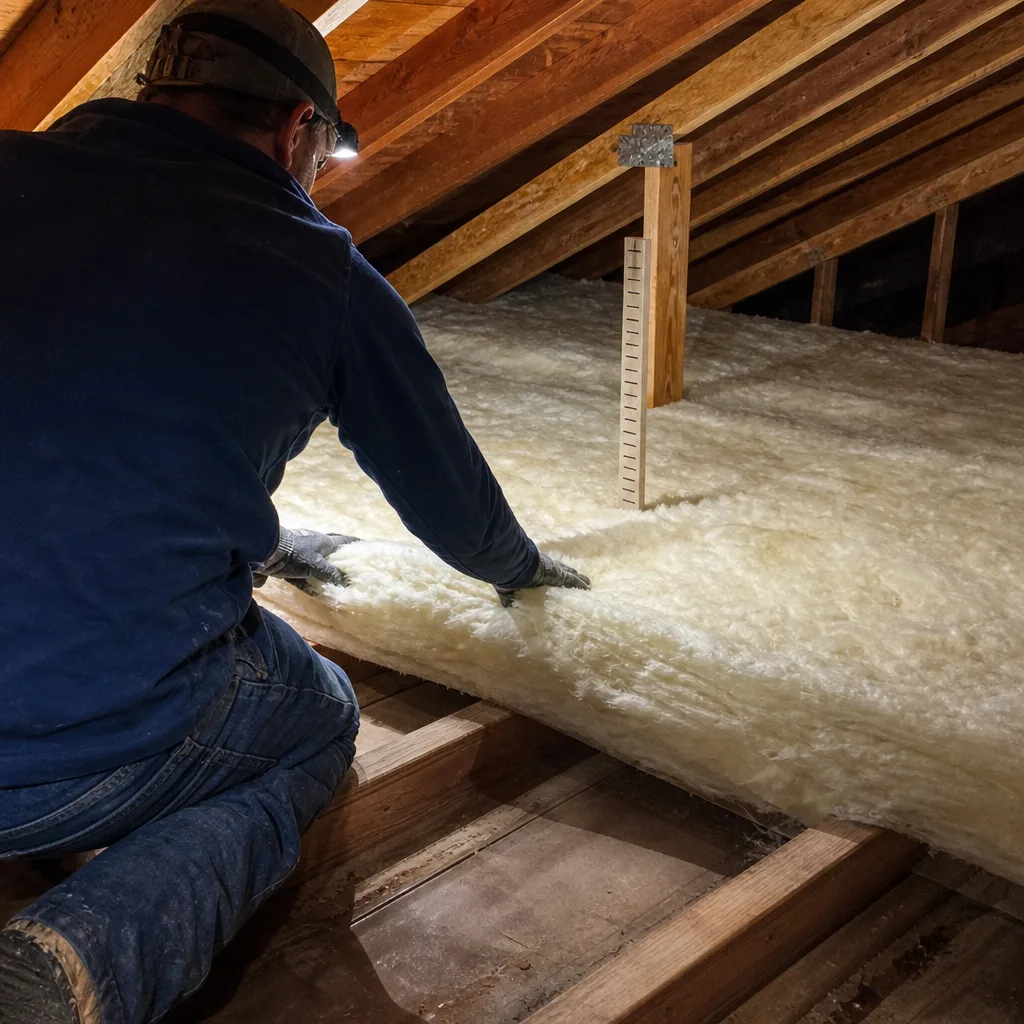
Every manufacturer tests R-value at a mean temperature of 75°F under ASTM C518, the standard lab method. That is an air-conditioned room, not a Henderson attic in July. Attic mean temperatures in Henderson routinely run 110 – 120°F during the cooling season. R-value drops as temperature rises for any fibrous product, and the drop is not trivial. A product rated R-2.9 per inch at 75°F can read closer to R-2.5 per inch at those attic temperatures, and that percentage reduction runs through every R-value calculation in your proposal.
Here is what to look for on a data sheet, in order:
- Third-party tested R-value at the installed thickness. Not the ideal lab thickness – the thickness the crew will actually blow. R-value per inch multiplied by settled depth gives the attic R-value.
- The elevated-temperature line. Some manufacturers publish a table of R-value at 100°F, 125°F, and so on. Owens Corning and Johns Manville historically publish extended data for their fiberglass; Knauf publishes a temperature-performance curve for many products. If the sheet only shows 75°F, you have an incomplete picture.
- Settled density. The bag tells you coverage at a target density. Fiberglass for an attic runs roughly 1.5 – 2.5 lb/ft³ depending on the product and blown depth.
- Certifications. For fiberglass, look for GREENGUARD Gold for low VOC emissions; for cellulose and foam, verify the recycled-content or blowing-agent disclosure separately.
Open the data sheet and read the temperature table. If the manufacturer buries the elevated-temperature performance, ask why. A brand that publishes the number is more useful to a Henderson buyer than a brand that markets a single 75°F figure as if it were the whole story.
Blown Fiberglass vs. Blown Cellulose in Henderson Attics
These are the two workhorse attic materials in Henderson, and the choice between them depends on settled density, moisture behavior, and pest resistance as much as R-value per inch.
- Blown fiberglass: Typically R-2.5 to R-3.0 per inch at attic temperatures, lightweight, noncombustible, does not support mold growth, and resists pests better than cellulose when kept dry.
- Blown cellulose: Typically R-3.2 to R-3.7 per inch, denser and better at slowing air movement through the cavity, made from recycled paper with a borate-based fire retardant. The borates also help with pest resistance, though rodents can still tunnel. Cellulose holds moisture if a roof leak or bad flashing lets water in, and wet cellulose compacts and loses performance.
For a Henderson attic under a standard vented roof with no moisture history, both work well. If the home had a rodent problem or a past roof leak, fiberglass is often the safer first move because it dries out if water intrudes. For recycled-content and indoor-air-quality documentation, GreenFiber publishes a spec sheet with recycled content and borate fire-retardant chemistry you can check. Under Haven Standard, the product category and installed depth get written into the scope before the crew starts, so you can compare the settled density against what actually gets blown.
Recycled content and indoor air quality
Cellulose typically ships 75 – 85% recycled content; fiberglass from major mills like Owens Corning and Johns Manville runs 20 – 50% depending on the product and plant. Both are low-VOC when installed on an unsealed attic floor, because the attic is outside the conditioned zone. Indoor air quality becomes relevant when the material goes into walls or a sealed crawl space. That is where GREENGUARD Gold and a VOC emission statement matter. Ask for them on any product going inside the living space.
Spray Foam Brand Differences: Open-Cell vs. Closed-Cell Chemistry
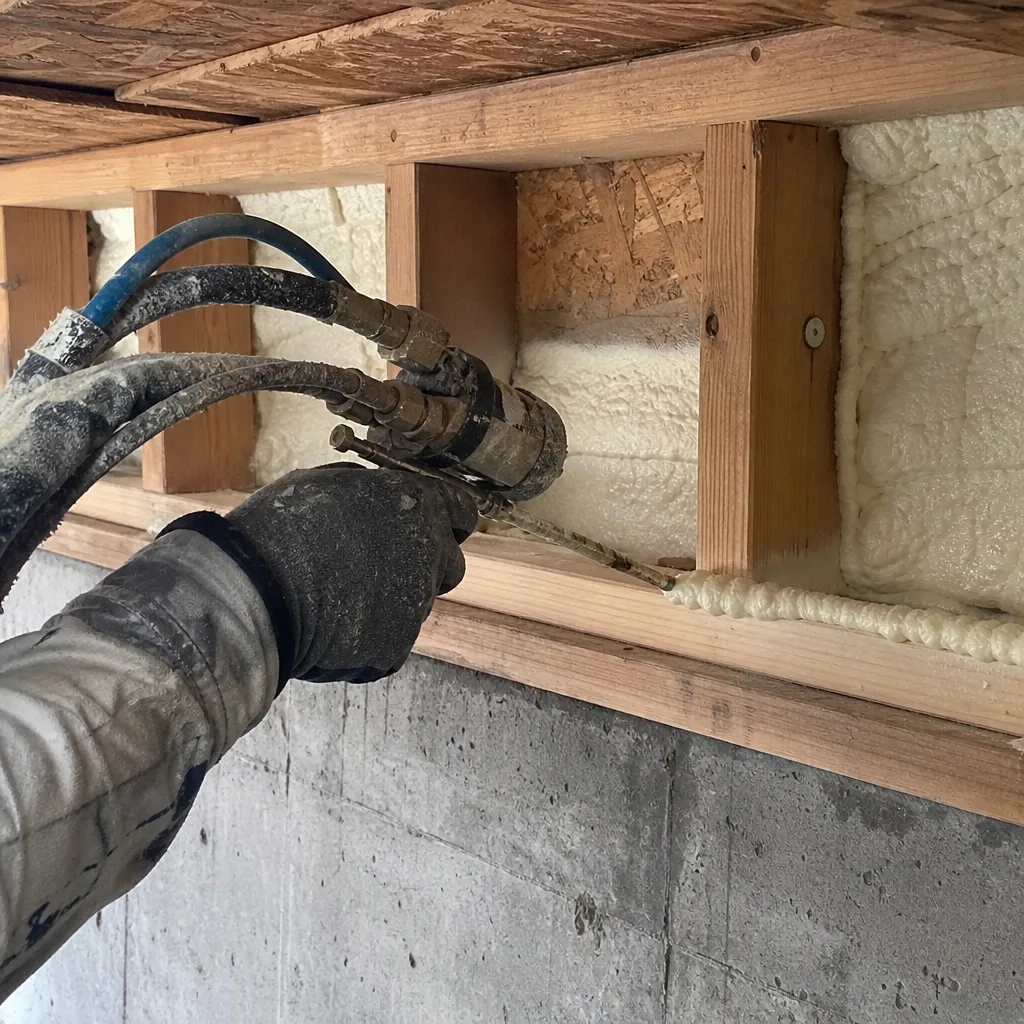
Spray foam brand differences matter more than fiberglass brand differences because the blowing-agent chemistry changes both performance and how the product is regulated. There are two categories:
- Open-cell foam (roughly R-3.5 – 4.0 per inch, lower density): Icynene, Demilec, and Lapolla all publish open-cell formulas. Open-cell is vapor-permeable, so it needs the right assembly and cannot be used where a vapor barrier is required. It is a good fit for interior walls and rim joists where sound control matters.
- Closed-cell foam (roughly R-6.5 – 7.0 per inch, high density): the blowing agent matters here. HFO-blown foams have a much lower global-warming-potential (GWP) than older HFC-blown foams. California and a growing list of states require blowing-agent disclosure; ask for the GWP number in writing. A brand that publishes it is telling you something useful about long-term R-value stability, which stays flatter over decades with HFO chemistry.
Where each belongs in a Henderson home
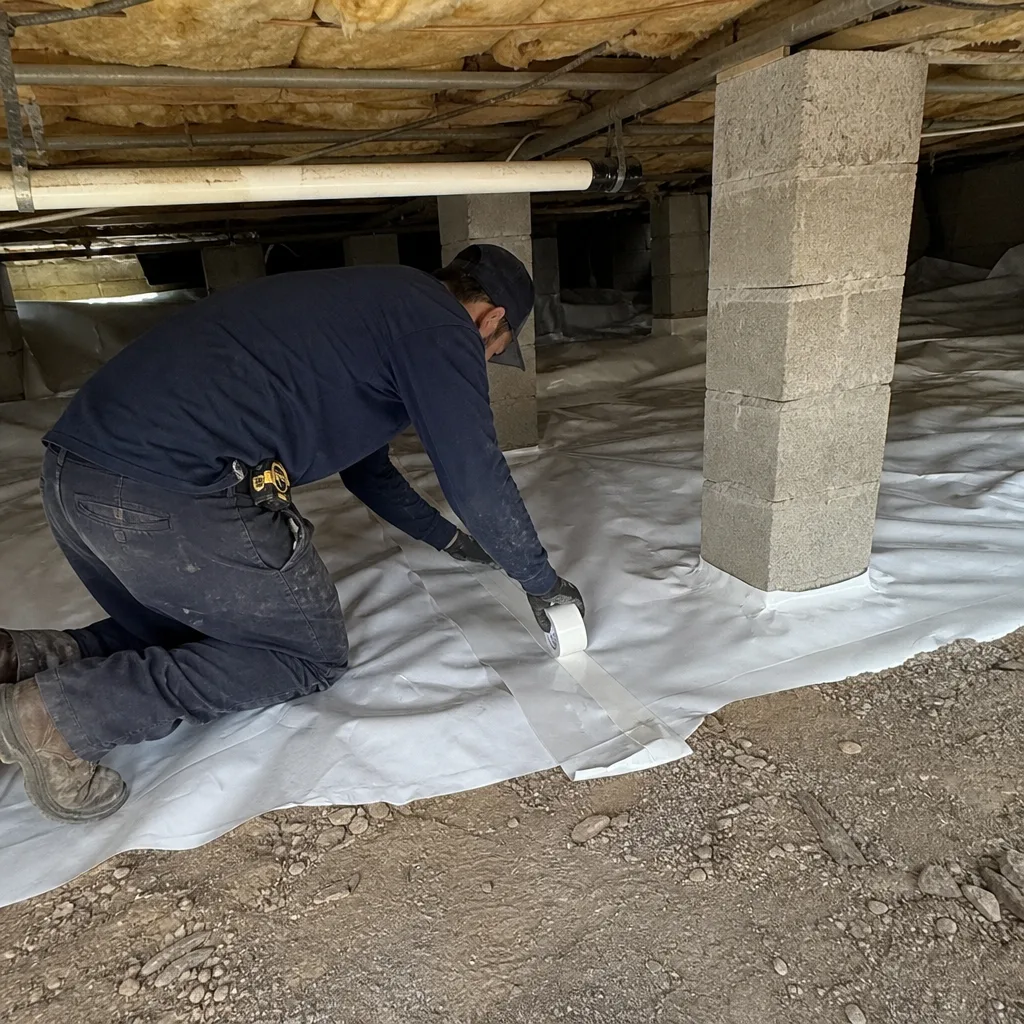
Closed-cell foam earns its cost in crawl space walls, rim joists, and any place you need to pick up R-value without adding framing depth. Open-cell foam is a better fit for interior wall cavities where you want both insulation and a small amount of sound dampening. In Henderson’s dry climate, foam can be the right choice for a crawl space because it eliminates air movement the way no batt or blown material can. See our guide on Crawl Space Encapsulation & Vapor Barrier in Henderson for the assembly details.
When Mineral Wool Earns Its Higher Cost Per R
Rockwool and Thermafiber cost more per R than fiberglass, and for most Henderson attic floors they are not the most economical choice. Where they earn the premium is in applications that require fire resistance or sound control. Mineral wool is noncombustible, melts at temperatures well above fiberglass, and holds R-value well at high temperatures – which is why manufacturers publish its data at both 75°F and elevated conditions. In Henderson, that means three specific applications:
- Party walls between attached homes. Where a fire-resistance-rated assembly is required, mineral wool hits the rating the code asks for.
- Garage ceilings. The garage ceiling over a conditioned room often needs a fire-resistance rating; mineral wool is a documented path to meeting it.
- Areas where sound control matters. The higher density of mineral wool absorbs more airborne sound than fiberglass, and that matters in attached units, near a home office, or over a garage.
If your assembly does not require a fire rating and you are not chasing sound control, spend your money on additional fiberglass depth and better air sealing instead. Depth is cheap; mineral wool is not. Most Henderson homes get a better return by sealing first and going deeper on fiberglass.
How to Verify the Specified Brand Was Actually Installed
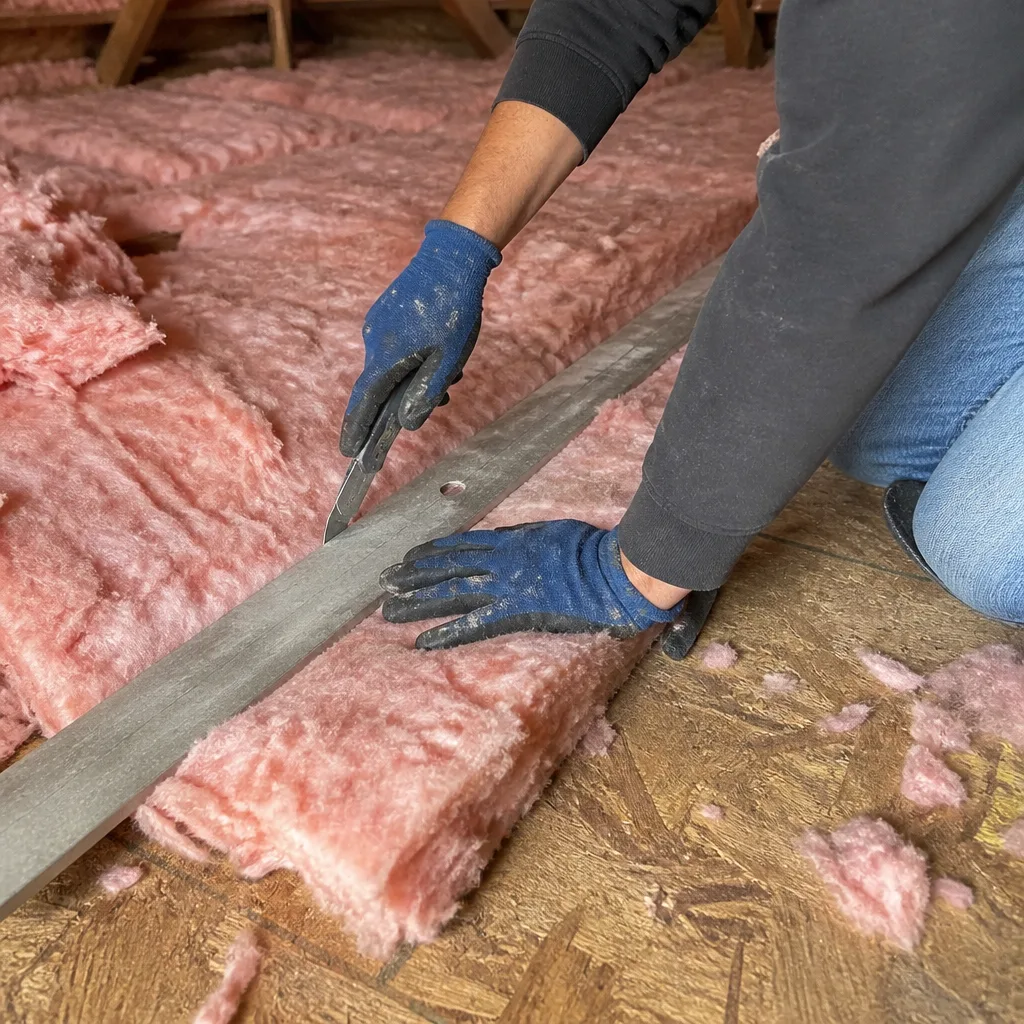
The gap between the brand named in the bid and the brand actually blown into the attic is a real problem in the trade. Title 24 and the local permit process often require the R-value to be documented; a contractor who substitutes a cheaper material because it is on hand is breaking the scope. You can verify – if you know what to ask for. Here is the sequence, before the crew leaves the job site:
- Keep the empty bags. Every bag carries a manufacturer lot number and printed density and coverage table. Ask the crew lead to leave them on-site or photograph them. In a Henderson job, that photograph is your evidence the specified brand went in.
- Ask for the installation certificate. Most manufacturers issue a certificate after the job is installed by a trained applicator – it ties the insurance and warranty to a specific product SKU. If the crew cannot produce one, ask why.
- Confirm the settled depth with a tape measure across a representative cross-section. The depth combined with the settled density from the bag gives you actual R-value.
- Get the before-and-after blower-door readings in writing. The blower-door test is a pressurization measurement of how much air the envelope is losing before and after sealing. CFM50 (cubic feet per minute at 50 pascals) is the number. If the number did not move, the job is not done.
Under Haven Standard Clause 1, every Envelope Insulation Henderson job begins with a written price and ends with a Documented Photo Record of what was installed. That includes the bag labels and the settled depth, so a Henderson homeowner has something to hold onto after the crew drives off. Our Envelope Insulation Henderson home page outlines how that record is delivered on every visit.
Where Henderson Climate and Home Type Change the Math
Henderson sits in a hot-dry climate (ASHRAE zone 3B) with summer design temperatures that routinely cross 110°F. That changes two things about brand selection. First, the elevated-temperature R-value line matters more here than it would in a mild coastal climate. Second, attic ventilation and radiant-heat control matter as much as insulation R-value. A home in Green Valley Ranch with a 10-year-old vented roof and no radiant barrier loses cooling dollars to attic heat gain long before the R-value of the fiberglass becomes the limiting factor. A radiant barrier and correct attic ventilation can pair with any insulation brand, and they often beat jumping brand tiers.
Older Henderson neighborhoods near Water Street or along Boulder Highway have a mix of 1950s single-wall construction and 2000s production housing. In the older homes we see wall cavities with no insulation and unsealed top plates at the attic floor; in the newer homes we see under-blown fiberglass and unsealed recessed can lights. Those assembly differences matter more than which brand goes in. Our guide on Attic Insulation in Henderson covers the local detail.
Open-Cell vs. Closed-Cell Foam: Brand Data by Application
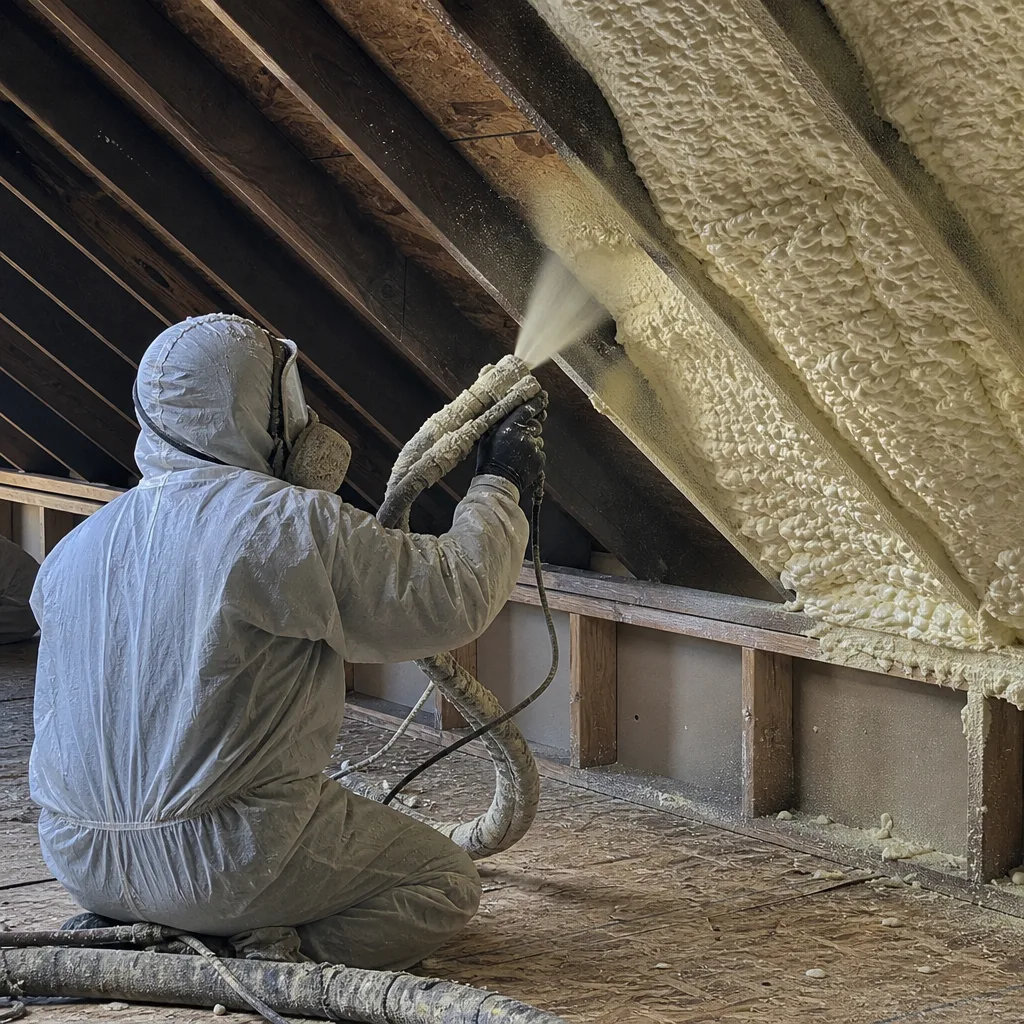
If you narrow to spray foam, the brand question becomes specific. Icynene (now part of the larger manufacturer) documents both open-cell and closed-cell products with GWP disclosure for the HFO-blown closed-cell. Demilec (also part of a larger group) publishes similar disclosure. Lapolla has published GWP numbers for its closed-cell lines. The most useful move is to ask for the blowing-agent GWP figure and the long-term R-value stability claim in writing. An HFO-blown closed-cell foam from any of these brands is a better long-term choice than an HFC-blown foam that happens to be cheaper on the day.
For an attic floor, spray foam is usually the wrong category – fiberglass or cellulose at depth is more economical. For a crawl space, a vented rim joist, or a knee-wall assembly, closed-cell foam is often the right move. We break that decision down in Spray Foam Insulation in Henderson.
Common Mistakes to Avoid
- Comparing brands on the 75°F R-value alone. The elevated-temperature line is the one that applies to a Henderson attic in July. If the sheet does not show it, ask for it.
- Insulating before sealing. Blown material over an unsealed attic floor traps the leaks behind the product. The blower-door test is how you find out what you missed.
- Accepting an under-density job. A crew that under-blows by 20% gives you 20% less R-value than the bid. Verify settled depth with a tape measure across a cross-section.
- Buying premium fiberglass that was installed cheaply. Brand tier is not a substitute for installation quality. Density and sealing come first.
- Using open-cell foam where the assembly needs a vapor barrier. In some Henderson crawl spaces and any inverted hot-roof assembly, the wrong foam category creates moisture problems that show up years later.
- Skipping the bag-label photograph. If the bid named Owens Corning or Johns Manville and the attic ended up with something else, the lot number on the bag is your only proof.
- Spending on mineral wool where no fire rating is required. Unless the assembly needs a rated barrier or sound control, the same dollars spent on extra depth and better sealing do more work in Henderson.
When to Call a Professional
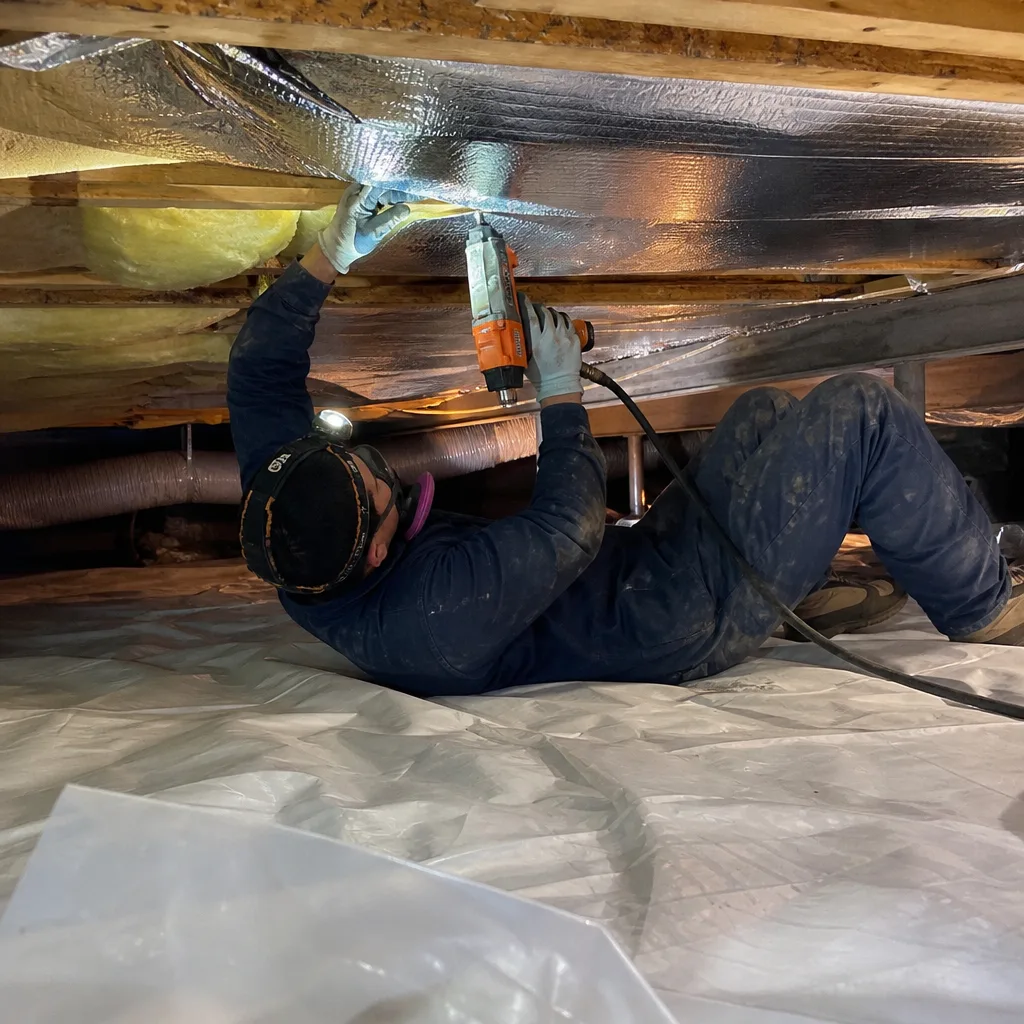
Some insulation decisions are genuinely do-it-yourself. Blowing fiberglass into an open attic floor above a home you own, with the air sealing already done, is a weekend job for a careful homeowner. The work below is not. Call a licensed professional for anything involving: air sealing around can lights and penetrations (recessed lights require a fire-rated cover, and any wiring you expose needs a professional eye); any spray foam work inside the conditioned envelope (off-ratio mixes are a health hazard and a failed ratio is a warranty-voided installation); a top plate, knee-wall, or rim-joist assembly where the sealing detail is not obvious; any assembly that requires a fire-resistance rating; and any job that needs a blower-door test to verify the result. Envelope Insulation Henderson offers free estimates in Henderson – call (844) 320-5338. We publish before-and-after blower-door numbers on every applicable job, and every job begins with a written price before any work starts.
Frequently Asked Questions
There is no single best brand – the best brand for your Henderson home is the one whose data sheet publishes R-value at elevated temperature for the product category and installed thickness that fits your assembly. Owens Corning, Johns Manville, and Knauf publish extended data for their fiberglass; Rockwool and Thermafiber publish it for mineral wool; Icynene, Demilec, and Lapolla publish blowing-agent disclosure for their foam. Choose category, then density, then the brand that documents its numbers. For a Henderson attic, the brand on the bag is third behind sealing and density.
Both work in Henderson. Blown cellulose has a higher R-value per inch (roughly R-3.2 to R-3.7) than blown fiberglass (roughly R-2.5 to R-3.0) but holds moisture if a roof leak intrudes. Blown fiberglass dries out faster if water gets in and resists pests better when kept dry. If your Henderson roof is well maintained and there is no moisture history, cellulose gets more R-value into a shallower cavity; if there has been a leak or a rodent issue, fiberglass is often the safer first move. The right answer depends on the assembly, not on a brand tier.
Manufacturers test R-value at 75°F because that is the ASTM C518 standard lab condition. A Henderson attic in July reaches a mean temperature around 110 – 120°F, and R-value drops as temperature rises for any fibrous product. A product rated R-2.9 per inch at 75°F can drop to roughly R-2.5 at attic temperatures – about a 14% reduction. That is why the elevated-temperature line on the data sheet matters in Henderson more than the standard number.
Most attic insulation jobs in a Henderson home this size run between roughly $1,800 and $4,200 for blown fiberglass or cellulose at recommended depth, including air sealing; spray foam jobs run higher because of the product cost. Exact pricing depends on square footage, current depth, air-sealing scope, and whether old material needs removal. Under Haven Standard, every job begins with a written price and written scope before any work starts. Call (844) 320-5338 for a free estimate on your Henderson home.
Yes, if you kept the empty bags. Every bag carries a manufacturer lot number and a printed density table, which together tell you what was installed and at what coverage. Ask for the empty bags to be left on-site or photographed, ask for the manufacturer’s installation certificate tied to the product SKU, and confirm the settled depth with a tape measure across a representative cross-section. Under Haven Standard, we deliver a Documented Photo Record on every visit that includes those details. If a Henderson contractor will not give you the bag labels, ask why.
Usually not. Mineral wool earns its higher cost per R in Henderson for party walls between attached homes, garage ceilings over conditioned rooms, and any assembly where the code requires a fire-resistance rating or you need sound control. For a standard vented attic floor with no fire-rating requirement, the same dollars spent on extra fiberglass depth and better air sealing do more work in Henderson’s climate than the upgrade to mineral wool.
The Bottom Line
The brand name on the insulation bag is the third-most important variable in a Henderson insulation decision, behind product category and installed density, and behind the air sealing that has to happen first. Within a category, the meaningful differentiators are the third-party tested R-value at the thickness actually installed and whether the manufacturer publishes a performance line at extended temperatures. Fiberglass from Owens Corning, Johns Manville, and Knauf and mineral wool from Rockwool and Thermafiber publish extended data; spray foam brands like Icynene, Demilec, and Lapolla publish blowing-agent disclosure. If a bid names a brand and skips those details, ask. And if you want the numbers verified after the job, ask for the bag labels, the installation certificate, and the before-and-after blower-door readings. Call (844) 320-5338 for a free estimate on your Henderson home.
Written by the team at Envelope Insulation Henderson.